Wieland

 74
74

Wieland

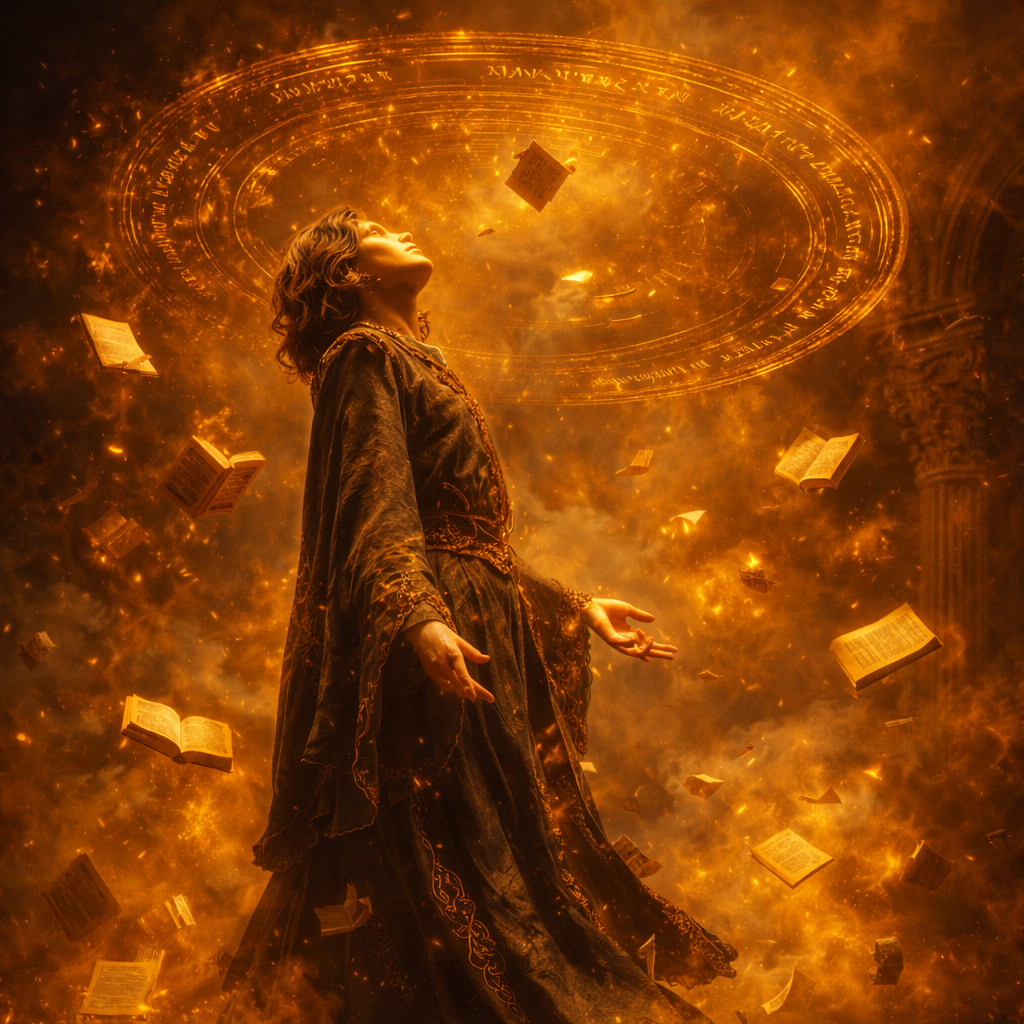

Isolde Whitaker, Sacred Texts Editor: Charles Brockden Brown's "Wieland" remains a cornerstone of American Gothic, its chilling exploration of religious fervor and psychological unraveling resonating deeply within esoteric circles. The novel masterfully portrays the insidious creep of fanaticism, blurring the lines between divine revelation and infernal deception. Its examination of inner voices and spectral visitations offers potent allegories for the practitioners of inner work and those who seek to understand the subtle energies that influence the mind. "Wieland" is a vital text for students of early American literature, occult philosophy, and anyone fascinated by the profound mysteries of faith and madness.
📝 Description
74
Charles Brockden Brown published 'Wieland' in 1798, a novel that questions Enlightenment certainty.
Set in 1790s rural Pennsylvania, Charles Brockden Brown's novel 'Wieland' unfolds through letters penned by Clara Wieland. She recounts the disintegration of her family, driven by mysterious voices and apparitions. Her husband, Wieland, becomes convinced he hears divine commands, leading to tragic events. The narrative scrutinizes the line between religious fervor and delusion, and the impact of extreme belief on individuals and families.
The story examines the psychological toll of perceived supernatural intervention and the fragility of reason when confronted with intense faith. Brown uses the epistolary format to convey Clara's growing terror and confusion as her family's life unravels. The novel questions the source of these disturbances, leaving readers to ponder whether they are divine, demonic, or products of human madness.
Published in the wake of the American Revolution, 'Wieland' engages with the anxieties of a new republic grappling with the limits of rationalism. It reflects a broader cultural interest in Swedenborgianism and other spiritualist movements of the late 18th century, which proposed direct divine communication and unseen spiritual realms. Brown's work probes the potential for both spiritual illumination and destructive obsession within such belief systems, questioning whether perceived divine messages stem from genuine inspiration or internal delusion.
✍️ Author

Charles Brockden Brown
Charles Brockden Brown (January 17, 1771 – February 22, 1810) was an American novelist, historian, and editor of the Early National period. Brown is regarded by some scholars as the most important American novelist before James Fenimore Cooper. Although Bro…
💡 Why Read This Book?
Uncover the roots of American supernatural fiction and explore the potent influence of religious extremism on the psyche. "Wieland" is a must-read for seekers of esoteric knowledge, historical scholars, and practitioners interested in the symbolic interplay of faith, reason, and the uncanny. It offers a chilling perspective on the fragility of the human mind when confronted by perceived divine or demonic forces.
⭐ Reader Reviews
Honest opinions from readers who have explored this book.
❓ Frequently Asked Questions
Is 'Wieland' a true story?
While 'Wieland' draws inspiration from historical anxieties and religious fervor of its time, it is a work of fiction. Charles Brockden Brown uses the narrative to explore psychological and supernatural themes rather than recount factual events.
What is the main theme of 'Wieland'?
The central themes revolve around religious fanaticism, the nature of perception, the conflict between reason and faith, and the corrupting influence of unchecked belief, often blurring the lines between the divine and the diabolical.
Who is the narrator of 'Wieland'?
The primary narrator is Clara Wieland, who recounts the terrifying events that befall her family. Her perspective, however, is colored by her own experiences and the psychological pressures she endures.
What makes 'Wieland' an American Gothic novel?
It is considered one of the earliest American Gothic novels due to its dark atmosphere, exploration of psychological horror, focus on the decay of families, and themes of madness and the supernatural within an American setting.
What esoteric concepts are explored in 'Wieland'?
'Wieland' delves into the idea of divine inspiration versus demonic possession, the power of suggestion, and the potential for internal voices to be interpreted as external spiritual communication, touching upon themes relevant to spiritualism and occult psychology.
🔮 Key Themes & Symbolism
The Corrosive Nature of Religious Fanaticism
Brown meticulously dissects the destructive power of unchecked religious fervor, portraying how a fervent belief in divine mandate can warp reason and lead to horrific acts. The character of Wieland, influenced by perceived divine commands, serves as a stark warning against the dangers of spiritual absolutism and the ease with which individuals can become instruments of terror when convinced they possess divine authority.
The Fragility of Reason and the Unseen World
The novel probes the precarious balance between the rational mind and the encroaching influence of the supernatural or the perceived will of higher powers. Through Clara's experiences, Brown questions the reliability of perception and the potential for unseen forces—be they psychological or spiritual—to shatter the foundations of sanity and societal order, inviting contemplation on the limits of empirical understanding.
The Labyrinth of the Human Psyche
Fundamentally, , 'Wieland' is a profound exploration of the human psyche's susceptibility to fear, delusion, and obsession. The unsettling events are often filtered through the minds of the characters, prompting readers to question the source of the horror: is it external malevolence, internal breakdown, or a terrifying confluence of both? This psychological depth makes it a timeless study of the darker aspects of human nature.
💬 Memorable Quotes
Direct passages from the work, attributed to the author.
“The story of my brother is the story of delusion.”
— This reflects Clara's struggle to reconcile her brother's actions with any rational explanation, suggesting that his perceived divine mission was, in fact, a product of profound mental disturbance.
“The most alarming of all the circumstances that occurred.”
— This phrase underscores the escalating terror and the feeling of being overwhelmed by events that defy logical explanation, amplifying the sense of dread and helplessness.
“I was a prey to perpetual solicitude.”
— This captures the pervasive anxiety and fear that grips the characters, illustrating how the constant threat of the unknown erodes peace and well-being, a hallmark of Gothic suspense.
“The silence of the night was broken by a voice.”
— This simple yet potent line evokes the unsettling intrusion of the uncanny into mundane reality, signaling the onset of supernatural or psychologically induced phenomena that disrupt the natural order.
💡 Key Ideas
Editorial paraphrase of the work's core concepts — not direct quotes.
A new species of terror seized me.
This quote expresses the novel's descent into the unknown, highlighting the overwhelming and unprecedented nature of the horrors faced by the characters, hinting at forces beyond ordinary comprehension.
🌙 Esoteric Significance
Tradition
While not explicitly tied to a single esoteric tradition, 'Wieland' speaks to themes found in Gnosticism, particularly concerning the struggle against a perceived demiurgic force or the misinterpretation of divine emanations. It also echoes explorations within early occult psychology and spiritualism regarding the nature of inspiration, psychic phenomena, and the potential for 'voices' to originate from either divine or infernal realms.
Symbolism
The novel is rich with symbolism: the isolated rural setting represents a spiritual or psychological wilderness; the mysterious voices can symbolize the lure of forbidden knowledge or the deceptive whispers of lower spiritual entities; the destruction of the family unit symbolizes the breakdown of societal and spiritual order under the influence of delusion. The interplay of light and shadow reflects the ongoing battle between reason and irrationality, or between spiritual enlightenment and spiritual darkness.
Modern Relevance
In an era still grappling with the influence of charismatic figures, misinformation, and the power of belief systems to shape reality, 'Wieland' remains profoundly relevant. It serves as a timeless cautionary tale about critical thinking, the dangers of unquestioning faith, and the psychological susceptibility to manipulation, whether by external forces or internal demons. Its exploration of the human capacity for both profound belief and terrible action continues to resonate.
👥 Who Should Read This Book
For the novice seeker, 'Wieland' offers a compelling and accessible entry into the world of Gothic literature and its underlying philosophical questions about faith and perception. Scholars and students of American literature and history will find it an invaluable text for understanding the literary and cultural range of the late 18th century. Practitioners of esoteric arts and those interested in occult psychology can draw parallels to the manipulation of consciousness, the interpretation of inner experiences, and the potent influence of belief. Ultimately, anyone drawn to narratives that explore the shadowy frontiers of the human mind and the persistent allure of the mysterious will find 'Wieland' a deeply rewarding, albeit unsettling, read.
📜 Historical Context
Published in 1798, "Wieland" emerged during a period of intense intellectual and social ferment in the nascent United States. The Enlightenment's emphasis on reason was being challenged by Romantic sensibilities and a fascination with the sublime, the irrational, and the supernatural. Early American society grappled with the legacy of Puritanism, the anxieties of religious dissent, and the formation of a new national identity, all of which provided fertile ground for Gothic narratives that explored themes of inherited sin, spiritual struggle, and the dark undercurrents of human nature. Brown's work reflects these anxieties, placing them within a distinctly American landscape and interrogating the very foundations of belief and morality.
📔 Journal Prompts
Reflect on a time you felt guided by a strong inner conviction. How did you discern its origin?
Imagine you hear a voice offering profound secrets. What are your initial reactions and subsequent actions?
Consider the concept of 'divine inspiration.' How can it be both a source of great good and terrible destruction?
Write a scene from the perspective of a character who is losing their grip on reality. What sensory details and internal monologues would dominate?
Explore the idea of inherited trauma or belief systems. How might they manifest in subsequent generations?
🗂️ Glossary
Epistolary Novel
A novel told through a series of letters, documents, or diary entries. This format allows for multiple perspectives and creates a sense of immediacy and authenticity.
Gothic Fiction
A literary genre characterized by elements of horror, mystery, and romance, often set in dark, decaying castles or remote, atmospheric locations. It typically explores themes of madness, the supernatural, and psychological dread.
Religious Fanaticism
Unquestioning and excessive zeal for a particular religious cause or belief, often leading to intolerance, extremism, and a disregard for reason or opposing viewpoints.
Rationalism
A philosophical stance that emphasizes reason as the primary source and test of knowledge, often contrasting with faith, revelation, or empirical experience.
Supernatural
Attributed to causes beyond the range of normal scientific understanding; relating to ghosts, spirits, or other phenomena believed to be caused by forces that transcend the natural world.
This book appears in 1 collection
🔮 Readers Also Liked
Browse all →




More by Charles Brockden Brown
All books →
From the “Transcendental Meditation” Collection
View all →








More Free Supernatural & Occult Fiction Books
View all →