Charles Brockden Brown
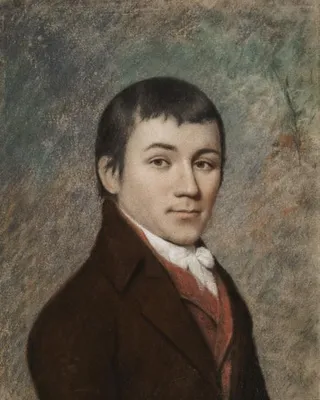
Charles Brockden Brown was an early American novelist and editor, known for his complex Gothic novels.
Charles Brockden Brown was a significant American writer of the Early National period, recognized by some as the most important novelist before James Fenimore Cooper. Though not the very first American novelist, his extensive work across multiple genres—including novels, short stories, essays, poetry, and historical writings—establishes him as a crucial figure in early American literature. His best-known novels, such as *Wieland* and *Edgar Huntly*, are noted for their exploration of Gothic themes and psychological complexity.
Born into a Quaker merchant family in Philadelphia, Brown initially pursued legal studies but ultimately dedicated himself to writing. He was part of intellectual circles in New York and Philadelphia, engaging in literary experimentation through correspondence and early publications. His writing was influenced by British radical-democratic thinkers like Mary Wollstonecraft and William Godwin, and his own work, in turn, influenced later generations of writers, including Mary Shelley. Brown's career spanned novels, editing periodicals, and writing political pamphlets, reflecting his engagement with the era's commercial, political, and social issues.
Literary Innovations and Influences
Brown's novels, published primarily between 1798 and 1801, are often categorized as Gothic, but they transcend simple genre classification. He synthesized various literary modes, including Gothic romance, revolutionary-era fiction, Enlightenment scientific and medical knowledge, and the political philosophies of writers like Wollstonecraft and Godwin. His work frequently incorporated motifs such as sleepwalking and religious mania, drawing upon contemporary medical theories. These complex narratives, often characterized by sensational violence and intellectual depth, challenged prevailing literary conventions. His novels like *Wieland* and *Edgar Huntly* are particularly recognized for their psychological intensity and thematic richness, sometimes referred to as 'Gothic' or 'Godwinian' novels. Later works, like *Clara Howard* and *Jane Talbot*, explored domestic themes through epistolary forms, though recent scholarship emphasizes the continuity of his thematic concerns across his oeuvre.
Engagement with Social and Political Issues
Beyond his fiction, Brown was an active editor and a writer of political commentary. He contributed significantly to periodicals like *The Monthly Magazine and American Review* and *The Literary Magazine and American Register*, publishing articles, reviews, and essays. His later writings included political pamphlets advocating for territorial expansion and opposing economic measures like the Embargo Act. Brown also engaged with significant social issues of his time. He planned, though never completed, a "History of Slavery" and was considered an appropriate author for a history of penal reform. His writings and intellectual pursuits reveal an interest in progressive ideas and reformist institutions, reflecting a complex political stance that moved away from Federalist ideologies towards a desire for "political justice."
Key Ideas
- Exploration of psychological states and internal conflicts
- Synthesis of Gothic, Enlightenment, and radical-democratic literary traditions
- Critique of commerce and its role in societal transition
- Engagement with social reform movements, including abolition and penal reform
Books by Charles Brockden Brown
2 free public domain books · Read online or download