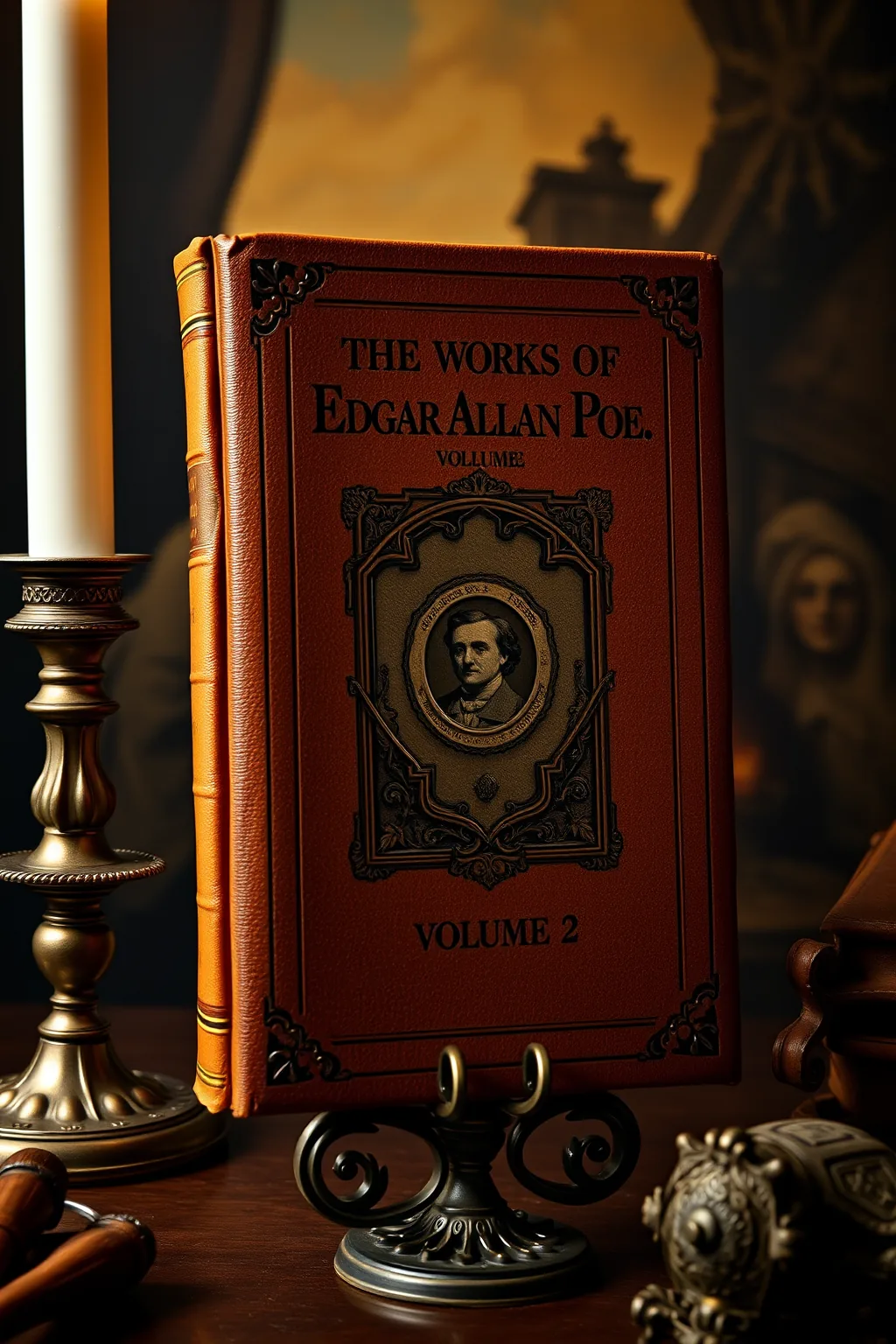
The Works of Edgar Allan Poe, Volume 2
 80
80

The Works of Edgar Allan Poe, Volume 2


Sophia Crane (Associate Editor) — Edgar Allan Poe's 'The Works, Volume 2' is an indispensable cornerstone for any serious student of esoteric literature. This collection plunges readers into the very heart of symbolic dread and psychological revelation. Poe masterfully employs imagery and narrative to explore the uncanny, the spectral, and the hidden currents of human consciousness, echoing themes found in Hermeticism and Gnosticism. The tales within are not mere Gothic fables but potent allegories that illuminate the darker aspects of the psyche and the universe's veiled mysteries. For seekers of hidden knowledge and practitioners of introspection, this volume offers profound insights into the nature of perception and the enduring power of the subconscious. A truly illuminating, albeit chilling, experience.
📝 Description
80
Published in 1850, 'The Works of Edgar Allan Poe, Volume 2' collects tales probing human frailty and the forbidden.
This anthology collects Edgar Allan Poe's stories from the period, continuing his examination of dread and mystery. Poe's narratives draw readers into complex plots that question the limits of human reason and the appeal of taboo subjects. Each piece functions as a carefully constructed narrative, addressing mortality, mental instability, and the boundary separating ordinary existence from supernatural realms.
Poe's writing style serves to reveal concealed aspects of the psyche, where primal anxieties and dormant desires exist. More than just a compilation of Gothic tales, this book enters the realm of archetypal darkness. It reflects the deepest puzzles of the human spirit, suitable for individuals who find insight in the macabre and meaning in the shadowed.
This volume aligns with traditions that explore the darker aspects of the human psyche and the hidden forces influencing reality. Poe's work often touches upon themes found in occult literature, such as the breakdown of rational thought under duress, the presence of unseen entities, and the psychological impact of guilt and sin. His narratives can be seen as explorations of the shadow self, a concept important in various esoteric philosophies, where repressed desires and fears manifest in symbolic and often terrifying ways. The focus on dreams, altered states of consciousness, and the subjective experience of reality places these stories within a lineage of literature that questions empirical perception.
✍️ Author
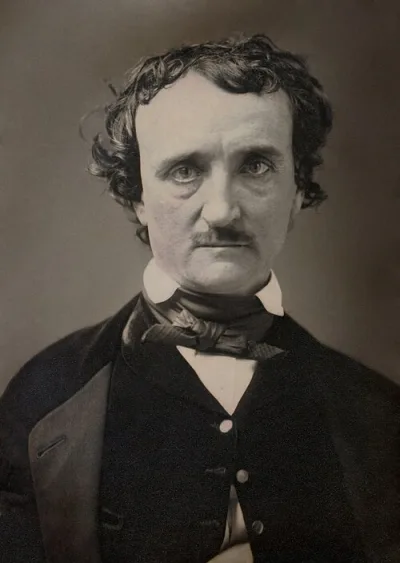
Edgar Allan Poe
American writer, poet, and critic, Edgar Allan Poe is best known for his tales of mystery and the macabre.
💡 Why Read This Book?
Unlock the secrets of the mind and the universe through Poe's visionary prose. This volume offers a unique portal to understanding subconscious fears, symbolic language, and the ethereal realms. Ideal for seekers of esoteric wisdom, scholars of the occult, and practitioners who explore the symbolic landscape of human experience. Discover profound truths hidden within tales of mystery and the supernatural.
⭐ Reader Reviews
Honest opinions from readers who have explored this book.
❓ Frequently Asked Questions
What esoteric traditions are reflected in Poe's work?
Poe's tales often echo themes found in Hermeticism, Gnosticism, and Romantic occultism, exploring duality, forbidden knowledge, the soul's journey, and the interplay between light and shadow.
Are these stories suitable for beginners in occult studies?
Yes, while profound, Poe's accessible yet rich prose makes these stories an excellent, engaging entry point for exploring symbolic narratives and psychological archetypes.
How does Poe's work relate to modern psychological theories?
Poe's exploration of the subconscious, repressed desires, and the fragility of sanity predates modern psychoanalytic thought, making his work eerily prescient and relevant to understanding the human psyche.
What is the significance of the recurring themes of death and decay?
These themes represent Poe's contemplation of mortality, the cyclical nature of existence, and the profound transformations that occur when confronting the absolute unknown, a common motif in esoteric traditions.
Can this collection be used for divination or meditation?
The rich symbolism and evocative imagery can serve as potent focal points for meditation, dream analysis, or as prompts for intuitive exploration, much like tarot or oracle cards.
🔮 Key Themes & Symbolism
The Unveiling of Hidden Realities
Poe masterfully draws back the curtain on perceived reality, revealing the spectral, the subconscious, and the often-terrifying truths that lie beneath the veneer of the mundane. His tales explore the thin membrane between life and death, sanity and madness, suggesting that what we deem 'real' is but a fraction of existence. This theme invites readers to question their own perceptions and to acknowledge the potent, unseen forces that shape our destinies and our inner landscapes, resonating deeply with esoteric philosophies that posit multiple layers of existence.
The Labyrinth of the Psyche
This collection serves as a profound exploration of the human mind's intricate and often treacherous architecture. Poe studies the depths of guilt, obsession, paranoia, and the fragmented self, showcasing how internal turmoil can manifest as external horror. His characters are often trapped in psychological prisons of their own making, mirroring esoteric concepts of karmic entanglement and the soul's struggle with its own shadow. The narratives act as potent allegories for the inner work required to navigate one's own mental and emotional complexities, a central tenet in many spiritual disciplines.
Symbolism and the Arcane Language
Every element in Poe's work, from the crumbling manors to the raven's ominous croak, is imbued with symbolic weight. These symbols act as keys to unlocking deeper meanings, reflecting the arcane traditions that utilize imagery and metaphor to convey profound spiritual truths. His recurring motifs—the eye, the mirror, the abyss—speak to universal archetypes and esoteric principles, inviting readers to interpret the text not just as a story, but as a coded message from the subconscious and the collective unconscious, offering a rich landscape for symbolic interpretation.
💬 Memorable Quotes
Direct passages from the work, attributed to the author.
““The boundaries which divide Life from Death are at best shadowy and vague. Who shall say where the one ends, and where the other begins?””
— This philosophical musing directly addresses the blurred lines between existence and non-existence, a concept central to many mystical traditions that explore the nature of consciousness and the afterlife.
““We cannot conquer fate and free ourselves from the dominion of the unknown.””
— This statement acknowledges the powerful, often unseen forces that govern human lives, aligning with esoteric beliefs in destiny, karma, and the limits of human agency against cosmic powers.
““The silence of the night was profound.””
— More than mere description, this often-repeated phrase evokes a primal, watchful stillness pregnant with unseen possibilities, a potent atmosphere for introspection and encounters with the spectral.
““All that we see or seem is but a dream within a dream.””
— This iconic line questions the very nature of reality, echoing philosophical idealism and Gnostic ideas that our perceived world is an illusion, a veil obscuring a higher truth.
💡 Key Ideas
Editorial paraphrase of the work's core concepts — not direct quotes.
“I have no dread of death. It is the mere cessation of existence, and I have lived a life of such misery that I am glad to be rid of it.”
This quote reveals Poe's morbid fascination with mortality and a profound weariness with earthly existence, hinting at a desire for transcendence or an escape from suffering, a theme explored in various spiritual paths.
🌙 Esoteric Significance
Tradition
Poe's works resonate deeply with Hermeticism and its exploration of hidden knowledge, the interconnectedness of all things, and the principle of 'as above, so below.' His tales also touch upon Gnostic themes of illusionary reality, the struggle against ignorance, and the search for inner gnosis. Furthermore, his psychological landscapes echo the principles of alchemy, where the transformation of base elements parallels the purification and evolution of the soul.
Symbolism
Key symbols abound: the raven signifies ill omen and the persistent voice of the subconscious; the decaying house represents the crumbling psyche or ancestral curse; the pendulum symbolizes the relentless march of time and the oscillation between life and death; the eye embodies perception, judgment, and the all-seeing cosmic awareness. These potent images serve as archetypal keys for unlocking deeper layers of meaning and understanding the symbolic language of the universe.
Modern Relevance
In an age still grappling with the nature of consciousness, reality, and the impact of the subconscious, Poe's writings remain remarkably relevant. His prescient exploration of psychological fragmentation, existential dread, and the allure of the forbidden speaks to contemporary discussions in psychology, philosophy, and even quantum physics. The symbolic depth of his stories offers enduring tools for self-reflection, shadow work, and understanding the persistent human quest for meaning beyond the material realm.
👥 Who Should Read This Book
This profound collection is essential for seekers of esoteric wisdom who wish to explore the symbolic language of the subconscious and the hidden dimensions of reality. Scholars of literature, psychology, and occult studies will find invaluable insights into Poe's masterful use of archetypes and his engagement with the philosophical currents of his time. For practitioners of introspection and shadow work, Poe's tales offer potent narratives for confronting personal demons and exploring the darker aspects of the human psyche. Even beginners curious about the intersection of literature and the metaphysical will find an accessible yet deeply rewarding entry point into these timeless mysteries.
📜 Historical Context
Published in the mid-19th century, 'The Works of Edgar Allan Poe, Volume 2' emerged during a period of intense intellectual and spiritual ferment. This era witnessed the rise of Romanticism, with its emphasis on emotion, individualism, and the sublime, alongside a burgeoning interest in spiritualism, mesmerism, and the occult. Poe’s Gothic tales tapped into a societal fascination with the macabre and the mysterious, reflecting anxieties about industrialization, social change, and the limits of scientific understanding. His work also engaged with the darker aspects of burgeoning American identity, exploring themes of decay, loss, and the haunting presence of the past. This context of scientific rationalism clashing with spiritual inquiry provided fertile ground for Poe's exploration of the uncanny and the boundaries of human perception.
📔 Journal Prompts
Reflect on a recurring nightmare or intrusive thought; how might Poe's characters relate to this internal landscape?
Choose a symbol from a Poe story (e.g., a raven, a decaying house) and explore its personal meaning and potential esoteric interpretations.
Consider a moment where you felt the veil between reality and something 'other' thinning. Describe the experience and its emotional impact.
Poe often explores the consequences of forbidden knowledge. What 'forbidden' knowledge do you believe exists, and what are its potential costs or rewards?
How does Poe's exploration of madness challenge our modern understanding of mental health and consciousness?
🗂️ Glossary
Gothic Fiction
A literary genre characterized by elements of horror, death, and gloom, often set in ancient castles or decaying mansions, exploring themes of the supernatural and psychological dread.
Hermeticism
An ancient philosophical and religious tradition based on writings attributed to Hermes Trismegistus, emphasizing esoteric knowledge, spiritual transformation, and the interconnectedness of the cosmos.
Gnosticism
A diverse set of religious and philosophical ideas centered on the belief that salvation is attained through secret knowledge (gnosis) revealed by a divine messenger, often positing a flawed material world created by a lesser deity.
Archetype
In psychology and mythology, a universal, inherited pattern of thought or image derived from the collective unconscious, such as the Hero, the Shadow, or the Wise Old Man.
The Uncanny
A concept describing the feeling of unsettling familiarity or the eerie sensation evoked when something that should be familiar becomes strange, often associated with the repressed returning.
This book appears in 1 collection
🔮 Readers Also Liked
Browse all →



More by Edgar Allan Poe
All books →




From the “Transcendental Meditation” Collection
View all →





More Free Supernatural & Occult Fiction Books
View all →