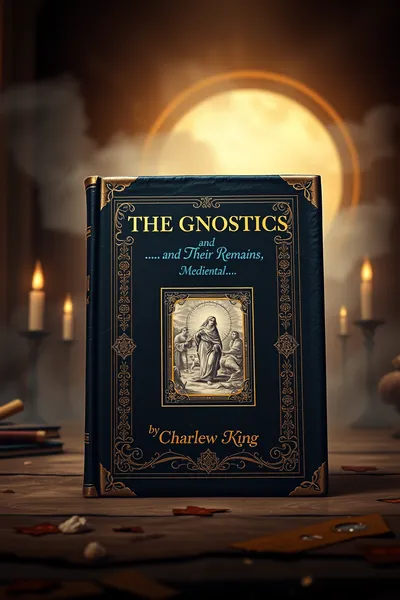
The Gnostics and Their Remains, Ancient and Medieval

 82
82

The Gnostics and Their Remains, Ancient and Medieval
King's "The Gnostics and Their Remains" remains a significant, if dated, compendium on its subject. Its strength lies in the sheer breadth of cataloged material, particularly the detailed descriptions of Gnostic gems and iconography, which were less systematically studied when King first published in 1864. The meticulous listing of inscriptions and symbols offers a valuable primary source for researchers. However, King's 19th-century lens occasionally leads to interpretations that modern scholarship has since refined or challenged, particularly regarding the precise origins and relationships between various Gnostic groups. A notable passage for its detailed analysis is the examination of the complex iconography on a particular Mithraic amulet, which King argues displays syncretic Gnostic elements. Despite its historical limitations, the work's systematic approach to the material evidence is commendable. It is a crucial, albeit superseded, cornerstone for understanding the historical reception and study of Gnosticism.
📝 Description
82
First published in 1864, Charles William King's study examines Gnostic thought and its material artifacts.
Charles William King's "The Gnostics and Their Remains, Ancient and Medieval" is a scholarly examination of Gnostic thought and its physical evidence, first released in 1864. King meticulously cataloged and analyzed symbols, inscriptions, and theological ideas found within various Gnostic groups. He aimed to present a thorough overview of historical evidence from a 19th-century academic viewpoint, differentiating between authentic Gnostic traditions and later misunderstandings or copies.
This book is useful for those studying early Christianity, religious history, and comparative mythology. Students and enthusiasts of the hidden foundations of Western thought will find it particularly valuable. It is for readers who value detailed historical research, the study of ancient images, and the examination of religious movements that went against established doctrines in the Roman Empire and surrounding regions.
King's work situates Gnosticism within a 19th-century academic framework, a time when such movements were often viewed with suspicion. Emerging from an era of growing interest in ancient religions and textual analysis, his study engaged with the scholarly debates of the period concerning early Christianity's connections to Hellenistic philosophy. The book reflects the academic paradigms of its time, seeking to understand Gnostic systems through the lens of available archaeological finds and textual criticism, while acknowledging the interpretive biases inherent in such scholarship.
✍️ Author
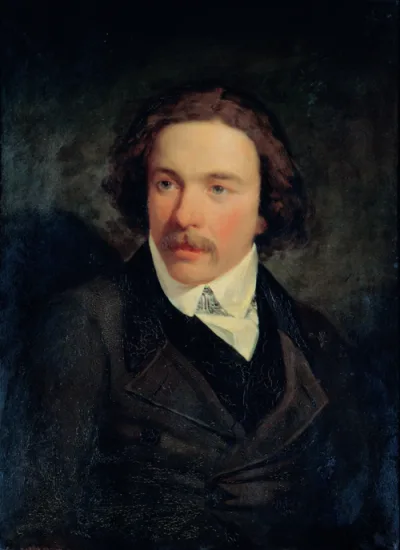
Charles William King
Charles William King was an English antiquarian, numismatist, and author, known for his works on gems and classical art.
💡 Why Read This Book?
• Learn about the historical classification of Gnostic sects, understanding how King categorized groups like the Valentinians and Basilidians based on textual and archaeological evidence available in the mid-19th century. • Discover the symbolic language of Gnostic gems and amulets, gaining insight into motifs like Abraxas and the Ouroboros as analyzed by King, which were central to Gnostic identification and protection. • Grasp the scholarly context of 1864, recognizing how King's work contributed to the academic discourse on early Christian heresies amidst emerging archaeological findings.
⭐ Reader Reviews
Honest opinions from readers who have explored this book.
❓ Frequently Asked Questions
What is the primary focus of Charles William King's "The Gnostics and Their Remains"?
The book primarily focuses on cataloging and analyzing the historical and material evidence of Gnosticism, including inscriptions, symbols, and theological concepts, distinguishing genuine Gnostic traditions from later developments.
When was "The Gnostics and Their Remains" first published, and why is this significant?
It was first published in 1864, a period of increased scholarly interest in ancient religions and textual criticism, making King's comprehensive study a significant contribution to the understanding of Gnosticism at that time.
What kind of Gnostic symbolism does the book examine?
The book examines a wide array of Gnostic symbolism found on gems, amulets, and in texts, including figures like Abraxas, the concept of Aeons, and serpentine motifs, often interpreting their theological significance.
Who are some key figures or groups discussed in relation to Gnosticism in King's work?
King discusses various Gnostic figures and sects, referencing individuals like Valentinus and Basilides, and explores their theological systems and historical interactions with early Christianity.
Is "The Gnostics and Their Remains" considered a primary or secondary source for Gnostic studies?
It functions as both. It's a secondary source for understanding 19th-century scholarship on Gnosticism but also presents primary material (inscriptions, gem descriptions) that scholars still reference.
What does the book say about the relationship between Gnosticism and other ancient religions?
King explores the syncretic nature of Gnosticism, discussing its potential influences from and interactions with Hellenistic philosophy, Judaism, and early Christian movements, as well as later traditions like Manichaeism.
🔮 Key Themes & Symbolism
Gnostic Iconography
King meticulously details the visual language of Gnosticism, focusing on symbols found on ancient gems and amulets. He analyzes figures like Abraxas, often depicted with a rooster's head and serpentine limbs, and the concept of the divine serpent. These symbols were not mere decoration but carried profound theological weight, representing emanations, divine power, or even the Demiurge himself. The work provides a systematic catalog that was instrumental in early Gnostic studies, allowing for the identification and interpretation of these potent visual markers of Gnostic belief.
The Demiurge and Sophia
A central theme is the Gnostic concept of the flawed creator god, the Demiurge, often identified with the Old Testament God, who is distinct from the true, transcendent supreme being. King explores the mythological narratives surrounding the emanation of the divine realm (Pleroma) and the fall of Sophia (Wisdom), whose misguided desire leads to the creation of the material world and its imperfect ruler. This cosmological drama is presented as fundamental to understanding the Gnostic worldview and their critique of established religious and material realities.
Gnostic Sects and Systems
The book attempts to delineate the various schools and thinkers within Gnosticism, discussing the ideas attributed to figures like Valentinus, Basilides, and Marcion. King presents their systems, which often involved complex hierarchies of Aeons, divine emanations, and intricate cosmogonies. He examines the historical transmission of these ideas and their divergence from orthodox Christian doctrines, highlighting the intellectual landscape of the second and third centuries CE where these heterodox traditions flourished.
Material Remains and Authenticity
A significant portion of King's work is dedicated to the physical evidence of Gnosticism, particularly inscribed gems and amulets. He analyzes the inscriptions, often in Greek or Coptic, and the accompanying imagery, using these artifacts to reconstruct Gnostic beliefs and practices. The emphasis on tangible remains reflects a 19th-century scholarly drive to ground esoteric studies in empirical evidence, seeking to authenticate Gnostic traditions through archaeology and epigraphy.
💬 Memorable Quotes
“The Gnostics, in their system, represent the supreme God as an abstraction, inaccessible, incomprehensible, and utterly removed from all creation.”
— This highlights a core Gnostic tenet: the radical transcendence of the true God, contrasting sharply with the immanent or anthropomorphic deities found in other traditions. It underscores the Gnostic search for a divine reality beyond the flawed material cosmos.
“Abraxas was the name of the deity, and the word itself formed a mystical charm, possessing the power to render the wearer invisible.”
— This interpretation emphasizes the practical, magical, and protective aspects associated with Gnostic symbolism. The name Abraxas, often inscribed on amulets, was believed to hold inherent power, a concept common in many ancient mystery traditions.
“The serpent, in Gnostic symbolism, frequently represents the Demiurge or his agents, a power that binds humanity within the material world.”
— This interpretation points to the dualistic nature of Gnostic thought, where certain powerful symbols, like the serpent, can be associated with negative or limiting forces, contrasting with traditions that view the serpent more positively.
“Valentinus taught that the divine nature emanated from a supreme, unknown Father, through a series of Aeons.”
— This paraphrased concept encapsulates Valentinian Gnosticism's hierarchical cosmology. It illustrates the concept of divine outflowing (emanation) and the sophisticated theological architecture developed by key Gnostic thinkers to explain existence.
“The material world is regarded as an unfortunate accident, a prison for the divine spark within humanity.”
— This interpretation captures the Gnostic view of the cosmos as fundamentally flawed and the human soul as a divine element trapped within it. It explains the Gnostic desire for liberation (Gnosis) from the material realm.
🌙 Esoteric Significance
Tradition
This work is firmly rooted in the scholarly examination of Gnosticism, a complex set of religious ideas that flourished in the early centuries CE. While not a Gnostic text itself, it serves as a crucial bridge, cataloging the material evidence and philosophical tenets that define this tradition. King's approach aligns with the Hermetic and Neoplatonic intellectual traditions that were also being rediscovered and studied during the 19th century, seeking hidden knowledge within ancient texts and artifacts.
Symbolism
The book extensively decodes Gnostic symbolism, particularly on ancient gems and amulets. Key symbols analyzed include 'Abraxas,' a composite deity often associated with the Demiurge or a powerful divine name, and the 'Ouroboros,' the serpent devouring its own tail, representing cyclical time or the totality of creation. The 'Eye of Horus' or similar watchful eyes also appear, signifying divine knowledge or providence within the Gnostic framework.
Modern Relevance
King's meticulous cataloging of Gnostic artifacts and inscriptions continues to be a valuable reference for contemporary scholars and practitioners interested in Western esotericism. Modern Gnostic revival movements and comparative religion scholars often consult his work for its detailed descriptions of iconography and historical Gnostic systems, even while acknowledging the need for updated interpretations informed by later archaeological discoveries and critical scholarship.
👥 Who Should Read This Book
• Researchers of Western Esotericism: Scholars and students seeking to understand the historical foundations of Gnostic studies and the material evidence available to 19th-century academics. • Comparative Religion Enthusiasts: Individuals interested in the diversity of early religious thought, particularly heterodox movements that existed alongside nascent Christianity. • Students of Ancient Iconography: Those focused on deciphering the symbolic language of ancient artifacts, especially gems and amulets, and their theological significance in the Roman and early Christian periods.
📜 Historical Context
Charles William King's "The Gnostics and Their Remains" emerged in 1864, a period marked by intense scholarly interest in early Christianity and its Hellenistic-era antecedents. The mid-19th century witnessed significant archaeological finds and a burgeoning academic field dedicated to comparative religion and textual criticism. Gnosticism, often viewed through the lens of early Church Fathers like Irenaeus, was beginning to be studied more systematically, though often with prejudice. King's work situated itself within this evolving academic landscape, seeking to provide a comprehensive catalog of Gnostic artifacts and doctrines. It engaged with the prevailing scholarly discourse, attempting to differentiate genuine Gnostic traditions from later syncretic movements. While King drew upon contemporary archaeological discoveries, his interpretations were shaped by the intellectual currents of his time, particularly the ongoing debates surrounding the origins of Christian heresy and its relationship to Neoplatonism and other philosophical schools.
📔 Journal Prompts
The concept of the Demiurge as presented by King: divine flawed creator or malevolent force?
Analyze the symbolism of Abraxas as described in King's catalog of Gnostic remains.
Reflect on the historical reception of Gnosticism as portrayed in King's 1864 analysis.
Consider the Gnostic emphasis on 'Gnosis' (knowledge) as a means of liberation from the material world.
How does King's description of Gnostic cosmological hierarchies compare to other ancient mythologies?
🗂️ Glossary
Gnosticism
A diverse set of religious and philosophical movements prominent in the first few centuries CE, characterized by a belief in salvation through esoteric knowledge (Gnosis) and a dualistic worldview that often posited a flawed creator god distinct from a supreme, transcendent deity.
Demiurge
In Gnostic cosmology, the creator of the material universe. Often depicted as ignorant, imperfect, or even malevolent, and distinct from the ultimate, true God.
Aeons
Emanations or divine beings that proceed from the supreme God in Gnostic and some other esoteric systems. They form a divine hierarchy within the Pleroma (fullness) of God.
Abraxas
A mystical word and deity figure often found on Gnostic gems and amulets. Frequently depicted with a composite form (e.g., rooster's head, human body, serpents for legs), it held significant symbolic and protective power.
Gnosis
Greek for 'knowledge.' In Gnosticism, it refers to a special, intuitive, or revealed knowledge of the divine that leads to salvation and liberation from the material world.
Valentinus
A prominent Gnostic teacher of the 2nd century CE, known for developing a complex Gnostic cosmological system involving Aeons and a sophisticated theology.
Basilides
Another significant Gnostic teacher from the 2nd century CE, whose teachings, particularly concerning cosmology and the nature of divine revelation, are discussed by King.