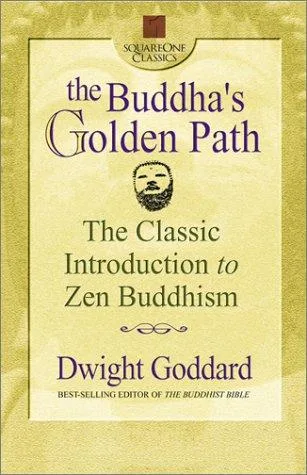
The Buddha's Golden Path
 77
77

The Buddha's Golden Path
Dwight Goddard's "The Buddha's Golden Path" offers a remarkably clear entry point into Buddhist thought, especially considering its 1929 origins. Goddard’s personal experience as a monk lends an authenticity that resonates, particularly in his straightforward exposition of the Eightfold Path. He avoids the overly academic tone that often alienates newcomers, presenting the material with a gentle insistence on practice. One particularly effective passage is his explanation of *dukkha*, not just as suffering, but as inherent unsatisfactoriness. However, the work, while historically significant, lacks the nuanced critique of Western societal structures that some later Buddhist writers would incorporate, tending to focus more on internal states. The book's strength lies in its directness; its limitation is a relative lack of engagement with the socio-political dimensions that Buddhism can address. It remains a valuable, if somewhat dated, primer.
📝 Description
77
Dwight Goddard's 1929 book translated Zen Buddhist teachings for an American audience.
First published in 1929, Dwight Goddard's "The Buddha's Golden Path" sought to make Buddhist philosophy and practice understandable to Western readers. Goddard, an American who lived as a Zen monk, broke down complex doctrines into accessible language. The book covers the Middle Way, the Four Noble Truths, and the Eightfold Path. It acts as an introductory guide, intending to clarify concepts that might seem foreign to Western perspectives. This work is for people new to Buddhist ideas, especially those interested in practical applications beyond strict religious doctrine. It will appeal to spiritual seekers, students of comparative religion, and anyone curious about Eastern thought. Readers interested in the history of spiritual ideas crossing cultures will also find value. Goddard's effort was notable, as few Americans at the time had experienced monastic life in Asia and then shared those teachings back home. This book emerged during a time of growing Western engagement with Eastern traditions, before the major Zen interest of the mid-20th century. It served as an early connection point to these philosophies.
In the late 1920s, America's engagement with Eastern spirituality was growing, influenced by figures and movements like Theosophy. Goddard's book appeared during this period, offering an early Western interpretation of Zen Buddhism. His experience as an American monk in Asia provided a unique perspective for bridging Eastern monastic traditions with Western understanding. This work predates the significant surge in Western interest in Zen Buddhism that occurred later in the 20th century, positioning it as a foundational text in the early dissemination of these specific teachings in the West.
💡 Why Read This Book?
• Gain a foundational understanding of the Four Noble Truths and the Eightfold Path, as elucidated by an American who lived as a Zen monk in the early 20th century, providing a historical lens on Buddhist introduction to the West. • Explore the concept of *dukkha* (suffering/unsatisfactoriness) as presented by Goddard, learning to identify its roots in personal experience and understand the path to its cessation. • Grasp the principle of the Middle Way through Goddard's practical explanations, discovering how to cultivate balance in your life to avoid extremes of indulgence and asceticism.
⭐ Reader Reviews
Honest opinions from readers who have explored this book.
❓ Frequently Asked Questions
When was Dwight Goddard's "The Buddha's Golden Path" first published?
Dwight Goddard's "The Buddha's Golden Path" was first published in 1929, marking an early attempt by an American to share Zen Buddhist principles with a Western audience after personal monastic experience.
What is the central philosophy presented in "The Buddha's Golden Path"?
The book focuses on the core teachings of Buddhism, including the Four Noble Truths, the Eightfold Path, and the concept of the Middle Way, presented in an accessible manner for Western readers.
Why is Dwight Goddard considered significant in the history of Western Buddhism?
Goddard was one of the first Americans to live as a Zen Buddhist monk and subsequently write about his experiences and teachings, effectively bridging Eastern and Western spiritual understanding in the early 20th century.
Does "The Buddha's Golden Path" discuss meditation practices?
While the book emphasizes the principles and philosophy, it implicitly guides readers toward practices that cultivate mindfulness and mental discipline, integral to the Eightfold Path, rather than detailing specific meditation techniques.
Is this book suitable for absolute beginners to Buddhism?
Yes, "The Buddha's Golden Path" is specifically designed as an introductory text, making its explanations of core Buddhist concepts clear and understandable for those with no prior knowledge.
Where can I find "The Buddha's Golden Path"?
"The Buddha's Golden Path" is often available through online archives and digital libraries due to its age, and can also be found via booksellers specializing in classic or esoteric literature.
🔮 Key Themes & Symbolism
The Middle Way
Goddard's exposition of the Middle Way serves as a central to his approach, urging readers to avoid the extremes of asceticism and sensual indulgence. This principle, central to Buddhist doctrine, is presented not merely as a philosophical concept but as a practical guide for daily life. It advocates for balance in thought, action, and intention, leading towards a more stable and enlightened existence. The book illustrates how this balanced approach mitigates suffering and fosters inner peace, making it a practical framework for spiritual progress.
Four Noble Truths as Diagnosis
The work meticulously unpacks the Four Noble Truths, framing them as an essential diagnostic tool for understanding the human condition. Goddard explains that the first truth, the reality of suffering (*dukkha*), is not a pessimistic assertion but an honest appraisal of life's inherent unsatisfactoriness. The subsequent truths—the origin of suffering (craving), the cessation of suffering (nirvana), and the path to cessation (the Eightfold Path)—offer a comprehensive framework for addressing this fundamental aspect of existence. This analytical structure provides a clear roadmap for spiritual inquiry.
The Eightfold Path as Prescription
As the practical application of the Four Noble Truths, the Eightfold Path is detailed as the actionable prescription for liberation. Goddard breaks down each component—Right Understanding, Right Thought, Right Speech, Right Action, Right Livelihood, Right Effort, Right Mindfulness, and Right Concentration—into understandable terms. The emphasis is on cultivating wisdom, ethical conduct, and mental discipline. This path is presented as a systematic method for transforming one's life, fostering clarity, compassion, and ultimately, enlightenment, moving beyond mere intellectual comprehension.
💬 Memorable Quotes
Direct passages from the work, attributed to the author.
“The Buddha's Path is a Middle Path, avoiding extremes.”
— This concise statement expresses the core principle of balance within Buddhist practice. Goddard emphasizes that true spiritual progress lies not in ascetic self-denial or hedonistic pursuit, but in moderation and equilibrium across all aspects of life.
“Craving is the root of suffering.”
— This captures the essence of the Second Noble Truth. Goddard likely expounds on how attachment, desire, and aversion fuel the cycle of dissatisfaction and suffering that individuals experience throughout their lives.
“The cessation of suffering is achievable through the Path.”
— This represents the Third Noble Truth, offering hope and a concrete goal. It signifies that liberation from suffering, or *nirvana*, is not an abstract ideal but a realizable state through dedicated practice.
“Right understanding and right thought are foundational.”
— This highlights the initial steps of the Eightfold Path. Goddard likely stresses that correct perception and intention are crucial prerequisites for engaging in ethical conduct and mental cultivation.
💡 Key Ideas
Editorial paraphrase of the work's core concepts — not direct quotes.
Suffering is an inherent part of existence.
This paraphrased concept from the book addresses the First Noble Truth (*dukkha*). It suggests that life's inherent unsatisfactoriness isn't a cause for despair, but a fundamental reality to be understood as the starting point for seeking liberation.
🌙 Esoteric Significance
Tradition
While "The Buddha's Golden Path" is primarily an introduction to Buddhist philosophy, its presentation within the context of early 20th-century Western esoteric movements imbues it with significance. It aligns with the broader esoteric quest for alternative spiritual paths and self-realization, mirroring the interests of contemporaries in Theosophy and Vedantic studies. Goddard's work acts as a bridge, translating a non-Western spiritual tradition into terms comprehensible within this burgeoning esoteric milieu, emphasizing its practical application for inner transformation.
Symbolism
The primary symbolism in "The Buddha's Golden Path" is rooted in Buddhist iconography and concepts. The 'Golden Path' itself symbolizes a path of enlightenment and wisdom, illuminated by the Buddha's teachings. The lotus flower, often associated with Buddhism, represents purity, spiritual awakening, and detachment, growing unstained from the muddy waters of samsara. The concept of the 'Middle Way' can be seen symbolically as a balanced axle, preventing the wheel of life from tilting into extremes, thus maintaining equilibrium and progress.
Modern Relevance
Goddard's work continues to be relevant for contemporary mindfulness and meditation practitioners seeking the philosophical underpinnings of these practices. It serves as a historical touchstone for understanding the early introduction of Zen Buddhism to the West. Modern thinkers and communities exploring comparative religion or seeking practical ethical frameworks often refer back to such foundational texts, appreciating their clarity and the historical context of cross-cultural spiritual exchange they represent.
👥 Who Should Read This Book
• Individuals new to Buddhist philosophy seeking a clear, accessible introduction to core concepts like the Four Noble Truths and the Eightfold Path, presented by an early Western practitioner. • Students of comparative religion and Western esoteric history interested in the early 20th-century reception and translation of Eastern spiritual traditions for a Western audience. • Seekers of practical wisdom and ethical guidance who wish to understand the foundational principles of Buddhist practice as a path to personal transformation and balance.
📜 Historical Context
Dwight Goddard's "The Buddha's Golden Path," published in 1929, emerged during a period of nascent American interest in Eastern philosophies, significantly influenced by the earlier introductions of Vedanta by Swami Vivekananda and the Theosophical Society's engagement with Asian religions. Goddard's unique position as an American who had lived as a Zen monk set his work apart. While figures like D.T. Suzuki would later become synonymous with popularizing Zen in the West, Goddard was an early pioneer, offering a practical guide grounded in personal experience. His work predated the major Zen literary boom of the 1950s and 60s. Unlike the more academic or abstract presentations of Buddhism that sometimes appeared, Goddard's text aimed for direct accessibility, making it a crucial early bridge for Westerners seeking to understand Buddhist principles beyond superficial exoticism. It represented a significant departure from prevailing Western religious and philosophical thought.
📔 Journal Prompts
The Buddha's Middle Way: How can I apply moderation to a specific challenge in my life?
Understanding Dukkha: Identify one instance of inherent unsatisfactoriness in your daily routine.
The Eightfold Path's foundational steps: Reflect on your current 'Right Understanding' and 'Right Thought'.
The concept of 'craving' as the root of suffering: Where does this manifest most strongly in your experience?
Applying Right Effort: How can you consciously direct your energy towards constructive actions this week?
🗂️ Glossary
Dukkha
A central Buddhist concept often translated as 'suffering,' but more accurately encompassing a sense of unsatisfactoriness, unease, or stress inherent in conditioned existence. It is the First Noble Truth.
The Four Noble Truths
The foundational framework of Buddhist teaching: 1. The truth of suffering (*dukkha*); 2. The truth of the origin of suffering (craving/attachment); 3. The truth of the cessation of suffering (*nirvana*); 4. The truth of the path to the cessation of suffering (the Eightfold Path).
The Eightfold Path
The fourth Noble Truth, outlining the path to end suffering. It comprises Right Understanding, Right Thought, Right Speech, Right Action, Right Livelihood, Right Effort, Right Mindfulness, and Right Concentration.
Middle Way
The principle of avoiding extremes, particularly the extremes of sensual indulgence and severe asceticism. It emphasizes balance in thought, speech, and action as the path to enlightenment.
Nirvana
The ultimate goal of Buddhist practice; the cessation of suffering and the cycle of rebirth. It represents liberation, peace, and the extinguishing of craving and ignorance.
Craving (Tanha)
The Second Noble Truth identifies craving, attachment, desire, and aversion as the primary cause of suffering. It refers to the thirst for sensory pleasures, existence, and non-existence.
Zen
A school of Mahayana Buddhism that emphasizes meditation and intuition over scripture. Goddard's work introduces its core principles to a Western audience.