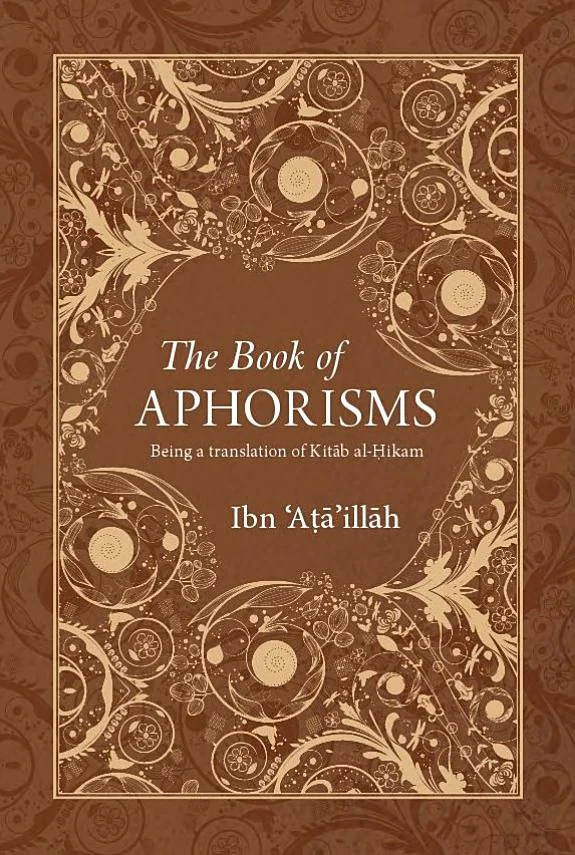
The Book of Aphorisms (Kitab al-Hikam)
 80
80

The Book of Aphorisms (Kitab al-Hikam)
Ibn 'Ata'illah Al-Iskandari’s Kitab al-Hikam offers a stark, unadorned glimpse into the heart of Sufi ethics. Its aphoristic structure, a series of potent pronouncements, bypasses elaborate exegesis to deliver spiritual truths with immediate force. The strength lies in its sheer conciseness; a single sentence can encapsulate a lifetime of contemplative practice. For instance, the repeated emphasis on recognizing one's own utter dependence on God while simultaneously acting with intention is a recurring theme that demands serious introspection. However, the book's very brevity can also be a limitation. Without extensive commentary, some aphorisms might remain opaque to the uninitiated, requiring prior familiarity with Islamic theological and mystical concepts. A reader might stumble on a phrase like "He who is not resigned to God’s decree is resigned to His annihilation" without a deeper understanding of tawhid. Still, for those prepared to engage with its terse wisdom, The Book of Aphorisms provides a potent spiritual discipline. It is a direct conduit to a specific spiritual tradition, offering potent, if sometimes challenging, guidance.
📝 Description
80
Ibn 'Ata'illah Al-Iskandari compiled The Book of Aphorisms in 13th-century Egypt.
The Book of Aphorisms, or Kitab al-Hikam, is a collection of spiritual maxims by Ibn 'Ata'illah Al-Iskandari. These short sayings offer guidance for spiritual development, drawing directly from the Qur'an and the Sunnah. They aim to help individuals cultivate a life of ethical conduct and God consciousness.
This work is for those seeking spiritual clarity and ethical living, particularly within Sufi thought and Islamic mysticism. It suits readers who prefer concise wisdom over lengthy theological arguments. Those interested in applying faith to daily life, understanding Divine Unity (tawhid), and developing inner states will find its teachings valuable.
The aphorisms address the believer's relationship with God's actions and decree, as well as the purification of the heart. They explore the balance between reliance on God and worldly action, the recognition of personal limitations, and how ego can hinder spiritual growth. The text focuses on inner cultivation and virtues as necessary for a meaningful spiritual life.
Written by a prominent figure in the 13th-century Shadhili Sufi order, The Book of Aphorisms emerged during a vibrant period of intellectual and spiritual activity in the Islamic world. It became a staple in Sufi education, offering a contemplative approach that contrasted with more legalistic or philosophical trends. Its widespread circulation across Islamic regions highlights its significance in the mystical tradition.
💡 Why Read This Book?
• Gain concise, actionable wisdom on the nature of tawhid, derived directly from the Qur'an and Sunnah, offering a unique perspective on Divine Unity not found in abstract philosophical discussions. • Develop a more profound ethical framework for daily conduct by engaging with Ibn 'Ata'illah Al-Iskandari's 13th-century guidance, which focuses on inner states and practical application of faith. • Experience a contemplative practice through the book's aphorisms, learning to extract deep meaning from short, potent statements, a method distinct from linear narrative theological texts.
⭐ Reader Reviews
Honest opinions from readers who have explored this book.
❓ Frequently Asked Questions
What is the primary focus of Ibn 'Ata'illah Al-Iskandari's Book of Aphorisms?
The book primarily serves as an ethical and spiritual guide, offering short sayings rooted in the Qur'an and Sunnah. It addresses topics like tawhid (Divine Unity), ethics, and daily conduct for those seeking a closer relationship with God.
When was The Book of Aphorisms first published in its modern edition?
The modern edition of The Book of Aphorisms (Kitab al-Hikam) by Ibn 'Ata'illah Al-Iskandari was first published on May 25, 2018.
What Islamic concepts are central to the teachings in Kitab al-Hikam?
Central concepts include tawhid (the oneness of God), recognizing God's actions in the world, the importance of inner states, and the practical application of faith in everyday life, all grounded in the Qur'an and Sunnah.
Who was Ibn 'Ata'illah Al-Iskandari?
Ibn 'Ata'illah Al-Iskandari was a prominent 13th-century Egyptian scholar and Sufi mystic, a key figure in the Shadhili order. He is known for his concise spiritual writings that have influenced Sufi thought for centuries.
Is The Book of Aphorisms a good starting point for understanding Sufism?
Yes, for readers who appreciate direct, aphoristic wisdom and are interested in practical ethics and contemplative spirituality within Islam, it serves as an accessible entry point to Sufi teachings.
How does Kitab al-Hikam differ from other Islamic spiritual texts?
It stands out for its aphoristic style, presenting profound spiritual meanings in brief sayings rather than extensive prose. This format emphasizes contemplation and direct spiritual realization over detailed argumentation.
🔮 Key Themes & Symbolism
Divine Unity (Tawhid)
The work persistently guides the reader toward an understanding of tawhid, not as a mere intellectual concept, but as a lived reality. It emphasizes recognizing God's singular role in all existence and action, urging the devotee to see Divine will behind all occurrences. This perspective aims to dissolve notions of independent agency and foster complete reliance on God, transforming the individual's perception of their own life and the world around them.
Ethical Conduct and Inner States
Central to the aphorisms is the cultivation of a pure heart and virtuous conduct. The text explores how external actions are intrinsically linked to internal disposition. It addresses the subtle pitfalls of the ego, the importance of sincerity (ikhlas), and the necessity of patience (sabr) and gratitude (shukr) in the face of Divine decree. The goal is to align one's outward behavior with an inner state of submission and awareness of God.
The Seeker's Path
Ibn 'Ata'illah Al-Iskandari offers practical counsel for those actively pursuing spiritual growth. The aphorisms function as spiritual signposts, informative the challenges and nuances of the path. They speak to the need for self-awareness, detachment from worldly distractions, and a steadfast focus on the Divine. The book encourages a disciplined approach to spiritual development, emphasizing consistency and mindful engagement with life's experiences.
Divine Providence and Human Action
A recurring theme is the intricate relationship between God's preordainment (qadar) and human free will or action. The aphorisms guide the reader to accept God's plan while still acting responsibly. They advocate for understanding that one's actions are ultimately enabled by God, fostering humility and preventing arrogance. This perspective seeks to reconcile apparent paradoxes, leading to a state of peaceful acceptance and active submission.
💬 Memorable Quotes
Direct passages from the work, attributed to the author.
“He who is not resigned to God’s decree is resigned to His annihilation.”
— This aphorism highlights the existential necessity of aligning one's will with God's. Resisting Divine decree, the saying suggests, leads to spiritual death and separation from the source of true existence.
“It is more of a sign of utter annihilation to find yourself seeking Him, than to find Him.”
— This points to the paradox of the spiritual journey: the seeker's own sense of self and effort can become an obstacle. True realization is found in losing the self in the Divine, not in the act of seeking itself.
“The greatest unveiling is the unveiling of His obedience in your actions.”
— This emphasizes that genuine spiritual insight is not about mystical visions, but about recognizing and embodying God's will in one's everyday deeds and choices.
“There is no movement, no stillness, save by His will.”
— This statement underscores the concept of tawhid, asserting that all actions, from the grandest to the most minute, originate from and are sustained by God's power and decree.
“Do not attach yourself to Him by means of the gifts He bestows upon you.”
— This warns against mistaking divine blessings or spiritual states for God Himself. The true object of devotion is God alone, not the experiences or favors He grants.
🌙 Esoteric Significance
Tradition
The Book of Aphorisms is firmly rooted in the Sufi tradition, specifically the Shadhili order, which emphasized practical spirituality, ethical conduct, and direct experience of God. It represents a distillation of Sufi wisdom, focusing on the inner journey and the cultivation of states of awareness and submission. While drawing from the broader Islamic mystical heritage, it offers a more accessible, aphoristic approach compared to the more speculative or philosophical works of some earlier Sufis.
Symbolism
While not overtly symbolic in a narrative sense, the aphorisms themselves act as symbols of profound spiritual truths. Concepts like 'annihilation' (fana') symbolize the dissolution of the ego in the face of Divine reality. 'Unveiling' (kashf) symbolizes spiritual insight, but here it is redefined as obedience in action, shifting the focus from ecstatic experience to ethical manifestation. The 'gifts' of God symbolize worldly blessings or spiritual states that can distract from the Divine Essence.
Modern Relevance
Contemporary thinkers and practitioners within various branches of Islamic spirituality continue to draw upon Ibn 'Ata'illah's work. His emphasis on ethical living, self-awareness, and the direct relationship with God appeals to modern Sufi study circles and individuals seeking practical spiritual guidance. Furthermore, scholars of Islamic mysticism frequently reference the Kitab al-Hikam for its clear articulation of core Sufi tenets and its historical significance within the Shadhili lineage.
👥 Who Should Read This Book
• Seekers of concise spiritual wisdom within the Islamic tradition, who appreciate aphoristic teachings that offer direct guidance on ethical conduct and the nature of Divine Unity (tawhid). • Students of Sufism, particularly those interested in the Shadhili order, looking for foundational texts that explain core principles through practical, contemplative statements. • Readers interested in comparative spirituality who wish to understand a key work of Islamic mysticism that bridges theological concepts with daily lived experience.
📜 Historical Context
Ibn 'Ata'illah Al-Iskandari (d. 1309 CE) was a key figure in 14th-century Mamluk Egypt, contributing significantly to the intellectual and spiritual landscape. As a leading proponent of the Shadhili Sufi order, he articulated its doctrines with clarity and conciseness. The Book of Aphorisms (Kitab al-Hikam) emerged during a period when Islamic scholarship was deeply engaged with jurisprudence, theology, and philosophy, including the rationalist Mu'tazilite school and the Ash'ari theological tradition. Al-Iskandari’s work offered a distinct path, focusing on direct spiritual experience and ethical conduct rooted in Sufi principles. His writings, particularly the Hikam, achieved widespread dissemination and enduring influence, becoming a foundational text for generations of Sufis and scholars, often studied alongside the works of figures like Ibn Arabi, though with a more concise and ethically focused emphasis.
📔 Journal Prompts
The nature of Divine Unity (tawhid) in your daily interactions.
Recognizing God's decree in moments of challenge.
The difference between seeking God and seeking His gifts.
Cultivating sincerity in your spiritual practice.
The concept of annihilation (fana') in the context of your ego.
🗂️ Glossary
Kitab al-Hikam
The Arabic title for The Book of Aphorisms, signifying a collection of wise sayings or maxims.
Tawhid
The foundational Islamic concept of the absolute oneness and uniqueness of God (Allah). It encompasses both theological assertion and a lived reality of recognizing God's singular sovereignty.
Sunnah
The practices, sayings, and silent approvals of the Prophet Muhammad. It serves as a primary source of guidance for Muslims, alongside the Qur'an.
Qur'an
The central religious text of Islam, believed by Muslims to be a revelation from God (Allah).
Fana'
An Arabic term in Sufism meaning 'annihilation' or 'dissolution,' referring to the extinction of the ego or lower self in the presence of God.
Sufism
The mystical or esoteric dimension of Islam, focused on direct experience of God and spiritual purification.
Shadhili Order
A major Sufi order founded by Abu al-Hasan al-Shadhili in the 13th century, known for its emphasis on spiritual struggle and ethical conduct within the world.
This book appears in 1 collection
🔮 Readers Also Liked
Browse all →









From the “Sufism” Collection
View all →






More Free Sacred Texts & Gnosticism Books
View all →