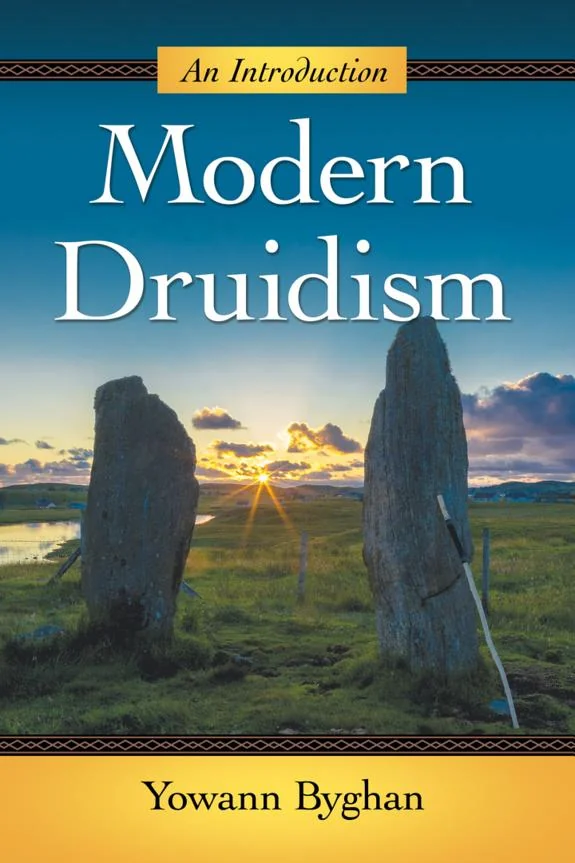
Modern Druidism
 81
81

Modern Druidism
Yowann Byghan’s "Modern Druidism" offers a commendable attempt to distill a complex, evolving spiritual path into a coherent introduction. The work’s strength lies in its clear delineation of modern Druidic practices and its inclusion of a gazetteer of sacred sites, providing tangible points of reference for the reader. However, the book occasionally struggles to fully convey the experiential depth that many practitioners associate with Druidry, sometimes presenting rituals and beliefs in a manner that feels more academic than devotional. A particularly effective section details the concept of the 'Threefold Law' as understood in contemporary Druid circles, illustrating the ethical underpinnings of the path. While comprehensive in its overview, it might leave those seeking a more visceral connection wanting more. "Modern Druidism" serves as a solid, informative primer, best utilized as a stepping stone rather than a definitive spiritual guide.
📝 Description
81
Yowann Byghan's 2023 book traces modern Druidism from ancient Celtic roots.
Yowann Byghan's "Modern Druidism" maps contemporary Druidic practice and belief systems. The book details how this path evolved from ancient Celtic societies in Britain and Ireland to its current form as a distinct Pagan religion and philosophy. It offers an introduction to Druidry's historical origins and its modern manifestations.
The work is for anyone curious about contemporary Paganism, especially those drawn to nature-based spiritualities and Celtic lore. It provides beginners with an overview of Druidic tenets, rituals, and historical context. Those already involved in spiritual or ecological movements will find its examination of this Western esoteric tradition valuable, as will scholars of comparative religion and folklore.
Byghan situates modern Druidism within its historical trajectory, noting its re-emergence and development through various revivals. The book distinguishes between historical speculation about ancient Druids and the practices of contemporary adherents. It also highlights the influence of intellectual movements from the 18th century onward that reshaped interest in ancient traditions.
This book engages with the resurgence of Druidry as a modern spiritual path. It acknowledges the reconstructionist efforts and debates surrounding the historical Druids, separating them from the lived experience of contemporary practitioners. Byghan traces the intellectual currents from the 18th century that spurred a rediscovery and adaptation of ancient Celtic traditions, placing modern Druidism within the broader landscape of Western esotericism and Pagan revivalism.
💡 Why Read This Book?
• Gain a foundational understanding of modern Druidic beliefs and practices, including its ethical framework and rituals, as explored in the book's detailed sections on morality and ceremony. • Understand the historical threads that led to the revival and modern interpretation of Druidism, specifically referencing the intellectual currents influencing its re-emergence. • Discover practical applications and community aspects of contemporary Druidry, including a gazetteer of sacred sites mentioned in the text, offering tangible points for further exploration.
⭐ Reader Reviews
Honest opinions from readers who have explored this book.
❓ Frequently Asked Questions
What are the core beliefs of Modern Druidism as presented in the book?
The book outlines core beliefs centered on reverence for nature, cyclical views of life and death, and the importance of community and ancestral ties, distinguishing these from historical reconstructions.
Does "Modern Druidism" cover the historical Druids or just contemporary practice?
It addresses both, providing historical context rooted in Celtic societies and then focusing on the evolution and practices of modern Druidism as a contemporary religion and philosophy.
What kind of rituals are described in Yowann Byghan's book?
The work describes various practices, rituals, and ceremonies common in modern Druidism, emphasizing their connection to nature, seasons, and community.
Is there information on modern Druid groups in the book?
Yes, "Modern Druidism" includes information about contemporary Druid groups and organizations, aiding readers in finding community or learning more about existing structures.
What makes this book a good introduction to the subject?
Its comprehensive overview, clear explanations of mythology, history, beliefs, and practices, combined with practical elements like a gazetteer, make it an accessible starting point.
Who were the key figures or movements that influenced modern Druidism's revival?
The book explores the historical revivals and scholarly interests that shaped modern Druidism, acknowledging intellectual movements from the 18th century onwards.
🔮 Key Themes & Symbolism
Nature Reverence
Central to modern Druidism is a profound respect for the natural world, viewing it as sacred and interconnected. The book details how this manifests in rituals, ethical considerations, and the recognition of sacred sites, aligning with a broader ecological consciousness that emerged prominently in the late 20th century.
Celtic Mythology and History
Byghan studies the mythological narratives and historical context of ancient Celtic tribal societies, which form the bedrock of modern Druidic identity. This includes exploring key figures and the reconstructed history that informs contemporary spiritual practice, distinguishing between scholarly understanding and spiritual interpretation.
Ritual and Ceremony
The work provides practical insights into the ceremonies and rituals practiced by modern Druids. These often involve seasonal celebrations, honouring ancestors, and connecting with the land, offering a glimpse into the lived experience of this evolving spiritual path.
Moral and Philosophical Systems
Beyond ritual, the book examines the moral and philosophical underpinnings of modern Druidism. It discusses the ethical frameworks that guide practitioners, emphasizing concepts like balance, community responsibility, and personal growth within a natural context.
💬 Memorable Quotes
Direct passages from the work, attributed to the author.
“Druidism's roots are in the Celtic tribal societies of ancient Britain and Ireland.”
— This foundational statement anchors the modern practice firmly in a specific ancestral and geographical lineage, differentiating it from more universalistic spiritual movements.
“This introduction to modern Druidism provides a comprehensive overview of today's Pagan religion and philosophy.”
— This highlights the book's purpose as an accessible guide, aiming to explain contemporary Druidry for a wider audience interested in Paganism.
“The author covers Druidism's mythology, history and important figures.”
— This indicates the book's structured approach, ensuring that readers gain an understanding of the narrative and biographical elements that shape the tradition.
“A gazetteer of important sacred sites is included.”
— This points to a practical, geographically-focused component of the book, offering tangible locations significant to Druidic practice and heritage.
“Information about modern Druid groups and organizations is also provided.”
— This suggests the book serves not only as an informational resource but also as a potential gateway for individuals seeking to connect with the contemporary Druid community.
🌙 Esoteric Significance
Tradition
While "Modern Druidism" focuses on a Pagan path, its emphasis on nature, wisdom, and inner development aligns with broader Western esoteric currents. It shares with Hermeticism and other traditions a concern for understanding the divine through the natural world and personal gnosis, though its specific lineage is rooted in Celtic reconstructionism rather than classical Hermetic or Kabbalistic systems.
Symbolism
Key symbols explored include the Ogham, the ancient Celtic alphabet often used for divination and magical purposes, representing trees and their associated wisdom. The concept of the 'Threefold Law' also functions symbolically, representing cycles of cause and effect and moral balance. Sacred groves and natural landmarks serve as potent symbols of the divine immanence in the world.
Modern Relevance
Contemporary thinkers and practitioners in eco-spirituality, deep ecology, and various Neopagan paths draw inspiration from the principles outlined in works like Byghan's. It provides a framework for understanding nature-based spirituality that appeals to modern concerns about environmentalism and the search for meaning outside traditional religious structures.
👥 Who Should Read This Book
['• Aspiring Druids seeking a structured introduction to the core tenets, history, and practices of contemporary Druidry.', '• Students of comparative religion and folklore interested in understanding modern Pagan movements and their historical antecedents.', '• Individuals drawn to nature-based spiritualities who wish to explore a Western esoteric tradition with deep ecological connections.']
📜 Historical Context
Published in 2018, "Modern Druidism" emerges within a landscape significantly shaped by the Neopagan revivals of the late 20th century. The intellectual currents of the time, influenced by scholars like Mircea Eliade and the broader New Age movement, fostered renewed interest in ancient nature-based traditions. Byghan's work follows in the wake of earlier, seminal texts that sought to reconstruct and revitalize Druidic practices, building upon the foundations laid by figures such as Iolo Morganwg in the 18th century and later organizations like the Order of Bards, Ovates & Druids. The reception of such works often navigates between academic scrutiny regarding historical accuracy and the lived spiritual needs of practitioners. Unlike purely academic treatises, Byghan's book aims for accessibility for contemporary adherents and inquirers, reflecting a trend towards more grounded, less esoteric interpretations compared to some earlier occult revivals.
📔 Journal Prompts
The concept of reverence for nature as presented in Byghan's work.
Druidic mythology and its relation to personal spiritual narratives.
The ethical implications of the Threefold Law in daily life.
Ancient Celtic societies and their influence on modern Druidic community structures.
The significance of sacred sites within the Druidic worldview.
🗂️ Glossary
Druidism
A contemporary Pagan religion and philosophy inspired by the ancient Celtic peoples of Britain and Ireland, focusing on nature reverence, wisdom, and spiritual practice.
Paganism
A broad term for contemporary nature-based or indigenous religions that typically honour polytheistic or animistic beliefs and often draw inspiration from pre-Christian European traditions.
Celtic Societies
The ancient tribal societies of peoples who spoke Celtic languages, inhabiting parts of Europe, including Britain and Ireland, from the Iron Age onwards.
Mythology
The collection of myths, legends, and stories that form the narrative foundation of a culture or religion, providing explanations for the world and human existence.
Rituals
Formalized sequences of actions or ceremonies performed in a specific order, often for religious or spiritual purposes, such as marking seasons or life transitions.
Gazetteer
A geographical dictionary or directory, typically containing place names and descriptions, used here to list important sacred sites.
Ogham
An ancient Celtic alphabet, consisting of a series of strokes and lines, often associated with trees and used for inscriptions and divination in Druidic practices.







![Brahmandic Gyanum [Universal Knowledge]](/img/thumb/brahmandic-gyanum-universal-knowledge-vashisht-vaid-346050.webp)