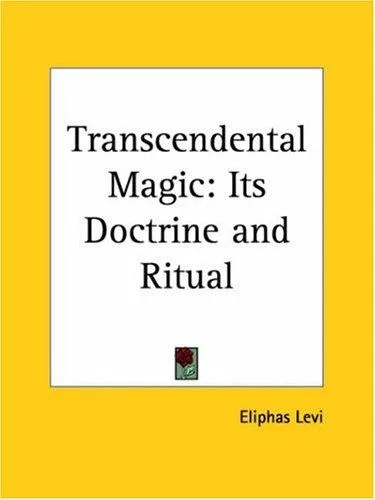
Transcendental Magic Its Doctrine and Ritual by Eliphas Levi
 75
75

Transcendental Magic Its Doctrine and Ritual by Eliphas Levi


Aurelia Blackwood (Occult Philosophy Critic) — Eliphas Levi's "Transcendental Magic" remains an unparalleled cornerstone of occult studies, offering a lucid yet profound exposition of magical theory and practice. Levi masterfully synthesizes Kabbalah, alchemy, and hermeticism, presenting a cohesive doctrine that transcends mere ritual. His ability to distill complex metaphysical concepts into accessible language is a testament to his genius. This work is essential for any serious practitioner or scholar seeking to grasp the foundational principles of Western esotericism. It is a challenging but vital text that rewards deep contemplation and diligent study, illuminating the path for the dedicated seeker of hidden knowledge.
📝 Description
75
Embark on a profound journey into the heart of occult philosophy with Eliphas Levi's seminal work, "Transcendental Magic: Its Doctrine and Ritual." This foundational text, originally penned in French as "Dogme et Rituel de la Haute Magie," unveils the intricate tapestry of Western esotericism, revealing hidden universal truths accessible through rigorous study and dedicated practice. Levi, a master of symbolic language, guides the reader through the arcane doctrines that underpin magic, from the Kabbalistic Tree of Life to the alchemical transmutation of the self. He elucidates the sacred rites and the profound philosophical underpinnings that empower the magician to effect change not only in the external world but, more importantly, within the inner cosmos of the soul. This book is an indispensable compendium for those who seek to understand the underlying principles of creation, consciousness, and the potent forces that govern existence. It is a challenging yet immensely rewarding exploration for the serious student of the occult, offering keys to unlocking forbidden knowledge and achieving spiritual liberation. The atmosphere is one of profound mystery, intellectual rigor, and timeless wisdom.
✍️ Author
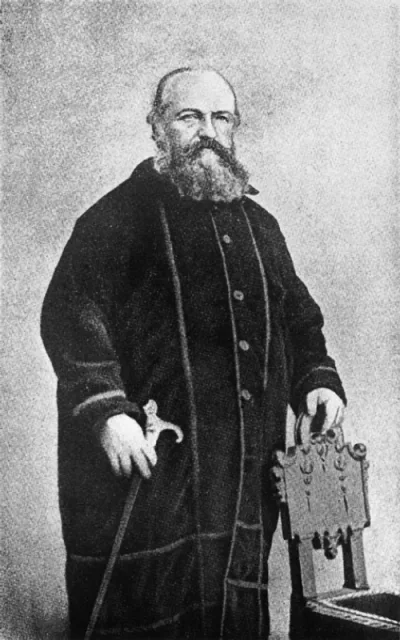
Eliphas Levi
Éliphas Lévi Zahed, born Alphonse Louis Constant (8 February 1810 – 31 May 1875), was a French esotericist, poet, and writer. Initially pursuing an ecclesiastical career in the Catholic Church, he abandoned the priesthood in his mid-twenties and became a ce…
💡 Why Read This Book?
This book is essential for understanding the historical and philosophical roots of Western magic. It provides a comprehensive framework for occult study, bridging ancient wisdom with practical application. Ideal for seekers of esoteric knowledge, occult scholars, and practitioners looking to deepen their theoretical understanding and spiritual practice.
⭐ Reader Reviews
Honest opinions from readers who have explored this book.
❓ Frequently Asked Questions
What is the primary focus of 'Transcendental Magic'?
The book delves into the doctrines and rituals of high magic, exploring the philosophical, symbolic, and practical aspects of occultism as understood within Western esoteric traditions.
Who was Eliphas Levi and what is his significance?
Eliphas Levi (Alphonse Louis Constant) was a highly influential French occultist and writer who revitalized interest in magic and esotericism in the 19th century, synthesizing various traditions into a coherent system.
Is this book suitable for beginners in occultism?
While comprehensive, the depth and complexity of the material may be challenging for absolute beginners. It is best approached by those with a foundational interest in philosophy or mysticism.
What role does symbolism play in the book?
Symbolism is paramount. Levi uses symbols from Kabbalah, Tarot, alchemy, and ancient mythologies to represent profound metaphysical concepts and magical principles.
What is the relationship between 'Doctrine' and 'Ritual' in the title?
The 'Doctrine' refers to the underlying theoretical principles and philosophical understanding of magic, while 'Ritual' pertains to the practical application, ceremonies, and methods used to enact magical will.
🔮 Key Themes & Symbolism
The Kabbalistic Synthesis
Levi's work is deeply rooted in Kabbalistic philosophy, particularly the Tree of Life. He meticulously decodes its seventy-two paths and ten Sephiroth, illustrating how they represent the divine emanations and the structure of the cosmos. This section reveals the interconnectedness of all things and provides a profound map for spiritual ascent, demonstrating how each element of existence can be understood through this ancient Hebrew mystical system. The book emphasizes that true magic is not about external manipulation but an internal alignment with these divine principles.
The Doctrine of Correspondences
A cornerstone of occult thought, the Doctrine of Correspondences posits that 'as above, so below.' Levi elaborates on how macrocosmic principles are reflected in the microcosm of humanity and the material world. He explores the intricate web of connections between planets, elements, divine names, and human faculties. Understanding these correspondences is presented as the key to unlocking the secrets of nature and influencing reality through sympathetic magic. This theme underscores the unity of creation and the potential for the adept to harmonize with universal forces.
The Alchemical Transformation of the Self
Beyond external magical acts, Levi stresses the importance of inner alchemy. The 'Great Work' is not merely the transmutation of base metals into gold, but the purification and spiritual elevation of the magician's own soul. He details how magical practices are designed to refine the practitioner's will, intellect, and emotional nature, leading to self-mastery and union with the divine. This transformative process is presented as the ultimate goal of transcendental magic, enabling the individual to realize their full spiritual potential and achieve gnosis.
💬 Memorable Quotes
“The key to everything is the key to yourself.”
— This quote highlights Levi's emphasis on inner work. True mastery in magic stems from self-knowledge, discipline, and the ability to control one's own mind and will before attempting to influence the external world.
“Magic is the science of the secrets of nature.”
— Levi defines magic not as superstition, but as a profound scientific inquiry into the hidden laws and forces governing the universe, accessible through intuition and esoteric study.
“The Great Work is the transformation of the adept.”
— This succinctly captures the alchemical and spiritual goal of magic: not just external manipulation, but the profound inner purification and evolution of the practitioner's consciousness.
“To know, to will, to dare, and to keep silent.”
— These are the four cardinal virtues of the magician, representing the essential qualities needed for successful and responsible magical practice: knowledge, determination, courage, and discretion.
“Symbolism is the language of the divine.”
— Levi believed that symbols are not mere representations but direct conduits to higher truths, offering a universal language that bypasses the limitations of ordinary speech and intellect.
🌙 Esoteric Significance
Tradition
Levi's work is a profound synthesis of Western esoteric traditions, primarily drawing from Kabbalah, Hermeticism, Gnosticism, and alchemy. He aimed to present a unified system of magic, revealing the common threads that bind these ancient streams of wisdom. His doctrine emphasizes the divine spark within humanity and the potential for spiritual realization through understanding and harmonizing with universal laws.
Symbolism
The book is a veritable lexicon of esoteric symbols. Levi meticulously interprets the imagery of the Tarot, the Tree of Life, alchemical processes, and ancient deities. These symbols are not mere decorations but represent complex metaphysical concepts, psychological states, and stages of spiritual development. Understanding this rich symbolic language is presented as crucial for deciphering the hidden meanings of existence and for effective magical practice.
Modern Relevance
Despite its 19th-century origins, "Transcendental Magic" remains remarkably relevant. Its exploration of consciousness, symbolism, and the power of will resonates with contemporary interest in psychology, mindfulness, and personal development. The book offers a timeless framework for understanding the human psyche and its potential for transformation, making it an enduring guide for spiritual seekers and practitioners across diverse paths.
👥 Who Should Read This Book
This profound text is an essential read for anyone serious about understanding the foundations of Western esotericism. **Occult scholars** will find invaluable historical context and a comprehensive theoretical framework. **Spiritual seekers** and those on a path of self-discovery will benefit from its emphasis on inner transformation and the interconnectedness of all things. **Practitioners of magic and mysticism** will discover a rich source of doctrine, symbolism, and ritualistic principles to deepen their practice. While challenging, **dedicated beginners** with a strong philosophical inclination will find it a rewarding, albeit demanding, introduction to the 'High Magic'.
📜 Historical Context
Published in 1855, "Transcendental Magic" emerged during a period of intense spiritual and intellectual ferment in Victorian England. The rise of spiritualism, mesmerism, and renewed interest in ancient philosophies created fertile ground for Levi's synthesis of occult traditions. His work offered a sophisticated, intellectual framework for magic, contrasting with more simplistic or sensationalist interpretations. It coincided with a broader European fascination with esotericism, influenced by movements like Romanticism and the burgeoning study of comparative religion and mythology. Levi's writings provided a coherent and influential system that would profoundly shape the trajectory of occultism in the late 19th and 20th centuries, impacting figures and organizations from the Hermetic Order of the Golden Dawn to Aleister Crowley.
📔 Journal Prompts
Reflect on the concept of 'correspondences' in your own life. Where do you see the 'as above, so below' principle manifested?
Consider the 'four cardinal virtues of the magician.' How can you cultivate 'to know, to will, to dare, and to keep silent' in your daily life?
Levi emphasizes the alchemical transformation of the self. What aspects of yourself do you feel need refinement or transmutation?
Analyze a symbol from nature or culture that you find particularly potent. What deeper meaning might it represent?
How does the idea of 'magic as the science of secrets' challenge your current understanding of science and spirituality?
🗂️ Glossary
Kabbalah
A complex system of Jewish mysticism that explores the divine nature, creation, and the relationship between God and humanity, often represented through the Tree of Life diagram.
Alchemy
An ancient philosophical and proto-scientific tradition focused on the transformation of matter, often interpreted as a metaphor for spiritual purification and the attainment of enlightenment.
Hermeticism
A philosophical and religious tradition based on the purported teachings of Hermes Trismegistus, emphasizing esoteric knowledge, the unity of all things, and the power of the mind.
Gnosticism
A diverse set of religious ideas and systems that arose in the early Christian era, emphasizing salvation through secret knowledge (gnosis) and the belief in a divine spark within humans.
Sephiroth
In Kabbalah, the ten divine emanations or attributes through which God is said to have created the universe and through which humans can understand the divine.