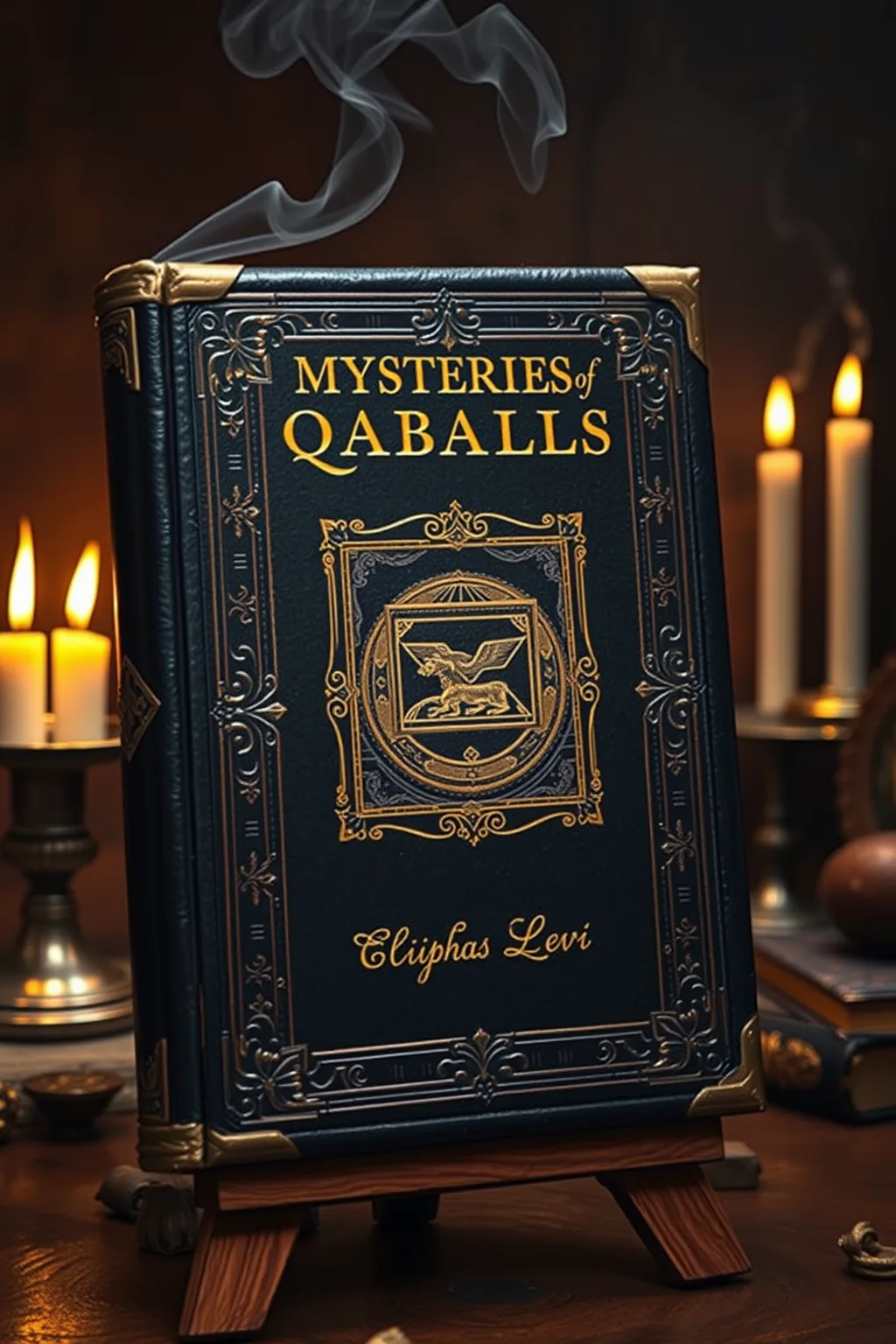
Mysteries of Qabalah, or the Occult Agreement of the Two Testaments (Studies in Hermetic Tradition, Vol 2)
 61
61

Mysteries of Qabalah, or the Occult Agreement of the Two Testaments (Studies in Hermetic Tradition, Vol 2)



Celeste Moreau (Divination & Symbolism Reviewer) — Eliphas Levi's 'Mysteries of Qabalah' is an indispensable key for unlocking the esoteric dimensions of both Jewish and Western mystical traditions. Levi's unparalleled ability to synthesize complex Kabbalistic principles with Hermetic philosophy and Christian symbolism creates a rich, interconnected worldview. He masterfully elucidates the Tree of Life, transforming abstract concepts into vibrant, operative principles. This volume is particularly potent for those who have grappled with the perceived dichotomy between different spiritual paths, as Levi demonstrates their underlying, harmonious unity. It is an essential text for serious students of the occult and anyone seeking a deeper, more integrated understanding of divine revelation and cosmic order. A truly illuminating and transformative read.
📝 Description
61
Eliphas Levi's 1861 work argues Qabalah bridges Jewish and Christian esoteric thought.
In 'Mysteries of Qabalah, or the Occult Agreement of the Two Testaments,' published in 1861, Eliphas Levi examines the Qabalistic system. He contends that its principles act as a key to understanding both ancient Hebrew mysticism and the hidden spiritual currents within Christianity. Levi, known for his work on occult symbolism, breaks down core Qabalistic elements such as the Tree of Life, the Sephiroth, and divine names. He presents these not as mere abstract ideas, but as active powers influencing the universe and individual consciousness.
The book aims to reveal the connections between the spiritual and material worlds, and how sacred texts relate to personal transformation. Levi's writing offers insights for those interested in spiritual knowledge, seeking to unify different esoteric traditions. It discusses the philosophical basis of a wisdom system that has influenced thinkers for centuries, suggesting a path toward self-understanding and spiritual connection.
This book is part of the Hermetic Tradition series, reflecting the 19th-century European revival of interest in Western esotericism. Levi was a significant figure in this period, synthesizing various occult traditions including Qabalah, Hermeticism, and ceremonial magic. His work often sought to find common threads between different religious and mystical systems, viewing Qabalah as a universal language of symbolism. This volume specifically attempts to reconcile Qabalistic concepts with Christian symbolism, a common practice among esotericists of his time.
💡 Why Read This Book?
Unravel the hidden connections between ancient Hebrew mysticism and Western esoteric traditions. 'Mysteries of Qabalah' offers profound insights into the Tree of Life, divine symbolism, and the occult agreement between spiritual texts. Ideal for seekers of universal wisdom, scholars of mysticism, and practitioners aiming to deepen their understanding of consciousness and the cosmos. Discover the foundational language of the occult.
⭐ Reader Reviews
Honest opinions from readers who have explored this book.
❓ Frequently Asked Questions
What is the primary focus of 'Mysteries of Qabalah'?
The book meticulously explores Kabbalistic principles, particularly the Tree of Life and its symbolism, as the occult foundation for understanding both Jewish mysticism and Western esoteric traditions, including Christianity.
Is this book suitable for beginners in Kabbalah?
While dense with esoteric knowledge, Levi's work is presented as a guide. Beginners may find it challenging but rewarding with dedicated study and perhaps supplementary resources.
What is the 'Occult Agreement of the Two Testaments'?
It refers to Levi's thesis that the esoteric truths encoded in Kabbalah are also present, albeit in veiled form, within the Christian scriptures, highlighting a hidden unity of spiritual wisdom.
What role does Eliphas Levi play in occultism?
Eliphas Levi is considered one of the most influential figures in 19th-century occult revival, synthesizing various esoteric traditions and popularizing Kabbalah, Tarot, and ceremonial magic.
Does this book require prior knowledge of Hebrew?
While knowledge of Hebrew enhances understanding, Levi's explanations are designed to be accessible through his symbolic interpretations and the context provided within the book.
🔮 Key Themes & Symbolism
The Tree of Life as a Cosmic Blueprint
This section examines the Sephiroth and their interconnections, presenting the Kabbalistic Tree of Life not merely as a diagram, but as a dynamic, living map of creation. Levi elucidates how each Sephirah embodies divine attributes and stages of manifestation, from the unknowable Ain Soph to the material world. The intricate relationships between the Sephiroth are explored as pathways for spiritual ascent and understanding the underlying order of the universe. This theme emphasizes the Tree as a tool for both cosmological comprehension and personal transformation, revealing the divine architecture that governs existence and the human psyche.
The Hermetic Unity of Spiritual Traditions
Levi masterfully demonstrates the 'Occult Agreement of the Two Testaments,' arguing for a profound, underlying unity between the esoteric interpretations of Jewish Kabbalah and Christian Gnosticism. He reveals how the same archetypal energies and divine principles are expressed through different symbolic languages across cultures and epochs. This theme highlights the universality of spiritual truths and the potential for cross-pollination between seemingly disparate mystical paths. It encourages readers to see beyond dogmatic divisions and recognize the shared source of divine revelation, fostering a holistic approach to spiritual inquiry and practice.
Symbolism as the Language of the Divine
Central to Levi's work is the concept of symbolism as the primary means through which divine knowledge is conveyed and understood. He dissects the rich symbolic vocabulary of Kabbalah – including Hebrew letters, divine names, and archetypal imagery – revealing their profound metaphysical meanings. This theme emphasizes that true comprehension lies not in literal interpretation, but in grasping the symbolic resonance that connects the material and spiritual realms. Levi posits that by mastering this symbolic language, one can unlock the hidden wisdom within sacred texts and the universe itself, facilitating direct communion with the divine.
💬 Memorable Quotes
Direct passages from the work, attributed to the author.
“Know thyself, and thou shalt know the universe and the gods.”
— A classic maxim emphasizing the microcosmic-macrocosmic correlation. It suggests that self-knowledge is the ultimate key to understanding all of existence, including divine principles.
“Qabalah is the key of science and the science of the keys.”
— This highlights the foundational and universal nature of Kabbalah. It is presented as both the underlying structure of all knowledge (science) and the method for unlocking deeper truths.
“The true magician is he who knows how to love.”
— This profound statement shifts the focus of magic from mere ritual to the power of divine love as the ultimate creative and transformative force.
“All is written in the book of nature, if you know how to read.”
— This points to the universe as a sacred text teeming with hidden meanings, accessible to those who possess the wisdom and discernment to interpret its symbolic language.
💡 Key Ideas
Editorial paraphrase of the work's core concepts — not direct quotes.
The key to the great work is the union of opposites.
This quote captures the core Hermetic principle of duality and its resolution. It speaks to the alchemical process of integrating seemingly contradictory forces within oneself and the cosmos to achieve spiritual perfection.
🌙 Esoteric Significance
Tradition
This book is a central to Western Esotericism, specifically within the Hermetic and Kabbalistic traditions. Levi masterfully synthesizes Kabbalistic concepts, particularly the Tree of Life, with Hermetic philosophy, alchemy, and even Christian mystical symbolism. It serves as a bridge, demonstrating how ancient Jewish mysticism provides a universal framework for understanding the divine emanations and the structure of reality, which can be applied across various spiritual paths.
Symbolism
Levi meticulously decodes the rich symbolic language of Kabbalah, focusing on the Tree of Life, the Sephiroth, divine names, and Hebrew letters. He presents these symbols not as mere intellectual constructs, but as dynamic keys to understanding cosmic forces, stages of consciousness, and the alchemical transformation of the soul. The text emphasizes the interconnectedness of all symbols and their power to unlock hidden truths about creation, the human condition, and the divine.
Modern Relevance
In an age often characterized by fragmentation and spiritual searching, Levi's 'Mysteries of Qabalah' offers a profound and unifying perspective. It provides a timeless blueprint for understanding the underlying order of the universe and the human psyche, relevant to contemporary seekers of meaning, consciousness explorers, and those interested in the intersection of spirituality and philosophy. Its emphasis on symbolic interpretation and the unity of wisdom traditions continues to resonate, offering a path to deeper self-awareness and a more integrated spiritual life.
👥 Who Should Read This Book
This profound work is an essential text for serious students of Western Esotericism, particularly those drawn to Kabbalah and Hermetic philosophy. Scholars of comparative religion and mysticism will find Levi's synthesis clear. For the dedicated seeker, it offers a challenging yet rewarding exploration into the hidden architecture of the cosmos and the soul. Practitioners of occult arts and meditation will discover invaluable insights for deepening their understanding of divine principles and symbolic correspondences. While it demands focused study, the rewards in terms of expanded consciousness and spiritual insight are immense.
📜 Historical Context
Published in the mid-19th century, 'Mysteries of Qabalah' emerged during a vibrant period of occult revival in Europe. Eliphas Levi was a central figure, synthesizing medieval Kabbalah, Hermeticism, Gnosticism, and ceremonial magic into a cohesive esoteric system. This era saw a resurgence of interest in ancient wisdom traditions, driven by dissatisfaction with purely materialistic philosophies and a yearning for spiritual depth. Levi's work provided a sophisticated framework for understanding these traditions, influencing subsequent generations of occultists, mystics, and scholars. His ability to bridge seemingly disparate religious and philosophical currents, particularly the 'agreement' between Jewish and Christian esoteric thought, was revolutionary and provided a unifying vision for the burgeoning occult movement.
📔 Journal Prompts
How does the concept of the Tree of Life resonate with your personal understanding of spiritual growth and manifestation?
Reflect on a time when you experienced the 'union of opposites' in your life. What was the outcome?
Consider a symbol from nature or your daily life. What deeper, hidden meaning might it hold?
In what ways do you see common threads between different spiritual or philosophical paths you are familiar with?
How can understanding divine names or archetypal forces influence your approach to personal challenges or creative endeavors?
🗂️ Glossary
Qabalah
An esoteric system of Jewish mysticism that seeks to understand the nature of God and the universe through symbolic interpretation of scripture and contemplation of the divine emanations, often represented by the Tree of Life.
Sephiroth
The ten divine emanations or attributes of God in Kabbalistic cosmology, arranged on the Tree of Life, representing stages of creation and divine influence from the spiritual to the material realm.
Tree of Life (Etz Chaim)
A central diagram in Kabbalah, depicting the ten Sephiroth and their interconnections, serving as a map of creation, a tool for spiritual ascent, and a representation of the divine order.
Ain Soph
In Kabbalah, the 'Infinite' or 'Limitless'; the unmanifest, unknowable aspect of God beyond all comprehension or description, from which all emanations originate.
Hermeticism
A philosophical and religious tradition based on the purported teachings of Hermes Trismegistus, emphasizing the interconnectedness of the cosmos, the power of divine knowledge, and the principle of 'as above, so below'.
This book appears in 1 collection
🔮 Readers Also Liked
Browse all →









More by Eliphas Levi
All books →




From the “Kabbalah” Collection
View all →






More Free Kabbalah & Jewish Mysticism Books
View all →