Transcendental Magic
 69
69

Transcendental Magic


Silas Hawthorne (Hermetic Studies Editor) — Eliphas Lévi's 'Transcendental Magic' remains an indispensable cornerstone of Western esotericism. Its enduring power lies in its comprehensive synthesis of occult doctrines, presented with a clarity that belies their complexity. Lévi’s exploration of the astral light, the divine names, and the principles of magical operation offers profound insights for serious students of Hermeticism. This work is essential for anyone seeking to move beyond superficial occultism and engage with the philosophical underpinnings of magical practice. Its strength lies in its systematic approach, providing a robust theoretical framework for aspiring practitioners and seasoned scholars alike.
📝 Description
69
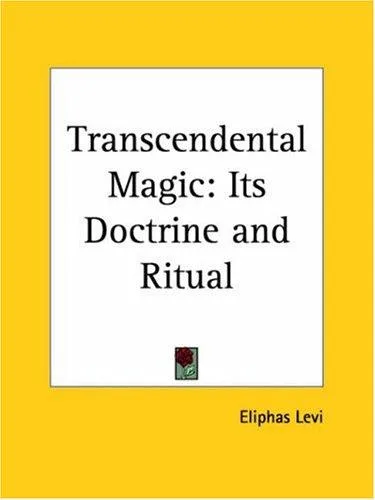
Eliphas Lévi published 'Transcendental Magic, Its Doctrine and Ritual' in 1856, outlining a system of magic.
First published in 1856, Eliphas Lévi's 'Transcendental Magic, Its Doctrine and Ritual' presents a systematic approach to occult philosophy. Lévi connects various esoteric traditions, including Hermeticism, Kabbalah, and Gnosticism, to explain the underlying principles he believed govern the universe. He details the function of ritual, the concept of the astral light, and the process of personal transformation through alchemy.
The book addresses how symbolic language and arcane knowledge reveal the efficacy of magical practices. Lévi proposes a framework for spiritual development and the attainment of magical abilities. It is aimed at those interested in the relationship between the individual and the cosmos, and the potential for realizing an inner divine quality.
This work emerged from the mid-19th century's renewed interest in occultism and esotericism. Lévi synthesized elements from historical magical traditions, seeking to create a coherent doctrine. He drew heavily on the Hermetic tradition, Kabbalistic texts, and various mystical philosophies to build his system. The book reflects a broader trend of the period, where scholars and practitioners attempted to revive and systematize ancient magical and religious knowledge, often interpreting it through a lens of spiritual philosophy.
💡 Why Read This Book?
Uncover the lost keys to spiritual sovereignty and cosmic understanding. 'Transcendental Magic' offers a systematic exploration of occult principles, revealing the interconnectedness of all things and the latent potential within. Ideal for seekers of hidden knowledge, students of comparative religion, and practitioners aiming to deepen their ritualistic and meditative practices. Engage with a foundational text that illuminates the path to self-mastery and esoteric enlightenment.
⭐ Reader Reviews
Honest opinions from readers who have explored this book.
❓ Frequently Asked Questions
What is the core philosophy of 'Transcendental Magic'?
The core philosophy posits that the universe is governed by an animating force, the Astral Light, and that through understanding and manipulating its principles via magic and ritual, one can achieve spiritual enlightenment and influence the material world.
Who was Eliphas Lévi?
Eliphas Lévi (Alphonse Louis Constant) was a 19th-century French occultist, ceremonial magician, and author, considered one of the most influential figures in the revival of magic during his era.
What is the significance of the Tarot in this book?
Lévi integrates the Tarot extensively, viewing its cards as symbolic representations of Kabbalistic concepts, divine emanations, and keys to understanding the fundamental principles of the universe and magic.
Is this book suitable for beginners?
While comprehensive, the book's density may require dedicated study. Beginners are advised to approach it with patience and perhaps supplementary guides to grasp the intricate symbolism and philosophical concepts.
What is the 'Astral Light' as described by Lévi?
The Astral Light, or Lumen, is described as a universal medium, a fluid and luminous substance that pervades all existence, acting as the vehicle for thought, force, and spirit, and is the fundamental agent of magic.
🔮 Key Themes & Symbolism
The Astral Light: The Universal Medium
Lévi posits the existence of the Astral Light as the primordial, luminous, and energetic substance that permeates all creation. This invisible ocean of force is the conduit for thought, will, and spirit, acting as the fundamental agent in all magical operations. Understanding its nature and how to manipulate it is paramount to achieving transcendental effects. The book meticulously details its dual nature – both divine and terrestrial – and its a central role in the Great Work of spiritual transformation and the manifestation of will.
Kabbalistic Correspondences and Symbolism
Central to Lévi's doctrine is the intricate collection of Kabbalistic symbolism, particularly the Tree of Life. He meticulously maps correspondences between divine names, Hebrew letters, planets, elements, and Tarot cards, revealing a cosmic order and a language of the divine. This section elucidates how these symbolic structures provide a framework for understanding the universe's hidden architecture and offer pathways for spiritual ascent and the invocation of higher forces. The adept learns to read the universe as a text written in symbols.
The Doctrine and Ritual of Magic
Lévi distinguishes between the theoretical understanding of magic (doctrine) and its practical application (ritual). He asserts that true magic is not superstition but a science based on immutable laws, a means to align one's will with divine principles. The book details specific rituals, incantations, and the use of magical tools, emphasizing the importance of mental discipline, focused intention, and the proper visualization of desired outcomes. It is a guide to harnessing personal power through spiritual discipline and intelligent application of occult knowledge.
💬 Memorable Quotes
Direct passages from the work, attributed to the author.
“The doctrine of the Kabbalah is the science of the divine names.”
— This highlights the profound connection Lévi makes between the Kabbalistic system and the power of divine nomenclature, suggesting that true understanding of God and creation lies within the sacred names.
“The great work is the transformation of the self.”
— This succinctly captures the essence of alchemy and esoteric magic as Lévi presents it – an inner process of spiritual purification and evolution rather than external manipulation.
“Everything is in God, and God is in everything.”
— A pantheistic or panentheistic statement emphasizing the immanence of the divine within all aspects of existence, a central to many mystical traditions that Lévi draws upon.
“Magic is the true science of the natural laws of the supernatural.”
— This defines magic as a rational discipline that studies and applies the principles governing realities beyond ordinary sensory perception, bridging the gap between the mundane and the divine.
💡 Key Ideas
Editorial paraphrase of the work's core concepts — not direct quotes.
To be a sorcerer is to be a philosopher.
This quote underscores Lévi's view that magic is not mere trickery but a deeply philosophical pursuit, requiring rigorous intellectual understanding and a profound grasp of universal laws.
🌙 Esoteric Significance
Tradition
Lévi's work is deeply rooted in the Hermetic and Kabbalistic traditions, drawing heavily from ancient Egyptian mysticism, Gnosticism, and Neoplatonic philosophy. He synthesizes these disparate threads into a unified doctrine of magic, presenting it as a universal science applicable to spiritual, intellectual, and even physical realms.
Symbolism
The book is a rich compendium of esoteric symbolism, with the Tarot, the Tree of Life, divine names, and alchemical imagery playing central roles. Lévi meticulously deciphers these symbols, revealing their interconnectedness and their function as keys to understanding the divine order, the human psyche, and the mechanisms of magical influence.
Modern Relevance
Despite its 19th-century origins, 'Transcendental Magic' remains remarkably relevant. Its exploration of consciousness, intention, and the power of symbolic language continues to inform modern spiritual practices, psychological inquiry, and the study of comparative religion. Lévi's emphasis on personal transformation and the interconnectedness of all things speaks to contemporary seekers of meaning and purpose.
👥 Who Should Read This Book
This key work is essential for serious students of Western Esotericism, particularly those interested in Hermeticism, Kabbalah, and ceremonial magic. Beginners seeking a foundational understanding of occult philosophy will find it a challenging yet rewarding introduction, provided they approach it with dedication. Scholars of religion and mysticism will discover a comprehensive synthesis of ancient traditions. Practitioners of magic and ritual will gain invaluable insights into the underlying principles and theoretical frameworks that govern their art. Ultimately, 'Transcendental Magic' is for the dedicated seeker who wishes to explore the profound depths of consciousness and the hidden forces of the universe.
📜 Historical Context
Published in the mid-19th century, 'Transcendental Magic' emerged during a period of intense spiritual and intellectual ferment in Europe. The rise of scientific materialism had spurred a counter-movement, a renewed interest in mysticism, occultism, and esoteric traditions that had been largely suppressed or forgotten. Lévi, a charismatic and learned figure, synthesized disparate threads of Hermeticism, Kabbalah, Gnosticism, and Neoplatonism into a coherent and influential system. His work resonated deeply with secret societies, occultists, and philosophers seeking a spiritual alternative to the rationalism of the age. It provided a foundational text for the occult revival, shaping the thinking of subsequent generations of practitioners and theorists in Western esotericism.
📔 Journal Prompts
Reflect on the concept of the Astral Light. How might this universal medium be perceived or experienced in your daily life?
Choose one Kabbalistic symbol discussed by Lévi and explore its personal meaning and potential applications in your spiritual practice.
Consider Lévi's assertion that 'to be a sorcerer is to be a philosopher.' What does this imply about the nature of true magical power?
Analyze a specific ritual described in the book. What are its core components, and what do they symbolize?
How does Lévi's concept of the Great Work, the transformation of the self, relate to your personal journey of growth and self-discovery?
🗂️ Glossary
Astral Light
The luminous, fluidic, and energetic medium pervading the cosmos, considered by Lévi to be the vehicle of all forces, thoughts, and spirits, and the primary agent in magical operations.
Kabbalah
A body of Jewish mystical teachings that explores the nature of God, creation, and the universe, often utilizing symbolic interpretation of scripture and Hebrew letters.
Hermeticism
A philosophical and religious tradition based on writings attributed to Hermes Trismegistus, emphasizing the unity of all things and the potential for human spiritual ascent.
The Great Work
In alchemy and esoteric traditions, the process of spiritual transformation, purification, and perfection of the self, leading to enlightenment or union with the divine.
Sympathetic Magic
The belief that like affects like, and that a person or object can influence another at a distance through a link or resemblance, often through the use of correspondences and symbols.
This book appears in 2 collections
🔮 Readers Also Liked
Browse all →





More by Eliphas Levi
All books →





From the “Ritual Magic” Collection
View all →







More Free Magic & Ritual Books
View all →