Eliphas Levi
Eliphas Levi was a 19th-century French occultist, writer, and ceremonial magician known for his influential works on magic and Kabbalah.
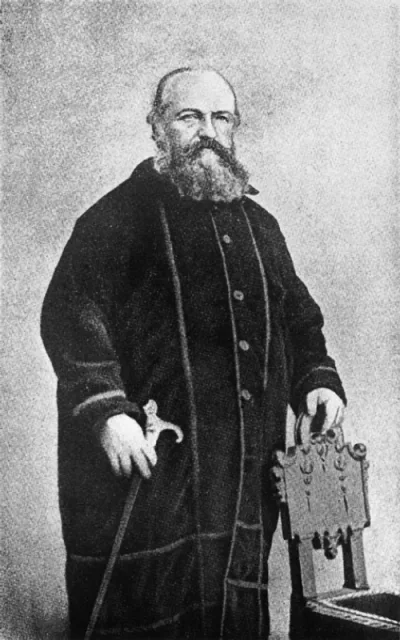
Alphonse Louis Constant, later known as Eliphas Levi, was a French esotericist, poet, and writer born in 1810. After an early aspiration to join the Catholic priesthood, he left the seminary before ordination and became involved in ceremonial magic. Levi authored over twenty books exploring subjects such as magic, Kabbalah, alchemy, and occultism, gaining recognition among esotericists and artists in Paris and London. He adopted the pen name 'Eliphas Levi' as a Hebrew translation of his given names. Levi's philosophical development was shaped by various thinkers including Joseph de Maistre, Paracelsus, and Plato. He left Freemasonry due to his belief that its original symbolic meanings had been lost and its lack of tolerance for Catholicism, despite his own emphasis on tolerance.
Levi's life involved periods of poverty and hardship, including a brief imprisonment for a publication critical of Emperor Napoleon III. He experienced a profound spiritual and financial crisis around the age of 40, which led him more deeply into occult studies. His magical theories, which posited the existence of 'astral forces' rather than autonomous spirits, diverged from contemporary Spiritualism, though he was credulous regarding reported supernatural phenomena. Levi's teachings, though sometimes obscure, were offered freely for the benefit of humanity, and he did not claim to be part of any secret society. His work significantly influenced later occult movements and figures such as the Hermetic Order of the Golden Dawn and Aleister Crowley.
Early Life and Spiritual Path
Born Alphonse Louis Constant in Paris, Levi initially studied for the Catholic priesthood at the Saint Sulpice seminary. He was ordained a deacon but left the path to priesthood just before final ordination. Despite leaving, he retained a clerical appearance for years and later wrote about integrating faith and science. His departure from the seminary, possibly due to 'strange views on doctrinal subjects' or 'doubts and scruples,' led to conflict with his superiors. He supported himself as a tutor and was influenced by mystic Simon Ganneau. In 1839, he briefly entered monastic life but left due to the strict discipline. His early work, 'La Bible de la liberté,' resulted in a prison sentence in 1841. Levi married Noémie Cadiot in 1846, a union that was later annulled, and had several children who died young. He also fathered an illegitimate son with Eugénie C.
Development as an Occultist
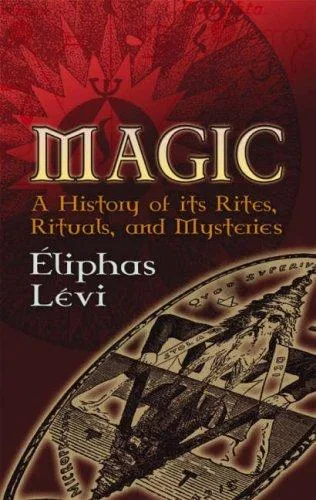
Around 1850, at age 40, Levi experienced a significant financial and spiritual crisis that propelled him further into the realm of 19th-century esotericism. His political views evolved; initially praising Napoleon III's coup, he later became disillusioned and was briefly imprisoned for a polemical song against the Emperor. He developed theocratic ideas, influenced by Joseph de Maistre, advocating for a 'spiritual authority' led by an elite, believing the masses needed guidance. Levi contributed to the 'Revue philosophique et religieuse,' publicly sharing his 'Kabbalistic' ideas. His later period saw the publication of significant works on magic and occultism, including 'Histoire de la magie' and 'La clef des grands mystères.'
Magical Philosophy and Influence
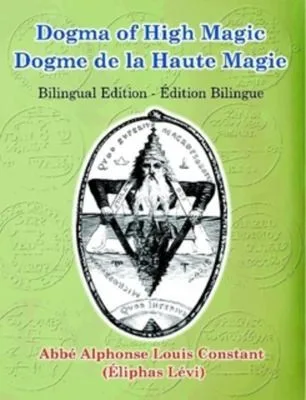
Eliphas Levi's approach to magic, particularly his incorporation of Tarot cards into his system, became highly influential, especially after his death. He distinguished his views from Spiritualism, asserting that only mental images and 'astral forces' persisted after death, which could be manipulated by skilled magicians, rather than autonomous spirits. He viewed phenomena like table-turning as nascent magnetic currents. Levi presented his teachings freely, describing himself as a scholar offering a profound discovery for humanity's benefit without personal gain. He is credited with identifying the pentagram with one point down as representing evil and with one point up as representing good. His ideas significantly impacted subsequent occult traditions and figures, including the Hermetic Order of the Golden Dawn and Aleister Crowley.
Key Ideas
- Magic as a science involving the manipulation of astral forces
- The Kabbalah as a key to understanding universal mysteries
- The symbolic interpretation of religious and magical traditions
- The pentagram's orientation signifying good or evil
- The need for spiritual authority and elite guidance for society
Notable Quotes
“I ceased being a freemason, at once, because the Freemasons, excommunicated by the Pope, did not believe in tolerating Catholicism ... [and] the essence of Freemasonry is the tolerance of all beliefs.”
“The phenomena which quite recently have perturbed America and Europe, those of table-turning and fluidic manifestations, are simply magnetic currents at the beginning of their formation, appeals on the part of Nature inviting us, for the good of humanity, to reconstitute great sympathetic and religious chains.”
“A poor and obscure scholar [who] has found the lever of Archimedes, and he offers it to you for the good of humanity alone, asking nothing whatsoever in exchange.”