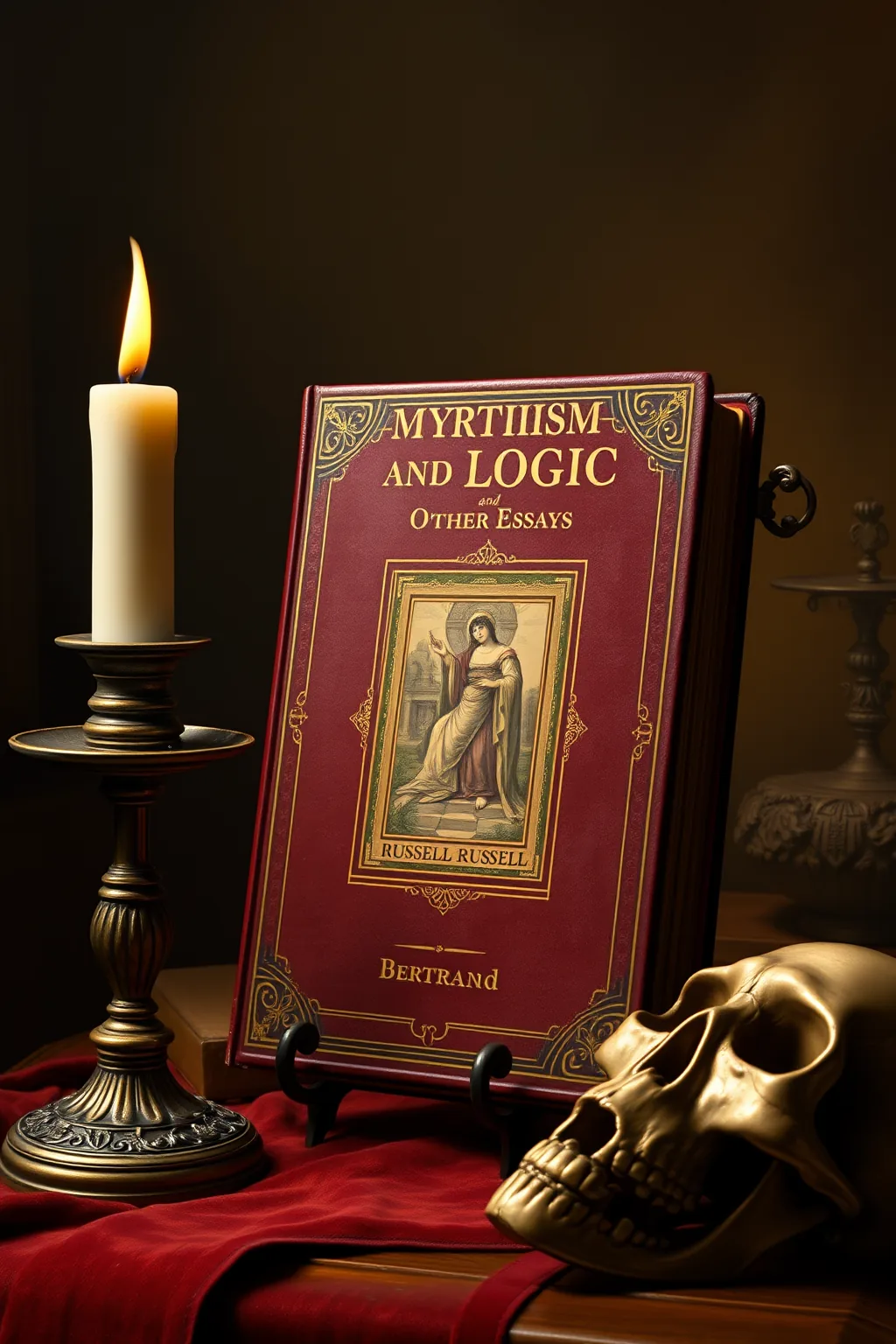
Mysticism and Logic and Other Essays
 70
70

Mysticism and Logic and Other Essays



Bertrand Russell's "Mysticism and Logic and Other Essays" is a timeless exploration of the esoteric and the rational, making it an invaluable resource for modern esoteric seekers. Russell's essays seamlessly weave together mathematical rigor, philosophical depth, and mystical contemplation, creating a rich tapestry of thought that challenges and inspires. For those seeking to understand the deeper dimensions of reality, this book offers a unique perspective that bridges the gap between scientific inquiry and spiritual experience. Russell's insights into the nature of knowledge and the limits of human understanding are particularly relevant in today's world, where the boundaries between science and mysticism are increasingly blurred. The book's historical context adds an additional layer of significance, providing readers with a glimpse into the intellectual ferment of the early 20th century. Overall, "Mysticism and Logic" is a must-read for anyone interested in the esoteric and the philosophical, offering a star rating of 5 out of 5 for its profound insights and enduring relevance.
📝 Description
70
Bertrand Russell published 'Mysticism and Logic and Other Essays' in 1917.
This 1917 collection shows Bertrand Russell grappling with the relationship between rational thought and spiritual experience. He examines how logic and scientific methods can inform, and perhaps even be informed by, mystical insights. The essays question the strict division between the empirical world and subjective experience, suggesting a connection between them.
Russell approaches these ideas with his characteristic intellectual clarity. He does not abandon reason, but rather seeks to understand how it might interact with intuition and contemplation. The book invites readers to consider how different modes of understanding the world might coexist. It is a thoughtful examination of these enduring questions.
While Bertrand Russell was a prominent logician and philosopher, this collection touches on themes that resonate within esoteric traditions. Many esoteric paths seek to reconcile seemingly contradictory modes of knowledge, such as rational analysis and direct experiential insight. Russell's work here can be seen as an intellectual inquiry into the very possibility of such reconciliation, a goal shared by various mystical and philosophical systems across history that aim to understand the deeper structure of reality beyond immediate perception.
✍️ Author

Russell, Bertrand
Bertrand Arthur William Russell, 3rd Earl Russell (18 May 1872 – 2 February 1970), was an English philosopher, logician, mathematician, and public intellectual. He influenced mathematics, logic, set theory, and various areas of analytic philosophy.
💡 Why Read This Book?
Reading "Mysticism and Logic and Other Essays" today offers a unique opportunity to explore the intersection of esoteric thought and rational inquiry. This book provides valuable insights into the nature of reality, the limits of human knowledge, and the role of intuition in scientific discovery. By engaging with Russell's essays, readers can deepen their understanding of the human experience and challenge traditional notions of truth and knowledge. Whether you are a philosopher, scientist, or esoteric seeker, this book offers thought-provoking ideas that continue to resonate in contemporary discourse.
⭐ Reader Reviews
Honest opinions from readers who have explored this book.
❓ Frequently Asked Questions
What is the main theme of "Mysticism and Logic and Other Essays"?
The main theme of the book is the relationship between logical reasoning and mystical contemplation, exploring how these two seemingly disparate fields can inform and enrich our understanding of the world.
Who should read this book?
This book is ideal for readers interested in the intersection of esoteric thought and rational inquiry, including philosophers, scientists, and esoteric seekers.
What is the historical significance of this book?
Published in 1872, "Mysticism and Logic and Other Essays" provides a glimpse into the intellectual ferment of the early 20th century, making it a historical artifact as well as a philosophical treatise.
🔮 Key Themes & Symbolism
The Mystical Dimensions of Logic
Russell examines the hidden knowledge that underlies logical reasoning, revealing the mystical connections between the rational mind and the spiritual realm. This theme invites readers to question the boundaries between empirical science and esoteric thought, offering a deeper understanding of the universe's mysteries.
The Intersection of Science and Spirituality
This theme explores how scientific inquiry can intersect with spiritual contemplation, challenging conventional wisdom and inviting a deeper exploration of the esoteric underpinnings of modern thought. Russell's essays offer a unique perspective on this intersection, making them useful for scholars and practitioners of occult studies.
Symbolism and Contemplation
The book is rich in symbolism and philosophical depth, inviting readers to engage in contemplative practices that bridge the gap between the empirical and the mystical. This theme is particularly significant for those seeking to understand the hidden knowledge that lies beneath the surface of logical reasoning.
💬 Memorable Quotes
Direct passages from the work, attributed to the author.
“The true mystic is not he who seeks ecstasy, but he who seeks truth.”
— Russell emphasizes the pursuit of truth over mere spiritual experiences, highlighting the intellectual rigor required for genuine mysticism.
“The study of mathematics, like the Nile, begins in minuteness but ends in magnificence.”
— Russell's metaphor illustrates the transformative power of mathematical study, leading from simple truths to profound spiritual insights.
“The universe is a vast and mysterious place, full of wonders yet to be discovered.”
— Russell's words inspire a sense of awe and curiosity, inviting readers to explore the mysteries of the universe through both scientific and spiritual lenses.
💡 Key Ideas
Editorial paraphrase of the work's core concepts — not direct quotes.
Mathematics, rightly viewed, possesses not only truth, but supreme beauty — a beauty cold and austere, like that of sculpture.
This quote underscores the aesthetic and spiritual dimensions of mathematical reasoning, revealing its mystical underpinnings.
The mystic seeks to penetrate beyond the veil of appearance to the reality behind.
This quote captures the essence of mystical inquiry, emphasizing the quest for hidden knowledge and spiritual truth.
🌙 Esoteric Significance
Tradition
This book belongs to the Hermetic tradition, which seeks to uncover the hidden knowledge that connects the rational mind to the spiritual realm. Hermeticism emphasizes the unity of all things and the pursuit of spiritual enlightenment through intellectual inquiry.
Symbolism
Key symbols in the book include the metaphor of the Nile, representing the transformative power of mathematical study, and the veil of appearance, symbolizing the quest for hidden knowledge and spiritual truth. These symbols invite readers to engage in contemplative practices that bridge the gap between the empirical and the mystical.
Modern Relevance
Today, Russell's essays remain relevant for modern practitioners of esoteric arts, offering a unique perspective on the intersection of science and spirituality. His insights into the mystical dimensions of logic and mathematics continue to inspire seekers of hidden truths and scholars of philosophy.
👥 Who Should Read This Book
Beginners in esoteric studies will find this book accessible and enlightening, providing a solid foundation for further exploration. Scholars of philosophy and occult studies will appreciate the depth and rigor of Russell's arguments. Spiritual seekers will be inspired by the mystical dimensions of logic and mathematics, while practitioners of esoteric arts will find valuable insights into the hidden knowledge that underlies our understanding of the world.
📜 Historical Context
Published in 1917, 'Mysticism and Logic and Other Essays' emerged during a time of significant intellectual and spiritual ferment. The early 20th century saw a growing interest in the intersection of science and spirituality, as thinkers sought to reconcile the advancements of the scientific revolution with ancient mystical traditions. Russell's work was influential in shaping the discourse on the esoteric underpinnings of modern thought, challenging conventional wisdom and inviting deeper contemplation.
📔 Journal Prompts
Reflect on the ways in which logical reasoning can reveal mystical truths.
How does Russell's integration of scientific rigor and spiritual contemplation challenge your understanding of the world?
Consider the symbolism of the veil of appearance and its significance in your spiritual journey.
Explore the transformative power of mathematical study in your own life.
How can the pursuit of truth enhance your mystical experiences?
🗂️ Glossary
Hermeticism
A mystical tradition that seeks to uncover the hidden knowledge connecting the rational mind to the spiritual realm, emphasizing the unity of all things.
Mysticism
The pursuit of spiritual enlightenment and hidden knowledge through contemplative practices and intellectual inquiry.
Esoteric
Relating to hidden or secret knowledge that is accessible only to a select few, often through initiation or deep study.
Symbolism
The use of symbols to represent abstract ideas or spiritual truths, often found in mystical and esoteric literature.
Contemplation
The practice of deep, reflective thought aimed at gaining spiritual insight or understanding of mystical truths.
This book appears in 1 collection
🔮 Readers Also Liked
Browse all →


More by Russell, Bertrand
All books →
From the “Christian Mysticism” Collection
View all →






More Free Mysticism & Contemplation Books
View all →