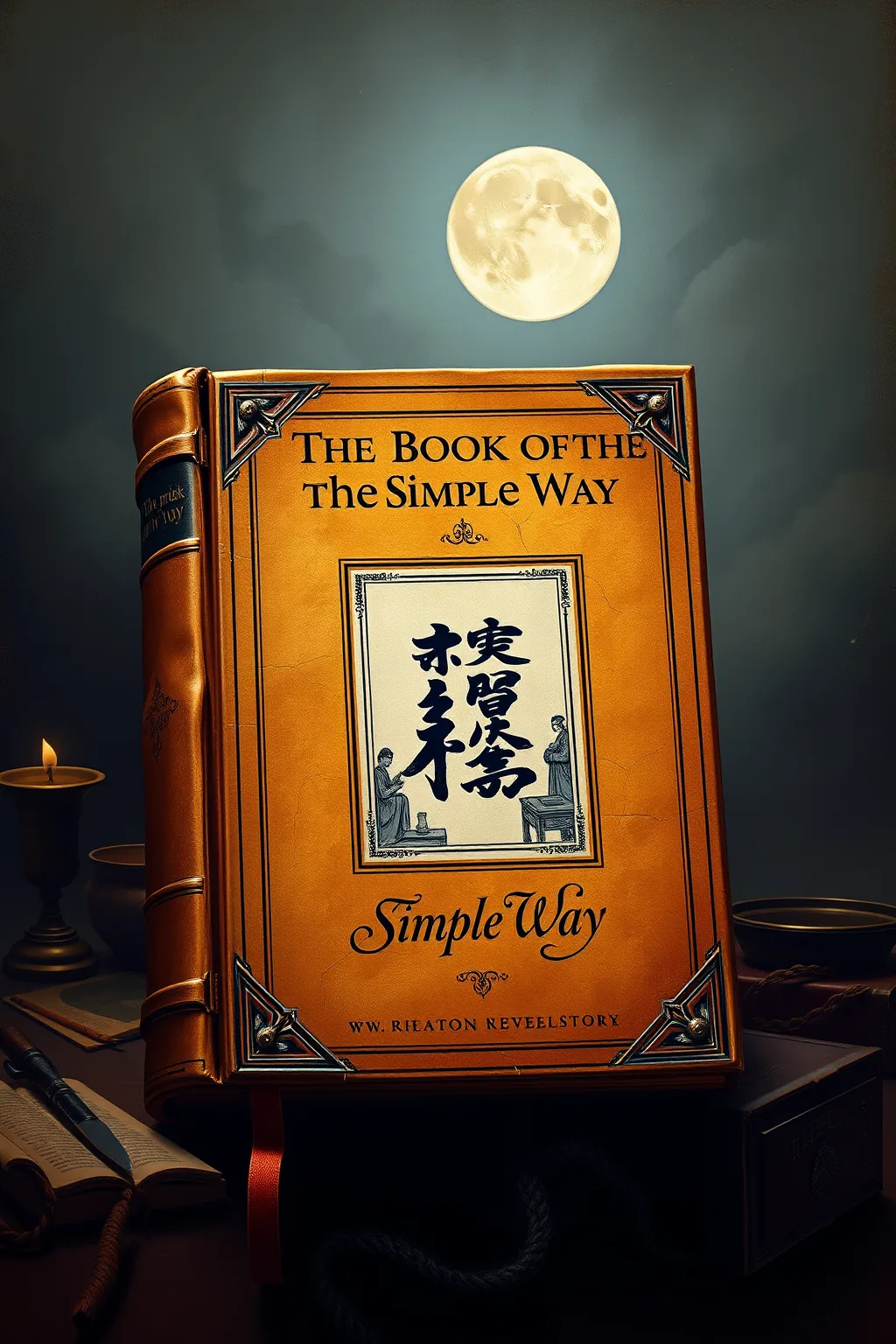
The Book of the Simple Way
 72
72

The Book of the Simple Way



Alaric Kestrel, Metaphysical Studies Reviewer — Within this venerated 1904 translation, "The Book of the Simple Way" offers an unparalleled glimpse into the foundational tenets of Taoist mysticism. Its strength lies in its exquisite articulation of effortless action and the relinquishing of egoic attachments, leading to a profound perception of cosmic unity. The author's rendition distills the esoteric essence of the Tao-Teh-King, making its profound philosophical insights accessible to the dedicated practitioner and the curious scholar alike. It is an essential resource for anyone seeking to understand the principles of non-duality and the path to spiritual liberation through a deep connection with the natural order of existence. This is a text for those ready to embark on a journey of inner transformation.
📝 Description
72
The 1904 translation of the Tao-Teh-King, 'The Book of the Simple Way,' reveals secrets of effortless action.
This 1904 translation of the Tao-Teh-King presents a philosophy of acting without attachment. It suggests that by engaging in actions and accepting their results without personal desire, one can achieve a state of liberation. The text encourages a perception of unity underlying all apparent differences, where distinctions fade into a singular, all-encompassing reality. It proposes that this approach leads to a transcendence of ordinary potential, allowing for the recognition of reality's true nature. The book acts as a guide for those seeking inner calm and fundamental truths, offering a space for contemplation. It invites readers to follow a path of clear simplicity and deep comprehension.
The book fosters an atmosphere of calm reflection, prompting introspection and a quiet spiritual awakening. Its message resonates with individuals who wish to move beyond everyday concerns and connect with the ineffable. The translated text focuses on the concept of wu wei, or non-action, as a means to harmonize with the natural order of the universe. It advocates for a minimalist approach to life, emphasizing that true strength comes from yielding and flexibility rather than force.
As a translation of the Tao-Teh-King, 'The Book of the Simple Way' sits within the Taoist tradition, a major philosophical and religious system originating in ancient China. Taoism centers on the concept of the Tao, the ineffable principle underlying all existence. This text, particularly in its focus on effortless action (wu wei) and living in accordance with nature, aligns with core Taoist tenets. It contrasts with more active or interventionist philosophies, advocating instead for a receptive and yielding approach to life and governance. Its esoteric nature lies in its guidance towards inner transformation and a direct, unmediated experience of reality.
✍️ Author
acting while separating oneself from acti
This article lists direct English translations of common Latin phrases. Some of the phrases are themselves translations of Greek phrases.
💡 Why Read This Book?
Embark on a journey of profound inner transformation. "The Book of the Simple Way" offers ancient wisdom for transcending the ego, perceiving unity in diversity, and achieving effortless action. Ideal for seekers of spiritual enlightenment, practitioners of contemplative arts, and scholars of Eastern philosophy who desire a deeper understanding of non-duality and the path to true fulfillment.
⭐ Reader Reviews
Honest opinions from readers who have explored this book.
❓ Frequently Asked Questions
What is the primary message of "The Book of the Simple Way"?
Its core message is about achieving enlightenment through effortless action, detaching from desires and outcomes, and recognizing the inherent unity of all things, transcending the illusion of duality.
Who is the intended audience for this translation?
The book is intended for sincere seekers of spiritual wisdom, practitioners of meditation and contemplation, and scholars interested in the profound philosophies of Taoism.
What does 'acting while separating oneself from action' mean?
It signifies performing tasks and engaging with life without egoic identification or attachment to the results, acting in accordance with natural flow rather than personal ambition.
Is this book suitable for beginners in mysticism?
Yes, its clear prose and profound yet accessible themes make it an excellent starting point for those new to mystical traditions and contemplative practices.
What is the significance of the 1904 translation date?
This early translation provides a historical bridge, offering a nuanced interpretation of the original text that may resonate differently than more modern renditions, capturing the scholarly and spiritual zeitgeist of its era.
🔮 Key Themes & Symbolism
The Art of Wu Wei (Effortless Action)
This theme explores the profound concept of 'Wu Wei,' or non-action, not as idleness, but as action aligned with the natural flow of the Tao. It's about achieving results by letting go of forceful striving and egoic will. The book guides readers to understand how to move through life with grace and efficacy, minimizing resistance and maximizing harmony. This principle is crucial for spiritual practitioners seeking to dissolve the friction of personal ambition and align with universal currents, leading to spontaneous and profound manifestations of their true nature.
Unity in Diversity and the Dissolution of Duality
At the heart of 'The Book of the Simple Way' lies the revelation that all perceived separations—good versus evil, self versus other, being versus non-being—are ultimately illusions. The text illuminates the path to recognizing the singular, unbroken essence that underlies all existence. By transcending the ego's tendency to categorize and judge, the reader is invited to perceive the interconnectedness of all phenomena. This profound understanding fosters compassion, acceptance, and a deep sense of belonging within the cosmic collection, leading to a state of equanimity and inner peace.
The Transcendence of Desire and Attachment
This theme looks at the liberating power of relinquishing desire and attachment to worldly outcomes. The book posits that much of human suffering stems from the incessant pursuit of fleeting pleasures and the fear of loss. By acting without the expectation of reward and embracing the present moment, one ceases to identify with the transient nature of existence. This detachment allows for a profound sense of fulfillment that is not dependent on external circumstances, fostering contentment and the realization of a deeper, unshakeable peace that resides within.
💬 Memorable Quotes
Direct passages from the work, attributed to the author.
“By acting while separating oneself from action...”
— This profound paradox suggests performing duties and engaging with the world without the ego's intrusive influence or identification with the doer.
“...and by reaching the fruit of action without desiring it...”
— It speaks to the attainment of results through natural processes, detached from personal craving or the need for validation.
“...man ceases to identify himself with good or evil in the world...”
— This leads to liberation from moralistic judgments and the dualistic perception that creates internal conflict and external division.
“...and reaches a state wherein diversity is perceived as unity...”
— It describes the awakening of higher consciousness, where the underlying oneness of all existence becomes apparent.
“...and all distinctions cease.”
— This signifies the ultimate dissolution of the ego's boundaries and the attainment of a unified, unconditioned state of being.
🌙 Esoteric Significance
Tradition
This work is a core part of Taoist esoteric philosophy, a profound spiritual tradition originating in ancient China. It looks at the mystical understanding of the Tao, the fundamental, ineffable principle that underlies and governs all existence. The esoteric significance lies in its direct transmission of this primordial wisdom, offering a path to spiritual liberation through alignment with the natural order, rather than through dogma or ritual alone.
Symbolism
Key symbols include the Tao itself, representing the unnamable source and flow of existence; 'Wu Wei' (effortless action), symbolizing the power of natural, unforced movement; and the concept of 'emptiness' or 'stillness,' representing the receptive, all-encompassing nature of true being. Water is often a potent symbol of adaptability, yielding strength, and purity, mirroring the Tao's properties. The book's symbolism guides the practitioner towards intuitive understanding and direct experience of these metaphysical realities.
Modern Relevance
In today's hyper-connected, often chaotic world, the principles of "The Book of the Simple Way" offer a vital antidote. Its teachings on effortless action and non-attachment are incredibly relevant for managing stress, burnout, and the constant pressure to achieve. The emphasis on unity and interconnectedness provides a powerful framework for fostering empathy, sustainability, and global harmony. For modern seekers, it offers a timeless guide to finding inner peace, clarity, and authentic purpose amidst the complexities of contemporary life.
👥 Who Should Read This Book
This translation is a treasure for all sincere seekers of spiritual depth. **Beginners** will find its clear exposition of profound concepts an accessible entry point into mystical thought. **Scholars** of Eastern philosophy and comparative religion will appreciate its historical significance and nuanced interpretation. **Practitioners** of meditation, mindfulness, and contemplative arts will discover invaluable guidance for deepening their practice and understanding the principles of effortless being. **Seekers** of inner peace, personal transformation, and a more harmonious relationship with the world will find "The Book of the Simple Way" to be an indispensable companion on their journey.
📜 Historical Context
Published in 1904, "The Book of the Simple Way" emerged during a period of intense intellectual and spiritual curiosity in the West regarding Eastern philosophies. The late Victorian and Edwardian eras saw a burgeoning interest in mysticism, theosophy, and comparative religion, fueled by increased global exploration and translation efforts. This translation of the Tao-Teh-King entered a landscape receptive to ideas that challenged prevailing Western materialism and rationalism. It offered an alternative worldview centered on harmony, natural order, and inner cultivation, resonating with thinkers and spiritual seekers who felt disillusioned by the rapid industrialization and societal changes of the time. The early 20th century provided fertile ground for such profound philosophical and mystical texts to take root and influence Western esoteric thought.
📔 Journal Prompts
Reflect on a recent action where you felt deeply aligned with a natural flow, free from striving. What did that feel like?
In what areas of your life do you find yourself most attached to specific outcomes? How could practicing detachment alter your experience?
Consider a situation where you perceived 'good' or 'evil.' How might viewing this situation through the lens of unity change your perspective?
What does 'emptiness' or 'stillness' mean to you in your daily life? How can you cultivate more of this quality?
How can the principle of 'effortless action' be applied to a challenging task you are currently facing?
🗂️ Glossary
Tao
The fundamental, ineffable principle that underlies and governs all existence in Taoism. It is the unnamable, eternal, and all-pervading 'Way' or 'Path' of the universe.
Wu Wei
Literally 'non-action' or 'effortless action.' It refers to acting in accordance with the natural flow of the Tao, without forceful striving or egoic interference.
De (Teh)
Virtue, power, or integrity. In Taoism, it is the manifestation of the Tao in individual beings and things, the inherent character or essence.
Duality
The philosophical concept of two opposing or contrasting forces or principles, such as good and evil, yin and yang. The book advocates for transcending this perceived separation.
Unity
The state of being one; oneness. In this context, it refers to the fundamental interconnectedness and singular essence of all existence, as revealed by the Tao.
This book appears in 1 collection
🔮 Readers Also Liked
Browse all →


From the “Christian Mysticism” Collection
View all →







More Free Mysticism & Contemplation Books
View all →