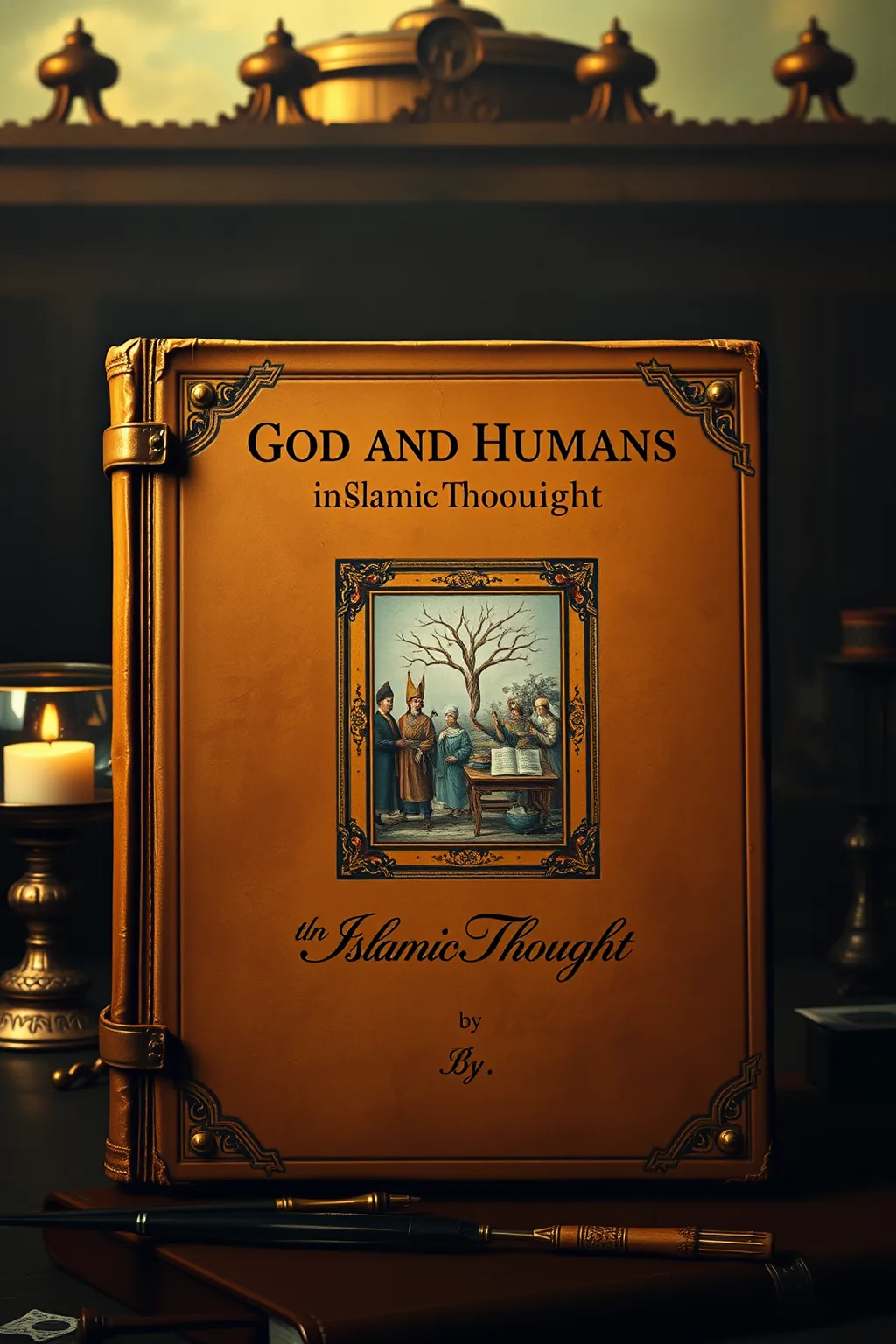
God and Humans in Islamic Thought
 80
80

God and Humans in Islamic Thought



Ophelia Vance, Mystical Literature Reviewer — This groundbreaking text offers a refreshing and deeply insightful reevaluation of the divine-human nexus within Islamic thought. It masterfully navigates the complex interplay of transcendence and immanence, unveiling esoteric interpretations often overshadowed by more orthodox viewpoints. The author's profound understanding of mystical traditions allows for a compelling articulation of the soul's yearning for the Eternal and the nature of divine assistance. Its original approach makes it an indispensable read for anyone seeking to comprehend the subtler currents of Islamic spirituality beyond superficial dogma. Highly recommended for scholars and earnest seekers.
📝 Description
80
This anonymous text from the early 20th century examines the relationship between God and humanity in Islamic thought.
This work looks at the connection between the Divine and the human within Islamic intellectual history. It moves beyond common views to show a different perspective on faith, including its hidden, or esoteric, aspects. The book discusses how divine presence is always felt and how human understanding reflects ultimate reality. It examines how theology, philosophy, and mystical traditions have influenced ideas about God and people.
The text aims to reveal truths often overlooked. It presents these ideas clearly, appealing to those seeking deeper spiritual understanding as well as academic readers. It is more than a religious argument; it is an invitation to deeper thought and a spiritual exploration of existence itself. The author's intent was to awaken contemplation on fundamental questions of being.
This book belongs to a tradition of Islamic thought that seeks deeper, inner meanings beyond literal interpretations. It aligns with Sufi traditions that emphasize direct experience of the Divine and the soul's journey. The text explores concepts like divine assistance as an ever-present force and human intellect as a mirror to ultimate truth, common themes in esoteric Islamic literature that focus on the hidden dimensions of revelation and existence.
💡 Why Read This Book?
Uncover a radical, non-conservative perspective on Islam's divine-human relationship. This book illuminates hidden spiritual truths, offering profound insights into divine assistance, eternal knowledge, and the soul's journey. Ideal for seekers of esoteric wisdom, scholars challenging established thought, and practitioners yearning for deeper contemplative understanding.
⭐ Reader Reviews
Honest opinions from readers who have explored this book.
❓ Frequently Asked Questions
What makes this book's perspective on Islam unique?
It deliberately contrasts with conservative views, offering a fresh, original examination of divine-human relations, emphasizing mystical and philosophical interpretations often overlooked in mainstream discourse.
Who is the intended audience for this book?
Scholars of Islamic studies, philosophy, and mysticism, as well as spiritual seekers interested in exploring esoteric interpretations of faith and the nature of the divine.
Does the book discuss the concept of 'abd' and 'jabbar' in detail?
Yes, these concepts are central to understanding the dynamic between the servant (abd) and the All-Compelling (Jabbar), exploring the profound implications for human existence and divine sovereignty.
Is prior knowledge of Islamic theology required to read this book?
While beneficial, extensive prior knowledge is not strictly necessary. The book’s clear exposition aims to make complex ideas accessible to a broad audience of interested readers.
What kind of 'assistance' from God is discussed in the book?
The book explores divine assistance not just as intervention, but as an inherent aspect of existence, a subtle guidance and support that shapes the human soul's journey towards eternal truth.
🔮 Key Themes & Symbolism
The Divine Presence and Human Consciousness
This theme examines the intricate relationship between the transcendent Divine and the immanent human consciousness. It explores how Islamic thought, particularly through its mystical currents, perceives the Divine not as a distant entity, but as a pervasive presence intimately interwoven with our inner lives. The text illuminates the pathways through which human beings can cultivate an awareness of this Divine presence, fostering a deeper connection that transcends intellectual understanding and touches the very core of one's being. It examines the concept of the soul's yearning for its divine origin and the subtle ways in which this connection is nurtured.
Eternal Knowledge and Divine Assistance
Central to this theme is the exploration of divine knowledge as an eternal wellspring, from which human understanding is but a reflection. The book investigates how the concept of divine assistance, 'tawfiq,' is not merely an external intervention but an intrinsic aspect of existence, guiding the soul towards truth and spiritual realization. It examines how this assistance manifests in the pursuit of knowledge, the overcoming of spiritual obstacles, and the unfolding of one's true potential. The interplay between human striving and divine grace is presented as a fundamental dynamic in the spiritual journey, underscoring the reciprocal nature of the divine-human relationship.
The Soul's Journey: From Abd to Beloved
This theme charts the spiritual trajectory of the human soul, conceptualized as 'abd' (servant or slave of God), on its path towards ultimate union or proximity with the Divine. It examines the transformative process of shedding egoic limitations and cultivating divine attributes, moving from servitude to a state of belovedness. The book explores the symbolic language and contemplative practices within Islamic mysticism that facilitate this profound inner metamorphosis. The journey is depicted as one of purification, unveiling, and ultimately, the recognition of the soul's inherent divine spark, echoing the eternal nature of its origin.
💬 Memorable Quotes
Direct passages from the work, attributed to the author.
“In the silence of the soul, the echo of eternity is heard.”
— This poetic assertion highlights the mystical belief that true spiritual understanding and connection with the eternal realm are found not through external noise, but through inner contemplation and stillness.
“Divine assistance is not a force imposed, but a resonance awakened.”
— This emphasizes that God's help is not an external imposition of will, but an inner awakening and alignment of the soul with divine principles, a harmonious response to divine guidance.
“To know God is to know oneself in the mirror of His Names.”
— This reflects the Sufi concept of knowing God through His attributes (Names) and simultaneously realizing one's own true nature as a reflection of those divine qualities.
“The world is a divine artifice, each soul a brushstroke of the Eternal.”
— This metaphor illustrates the intricate beauty and purposeful design of creation, viewing each individual soul as an essential and divinely inspired element within the grand cosmic masterpiece.
💡 Key Ideas
Editorial paraphrase of the work's core concepts — not direct quotes.
The veil between the Divine and the human is often woven from our own perceptions.
This quote suggests that the perceived separation from the Divine is not an inherent reality, but a construct of our limited human viewpoint and preconceptions, which can be overcome through spiritual insight.
🌙 Esoteric Significance
Tradition
This book draws deeply from the esoteric currents within Islam, most notably Sufism (Islamic mysticism). It examines the core principles of Sufi cosmology, the nature of the soul's journey ('suluk'), and the practical methods for achieving spiritual proximity to God (Allah). The emphasis on inner experience, symbolic interpretation of scripture, and the cultivation of divine virtues places it firmly within the area of Islamic esotericism, offering insights often veiled from purely exoteric readings.
Symbolism
Key symbols explored include the 'veil' (hijab) representing spiritual ignorance or separation, the 'mirror' symbolizing the purified heart reflecting divine light, and the 'journey' (suluk) representing the soul's transformative path. The Divine Names are also treated as potent symbols, each revealing a facet of God's essence and guiding the seeker towards a deeper understanding of both the Creator and the self. The text likely unpacks the symbolic meanings of concepts like light, darkness, annihilation (fana), and subsistence (baqa).
Modern Relevance
In an era often characterized by spiritual seeking and a desire for deeper meaning beyond material pursuits, this book offers profound contemporary relevance. It provides a sophisticated framework for understanding the divine-human relationship that transcends dogmatic divides and speaks to universal spiritual yearnings. Its emphasis on inner transformation, contemplative practice, and the interconnectedness of all existence appeals to individuals seeking a more holistic and meaningful spiritual life, offering timeless wisdom for working through the complexities of the modern world.
👥 Who Should Read This Book
This book is a treasure for scholars of comparative religion and philosophy, offering a nuanced counterpoint to conventional Islamic studies. Spiritual seekers yearning for a deeper, more esoteric understanding of faith will find profound resonance within its pages. Practitioners of contemplative disciplines, regardless of their religious background, will discover valuable insights into the nature of the soul and its relationship with the Divine. Beginners to Islamic thought may find it challenging but immensely rewarding, as it opens a door to a rich and complex spiritual tradition, while seasoned practitioners will appreciate its original and insightful approach.
📜 Historical Context
This work emerges from a rich intellectual tradition within Islam, spanning centuries of theological debate, philosophical inquiry, and mystical exploration. The early Islamic period, characterized by a vibrant diversity of thought and the nascent development of theological schools, laid the groundwork for later intellectual advancements. As Islam expanded, it encountered and assimilated diverse philosophical and spiritual ideas, leading to a complex and evolving understanding of the divine-human relationship. The contemplative traditions, particularly Sufism, played an important role in developing esoteric interpretations, focusing on inner experience, the purification of the soul, and the direct apprehension of divine truth. This book, by re-examining these historical currents, offers a contemporary perspective on enduring questions that have shaped Islamic civilization.
📔 Journal Prompts
Reflect on a time you felt a strong sense of divine assistance. How did it manifest, and what was its impact on your perception of yourself and the world?
Consider the concept of 'eternal knowledge.' How does your current understanding of knowledge align with or diverge from the idea of an eternal, divine source?
Explore the idea of the soul as 'abd' (servant). What does this servitude mean to you, and how can it be a path to spiritual freedom rather than constraint?
If the 'veil' between you and the Divine is woven from your own perceptions, what threads can you begin to unravel to see more clearly?
How can cultivating an awareness of the Divine Presence in your daily life transform your understanding of 'world' and your place within it?
🗂️ Glossary
Abd
An Arabic term meaning 'servant' or 'slave' of God. In Islamic thought, particularly mysticism, it signifies a state of humble submission, devotion, and dependence on the Divine, often viewed as a path to spiritual closeness.
Jabbar
One of the 99 Names of Allah, meaning 'The Compeller,' 'The Almighty,' or 'The All-Powerful.' It denotes God's absolute sovereignty, might, and ability to overcome all things, inspiring awe and reverence.
Suluk
An Arabic term referring to the spiritual path or journey undertaken by a mystic (Sufi) towards God. It involves stages of spiritual development, purification of the soul, and the attainment of divine knowledge and proximity.
Hijab
Literally meaning 'veil' or 'curtain.' In Islamic esotericism, it refers to anything that obstructs the soul's vision of the Divine, such as worldly attachments, egoic illusions, or lack of spiritual insight.
Tawfiq
Divine success or assistance granted by God. It is understood as the enabling grace and guidance that helps an individual to perform righteous deeds and achieve spiritual goals, often seen as a cooperative effort between human will and divine will.
This book appears in 1 collection
🔮 Readers Also Liked
Browse all →







From the “Christian Mysticism” Collection
View all →








More Free Mysticism & Contemplation Books
View all →