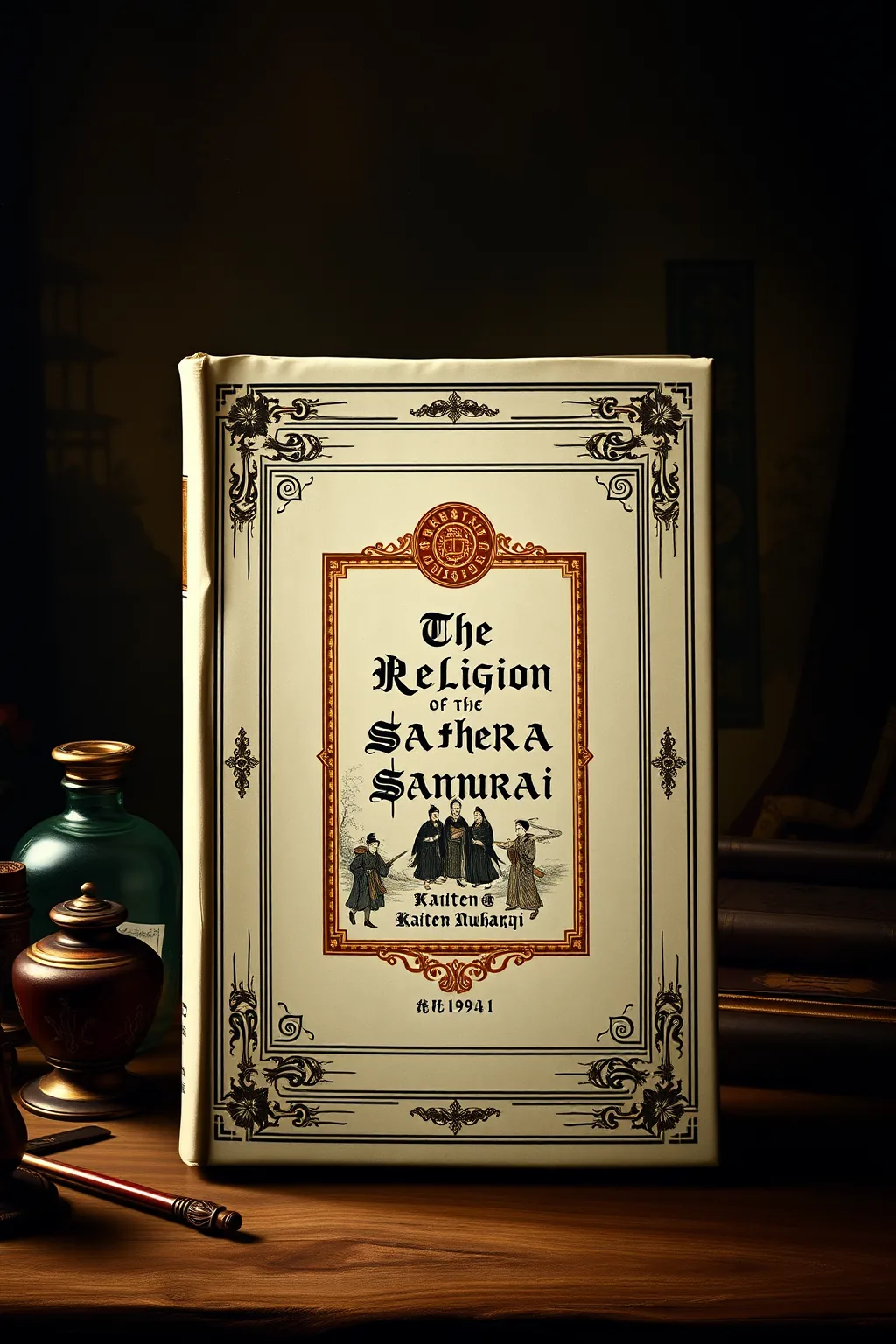
The Religion of the Samurai by Kaiten Nukariya
 82
82

The Religion of the Samurai by Kaiten Nukariya



Kaiten Nukariya's 'The Religion of the Samurai' stands as a cornerstone for understanding the spiritual bedrock of the Japanese warrior caste. This meticulously researched volume transcends mere historical record, offering a deeply insightful exploration into the symbiotic relationship between Zen Buddhism and Bushido. Nukariya expertly navigates the philosophical nuances, illuminating how Zen's emphasis on impermanence, emptiness, and present-moment awareness forged an unparalleled mental fortitude in the samurai. The author’s authoritative yet accessible prose makes complex doctrines comprehensible, revealing the esoteric underpinnings of courage, discipline, and self-sacrifice. Essential reading for scholars of Eastern philosophy, martial arts practitioners, and anyone seeking to grasp the profound psychological and spiritual dimensions of this iconic cultural phenomenon.
📝 Description
82
Kaiten Nukariya's 1913 book connects Zen Buddhism and the samurai code.
Kaiten Nukariya's 'The Religion of the Samurai,' published in 1913, examines the philosophical underpinnings of the Japanese warrior class. The book traces the development of Buddhist thought from India, through China, and its adaptation in Japan. Nukariya focuses on how Zen principles, such as mindfulness and self-mastery, influenced the samurai ethos. The work details how the samurai integrated Buddhist concepts into their daily lives and martial practices.
This text explores the spiritual framework that informed the samurai's dedication and courage. It looks at the internal discipline and understanding of impermanence that allowed them to confront mortality. Nukariya presents Zen's influence not just as a historical phenomenon but as a practical guide to inner strength and spiritual awareness for those who embodied the warrior ideal.
This work situates itself within the study of religious and philosophical traditions that informed specific cultural practices. It addresses how esoteric interpretations of Buddhism, particularly Zen, were adopted and adapted by a martial elite. The book investigates the internal spiritual disciplines and metaphysical concepts that became integral to the samurai's worldview, moving beyond a purely historical or sociological analysis to an understanding of their inner life.
✍️ Author

Kaiten Nukariya was published in
See also Zen for an overview of Zen, Chan Buddhism for the Chinese origins, and Sōtō, Rinzai and Ōbaku for the three main schools of Zen in Japan Japanese Zen refers to the Japanese forms of Zen Buddhism, an originally Chinese Mahāyāna school of Buddhism th…
💡 Why Read This Book?
Uncover the profound spiritual lineage that shaped the samurai's legendary discipline and inner fortitude. This book offers a unique lens through which to understand the deep connections between Zen philosophy and the warrior's code, revealing timeless wisdom on self-mastery, courage, and confronting impermanence. Ideal for seekers of esoteric knowledge, martial arts enthusiasts, and students of Eastern spiritual traditions.
⭐ Reader Reviews
Honest opinions from readers who have explored this book.
❓ Frequently Asked Questions
What is the central thesis of 'The Religion of the Samurai'?
The central thesis is that Zen Buddhism provided the core philosophical and spiritual framework for the samurai's ethical code and psychological discipline, shaping their approach to life, death, and duty.
When and where was the book originally published?
The book was originally published in Japan in 1913.
What is the relationship between Zen and the samurai code described in the book?
The book details how Zen's principles of mindfulness, impermanence, self-discipline, and detachment from ego directly influenced the samurai's warrior ethos, fostering courage, stoicism, and spiritual resilience.
Does the book cover the origin of Buddhism?
Yes, the book guides the reader through the origin of Buddhism and its subsequent spread and development, particularly in China and Japan, before focusing on its influence on the samurai.
Is this book suitable for beginners in Zen philosophy?
While it delves into philosophical depths, Nukariya's clear prose makes it accessible. Beginners will gain a foundational understanding of Zen's practical application within a historical context.
🔮 Key Themes & Symbolism
Zen's Influence on Bushido
This theme explores the profound spiritual and philosophical underpinnings that Zen Buddhism provided to the samurai's ethical code, known as Bushido. It examines how Zen concepts like impermanence, detachment, mindfulness, and the pursuit of enlightenment directly shaped the samurai's mindset, fostering their renowned discipline, courage, equanimity in the face of death, and commitment to duty. The text studies how Zen practices were integrated into the warrior's training and daily life, transforming martial skill into a path of spiritual cultivation and self-realization, revealing the esoteric connection between inner peace and outer strength.
The Transmission of Buddhist Thought
This theme meticulously traces the historical and philosophical journey of Buddhism from its inception in India, through its transformative adoption and adaptation in China, and finally to its complex and diverse manifestations in Japan. It highlights how each culture imprinted its own unique characteristics onto Buddhist doctrines, particularly focusing on the evolution of Zen (Ch'an in China). The narrative underscores the intellectual and spiritual cross-pollination that occurred, leading to distinct schools and interpretations, setting the stage for Zen's eventual wide impact on Japanese society and the warrior class.
The Samurai as a Spiritual Practitioner
Beyond their martial prowess, this theme illuminates the samurai as dedicated practitioners of a spiritual discipline. It reveals how the warrior's path was often seen as a rigorous form of spiritual training, where the constant confrontation with mortality and the pursuit of perfection in their craft were viewed as pathways to enlightenment. The text explores the parallels between the samurai's quest for mastery and the Zen monk's pursuit of satori (awakening), demonstrating how both roles demanded intense self-control, unwavering focus, and a deep understanding of the transient nature of existence, thus elevating the samurai's life to a form of living meditation.
💬 Memorable Quotes
Direct passages from the work, attributed to the author.
“The Samurai and the Zen monk have to undergo a...”
— This fragment hints at shared rigorous training and discipline, suggesting a common path of arduous self-cultivation essential for both spiritual awakening and martial excellence.
“Let us point out in brief the similarities between Zen and Japanese chivalry.”
— This introductory statement promises an exploration of the profound, often hidden, parallels between the spiritual discipline of Zen and the ethical code of the samurai, inviting readers to uncover their interconnectedness.
“The Zen monk has to undergo a...”
— This suggests the intense, transformative process inherent in Zen practice, implying a stripping away of ego and worldly attachments through arduous discipline, a process mirrored in the samurai's training.
“Japanese chivalry is again divided into several sects.”
— This intriguing statement implies a diversity and nuance within the samurai code, akin to the sectarian divisions within Buddhism, suggesting varied interpretations and approaches to the warrior's way.
“The origin of Buddhism and Zen...”
— This points to the foundational elements of the book, promising an exploration of the historical roots and early development of these influential spiritual traditions before examining their synthesis.
🌙 Esoteric Significance
Tradition
This work is deeply rooted in the esoteric traditions of Mahayana Buddhism, specifically Zen (Ch'an) Buddhism, and its manifestation within the Japanese warrior culture. It explores the practical application of meditative disciplines, mindfulness, and the pursuit of non-duality as pathways to inner liberation and enhanced perception. The esoteric aspect lies in the transmission of direct experience and intuitive understanding, often conveyed through koans and master-disciple relationships, emphasizing that true wisdom transcends intellectual grasp and requires profound personal transformation.
Symbolism
The samurai's sword, 'the soul of the warrior,' symbolizes the sharp clarity of mind and the decisive action born from spiritual insight. The concept of 'mushin' (no-mind) represents a state of egoless awareness, allowing for intuitive and spontaneous action, free from conscious deliberation or fear. The cherry blossom (sakura) serves as a poignant symbol of ephemeral beauty and the acceptance of impermanence, reflecting the samurai's readiness to face death with grace. The stark simplicity of Zen gardens and the discipline of calligraphy further embody the aesthetic and philosophical principles of focus, harmony, and essential truth.
Modern Relevance
In an era often characterized by distraction, stress, and a perceived lack of purpose, the teachings within 'The Religion of the Samurai' offer profound relevance. The emphasis on mindfulness, self-discipline, and cultivating inner resilience provides practical tools for navigating modern challenges. The samurai's pursuit of mastery and ethical conduct, informed by Zen principles, can inspire individuals to seek deeper meaning in their work and lives. Furthermore, understanding this historical synthesis of spirituality and action offers valuable insights into human psychology and the enduring quest for inner peace amidst external chaos.
👥 Who Should Read This Book
This useful text is essential for scholars of Eastern philosophy, religious studies, and Japanese history seeking a foundational understanding of the samurai's spiritual underpinnings. Martial arts practitioners and enthusiasts will find invaluable insights into the philosophical roots of their disciplines, exploring the mental and spiritual dimensions of combat. Spiritual seekers, particularly those drawn to Buddhism, Zen, or contemplative practices, will discover a unique application of these teachings in a historical context. Additionally, anyone interested in character development, ethics, and the cultivation of inner strength will benefit from the wisdom embedded within the samurai's Way.
📜 Historical Context
Published in 1913, 'The Religion of the Samurai' emerges from an important era in Japanese history. Following the Meiji Restoration (1868), Japan underwent rapid modernization and Westernization, leading to a re-evaluation of its traditional culture and identity. The samurai class, abolished as a distinct entity, saw its legacy both celebrated and scrutinized. Nukariya's work, appearing during this period of national introspection, sought to articulate the spiritual essence that had underpinned the samurai's influence for centuries. It aimed to present Zen Buddhism not merely as a religion but as a vital force that shaped the character, discipline, and worldview of the warrior class, offering a distinctively Japanese philosophical perspective amidst burgeoning global exchanges. The book reflects a desire to preserve and interpret a crucial aspect of Japanese heritage for both domestic and international audiences.
📔 Journal Prompts
Reflect on a moment when you experienced 'mushin' (no-mind) in your daily life. What were the circumstances, and how did it feel?
How does the Zen concept of impermanence challenge or affirm your current perspective on life and its fleeting nature?
Consider the parallels between the discipline required for martial arts or spiritual practice and the discipline required in your personal or professional life.
If the samurai's sword represents the clarity of mind, what metaphorical 'sword' do you wield in your own life, and how do you hone it?
How can the samurai's acceptance of death as a part of life influence your approach to overcoming obstacles and embracing challenges?
🗂️ Glossary
Zen (Ch'an)
A school of Mahayana Buddhism that originated in China, emphasizing meditation, mindfulness, and direct experience of enlightenment over scripture or dogma. Known for its focus on present moment awareness and the realization of one's inherent Buddha-nature.
Bushido
The ethical code of the samurai, often translated as 'the Way of the Warrior.' It encompassed virtues such as loyalty, courage, honor, self-discipline, and a readiness to face death.
Satori
A Japanese Buddhist term for a sudden or immediate enlightenment or awakening. It signifies a deep, intuitive understanding of reality, often experienced during Zen meditation.
Mushin
A Japanese Zen concept meaning 'no-mind' or 'mind without mind.' It describes a state of egolessness and unattached awareness, allowing for spontaneous, intuitive action free from conscious thought or hesitation.
Koan
A paradoxical riddle or question used in Zen Buddhism to provoke doubt and test a student's progress. Koans are designed to break down conventional, dualistic thinking and lead to a deeper, intuitive understanding.
This book appears in 1 collection
🔮 Readers Also Liked
Browse all →







From the “Christian Mysticism” Collection
View all →









More Free Mysticism & Contemplation Books
View all →