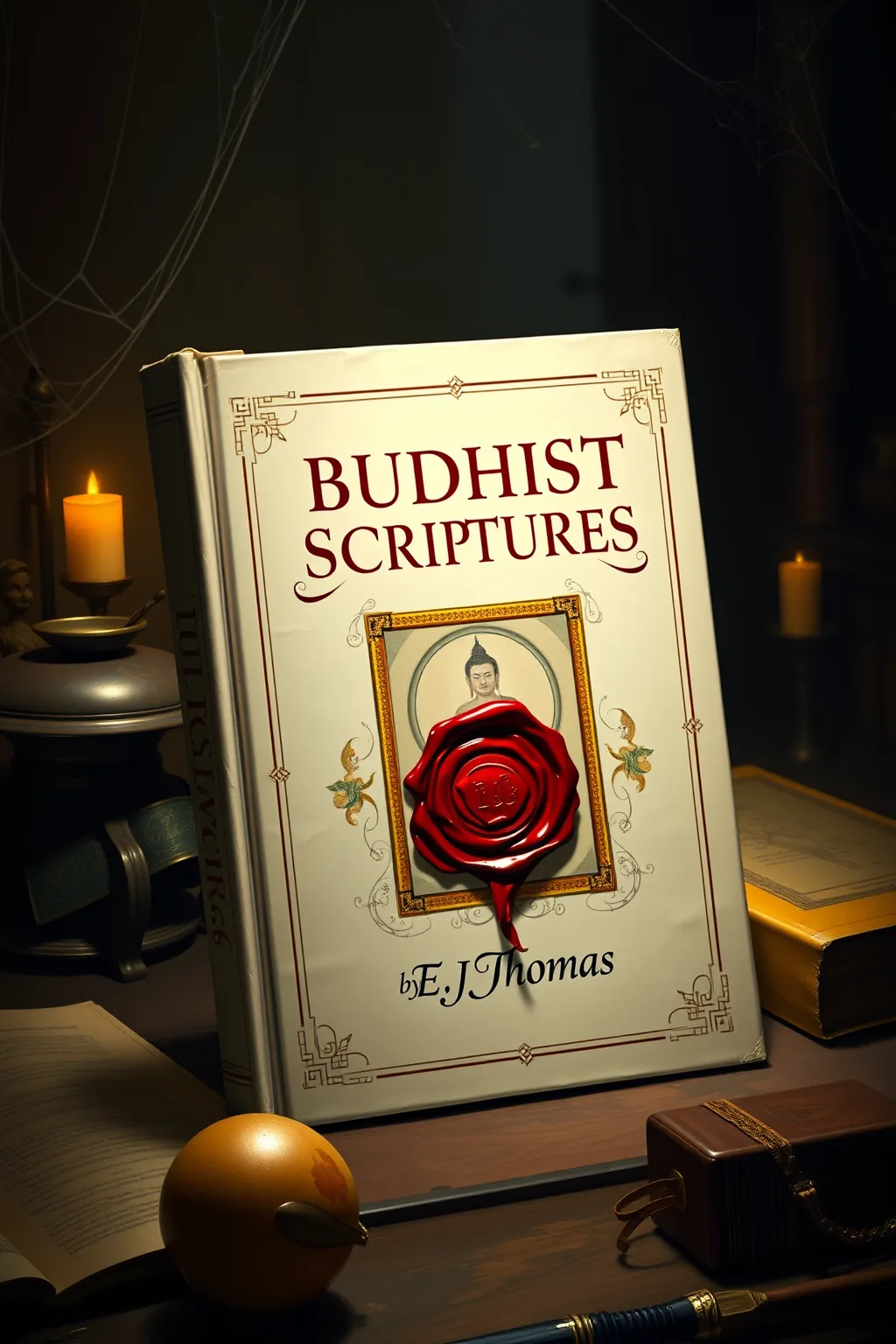
Buddhist Scriptures
 80
80

Buddhist Scriptures



Celeste Moreau (Divination & Symbolism Reviewer) — E. J. Thomas's "Buddhist Scriptures" is a masterfully distilled essence of the Buddha's liberating teachings, an invaluable primer for those drawn to the contemplative arts. Thomas expertly selects passages that illuminate the path to enlightenment, emphasizing practical wisdom over rigid dogma. The inclusion of Jataka tales offers profound insights into karma and compassion, revealing the cyclical nature of existence through vivid, archetypal narratives. This work is particularly potent for readers seeking to understand the symbolic language of Buddhist philosophy and its practical application in cultivating inner peace and wisdom. An essential read for modern mystics and spiritual explorers.
📝 Description
80
E. J. Thomas published "Buddhist Scriptures" in 1913, gathering key Buddhist texts.
First published in 1913, E. J. Thomas's "Buddhist Scriptures" presents significant passages from the Buddha's teachings. This collection goes beyond a simple anthology; it aims to reveal the core principles of the Dharma. Thomas, a scholar, includes accounts of the Buddha's life and his previous incarnations, such as the Jataka tales.
The book focuses on illuminating the central ideas of the Buddha's teachings without getting lost in complex theological arguments. It invites readers to reflect on the Buddha's transformative message. The volume is suited for those interested in the esoteric aspects of Buddhism and offers insight into the philosophical and mystical dimensions of this world-changing tradition.
This collection situates itself within the broader interest in Eastern religions that emerged in the West during the late 19th and early 20th centuries. It caters to a readership seeking deeper spiritual understanding beyond conventional religious frameworks. By focusing on direct scriptural excerpts and their underlying philosophical and mystical implications, Thomas appeals to those exploring esoteric traditions for personal enlightenment and a connection to what was perceived as ancient wisdom.
✍️ Author

E J Thomas
Thomas Jefferson Anderson (November 10, 1910 – August 30, 2002) was an American author, journalist, and farmer. He was the American Independent Party vice presidential nominee under John G.
💡 Why Read This Book?
Uncover the distilled essence of Buddhist wisdom, tracing the Buddha's luminous path through captivating life stories and core teachings. Ideal for spiritual seekers, scholars of comparative religion, and practitioners yearning for direct insight into foundational Dharma, this volume offers a profound yet accessible entry into transformative contemplation and esoteric understanding.
⭐ Reader Reviews
Honest opinions from readers who have explored this book.
❓ Frequently Asked Questions
What is the primary focus of E. J. Thomas's "Buddhist Scriptures"?
The book primarily focuses on presenting key excerpts from Buddhist scriptures, emphasizing the core message of the Buddha and including narratives from his life and past lives, rather than deep theological discussions.
Who is the intended audience for this book?
The intended audience includes spiritual seekers, students of philosophy and religion, and anyone interested in understanding the fundamental teachings and wisdom of Buddhism in a contemplative and accessible manner.
Does the book delve into complex Buddhist philosophy?
While it touches upon profound philosophical concepts, the book prioritizes clarity and accessibility, offering the basics of the Buddha's message in a way that is understandable to a broad range of readers interested in spiritual wisdom.
What kind of stories are included?
The book features several narratives drawn from the Buddha's life, as well as stories from his previous existences, notably the Jataka tales, which illustrate Buddhist principles through allegorical and instructive narratives.
What is the historical significance of this publication?
Published in 1913, it represents an early effort in the West to present Buddhist scriptures in a curated and accessible format, contributing to the growing Western interest in Eastern spirituality and philosophy during that era.
🔮 Key Themes & Symbolism
The Path to Awakening
This theme looks at the fundamental principles and practices that lead to spiritual liberation within the Buddhist tradition. It explores the nature of suffering, the cessation of desire, and the cultivation of wisdom and compassion as outlined in the Buddha's teachings. The excerpts chosen by Thomas illuminate the practical steps and inner transformations required to tread the path towards enlightenment, emphasizing mindfulness, ethical conduct, and meditative insight as crucial elements for spiritual progress and inner peace.
Karma and Rebirth (Jataka Tales)
Central to Buddhist esotericism, this theme examines the inexorable law of cause and effect as it manifests across lifetimes. The Jataka tales, rich with symbolic narrative, offer profound lessons on the consequences of actions and the cyclical nature of existence. They reveal how past deeds shape present circumstances and future destinies, fostering a deep understanding of interconnectedness and the ethical imperative to cultivate wholesome karma. These stories serve as archetypal blueprints for moral development and spiritual evolution across countless rebirths.
The Essence of the Dharma
This theme focuses on the core teachings that form the bedrock of Buddhist philosophy and practice. It distills the Buddha's useful insights into the nature of reality, the impermanence of all phenomena, and the interconnectedness of all beings. Rather than theological dogma, the emphasis is on the practical application of these truths in daily life to alleviate suffering and cultivate profound understanding. The selection aims to reveal the universal wisdom embedded within the Dharma, offering a clear and potent message for seekers of truth and inner peace.
💬 Memorable Quotes
Direct passages from the work, attributed to the author.
“Every action sown, a harvest reaped.”
— A concise expression of the law of karma, this highlights the principle that all deeds, whether positive or negative, inevitably lead to corresponding consequences, emphasizing responsibility for one's actions.
“Wisdom illuminates the darkness of ignorance.”
— This metaphor emphasizes the transformative power of understanding and insight, positioning wisdom as the antidote to delusion and the key to perceiving reality as it truly is.
“Compassion binds all beings.”
— This highlights the unifying force of empathy and kindness, suggesting that a compassionate heart recognizes the shared humanity and interconnectedness that links all sentient life.
“The present moment holds all truth.”
— This points to the importance of mindfulness and presence, asserting that genuine understanding and spiritual realization are accessed by fully inhabiting and observing the now.
💡 Key Ideas
Editorial paraphrase of the work's core concepts — not direct quotes.
The path to peace lies within.
This quote expresses the internal focus of Buddhist practice, suggesting that true serenity is not found in external circumstances but through inner cultivation and mental discipline.
🌙 Esoteric Significance
Tradition
This collection serves as a foundational text for understanding the esoteric underpinnings of Buddhist thought, particularly within the Theravada and Mahayana traditions. It offers a glimpse into the practical application of the Dharma, focusing on the inner journey of transformation and the cultivation of higher consciousness. The emphasis on mindfulness, meditation, and the understanding of impermanence aligns with various contemplative and yogic practices found across esoteric traditions, making it relevant to practitioners seeking universal spiritual truths.
Symbolism
The Jataka tales are rich in archetypal symbolism, representing karmic lessons and the unfolding of spiritual development across lifetimes. The Buddha himself, as a symbol of awakened consciousness, guides the reader through narratives that explore themes of renunciation, detachment, and the overcoming of illusion. The very act of excerpting scripture points to a symbolic approach, suggesting that the essence of the teaching can be distilled and accessed through carefully chosen fragments, revealing hidden layers of meaning beyond literal interpretation.
Modern Relevance
In an era often characterized by existential anxiety and a search for meaning, the distilled wisdom of "Buddhist Scriptures" offers a powerful antidote. Its focus on inner peace, ethical living, and the understanding of impermanence provides practical tools for working through the complexities of modern life. The timeless principles of mindfulness and compassion resonate deeply with contemporary wellness movements and psychological approaches, making these ancient texts profoundly relevant for personal growth and spiritual well-being today.
👥 Who Should Read This Book
This volume is an indispensable resource for the earnest spiritual seeker desiring a direct connection with foundational Buddhist wisdom. Scholars of world religions and comparative philosophy will find it an excellent primary source for understanding early Western interpretations of Buddhist texts. Practitioners of meditation and mindfulness will discover useful insights to deepen their practice. Beginners to Buddhist thought will appreciate its accessible yet profound introduction, while advanced students can revisit core principles with renewed contemplation. It is for anyone seeking a path to inner transformation and a deeper understanding of existence.
📜 Historical Context
Published in 1913, E. J. Thomas's "Buddhist Scriptures" emerged during a period of intense Western fascination with Eastern philosophies and religions. The late 19th and early 20th centuries saw a burgeoning interest in comparative religion, Orientalism, and esoteric traditions, fueled by increased global travel and translation efforts. Scholars and spiritual seekers alike were drawn to the useful insights offered by Buddhism, seeking alternatives to prevailing Western thought. Thomas's work contributed to this scholarly and spiritual engagement by providing accessible, curated excerpts of core Buddhist texts. It served as a vital bridge, introducing the fundamental tenets of the Dharma to a Western audience predisposed to exploring mystical and contemplative paths, thus shaping the early reception and understanding of Buddhism in the West.
📔 Journal Prompts
Reflect on a current challenge and how the principle of impermanence might offer a new perspective.
Consider a past action and its present consequences, exploring the concept of karma in your own life.
How can cultivating compassion for yourself and others transform your daily interactions?
What does 'awakening' mean to you, and what small steps can you take today to move closer to it?
Explore the notion of 'detachment' from outcomes; how might this apply to your aspirations and desires?
🗂️ Glossary
Dharma
In Buddhism, Dharma refers to the teachings of the Buddha, the cosmic law and order, and the path to enlightenment. It is the fundamental truth about existence that the Buddha revealed.
Jataka Tales
A collection of stories about the Buddha's previous lives, told before his enlightenment. These tales illustrate Buddhist virtues and principles through allegorical narratives, often featuring animal characters.
Karma
The principle of cause and effect, where intentional actions (physical, verbal, or mental) lead to future consequences. Good karma results from wholesome actions, and bad karma from unwholesome actions.
Enlightenment (Nirvana)
The ultimate goal in Buddhism, representing the cessation of suffering, the extinction of desire, and a state of profound peace, wisdom, and liberation from the cycle of rebirth.
Mindfulness
A state of active, open attention on the present. It involves observing one's thoughts, feelings, bodily sensations, and surrounding environment without judgment.
This book appears in 4 collections
🔮 Readers Also Liked
Browse all →









From the “Meditation” Collection
View all →






More Free Mysticism & Contemplation Books
View all →