The(y)ology - Mythopoetics for Queer/Trans Liberation

 78
78

The(y)ology - Mythopoetics for Queer/Trans Liberation

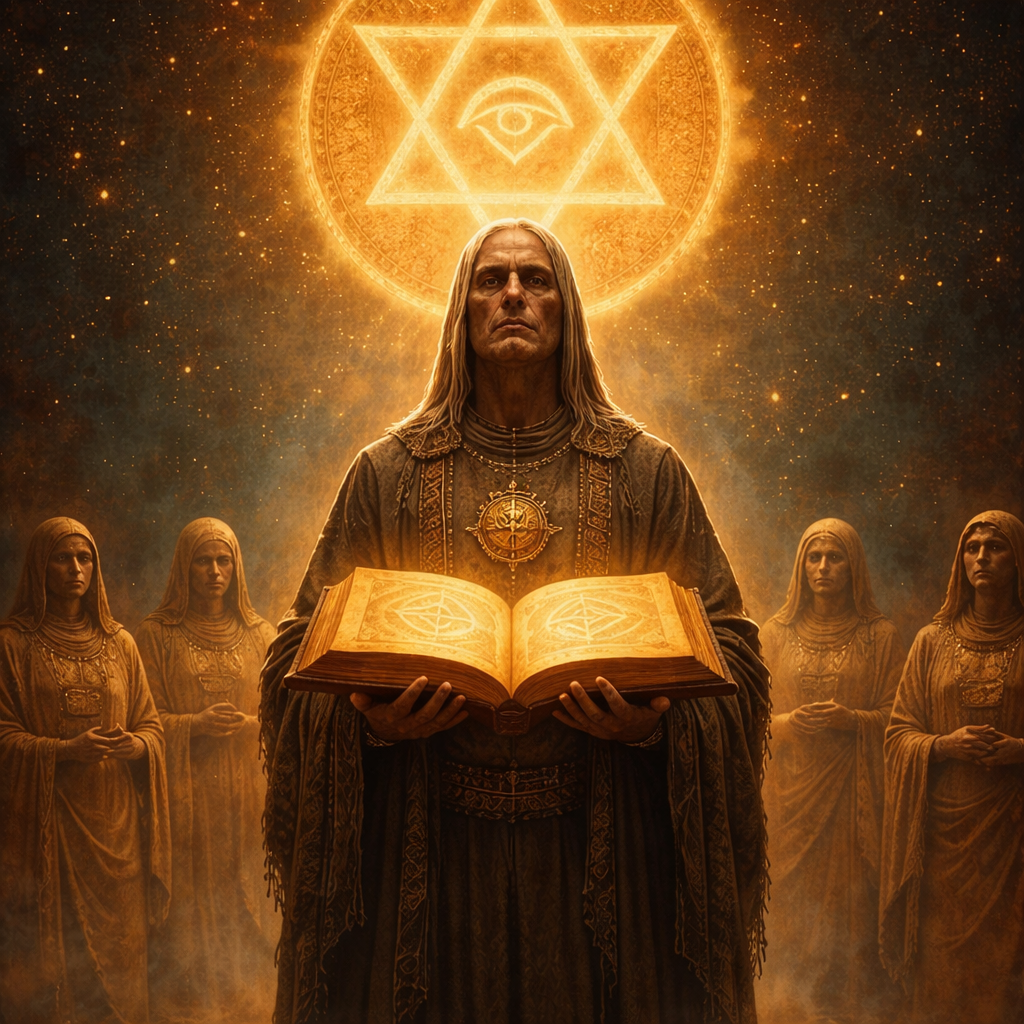

Isolde Whitaker (Sacred Texts Editor) — 'The(y)ology' is a breathtaking synthesis of Kabbalistic wisdom and contemporary queer theory, offering an unprecedented lens through which to view spiritual liberation. The unknown author masterfully reinterprets ancient symbols, revealing their profound relevance to transgender, queer, and nonbinary identities. This is not merely an academic treatise but a deeply spiritual and political text, resonating with a potent call for authenticity. Its strength lies in its ability to dismantle oppressive theological frameworks by embracing multiplicity as a divine attribute, a core tenet often obscured by patriarchal interpretations. It is an essential read for anyone seeking to reconcile their spiritual journey with their authentic self.
📝 Description
78
'The(y)ology' argues that the idol of 'oneness' has silenced queer and trans existence.
This book examines mythopoetics as a tool for queer and trans liberation, challenging the concept of singular identity. It critiques how enforced notions of a single self, sexuality, or gender have suppressed individuals who exist outside rigid boundaries. The author suggests that existence is fundamentally a multiplicity, comparing it to a constellation rather than a single star. This perspective aims to offer spiritual resonance and empowerment to queer, trans, and nonbinary individuals.
The text decodes elements of Kabbalah and Jewish mysticism to support its argument for the divinity in diverse expressions of being. It stands against monolithic doctrines, advocating for an understanding of the cosmos as boundless and interconnected. The book encourages readers to reclaim their personal narratives from restrictive societal frameworks and find affirmation in their varied truths.
This work draws from esoteric currents within Kabbalah and Jewish mysticism, traditions that often explore divine multiplicity and the nature of being beyond dualistic frameworks. It reinterprets these established mystical systems to address contemporary concerns of gender and sexual identity. By engaging with concepts of emanation and divine manifestation, the book seeks to provide a spiritual language for those who feel marginalized by more conventional religious or philosophical structures.
💡 Why Read This Book?
Uncover the hidden mystical dimensions of queer and trans existence. This book offers a radical reinterpretation of ancient spiritual traditions, providing powerful tools for self-acceptance and liberation. Ideal for seekers questioning rigid doctrines, scholars of esoteric thought, and practitioners yearning for embodied spirituality that honors the full spectrum of being.
⭐ Reader Reviews
Honest opinions from readers who have explored this book.
❓ Frequently Asked Questions
What is the central critique of 'oneness' presented in this book?
The book critiques the imposed ideology of 'oneness' as a restrictive illusion that denies the inherent multiplicity and divine spectrum of human experience, particularly for queer and transgender individuals.
Which esoteric tradition does 'The(y)ology' draw upon?
It primarily draws upon Kabbalah and Jewish mysticism, reinterpreting its rich symbolic language and cosmological insights through a queer and trans lens.
Who is the intended audience for this book?
The intended audience includes transgender, queer, and nonbinary individuals seeking spiritual validation, scholars of mysticism and gender studies, and anyone interested in deconstructing oppressive narratives.
Does the book offer practical guidance for spiritual practice?
While not a traditional grimoire, the book offers profound insights that can inform and transform one's spiritual practice by fostering self-acceptance and a more inclusive understanding of the divine.
Is this book suitable for beginners in Kabbalah?
Yes, the book makes complex Kabbalistic concepts accessible and relevant, offering a unique entry point for those new to the tradition who are interested in its spiritual and philosophical dimensions.
🔮 Key Themes & Symbolism
Deconstructing the Monolithic Self
This theme looks at the critique of the singular, prescribed self that dominant ideologies enforce. It explores how the 'myth of oneness' erases the vibrant, complex nature of existence, particularly for those whose identities defy binary expectations. The book argues that true spiritual liberation lies in embracing one's inherent multiplicity, shattering the illusion of a fixed identity and recognizing the divine spectrum within. This involves a profound re-evaluation of societal constructs and a reclamation of personal truth.
Mythopoetics of Queer/Trans Divinity
This theme examines how the book re-imagines ancient narratives and mythologies through a queer and transgender lens. It posits that the divine is not singular or exclusive but exists in the myriad forms of being. By combining new mythopoetic understandings, the text empowers marginalized identities to see themselves reflected in the sacred, fostering a sense of belonging and inherent worth. It's about creating new sacred stories that affirm all expressions of gender and sexuality.
Kabbalistic Insights for Liberation
Here, the focus is on the esoteric wisdom of Kabbalah, specifically how its symbolic language and cosmological frameworks can be reinterpreted to support queer and trans liberation. The book unearths hidden meanings within traditional texts, revealing how concepts like multiplicity, divine emanations, and the interconnectedness of all things offer a powerful counter-narrative to exclusionary doctrines. It demonstrates how ancient mystical traditions can provide profound tools for challenging oppression and fostering spiritual autonomy.
💬 Memorable Quotes
Direct passages from the work, attributed to the author.
“Every body contains multitudes, a universe within.”
— Emphasizes the inherent complexity and vastness of each individual, suggesting that identity is not monolithic but a body of experiences and potentials.
“Liberation begins with the refusal of imposed narratives.”
— Underscores the active role of the individual in achieving freedom, asserting that shedding external expectations and societal definitions is the first step toward authentic selfhood.
“Our bodies are sacred texts waiting to be read.”
— Suggests that the physical form, often policed and misunderstood, is a source of profound wisdom and spiritual truth, inviting deep introspection and acceptance.
💡 Key Ideas
Editorial paraphrase of the work's core concepts — not direct quotes.
The illusion of oneness is a cage built from fear.
This quote highlights the book's central thesis: the enforced notion of a single, true self is a construct designed to limit and control, stemming from an underlying fear of diversity and difference.
To be queer is to embody the divine spectrum.
This quote reframes queerness not as an aberration but as a sacred expression of the boundless nature of the divine, aligning it with mystical concepts of multiplicity.
🌙 Esoteric Significance
Tradition
The book is deeply rooted in Kabbalah and Jewish Mysticism, breathing new life into its complex symbolism and cosmological frameworks. It moves beyond patriarchal interpretations to reveal the inherent fluidity and multiplicity within these traditions, positioning them as potent sources of empowerment for queer and transgender individuals seeking spiritual resonance and self-affirmation. It highlights the divine spark present in all forms of being.
Symbolism
Key symbols include the Tree of Life, reinterpreted to embrace diverse manifestations of gender and identity, and the concept of Shekhinah (Divine Presence), understood as immanent within all bodies, particularly those marginalized by societal norms. The text also explores the idea of divine multiplicity, challenging the singular Godhead to reveal a more expansive, inclusive divine reality that embraces all forms of existence.
Modern Relevance
In an era of increasing polarization and identity-based conflict, 'The(y)ology' offers a radical message of acceptance and inclusivity. Its reinterpretation of ancient mystical thought provides a powerful counter-narrative to dogmatic ideologies, fostering a sense of belonging and spiritual validation for queer and transgender individuals. The book's exploration of multiplicity and divine immanence resonates deeply with contemporary desires for authentic self-expression and a more compassionate, interconnected world.
👥 Who Should Read This Book
This book is a beacon for transgender, queer, and nonbinary individuals who have felt alienated by traditional spiritual narratives, offering validation and a pathway to reclaim their divinity. Scholars of Kabbalah, gender studies, and religious history will find a groundbreaking and provocative reinterpretation of esoteric traditions. Seekers of deeper meaning who question monolithic belief systems will discover profound philosophical insights. Practitioners of embodied spirituality will find inspiration to integrate their authentic selves with their spiritual journeys, fostering a holistic and liberating practice.
📜 Historical Context
Emerging from a lineage of radical theological inquiry and queer spirituality, 'The(y)ology' arrives at a central moment. As societies grapple with evolving understandings of gender and sexuality, the text provides a much-needed esoteric framework for liberation. It stands in dialogue with post-Holocaust Jewish thought, feminist theology, and queer theory, seeking to reclaim and reinterpret sacred traditions that have historically been used to marginalize. The work implicitly critiques the rise of fundamentalist ideologies that seek to impose rigid binaries, offering instead a vision of spiritual inclusivity rooted in ancient mystical principles. Its anonymous authorship lends it an aura of collective wisdom, suggesting that these insights have emerged from a shared experience of seeking and resistance.
📔 Journal Prompts
How has the concept of 'oneness' impacted your sense of self and your spiritual journey?
What ancient symbols or myths resonate with your experience of gender or sexuality?
In what ways can you embrace the 'multitudes' within yourself as sacred?
How might a Kabbalistic understanding of multiplicity inform your personal liberation?
What new spiritual narratives can you create to affirm your authentic identity?
🗂️ Glossary
Mythopoetics
The creation and study of myths, particularly in relation to their poetic and symbolic power in shaping understanding and meaning.
Oneness
The concept of a singular, unified reality or identity, often enforced as a normative ideal, which this book critiques as a restrictive illusion.
Kabbalah
A system of Jewish mysticism that explores the nature of God and the universe through esoteric interpretations of the Torah and symbolic representations like the Tree of Life.
Shekhinah
In Jewish mysticism, the feminine aspect of the Divine Presence, often understood as immanent in the world and in creation.
Binary
A system that divides things into two distinct, often opposing, categories, such as male/female or heterosexual/homosexual, which this book challenges.
This book appears in 1 collection
🔮 Readers Also Liked
Browse all →







From the “Kabbalah” Collection
View all →






More Free Kabbalah & Jewish Mysticism Books
View all →