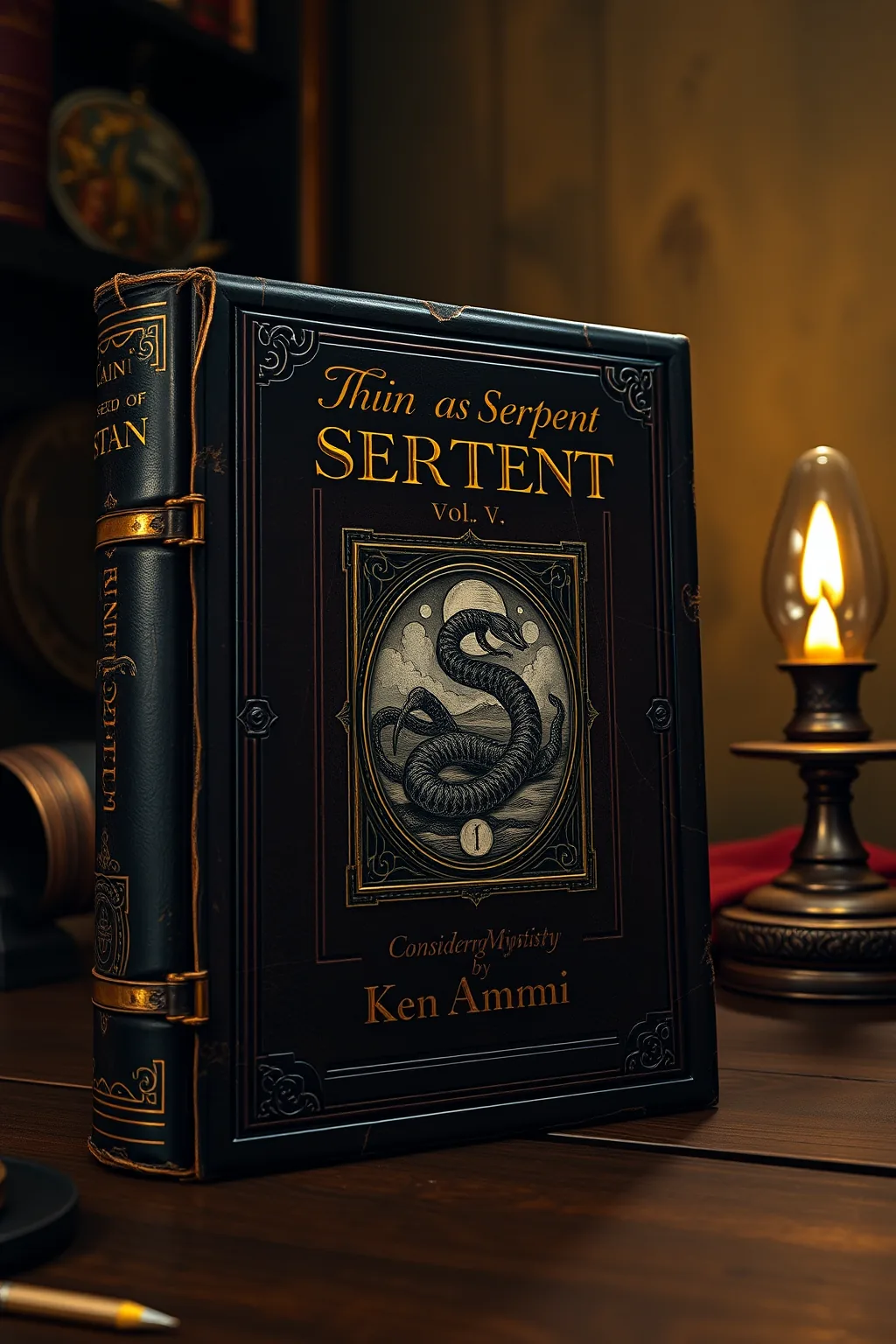
Cain As Serpent Seed of Satan, Vol. V : Considering Mysticism and Occultism
 61
61

Cain As Serpent Seed of Satan, Vol. V : Considering Mysticism and Occultism

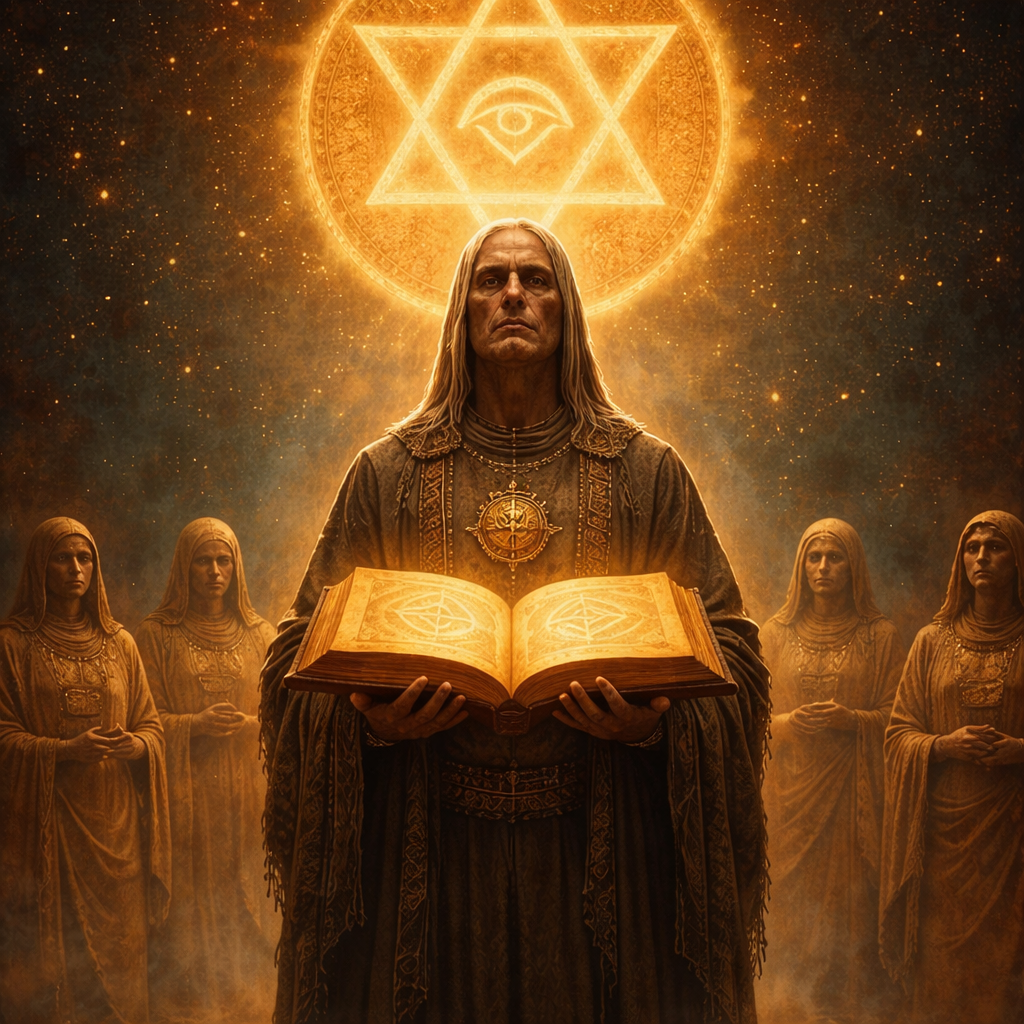

Celeste Moreau (Divination & Symbolism Reviewer) — Ken Ammi's 'Cain As Serpent Seed of Satan, Vol. V' is a monumental contribution to the study of esoteric lineages. Ammi's rigorous scholarship and intuitive grasp of occult symbolism are on full display, offering a compelling exploration of the Serpent's influence through the lens of Kabbalah and Jewish mysticism. The book masterfully deciphers ancient texts and traditions, revealing hidden correspondences that will fascinate seasoned practitioners and academics alike. It’s a challenging yet rewarding read, essential for anyone seeking a deeper understanding of the primal forces that shape our spiritual landscape. Ammi's work is an indispensable guide for the serious student of the occult.
📝 Description
61
Ken Ammi's 2022 work, 'Cain As Serpent Seed of Satan, Vol. V,' examines the serpent lineage in mysticism and occultism.
This fifth volume in Ken Ammi's series considers the figure of Cain through the lens of mysticism and occultism. It investigates the concept of a serpentine lineage and its implications within various esoteric traditions. The book traces connections between Kabbalah, Jewish mysticism, and ancient serpent cults, exploring their symbolic representations and enduring influence. Ammi connects these themes to the human psyche and the broader cosmos. The text aims to shed light on hidden aspects of spiritual understanding that lie outside conventional dogma.
It is written for those interested in uncovering deeper layers of esoteric thought. The work focuses on the manifestations of primal forces and their historical and symbolic presence. Readers will find discussions on symbolism and its interpretation within occult frameworks.
This book operates within the field of esoteric studies, specifically examining religious and occult traditions that utilize symbolic interpretations of biblical narratives. It engages with Gnostic and Kabbalistic ideas, which often reframe traditional figures and stories to reveal hidden spiritual meanings. The focus on a 'serpent seed' connects to ancient mythologies and Gnostic cosmologies where the serpent can represent knowledge or a primal creative force, often in opposition to orthodox religious interpretations. Ammi situates these concepts within the broader landscape of mystical and occult thought.
💡 Why Read This Book?
Unravel the esoteric significance of Cain's lineage within Kabbalistic frameworks. This book offers a unique perspective on serpentine symbolism and its occult implications, bridging ancient wisdom with modern spiritual inquiry. Ideal for seekers of hidden truths, scholars of comparative mysticism, and practitioners exploring the depths of occult traditions.
⭐ Reader Reviews
Honest opinions from readers who have explored this book.
❓ Frequently Asked Questions
What is the central thesis of this volume?
The central thesis posits that the lineage of Cain represents a significant esoteric force, deeply intertwined with serpentine symbolism and foundational to certain mystical and occult traditions, particularly within Kabbalistic thought.
Is prior knowledge of Kabbalah required to understand this book?
While prior familiarity with Kabbalah enhances the reading experience, Ammi provides sufficient context and explanation to guide readers new to the subject through the complex esoteric concepts presented.
What kind of occult traditions are explored?
The book delves into various occult traditions, with a strong emphasis on Kabbalah and Jewish mysticism, examining their connections to ancient serpent cults and their influence on Western esotericism.
How does this volume connect to previous books in the series?
This volume continues the exploration of the 'Serpent Seed' concept, building upon foundational themes from earlier installments while focusing specifically on the mystical and occult dimensions through a Kabbalistic lens.
What is the intended impact of reading this book?
The intended impact is to provoke deeper contemplation on the nature of hidden knowledge, primal forces, and the symbolic language of the occult, encouraging readers to expand their understanding of spiritual evolution.
🔮 Key Themes & Symbolism
The Serpent's Embrace in Kabbalah
This volume intricately explores the many-sided symbolism of the serpent within Kabbalistic cosmology. It moves beyond simplistic interpretations to reveal the serpent not merely as a symbol of temptation, but as a potent representation of transformative energy, primal wisdom, and the hidden paths to divine knowledge. Ammi meticulously traces the serpent's presence in the Sephiroth, the Tree of Life, and various mystical texts, demonstrating its integral role in the unfolding of creation and the ascent of the soul towards the divine essence. The focus is on understanding its dualistic nature – both creative and destructive – as a catalyst for spiritual awakening.
Cain's Esoteric Legacy
The book posits that the lineage of Cain carries a distinct esoteric energetic imprint, distinct from other biblical narratives. It examines how this 'Serpent Seed' is understood within occult traditions not as a purely negative force, but as a carrier of specific gnosis and a catalyst for challenging conventional spiritual paradigms. Ammi looks at the hidden histories and secret teachings that associate Cain with primal knowledge, earthbound power, and a unique connection to the material plane, offering a reinterpretation of his role as a spiritual progenitor outside orthodox theological frameworks.
Mystical and Occult Intersections
A central pillar of this work is the diligent mapping of the intersections between Jewish mysticism and broader occult traditions. Ken Ammi illustrates how ancient Kabbalistic concepts, when viewed through an occult lens, reveal deeper layers of meaning related to serpent symbolism and Cain's perceived influence. The book explores how these esoteric currents have shaped Western magical practices, alchemical pursuits, and esoteric philosophies, demonstrating a continuous thread of hidden knowledge passed down through centuries, often veiled in allegory and myth.
💬 Memorable Quotes
Direct passages from the work, attributed to the author.
“Cain’s legacy is etched not in stone, but in the unseen currents of spiritual evolution.”
— This emphasizes the esoteric nature of Cain's influence, positing it as a dynamic force that shapes consciousness and spiritual progression in ways that are not immediately apparent or historically documented.
“Within the Kabbalistic tree, the serpent guides the descent and ascent.”
— This points to the complex role of serpentine symbolism in Kabbalah, indicating its function in both the downward manifestation of divine energy and the upward journey of the soul.
“To understand the seed is to understand the growth of the hidden garden.”
— This metaphor suggests that by comprehending the foundational esoteric principles (the seed), one can unlock the secrets of spiritual development and the manifestation of esoteric truths (the hidden garden).
“Occultism is the art of conversing with the ancient elements of creation.”
— This defines occultism as a practice of engaging with the primal forces and fundamental knowledge that have shaped existence from its inception, implying a deep historical and spiritual connection.
💡 Key Ideas
Editorial paraphrase of the work's core concepts — not direct quotes.
The serpent whispers truths the orthodox fear to hear.
This quote highlights the book's theme of hidden knowledge, suggesting that the serpentine influence represents a form of wisdom that challenges established doctrines and offers a more profound, albeit unconventional, spiritual insight.
🌙 Esoteric Significance
Tradition
This volume is deeply rooted in the Western Esoteric Tradition, with a particular focus on its Kabbalistic and Jewish mystical branches. It draws heavily upon interpretations of biblical narratives through an occult lens, exploring concepts like the divine spark, primal forces, and hidden genealogies. The work aims to illuminate the esoteric dimensions of creation, consciousness, and spiritual evolution as understood within these rich and often complex mystical frameworks.
Symbolism
Key symbols explored include the serpent (representing primal energy, gnosis, transformation, and the Tree of Knowledge), Cain (as an archetypal figure embodying a unique spiritual lineage and connection to earthly power), and the Kabbalistic Tree of Life (as a map of consciousness and divine emanation). Ammi deciphers how these symbols intertwine to represent a hidden energetic current within spiritual history, influencing both individual awakening and collective consciousness.
Modern Relevance
In an age where many seek deeper spiritual meaning beyond conventional paths, this book offers a potent re-examination of ancient symbolism. It provides tools for understanding the 'shadow' aspects of existence, the nature of forbidden knowledge, and the inherent power within seemingly negative archetypes. Its relevance lies in empowering readers to engage with these profound concepts, fostering personal transformation and a more nuanced appreciation of the complex collection of spiritual traditions.
👥 Who Should Read This Book
This volume is essential for serious students of esoteric philosophy and occult studies, particularly those interested in Kabbalah and Jewish mysticism. Scholars of comparative religion and ancient symbolism will find Ammi's rigorous analysis informative. Practitioners of various occult disciplines seeking to deepen their understanding of primal forces and hidden lineages will discover valuable insights. While accessible to those with a foundational interest, it is best suited for individuals ready to engage with complex, challenging, and often controversial esoteric concepts.
📜 Historical Context
Published in an era of renewed interest in esoteric studies and comparative religion, 'Cain As Serpent Seed of Satan, Vol. V' emerges from a lineage of occult scholarship that sought to reinterpret ancient myths and religious texts through the lens of hidden traditions. The late 20th and early 21st centuries witnessed a surge in individuals exploring Gnosticism, Kabbalah, and Hermeticism, often seeking alternative spiritual paths beyond mainstream religious dogma. Ken Ammi's work situates itself within this intellectual milieu, contributing to a broader conversation about the enduring power of symbolism, primal archetypes, and the potential for hidden knowledge to illuminate the human condition. The book reflects a growing desire to understand the roots of Western esotericism and its connections to ancient Near Eastern spiritualities, challenging conventional interpretations and advocating for a more profound engagement with the 'shadow' aspects of spirituality.
📔 Journal Prompts
Reflect on the dualistic nature of the serpent symbol in your own spiritual journey. Where has it represented transformation, and where has it represented temptation?
Consider the concept of a 'hidden lineage' in your personal or ancestral history. What esoteric or symbolic significance might it hold?
How do you interpret the idea of 'forbidden knowledge'? In what ways might it be essential for spiritual growth?
Explore the Kabbalistic Tree of Life. What are your personal associations with the paths and spheres where serpentine symbolism might be found?
Meditate on the archetype of Cain. What aspects of his story resonate with you when viewed through an occult or mystical lens?
🗂️ Glossary
Kabbalah
A system of Jewish mysticism that explores the divine nature and the relationship between God and the created universe, often represented through symbolic diagrams like the Tree of Life.
Occultism
A broad term encompassing secret or hidden knowledge and practices, often related to magic, alchemy, divination, and esoteric spirituality.
Gnosis
In esoteric traditions, refers to a special intuitive knowledge or spiritual insight, often considered a key to salvation or enlightenment.
Archetype
A universal, archaic symbol or motif that derives its meaning from the collective unconscious and is present in myth, literature, and art.
Sephiroth
The ten divine emanations or attributes of God in Kabbalistic cosmology, often depicted as nodes on the Tree of Life.
This book appears in 1 collection
🔮 Readers Also Liked
Browse all →









From the “Kabbalah” Collection
View all →








More Free Kabbalah & Jewish Mysticism Books
View all →