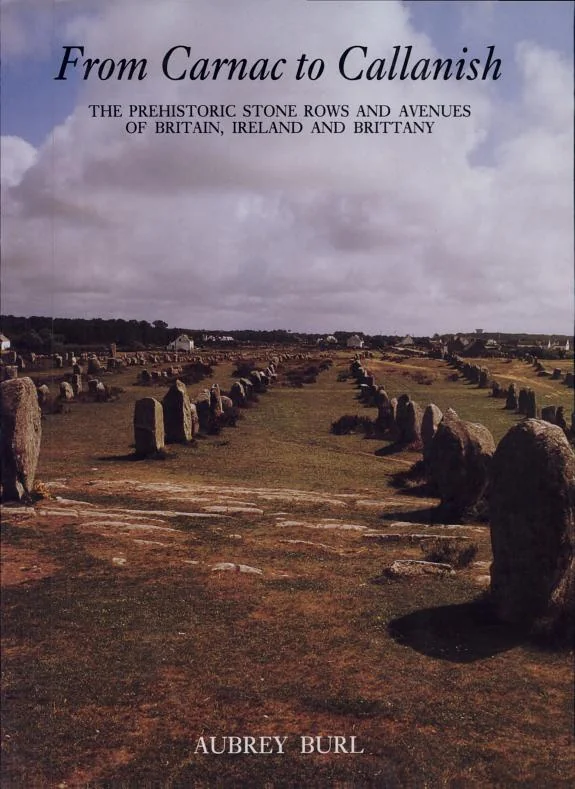
From Carnac to Callanish
 81
81

From Carnac to Callanish
Aubrey Burl’s "From Carnac to Callanish" offers a much-needed scholarly survey of prehistoric stone alignments, a subject often relegated to speculative fringe theories. Burl anchors his study in solid archaeological evidence, tracing the development and regional variations of these remarkable sites from Brittany to the Hebrides. He effectively demonstrates their role as ritual centers over thousands of years, moving beyond mere astronomical observation. A particular strength is his detailed comparison of the Carnac alignments with those at Callanish, showcasing distinct cultural expressions. However, the book’s dense academic prose, while thorough, can sometimes obscure the sheer wonder of these ancient places. The original blurb’s mention of "pairs of" stones hints at the detailed typological analysis, a core element that, while informative, might not fully satisfy readers seeking purely esoteric interpretations. Ultimately, Burl provides an indispensable, fact-based foundation for understanding these enduring megalithic mysteries.
📝 Description
81
Aubrey Burl's 1981 book re-examines prehistoric European stone rows.
Aubrey Burl's "From Carnac to Callanish" examines the stone rows of prehistoric Europe, with a focus on sites in Britain, Ireland, and Brittany. These alignments, often overshadowed by other megalithic structures, were central to ritual practices for over two millennia. The book notes that while Carnac and Callanish are known today, a full historical understanding was lacking before its publication.
Burl argues these stone rows were fundamental to the spiritual and social lives of ancient peoples, not just markers. He details how their arrangements and stone types show regional differences and changing beliefs. The author moves beyond description to interpret their possible uses, suggesting they functioned as settings for ceremonies and gatherings.
The study follows the development of stone rows chronologically, highlighting distinct features in areas like Brittany's Carnac and the Hebrides' Callanish. Burl differentiates between architectural types and their likely roles within their cultures.
This work engages with the esoteric interest in ancient megalithic structures, moving beyond purely archaeological interpretations. It considers the ritualistic and symbolic dimensions of sites like Carnac and Callanish, aligning with traditions that seek to understand the spiritual beliefs and practices of prehistoric peoples. The book places these stone rows within a context of communal ceremony and evolving belief systems, resonating with those interested in ancient cosmologies and earth mysteries.
💡 Why Read This Book?
• Gain a factual understanding of the ritualistic purpose of stone rows like those at Carnac, moving beyond vague speculation. • Appreciate the distinct architectural styles and chronological development of megalithic alignments across Britain, Ireland, and Brittany, as detailed by Burl. • Understand the scholarly context of prehistoric European studies from the early 1990s, recognizing the work's contribution to the field.
⭐ Reader Reviews
Honest opinions from readers who have explored this book.
❓ Frequently Asked Questions
What is the main focus of Aubrey Burl's "From Carnac to Callanish"?
The book focuses on the lines of standing stones in prehistoric Europe, particularly in Britain, Ireland, and Brittany, examining their history, ritualistic significance, and regional variations.
When was "From Carnac to Callanish" first published?
The book was first published in 1993.
Which famous prehistoric sites are discussed in the book?
Key sites prominently featured include Carnac in Brittany and Callanish in the Hebrides.
What does Burl suggest about the function of these stone rows?
Burl suggests these alignments served as significant foci for rituals and ceremonies for over two thousand years, integrating them into the social and spiritual life of ancient communities.
What makes "From Carnac to Callanish" important for understanding prehistoric Europe?
It offers a serious, scholarly explanation of the history, significance, and background of these often-neglected megalithic wonders, providing a comprehensive overview previously unavailable.
Who is the author of "From Carnac to Callanish"?
The author is Aubrey Burl, also referred to as Dr. Aubrey Burl.
🔮 Key Themes & Symbolism
Ritualistic Significance of Stone Rows
The work posits that the extensive lines of standing stones, such as those at Carnac and Callanish, were not merely architectural curiosities but served as central venues for ancient rituals. For over two thousand years, these alignments likely facilitated ceremonies and communal observances, deeply embedding them within the spiritual life of prehistoric European societies. Burl moves beyond astronomical interpretations to explore the broader social and religious functions these megalithic structures fulfilled, presenting them as stages for significant ancient practices.
Regional Diversity in Megalithic Construction
A core theme is the varied expression of megalithic architecture across different European regions. The book contrasts the monumental scale and complexity of the Carnac alignments in Brittany with the stark, atmospheric setting of the Callanish stones in the Hebrides. Burl details how these differences in stone type, arrangement, and scale reflect distinct cultural traditions, evolving construction techniques, and potentially differing ritualistic needs among prehistoric peoples. This comparative approach highlights the body of European prehistory.
Evolution of Stone Alignment Traditions
The book traces the chronological development of stone row traditions, demonstrating their persistence and adaptation over millennia. Burl explores how these sites evolved from earlier forms of megalithic construction, becoming increasingly sophisticated focal points for ritual and community life. The work suggests a continuity and transformation in the use and meaning of these stone settings, underscoring their enduring importance across various prehistoric periods and cultural shifts.
Bridging Archaeology and Esoteric Interpretation
While grounded in archaeological evidence, Burl's work implicitly invites deeper reflection on the esoteric dimensions of these ancient sites. By detailing their ritualistic use and symbolic arrangement, the book provides a foundation for understanding the metaphysical beliefs of their builders. It serves as a crucial reference for those interested in the mystical landscapes of Europe, offering a scholarly perspective that can inform more speculative explorations of ancient consciousness and cosmology.
💬 Memorable Quotes
Direct passages from the work, attributed to the author.
“rows that were foci of rituals in Britain, Ireland and Brittany for over two thousand years”
— This foundational statement underscores the book's central thesis: that these stone alignments were active centers of religious and social practice, not simply static monuments.
“the neglected wonders of prehistoric Europe”
— This phrase highlights Burl's motivation: to bring scholarly attention to the significant, yet often overlooked, megalithic stone rows.
“Places such as Carnac in Brittany and Callanish in the Hebrides are visited by many visitors each year”
— This observation contextualizes the sites' modern appeal while emphasizing the prior lack of serious academic exploration into their background.
“the settings vary from pairs of”
— This fragment points to Burl's detailed typological analysis, indicating the book examines the diverse architectural forms and arrangements of the stone rows.
“no book that seriously explains the history, significance and background to these impressive sites”
— This statement articulates the scholarly gap Burl aimed to fill with his comprehensive study of these ancient megalithic monuments.
🌙 Esoteric Significance
Tradition
While not explicitly aligned with a single esoteric lineage like Hermeticism or Theosophy, "From Carnac to Callanish" serves as a vital resource for esoteric studies by grounding speculative interpretations in robust archaeological data. It provides the factual framework—the 'what' and 'where'—upon which esoteric traditions can build their understanding of ancient consciousness and ritual. The work implicitly supports traditions that emphasize earth energies, sacred geography, and the spiritual significance of landscape features, validating the ancient reverence for these stone sites.
Symbolism
The primary symbols explored are the standing stones themselves and their linear arrangements. In many esoteric traditions, solitary stones can represent phallic energy, cosmic pillars, or conduits for earth energies. The rows, therefore, can symbolize pathways—physical or spiritual—connecting different realms, marking ley lines, or facilitating processions. The specific configurations, such as paired stones or complex alignments at sites like Carnac, suggest a sophisticated symbolic language related to cosmology, fertility rites, or ancestral veneration, inviting deeper mystical contemplation.
Modern Relevance
Contemporary practitioners of earth mysteries, geomancy, and landscape spirituality frequently reference Aubrey Burl's work. Thinkers exploring sacred geography and the energetic properties of ancient sites rely on his detailed descriptions and historical context. Modern pagan and Druidic communities also draw from such scholarship to inform their understanding and reverence for megalithic sites like Callanish and Carnac, seeking to connect with the spiritual legacy embedded within these landscapes.
👥 Who Should Read This Book
• Students of European prehistory and archaeology seeking a comprehensive overview of stone row monuments. • Researchers of ancient ritual practices and belief systems interested in the functional and symbolic roles of megalithic sites. • Enthusiasts of sacred geography and earth mysteries looking for evidence-based context for prehistoric ritual landscapes.
📜 Historical Context
Published in 1993, "From Carnac to Callanish" emerged during a period of sustained academic interest in European prehistory, building upon decades of archaeological excavation and survey. The intellectual currents favored rigorous empirical study, often contrasting with earlier, more speculative interpretations of megalithic monuments. Burl’s work engaged directly with the archaeological establishment, providing a much-needed synthesis of a specific class of monument – the stone row – which had perhaps been less studied than chambered tombs or henge monuments. Key contemporaries in the study of British and Irish prehistory included figures like Barry Cunliffe and Colin Renfrew, whose broader syntheses often touched upon ritual landscapes. Burl’s focus on the ritualistic and symbolic aspects, while evidence-based, offered a nuanced counterpoint to purely functionalist archaeological explanations prevalent at the time. The book’s reception was largely positive within archaeological circles for its detailed scholarship and comprehensive scope.
📔 Journal Prompts
The ritualistic functions of stone rows at Carnac.
Variations in megalithic construction between Callanish and Brittany.
The evolution of stone alignment traditions over two millennia.
Interpreting the symbolic meaning of linear stone arrangements.
How archaeological evidence informs esoteric understanding of ancient sites.
🗂️ Glossary
Megalith
A large stone that forms part of a prehistoric monument, either standing alone or part of a group, such as Stonehenge or a stone circle.
Stone Row
A prehistoric arrangement of standing stones set in lines, often found in Britain, Ireland, and Brittany, distinct from stone circles or solitary menhirs.
Alignment
The arrangement of stones in a straight line or pattern, often with potential astronomical or ritualistic significance.
Carnac
A site in Brittany, France, famous for its extensive collection of megalithic sites, including a vast number of standing stone alignments.
Callanish
A Neolithic site on the Isle of Lewis in the Outer Hebrides, Scotland, known for its iconic standing stone circle and surrounding alignments.
Ritual
A set of actions performed in a prescribed order, often of a religious or ceremonial nature, believed to have symbolic or spiritual significance.
Foci
Centers of activity or interest; in this context, the stone rows served as central points for ancient rituals.
This book appears in 1 collection
🔮 Readers Also Liked
Browse all →








From the “Stone Circles” Collection
View all →









More Free Esoteric History & Biography Books
View all →