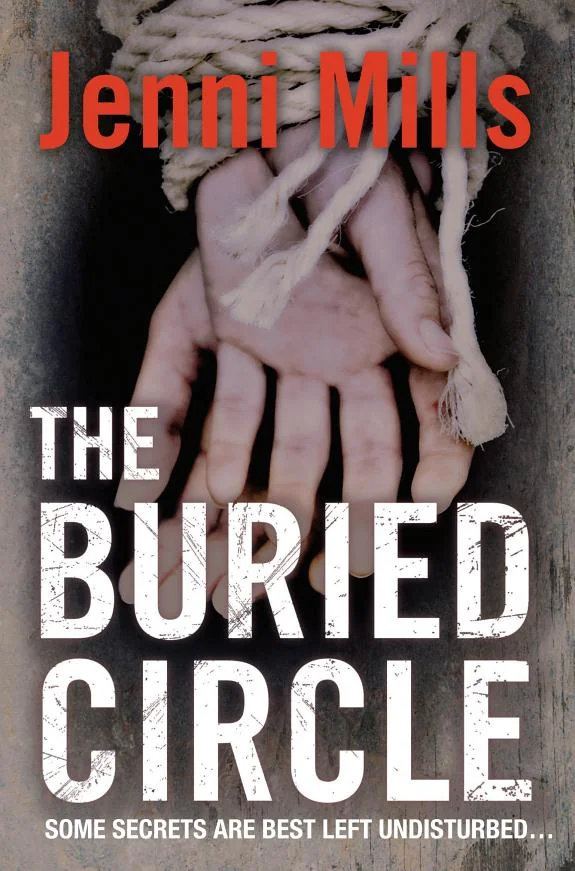
The Buried Circle
 72
72

The Buried Circle
Jenni Mills' 'The Buried Circle' offers a compelling, if occasionally uneven, excursion into the shadowy corners where history, archaeology, and the occult collide. The novel’s strength lies in its atmospheric portrayal of Avebury, a place where the weight of millennia feels palpable. The choice to center the narrative around Alexander Keiller’s 1938 reconstruction project, a historically documented event, grounds the story in a fascinating reality, especially given Keiller’s documented interest in ritual magic. Mills successfully conjures a sense of unease, suggesting that the ancient stones hold secrets far deeper than mere archaeological interest. However, the pacing, while generally brisk, sometimes falters, with certain plot threads feeling less developed than others. A particular passage describing Keiller’s contemplation of the astronomical alignments of the stone circle, juxtaposed with his private magical practices, encapsulates the book’s ambitious thematic reach. While it doesn't entirely escape the conventions of the thriller genre, 'The Buried Circle' provides a distinctive exploration of esoteric history.
Verdict: A richly imagined thriller that excavates the mystical underpinnings of a legendary landscape.
📝 Description
72
In 1938, archaeologist Alexander Keiller's work at Avebury became the backdrop for Jenni Mills' supernatural thriller.
Jenni Mills' novel, 'The Buried Circle,' intertwines historical events with supernatural fiction. The story centers on Alexander Keiller's 1938 efforts to reconstruct the prehistoric stone circle at Avebury, a location known for its ancient mysteries. Mills uses this historical setting to examine the convergence of archaeological investigation and esoteric practices. The narrative draws on Keiller's actual work at the site, adding a factual anchor to a story that questions the interpretation of history.
The book is for readers who enjoy thrillers with intellectual depth, especially those interested in the connections between history, archaeology, and occultism. It will appeal to individuals drawn to stories set in significant historical places and those curious about real figures who explored magical philosophies. Readers looking for a plot with symbolic meaning and a strong sense of place will find the novel rewarding.
The novel situates itself within a tradition that views ancient sites not merely as historical artifacts but as active centers of potent energy. It touches upon the historical interest some intellectuals held in ritual magic and ancient traditions, particularly during periods of significant archaeological discovery. By focusing on Avebury and the figure of Alexander Keiller, Mills engages with concepts of sacred geography and the potential influence of ritualistic practices on historical sites and figures.
💡 Why Read This Book?
• Gain insight into the esoteric significance of Avebury, specifically through its depiction of the 1938 reconstruction efforts by Alexander Keiller, understanding the site as more than just ancient stones. • Explore the historical intersection of archaeology and ritual magic, as exemplified by Keiller's documented interests, offering a unique lens on early 20th-century esoteric thought. • Experience a literary thriller that uses a specific historical event and location to probe themes of hidden knowledge and the power of ancient sites, moving beyond generic mysteries.
⭐ Reader Reviews
Honest opinions from readers who have explored this book.
❓ Frequently Asked Questions
What is the primary setting of 'The Buried Circle' and why is it significant?
The primary setting is Avebury, England, renowned for its Neolithic stone circle, burial mounds, and crop circles. Its significance lies in its ancient history and the esoteric belief that such sites are centers of potent energy, a belief explored by the novel.
Who was Alexander Keiller and what role does he play in the book?
Alexander Keiller was a real-life archaeologist and philanthropist who undertook significant excavations and reconstruction work at Avebury in the 1930s. In 'The Buried Circle,' he is a central character, depicted with a fascination for ritual magic alongside his professional archaeological endeavors.
What year does the main action of 'The Buried Circle' take place?
The main narrative action in 'The Buried Circle' is set in 1938, the year Alexander Keiller planned and executed parts of his ambitious reconstruction of the Avebury stone circle.
Does 'The Buried Circle' incorporate real historical events or figures?
Yes, the novel is firmly rooted in historical reality, featuring the real archaeologist Alexander Keiller and his actual work at Avebury starting in the 1930s. It fictionalizes his personal interests and the surrounding events.
What blend of genres can readers expect from 'The Buried Circle'?
Readers can expect a blend of literary thriller, historical fiction, and esoteric mystery. The book combines a fast-paced plot with elements of occultism, archaeology, and the exploration of ancient sites.
Is the ritual magic depicted in the book based on actual practices?
While the book fictionalizes specific events, it draws upon the historical context of individuals like Alexander Keiller, who were known to have interests in ritual magic and esoteric traditions prevalent in the early 20th century.
🔮 Key Themes & Symbolism
Sacred Geography of Avebury
The novel foregrounds Avebury not merely as a historical site but as a locus of potent energetic forces. It highlights the ancient standing stones, burial mounds, and the reconstructed stone circle as elements of a deliberate, sacred landscape. The narrative suggests that the arrangement and history of these megaliths imbue the location with a unique spiritual or magical quality, influencing events and individuals connected to it. This theme explores how physical geography can intersect with esoteric beliefs, shaping human experience and perception within its boundaries.
Archaeology and Esoteric Practice
Mills intertwines the scientific discipline of archaeology with the exploration of ritual magic, particularly through the figure of Alexander Keiller. The book posits that historical figures involved in uncovering the past may have simultaneously engaged with hidden, magical traditions. It questions whether the study of ancient sites can lead to an understanding of their original esoteric purposes, suggesting a symbiotic relationship between empirical research and occult knowledge. This theme probes the motivations behind historical figures' engagement with both domains.
Reconstruction and Revelation
The act of reconstructing the Avebury stone circle in 1938 serves as a central metaphor. It represents not only the physical restoration of ancient monuments but also the potential for uncovering lost knowledge or hidden truths. The narrative implies that such reconstructions can either reveal or obscure the true nature of the past, depending on the intent and understanding of those involved. This theme examines how historical interpretation and physical intervention can lead to new revelations or perpetuate misunderstandings about ancient mysteries.
The Veil Between Worlds
Central to the thriller aspect is the notion that Avebury exists as a place where the veil between the mundane and the mystical is thin. The ancient stones and the surrounding landscape are portrayed as conduits or thresholds, potentially allowing for communication with deeper forces or hidden realities. The narrative plays on the idea that the site's history and its energetic properties can affect the psychological states and actions of characters, hinting at influences beyond ordinary comprehension.
💬 Memorable Quotes
Direct passages from the work, attributed to the author.
“In 1938, Alexander Keiller planned to reconstruct the 5,000-year-old stone circle at Avebury.”
— This factual anchor highlights the central event that drives the novel's plot, grounding the fictional narrative in a specific historical undertaking and setting the stage for the exploration of esoteric themes.
“The village of Avebury is one of the most mysterious places in the English countryside.”
— This statement sets the atmospheric tone, emphasizing Avebury's reputation for ancient mysteries and its unique landscape, which the novel uses as a potent backdrop for its unfolding events.
“A pacy literary thriller, 'The Buried Circle' is a gripping blend of fact and fiction.”
— This description defines the book's genre and approach, promising a narrative that skillfully merges historical accuracy with imaginative storytelling to create an engaging reading experience.
“Surrounded by ancient standing stones, crop circles and burial mounds, this is a place where all is not as it seems.”
— This evocative phrase emphasizes the enigmatic nature of Avebury, suggesting hidden layers of meaning and reality beneath the surface, a core element that fuels the novel's mystery and suspense.
“The millionaire playboy with a passion for ritual magic.”
— This characterization of Alexander Keiller introduces the intriguing duality of his persona, blending societal status with a private devotion to esoteric practices, a key element driving the novel's exploration of hidden lives.
🌙 Esoteric Significance
Tradition
This work draws implicitly from Western Esotericism, particularly traditions that emphasize sacred geography and earth energies, akin to Druidic or Ley Line theories, though not strictly adhering to any single lineage. It engages with the idea of ancient sites as power centers and conduits for mystical forces. The narrative positions Avebury as a focal point where history, myth, and esoteric practice converge, suggesting a form of immanent spirituality tied to the land itself, rather than a codified magical system.
Symbolism
The primary symbols are the ancient standing stones of Avebury, representing enduring connection to the past, cosmic order, and earth energies. The act of reconstruction symbolizes humanity's attempt to understand and perhaps re-engage with these ancient powers, while also posing questions about authenticity and interpretation. Burial mounds evoke the underworld, ancestral spirits, and the cyclical nature of life and death, serving as reminders of the deep history and potent spiritual presence within the landscape.
Modern Relevance
Contemporary interest in sacred sites, geomancy, and the energetic properties of landscapes carries the themes explored in 'The Buried Circle.' Thinkers and practitioners in fields like earth mysteries, neo-paganism, and ecopsychology often look to sites like Avebury for inspiration and connection. The novel’s exploration of how historical figures grappled with the esoteric dimensions of archaeology speaks to modern efforts to reconcile scientific inquiry with spiritual or intuitive understanding of the natural world.
👥 Who Should Read This Book
• Readers interested in the esoteric history of British megalithic sites, particularly Avebury, who seek a narrative that explores the spiritual and magical dimensions beyond academic archaeology. • Fans of historical thrillers who enjoy plots interwoven with real historical figures and events, especially those intrigued by individuals with unconventional interests like ritual magic. • Students of Western Esotericism looking for fictional explorations of concepts like sacred geography, earth energies, and the potential mystical significance of ancient monuments.
📜 Historical Context
Jenni Mills’ 'The Buried Circle' emerged in 2010, reflecting a continued interest in British prehistory and the esoteric interpretations thereof, a fascination that gained significant traction in the early 20th century. The novel’s 1938 setting places it within a period of intense archaeological activity in Britain, exemplified by Alexander Keiller’s extensive work at Avebury. This era saw figures like Keiller, a wealthy individual with a penchant for the mystical, engaging with ancient sites not just as scientific endeavors but as potential sources of spiritual or magical understanding. The interwar period was also a fertile ground for occult societies and individual practitioners exploring Hermeticism, ceremonial magic, and ancient pagan traditions, often seeking to reconnect with perceived primal energies embodied in megalithic structures. While Keiller himself was a real figure, Mills fictionalizes his occult interests. This work can be seen in dialogue with the broader trend of New Age thought that began to coalesce later, but its roots are firmly in the early 20th-century’s blend of archaeology and esotericism, distinct from, for instance, the more academic archaeological approaches championed by figures like Grahame Clark.
📔 Journal Prompts
Avebury's ancient standing stones as focal points of esoteric energy.
Alexander Keiller's dual passion for archaeology and ritual magic.
The symbolic meaning of reconstructing a 5,000-year-old stone circle.
The concept of 'all is not as it seems' in historically significant landscapes.
Personal reflections on the intersection of historical discovery and hidden knowledge.
🗂️ Glossary
Avebury
A Neolithic henge monument in Wiltshire, England, famous for its large stone circle and associated avenues. It is one of the most significant prehistoric sites in Britain, often associated with mystical and energetic properties.
Alexander Keiller
A prominent British archaeologist and philanthropist known for his extensive work and reconstruction efforts at Avebury during the 1930s. He also had documented interests in esoteric subjects.
Stone Circle
A prehistoric monument consisting of a ring of standing stones. Avebury's is one of the largest and most complex in Britain, believed to have served ceremonial or astronomical purposes.
Burial Mounds
Artificial hills or mounds built over graves, common in prehistoric cultures. They are significant archaeological features and are often imbued with spiritual or ancestral significance in esoteric contexts.
Ritual Magic
A broad term for magical practices involving specific ceremonies, symbols, and intentions, often aimed at achieving spiritual, psychological, or material effects. It was of interest to some intellectuals in the early 20th century.
Sacred Geography
The study and belief in the spiritual or mystical significance of particular places or landscapes, often focusing on how these locations influence human consciousness or serve as centers of power.
Literary Thriller
A genre that combines elements of suspense and excitement typical of thrillers with a more sophisticated literary style, character development, and thematic depth.
This book appears in 1 collection
🔮 Readers Also Liked
Browse all →









From the “Stone Circles” Collection
View all →







More Free Occult Philosophy Books
View all →