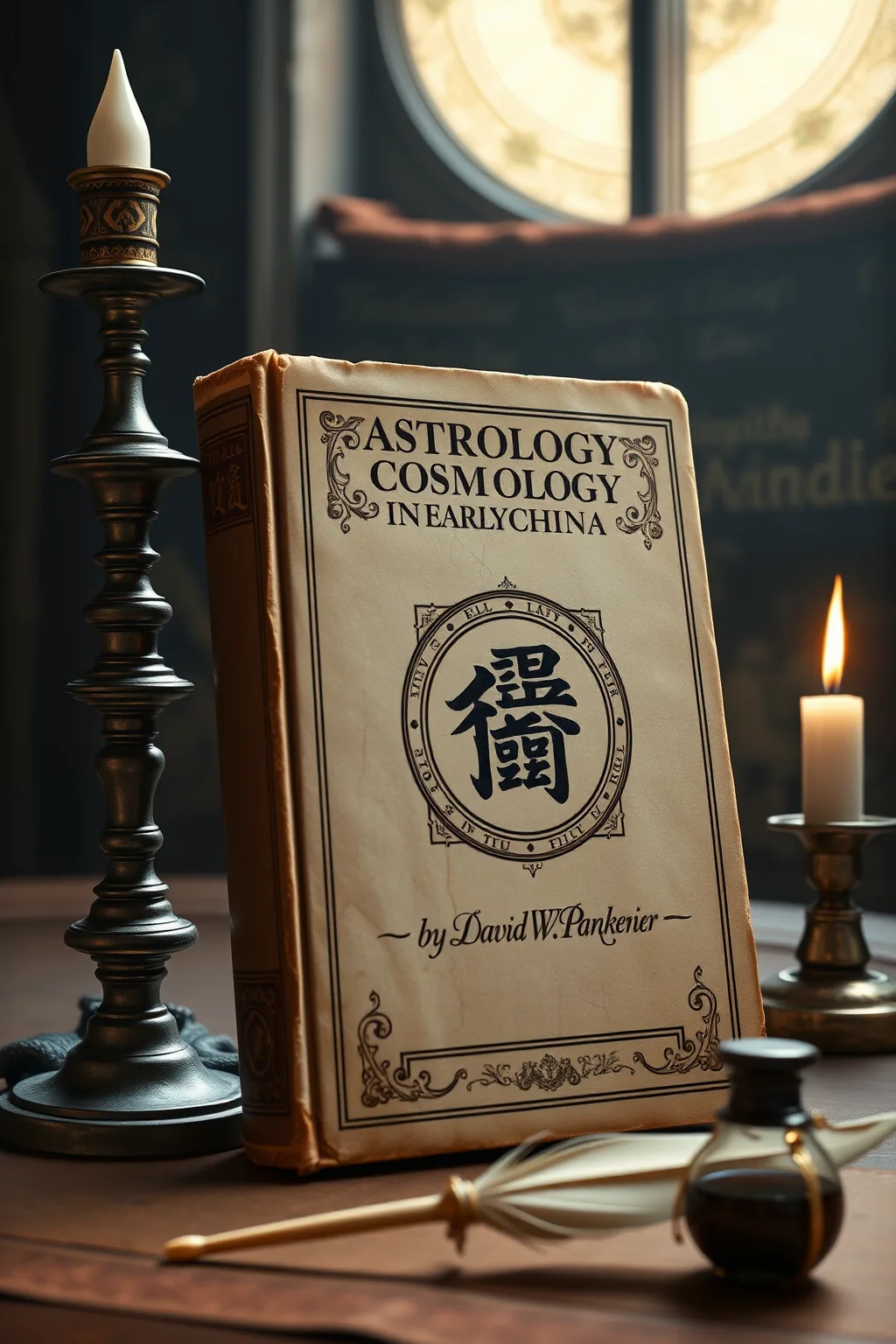
Astrology and Cosmology in Early China
 62
62

Astrology and Cosmology in Early China


Aurelia Blackwood (Occult Philosophy Critic) — David W. Pankenier's *Astrology and Cosmology in Early China* is an indispensable revelation for anyone drawn to the profound interconnectedness of the cosmos and human society. This pioneering study meticulously excavates the esoteric wisdom embedded within early Chinese civilization, demonstrating how celestial observation was not simply scientific but deeply spiritual and divinatory. Pankenier brilliantly elucidates the intricate symbolic language that linked astronomical events to earthly affairs, revealing a sophisticated worldview where cosmic patterns offered guidance for governance, ritual, and personal destiny. A must-read for scholars of ancient wisdom, practitioners of celestial arts, and seekers of hidden knowledge.
📝 Description
62
David W. Pankenier's 1997 book connects early Chinese cosmology with its astrological practices.
In *Astrology and Cosmology in Early China*, David W. Pankenier examines how celestial observation shaped the political and cultural landscape of ancient China. He argues that the movements of the sun, moon, and stars were not just observed but actively integrated into the structuring of society. This integration included the development of complex calendars, the design of imperial architecture, and the interpretation of omens that guided state decisions. Pankenier details how these cosmic patterns were seen as reflections of earthly order, influencing everything from ritual practices to the legitimacy of rulers.
The book traces the origins of these beliefs, showing how early Chinese thinkers perceived a direct correspondence between the celestial realm and human affairs. This worldview permeated various aspects of life, from artistic expression and mythmaking to the practical sciences of calendrics and astronomy. Pankenier's work illustrates a civilization deeply concerned with aligning itself with cosmic principles, believing that such harmony was crucial for stability and prosperity. It provides a detailed look at a society that viewed the heavens as an active participant in earthly governance and human destiny.
This book situates early Chinese astrology and cosmology within a tradition that sought to understand and align human society with perceived cosmic forces. Unlike purely scientific or philosophical inquiries, this tradition viewed celestial events as imbued with meaning and directive power for earthly affairs. It was part of a broader worldview where the universe was seen as an interconnected system, with human actions and cosmic phenomena in constant dialogue. The practices discussed, such as divination based on astral configurations and the construction of calendars to harmonize with celestial cycles, are key elements of this esoteric understanding of the cosmos and humanity's place within it.
💡 Why Read This Book?
Embark on a journey to decipher the cosmic architecture that shaped ancient China. This book offers unparalleled insights into the profound influence of celestial phenomena on a civilization's art, science, and governance. It's essential reading for scholars of ancient history, students of comparative cosmology, and spiritual seekers eager to understand the deep symbiosis between humanity and the heavens, revealing a lost worldview.
⭐ Reader Reviews
Honest opinions from readers who have explored this book.
❓ Frequently Asked Questions
What is the primary focus of the book?
The book's primary focus is on the pervasive influence of astrology and cosmology on the formation and development of ancient Chinese civilization, exploring how celestial observations shaped culture, science, and decision-making.
Who was David W. Pankenier?
David W. Pankenier was a distinguished scholar and professor specializing in Chinese history and the history of science, renowned for his groundbreaking research on ancient Chinese astronomy and cosmology.
Is this book suitable for beginners?
Yes, while scholarly, the book is written in an accessible manner, making it suitable for beginners interested in the topic, as well as advanced students and researchers.
What are some key areas influenced by Chinese cosmology?
Key areas include calendrical science, political and military strategy, art, architecture, myth, and the very conception of the cosmos and humanity's place within it.
Does the book discuss specific astronomical phenomena?
Yes, the book delves into specific astronomical phenomena observed by the ancient Chinese, such as planetary movements, stellar patterns, and celestial portents, and their interpreted significance.
🔮 Key Themes & Symbolism
Celestial Mandate and Imperial Power
This theme explores the profound concept of the 'Mandate of Heaven' (Tianming), where astronomical alignments and celestial events were interpreted as divine pronouncements on the legitimacy and authority of rulers. It reveals how the observation of the heavens was intrinsically linked to political stability and dynastic succession in ancient China, serving as a cosmic validation or condemnation of earthly power. The text illustrates how rulers sought to align their actions and the state's destiny with perceived cosmic order, making astronomy a critical tool of governance and a source of profound philosophical and political discourse.
The Cosmic Mirror: Human Affairs and Astral Echoes
This theme looks at the ancient Chinese belief that the cosmos served as a direct mirror to human affairs, and vice-versa. It examines how the patterns and movements observed in the celestial sphere were meticulously mapped onto earthly phenomena, influencing everything from agricultural cycles and societal rituals to individual destinies and grand historical narratives. The book uncovers the intricate system of correspondences, where specific stars, constellations, and planetary configurations were believed to hold sway over different aspects of the human world, fostering a deep sense of interconnectedness and cosmic responsibility.
Astronomy as the Foundation of Chinese Culture
Here, the focus is on how astronomy was not merely a scientific pursuit but a foundational element that permeated every facet of ancient Chinese culture. From the design of imperial palaces and city layouts, intended to align with cosmic principles, to the development of sophisticated calendars essential for societal organization and religious observance, astronomy provided the underlying structure. The text demonstrates how this cosmic worldview informed artistic expression, philosophical thought, and technological innovation, presenting a holistic vision where the celestial realm was the ultimate source of order, meaning, and civilization's very essence.
💬 Memorable Quotes
Direct passages from the work, attributed to the author.
“Civilization itself was an attempt to mirror the celestial order.”
— This highlights the profound aspiration of ancient Chinese society to replicate the perceived harmony and structure of the cosmos in their own societal organization and daily existence.
“Astronomy was the language through which the divine communicated with the earthly realm.”
— This emphasizes the divinatory and spiritual dimension of ancient Chinese astronomy, viewing celestial observations as messages from a higher power.
“Every movement of the stars held a cosmic significance for the empire.”
— This underscores the belief that even minute celestial changes were imbued with meaning and could portend significant events for the state and its people.
“The Chinese worldview saw a profound unity between the terrestrial and the celestial.”
— This points to the holistic perspective of ancient China, where the areas of earth and sky were not separate but intrinsically linked in a dynamic and meaningful relationship.
💡 Key Ideas
Editorial paraphrase of the work's core concepts — not direct quotes.
The heavens were not a detached spectacle, but an active participant in shaping earthly destiny.
This quote expresses the core belief that celestial bodies and events possessed agency, directly influencing and guiding human lives and the course of history in ancient China.
🌙 Esoteric Significance
Tradition
The esoteric significance of *Astrology and Cosmology in Early China* lies deeply within the ancient Chinese metaphysical tradition, particularly its integration of I Ching (Book of Changes) principles and Daoist cosmology. It reveals a worldview where the universe is governed by cyclical patterns and dynamic forces (Qi), and where human destiny is intricately interwoven with these cosmic rhythms. This tradition emphasizes the pursuit of harmony and balance by understanding and aligning with these celestial energies, offering a path to spiritual insight and practical wisdom for navigating life's complexities.
Symbolism
The book unlocks the strong symbolism inherent in ancient Chinese cosmology. Key symbols include the Yin and Yang duality, representing complementary cosmic forces; the Five Elements (Wood, Fire, Earth, Metal, Water), which govern interactions and transformations; and the constellations and celestial bodies themselves, each imbued with specific meanings and influences. These symbols were not mere decorations but were integral to understanding cosmic order, predicting events, and guiding human actions, forming a sophisticated symbolic language connecting the macrocosm to the microcosm.
Modern Relevance
In a world increasingly driven by logic and materialism, this book offers a vital reminder of the profound wisdom found in cyclical, holistic, and spiritually informed worldviews. It provides a lens through which to understand the enduring human desire to find meaning and order in the universe, and to connect with something larger than ourselves. The principles of cosmic harmony and interconnectedness explored here can offer valuable perspectives for personal growth, environmental consciousness, and a more integrated understanding of our place within the grand set of existence.
👥 Who Should Read This Book
This informative work is essential for scholars of East Asian history, comparative religion, and the history of science, offering rigorous academic insight into a crucial, yet often overlooked, field. Spiritual seekers and practitioners of esoteric arts will find profound wisdom in the deep connection between celestial events and human destiny, revealing timeless principles of cosmic order. Beginners curious about ancient belief systems will discover an accessible yet comprehensive introduction to a worldview that profoundly shaped a major civilization. Ultimately, anyone yearning to understand the deeper currents of human civilization and its relationship with the cosmos will find this book a transformative and enlightening read.
📜 Historical Context
During the formative centuries of early China, spanning dynasties like the Shang, Zhou, Qin, and Han, the cosmos was not a distant abstraction but an immediate and vital force. This was an era where the relationship between the celestial and terrestrial realms was deeply scrutinized and understood as a fundamental principle governing all existence. Astronomical observation was not solely a scientific endeavor; it was a critical component of statecraft, religious practice, and philosophical inquiry. The perceived order of the heavens was directly correlated with the stability and legitimacy of the ruling dynasty, as embodied in the concept of the Mandate of Heaven. Calendrical science, vital for agricultural planning and societal organization, was intrinsically tied to astronomical cycles. This period witnessed the meticulous charting of stars, planets, and celestial phenomena, which were then interpreted through complex symbolic systems to divine auspicious times for rituals, warfare, and governance. The intellectual landscape was deeply imbued with a sense of cosmic interconnectedness, where human actions were seen as echoing or influencing celestial movements, and vice-versa, creating a unique synthesis of science, spirituality, and political ideology.
📔 Journal Prompts
How might ancient Chinese astronomical observations have influenced their understanding of time and causality?
Reflect on a personal experience where you felt a connection to celestial phenomena. How did it impact your perception?
Consider the concept of 'Mandate of Heaven' in relation to modern leadership and governance. What parallels or divergences do you observe?
Explore the idea of the universe as a 'mirror' of human affairs. What does this imply about our interconnectedness with the cosmos?
In what ways can understanding ancient cosmological systems inform our approach to contemporary challenges, such as environmental sustainability or societal harmony?
🗂️ Glossary
Cosmology
The study of the origin, evolution, and eventual fate of the universe. In the context of early China, it refers to their sophisticated understanding and conceptualization of the structure and order of the cosmos and humanity's place within it.
Astrology
The study of the movements and relative positions of celestial bodies, interpreted as having an influence on human affairs and the natural world. In early China, it was deeply intertwined with astronomy.
Mandate of Heaven (Tianming)
A traditional Chinese political and religious doctrine used to justify the rule of the King or Emperor of China. It was believed that Heaven granted emperors the right to rule based on their ability to govern well and justly.
Yin and Yang
A fundamental concept in Chinese philosophy describing how seemingly opposite or contrary forces may actually be complementary, interconnected, and interdependent in the natural world, and how they give rise to each other as they interrelate.
Five Elements (Wuxing)
A Chinese philosophical concept of dynamic and interconnected phases or transitions that describe all the natural phenomena, including the cycles of creation and destruction. They are Wood, Fire, Earth, Metal, and Water.
This book appears in 2 collections
🔮 Readers Also Liked
Browse all →








More by David W. Pankenier
All books →
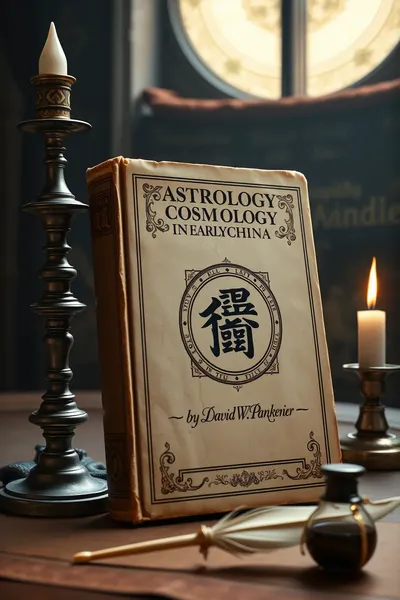
From the “Astrology” Collection
View all →




![Mrs. Davis, (no. 7.) Crown Court, Little Poultney Street, Wardour Street, Soho, ... name and clock face on the door. Who has studied the occult sciences under the most learned sages after many years studious application; answers all adimssable [sic] questions in astrology, ... 1780](/img/thumb/mrs-davis-no-7-crown-court-little-poultney-street-wardour-street-soho-name-and-clock-face-on-the-door-who-has-studied-the-occult-sciences-under-the-most-learned-sages-after-many-years-studious-applica.webp)


More Free Astrology & Cosmology Books
View all →