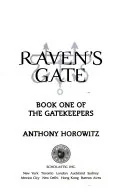
Raven's Gate
 75
75

Raven's Gate
Horowitz's "Raven's Gate" presents a starkly effective portrayal of adolescent alienation amplified by genuinely unsettling supernatural forces. Matt’s arrival in Black Creek, a village steeped in an ominous quietude, immediately signals that this is no ordinary foster placement. The author excels at building tension through Matt’s growing unease and the subtle, then overt, manifestations of dark magic. A particular strength lies in the depiction of the local community, whose inhabitants harbor secrets that manifest as both insular suspicion and active participation in the occult plot. However, the resolution, while climactic, feels somewhat rushed, leaving certain character arcs less developed than the central mystery. The depiction of the ancient stone circle's power, while central, could have benefited from further exploration of its specific esoteric origins. Despite this, "Raven's Gate" remains a potent and atmospheric tale of confronting primal evil.
📝 Description
75
Anthony Horowitz's Raven's Gate, published in 2006, pits a troubled teen against dark Yorkshire magic.
Matt, a fourteen-year-old with a difficult past, is sent to live in the remote Yorkshire village of Black Creek. What appears to be an idyllic setting quickly reveals itself as the center of a sinister plot. As Matt adjusts to his new life, he stumbles upon a hidden world of dark magic and ancient secrets that threaten the village.
The narrative follows Matt as he uncovers a conspiracy tied to the village's history and a malevolent force. He learns that ancient evils can lie dormant, awakened by specific circumstances or individuals, often in historically significant places. This story draws from classic occult elements, blending them with the struggles of contemporary adolescence.
Readers interested in suspenseful plots, atmospheric settings, and the clash between modern life and old folklore will find this novel engaging. It explores themes of confronting evil and finding one's place within a world where the past actively influences the present.
Published in 2006, Raven's Gate taps into a tradition of British occult fiction that uses isolated settings and ancient folklore to create a sense of unease. The novel's focus on a hidden coven and a reawakening malevolent force aligns with narratives exploring the persistence of older, supernatural powers beneath the surface of everyday life. The integration of specific geographical locations, like the Yorkshire village, with ancient practices echoes a long-standing literary device used to ground supernatural threats in a tangible reality, suggesting that such powers are tied to the land itself.
💡 Why Read This Book?
• Understand the insidious nature of local cults and how they operate within seemingly normal communities, exemplified by the villagers' pacts around the ancient stone circle. • Experience the visceral fear of an ancient evil being reawakened, specifically the malevolent entity tied to the Yorkshire landscape and its history. • Discover how an outsider, Matt, must confront and overcome powerful witchcraft, drawing parallels to real-world struggles against overwhelming negative forces.
⭐ Reader Reviews
Honest opinions from readers who have explored this book.
❓ Frequently Asked Questions
What is the primary setting for Anthony Horowitz's Raven's Gate?
Raven's Gate is primarily set in the remote Yorkshire village of Black Creek, a location chosen for its isolated atmosphere and proximity to an ancient stone circle.
Who is the protagonist of Raven's Gate?
The protagonist is Matt, a troubled fourteen-year-old boy who is sent to live in Black Creek and becomes entangled in the village's dark secrets.
What supernatural elements are present in Raven's Gate?
The novel features witchcraft, a malevolent ancient entity, and a coven of villagers involved in occult practices, all connected to the historical site of a stone circle.
When was Raven's Gate first published?
Raven's Gate was first published in 2006.
Does Raven's Gate involve any specific historical or mythological references?
Yes, the book draws on folklore associated with ancient stone circles and the concept of localized malevolent spirits or entities tied to the land.
What is the main conflict Matt faces in Raven's Gate?
Matt's main conflict is uncovering and surviving an evil plot involving witchcraft and the awakening of an ancient power centered around the village's stone circle.
🔮 Key Themes & Symbolism
Ancient Evil and Place
The narrative powerfully connects a malevolent supernatural force to a specific geographical location, the Yorkshire village and its ancient stone circle. This reflects a common esoteric concept where places of power, especially those with pre-Christian or pagan associations, can become focal points for lingering energies or entities. The book explores how this 'earthbound' evil can subtly influence or directly corrupt inhabitants, manifesting through rituals and dark pacts, particularly when an unsuspecting outsider like Matt arrives.
Witchcraft and Coven Dynamics
Raven's Gate explores the mechanics of a localized coven, portraying witchcraft not as individualistic magic but as a communal, often sinister, practice. The villagers' participation in dark rituals and their collective effort to harness or appease the ancient entity highlight the power and danger of group occult endeavors. This focus on the coven's structure and their shared, often fearful, adherence to tradition offers a fictional exploration of how such groups might operate in secrecy.
Adolescent Outsider vs. Established Darkness
The protagonist, Matt, embodies the archetype of the adolescent outsider thrust into a world far beyond his comprehension. His isolation and past trauma make him both vulnerable and, paradoxically, a potential catalyst for confronting the entrenched evil. This theme mirrors esoteric narratives where an individual, often uninitiated, must face powerful forces through inner resilience and the uncovering of hidden truths, becoming a linchpin in the struggle against established darkness.
Folklore and Modernity
The novel effectively juxtaposes the ancient, primal forces tied to the Yorkshire landscape with the modern reality of a fourteen-year-old boy's life. It suggests that deeply embedded folklore and pagan remnants can persist beneath the surface of contemporary society, waiting to reassert their influence. The ancient stone circle serves as a potent symbol of this enduring connection to older ways and powers, contrasting sharply with Matt's ordinary background.
💬 Memorable Quotes
Direct passages from the work, attributed to the author.
“The stones hummed with a power that predated memory, a dark energy waiting to be stirred.”
— This interpretation highlights the ancient stone circle's significance as a nexus of primal, potentially dangerous, energy. It implies the location is not merely historical but actively holds a dormant, malevolent force.
“They weren't just villagers; they were keepers of a pact, bound to the darkness that slept beneath the moors.”
— This captures the idea that the inhabitants of Black Creek are not simply superstitious but actively involved in maintaining a dark covenant, suggesting a deliberate and communal engagement with malevolent forces.
“He realized the true horror wasn't the magic itself, but the mundane faces that wielded it.”
— This reflects Matt's dawning realization that the practitioners of witchcraft are ordinary villagers, underscoring the theme that evil can reside in plain sight, hidden within the fabric of everyday life.
“The gate wasn't just a place; it was a threshold, a point of no return into the village's hidden world.”
— This interpretation emphasizes the symbolic significance of 'Raven's Gate' as a metaphorical and possibly literal boundary. Crossing it means entering a realm where normal rules do not apply, and ancient, dangerous forces hold sway.
💡 Key Ideas
Editorial paraphrase of the work's core concepts — not direct quotes.
Matt felt the village watching him, a silent, collective gaze that seemed to hold ancient disapproval.
This paraphrased concept captures the oppressive atmosphere of Black Creek, suggesting the community itself acts as a unified entity, imbued with a deep-seated, perhaps supernatural, suspicion towards outsiders like Matt.
🌙 Esoteric Significance
Tradition
While not explicitly aligned with a single esoteric tradition, Raven's Gate draws heavily from British folklore and neo-pagan concepts concerning sacred sites and earth-bound spirits. It echoes themes found in older occult literature that associates specific landscapes, particularly ancient megalithic structures, with potent, often dangerous, energies. The work can be seen as a modern fictional exploration of animistic beliefs and the idea that certain locations retain a consciousness or power tied to their history and natural elements.
Symbolism
The most prominent symbol is the ancient stone circle, representing a nexus of primal power, a gateway between worlds, or a site of ancient rituals. Its presence signifies a connection to pre-Christian beliefs and the enduring influence of the land itself. The 'raven' in the title likely symbolizes ill omen, death, or a messenger from the spirit world, a common motif in folklore associated with darker magic and prophecy. The village itself, Black Creek, functions as a symbol of hidden corruption and a community bound by shared, sinister secrets.
Modern Relevance
Contemporary discussions within occult and esoteric circles often touch upon the power of place and the resurgence of interest in folk magic and local deities. Raven's Gate, despite being a fictional work, speaks to these modern sensibilities by illustrating how ancient energies and practices can persist and manifest in contemporary settings. It appeals to practitioners of geomancy, folk witchcraft, and those interested in the intersection of landscape and spiritual power, demonstrating a continued fascination with the idea that the land itself holds potent, often untamed, magic.
👥 Who Should Read This Book
• Young adult readers aged 12-16 seeking atmospheric thrillers with supernatural elements and a strong sense of mystery. • Fans of dark folklore and stories that explore the hidden dangers within seemingly ordinary rural communities. • Aspiring writers interested in how to blend adolescent coming-of-age narratives with classic horror and occult themes.
📜 Historical Context
Published in 2006, Raven's Gate emerged during a fertile period for young adult supernatural fiction, a genre that had seen a resurgence with works exploring darker themes. Anthony Horowitz, already a celebrated author for younger audiences, entered this space with a narrative that tapped into enduring British folklore surrounding ancient sites like stone circles. This era saw authors like J.K. Rowling (though her work predates this, its continued dominance shaped the market) and Stephenie Meyer achieving massive success, indicating a strong reader appetite for the fantastical. Unlike the more overtly magical schools of Hogwarts, Horowitz grounded his supernatural elements in a seemingly ordinary, remote village setting, playing on anxieties about hidden communities and local malevolence. Contemporary to Raven's Gate, authors like Jonathan Stroud were also exploring dark fantasy for young adults, though often with different stylistic approaches, such as Stroud's focus on demons and ghost-hunting in the Bartimaeus Sequence. The reception of such books often hinged on their ability to blend relatable adolescent struggles with genuinely frightening supernatural elements, a balance Horowitz sought to strike.
📔 Journal Prompts
The oppressive atmosphere of Black Creek and its ancient stone circle.
Matt's initial feelings of displacement and his eventual confrontation with the coven.
The symbolic meaning of the ravens appearing throughout the narrative.
The ways in which the villagers' fear and belief enable the ancient evil.
The transformation of the seemingly idyllic Yorkshire setting into a source of dread.
🗂️ Glossary
Ancient Stone Circle
A prehistoric monument consisting of a ring of standing stones, often associated with ritualistic or astronomical purposes, and in fiction, frequently depicted as a site of powerful, sometimes malevolent, energy.
Coven
A group or assembly of witches, typically meeting for ritualistic purposes. In Raven's Gate, it refers to the clandestine group of villagers practicing dark magic.
Witchcraft
The practice of magic, typically involving spells, rituals, and invocation of supernatural powers, often portrayed in fiction as a means to gain influence or control.
Folklore
The traditions, customs, and beliefs of a community or nation, often passed down orally, which form the basis for many supernatural narratives.
Pact
A formal agreement or treaty, often used in occult contexts to describe a deal made with supernatural entities, usually involving an exchange of service or loyalty for power.
Threshold
A point of entry or beginning; in Raven's Gate, it signifies the boundary between the ordinary world and the hidden, dangerous reality of the village.
Yorkshire Moors
A large area of undeveloped upland in northern England, known for its rugged landscape, which contributes to the isolated and atmospheric setting of the novel.
This book appears in 1 collection
🔮 Readers Also Liked
Browse all →








From the “Stone Circles” Collection
View all →






More Free Occult Philosophy Books
View all →