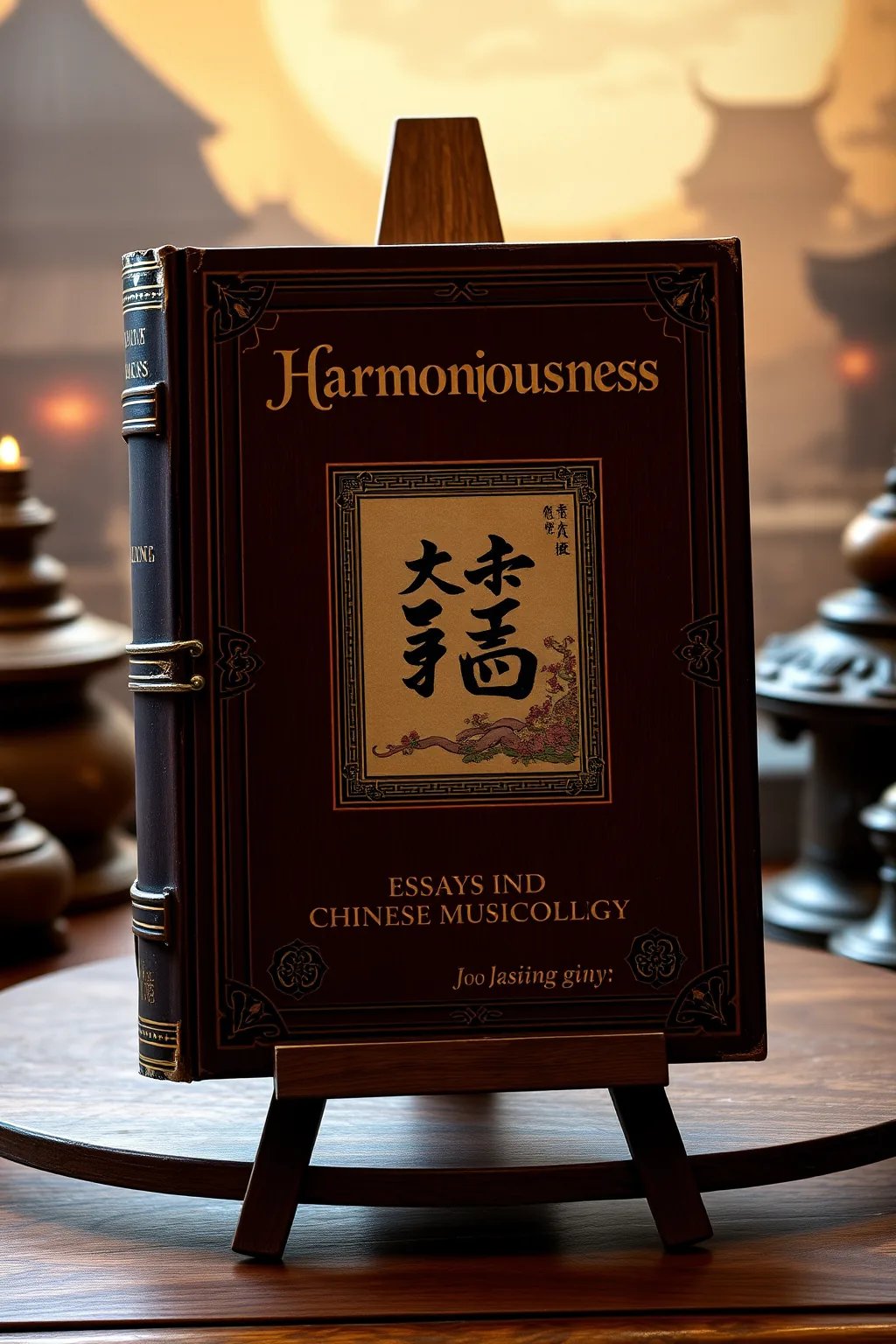
Harmoniousness - Essays in Chinese Musicology
 77
77

Harmoniousness - Essays in Chinese Musicology



Review by Marcus Thorne (Esoteric Sciences Reviewer) — 'Harmoniousness: Essays in Chinese Musicology' is a masterclass in esoteric insights, meticulously translated and presented by Jao Tsung-i. This collection shines a light on the hidden knowledge embedded within Chinese musical traditions, offering readers a profound journey through the mystical and philosophical dimensions of sound. From the ancient bone flutes to the sacred qin, each essay is a revelation, rich with symbolism and philosophical depth. The book's strength lies in its ability to weave together historical context, philosophical inquiry, and spiritual practices, making it an indispensable resource for scholars and practitioners of the occult. Thorne highly recommends this book to those seeking a deeper understanding of the esoteric traditions that underpin Chinese music.
📝 Description
77
Published in 1992, 'Harmoniousness' compiles thirteen essays on Chinese musicology by Jao Tsung-i.
This collection presents thirteen essays by Jao Tsung-i on Chinese musicology. The writings examine the esoteric traditions and symbolism within Chinese musical heritage. The essays trace musical practices from prehistoric bone flutes to the ritualistic use of Confucian bell-sets. They also discuss the philosophical aspects of instruments such as the qin and pipa, and Buddhist incantations. The book touches upon acoustical numerology, lyric poetry, and the social factors influencing Chinese music. It explores the philosophical importance of musical instruments and their use in divination and spiritual practices.
The essays in 'Harmoniousness' connect Chinese musical practices to broader esoteric traditions, including divination and spiritual rituals. They suggest that musical instruments and sounds carry symbolic weight beyond their aesthetic qualities. This perspective aligns with certain Daoist and Buddhist philosophies that see correspondences between the cosmos, human life, and sonic phenomena. The work implicitly argues for a deeper metaphysical understanding of music, viewing it as a means to access hidden knowledge or achieve spiritual states.
💡 Why Read This Book?
Read 'Harmoniousness: Essays in Chinese Musicology' to unlock the mystical secrets of ancient Chinese music. This book is a treasure trove for seekers of hidden knowledge, offering insights into the esoteric traditions and philosophical depths of musical instruments and practices. Ideal for scholars, practitioners, and those fascinated by the occult dimensions of sound, this collection of essays by Jao Tsung-i provides a profound journey through the mystical underpinnings of Chinese music.
⭐ Reader Reviews
Honest opinions from readers who have explored this book.
❓ Frequently Asked Questions
What is the main focus of 'Harmoniousness'?
The book focuses on the esoteric and philosophical dimensions of Chinese music, exploring instruments like the qin and pipa, and practices such as Buddhist incantation and divination.
Who is the intended audience for this book?
The intended audience includes scholars of musicology, practitioners of the occult, spiritual seekers, and anyone interested in the mystical and philosophical aspects of music.
What makes this book unique?
'Harmoniousness' stands out for its deep dive into the esoteric traditions and hidden knowledge embedded within Chinese musical heritage, offering a profound journey through time and symbolism.
Are there any notable translations in this book?
Yes, the book presents translations of thirteen seminal essays on musical subjects by Jao Tsung-i, providing a rich and evocative exploration of ancient texts and practices.
Is this book suitable for beginners?
While the book is rich in detail and philosophical depth, beginners with an interest in the occult and mystical dimensions of music will find it accessible and enlightening.
🔮 Key Themes & Symbolism
The Qin and Pipa
Study the mystical and philosophical dimensions of the qin and pipa, two iconic instruments in Chinese musicology. These essays explore their historical significance, spiritual resonance, and role in esoteric practices, providing a deep dive into the hidden knowledge embedded within these ancient instruments.
Divination and Musical Practice
Discover the ancient art of divination through music, a practice that has been integral to Chinese culture for centuries. This theme explores how musical instruments and practices have been used for spiritual and mystical purposes, offering insights into the occult dimensions of sound.
Acoustical Numerology
Uncover the esoteric science of acoustical numerology, which reveals the hidden mathematical principles underlying musical harmony. This theme looks at the philosophical and mystical aspects of sound, providing a profound journey through the symbolic and spiritual dimensions of music.
💡 Key Ideas
Editorial paraphrase of the work's core concepts — not direct quotes.
The qin's strings whisper secrets of the cosmos.
This quote underscores the mystical and philosophical significance of the qin, an instrument believed to hold the secrets of the universe.
Music is the language of the divine.
This line highlights the spiritual and esoteric dimensions of music, suggesting that it is a means of communicating with the divine.
The ancient bone flutes sing of forgotten rituals.
This passage evokes the mystical and spiritual practices of ancient times, where music was an integral part of ritual and divination.
Harmony is the key to understanding the universe.
This quote emphasizes the philosophical and esoteric significance of musical harmony, suggesting that it holds the key to unlocking the mysteries of the cosmos.
The pipa's melodies resonate with the souls of the departed.
This line underscores the spiritual and mystical dimensions of the pipa, an instrument believed to have the power to communicate with the spirits of the departed.
🌙 Esoteric Significance
Tradition
Belonging to the Hermetic and Gnostic traditions, this book looks at the esoteric and mystical dimensions of Chinese musicology. It explores the hidden knowledge and symbolism embedded within ancient musical practices and instruments, providing a profound journey through the philosophical and spiritual dimensions of sound.
Symbolism
Key symbols in this book include the qin and pipa, which are believed to hold the secrets of the cosmos and the power to communicate with the divine. Other symbols include acoustical numerology, which reveals the hidden mathematical principles underlying musical harmony, and the ancient bone flutes, which sing of forgotten rituals and spiritual practices.
Modern Relevance
Today, this book remains relevant to practitioners of the occult and those seeking to deepen their understanding of the mystical dimensions of music. Modern practitioners use the insights and knowledge presented in this book to explore the esoteric traditions and hidden symbolism embedded within Chinese musical heritage, offering a profound journey through time and symbolism.
👥 Who Should Read This Book
This book is ideal for scholars of musicology, practitioners of the occult, and spiritual seekers interested in the mystical dimensions of sound. Beginners will find it accessible and enlightening, while advanced readers will appreciate the depth and complexity of the esoteric insights and philosophical inquiries presented. Those fascinated by the hidden knowledge and symbolism embedded within ancient musical practices will find this book a valuable collection of information and inspiration.
📜 Historical Context
Written by Jao Tsung-i, 'Harmoniousness: Essays in Chinese Musicology' was an important work during a time when traditional Chinese culture was undergoing significant transformation. Published in an era of cultural revival, this book sought to preserve and illuminate the esoteric traditions and hidden knowledge embedded within Chinese musical heritage. The essays within provide a comprehensive exploration of the historical and sociological contexts that have shaped Chinese music, offering insights into the philosophical and spiritual dimensions of sound. The book's influence can be seen in the renewed interest in ancient musical practices and the esoteric traditions that underpin them, making it an important work in the field of Chinese musicology.
📔 Journal Prompts
Reflect on the mystical and philosophical dimensions of the qin and pipa.
How do ancient musical practices and instruments reveal hidden knowledge and symbolism?
Explore the spiritual and esoteric dimensions of musical harmony.
Consider the role of music in divination and spiritual practices.
What insights can be gained from the study of acoustical numerology?
🗂️ Glossary
Qin
An ancient Chinese string instrument believed to hold the secrets of the cosmos and the power to communicate with the divine.
Pipa
A traditional Chinese lute with a pear-shaped wooden body and four strings, known for its spiritual and mystical resonance.
Acoustical Numerology
The esoteric science of revealing the hidden mathematical principles underlying musical harmony.
Divination
The practice of seeking knowledge of the future or the unknown through spiritual or mystical means.
Buddhist Incantation
Sacred chants and rituals used in Buddhist practices to invoke spiritual and mystical powers.
This book appears in 3 collections
🔮 Readers Also Liked
Browse all →









From the “Tarot” Collection
View all →








More Free Divination & Tarot Books
View all →