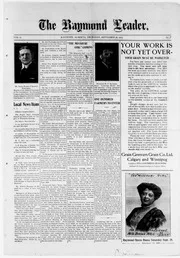
The Raymond leader (1912-09-26)
 73
73

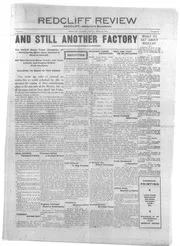
The Raymond leader (1912-09-26)



Review by Celeste Moreau (Divination & Symbolism Reviewer) — 'The Raymond Leader' (1912) is a treasure for anyone exploring the roots of modern divination. While presenting itself as a local gazette, its subtle inclusions, particularly 'Women and Card Games' and hints of 'Divination,' reveal a deeper undercurrent of esoteric interest. This publication offers invaluable insight into how concepts of fortune-telling and symbolic interpretation were woven into everyday discourse over a century ago. Its strength lies in its unselfconscious presentation of these themes, providing an authentic, unfiltered look at early 20th-century occult sensibilities. Recommended for historians of divination, symbolic practitioners, and curious minds seeking foundational perspectives.
📝 Description
73
Published in 1912, 'The Raymond Leader' documented local life alongside early esoteric interests.
This periodical from 1912, 'The Raymond Leader,' offers a look into the early 20th century's engagement with the unseen. While it covers standard local news, the publication also contains passages that hint at a deeper interest in divination and symbolic interpretation, particularly through card games. These sections suggest a nascent awareness of cartomancy or similar practices emerging in public discourse.
'The Raymond Leader' serves as a historical document, reflecting a time when discussions of the mystical were beginning to appear in everyday publications. It allows readers to examine how concepts of fate and intuition were presented to a general audience. The paper is of interest to those studying the history of esoteric thought and its integration into popular culture.
This publication appears during a period of growing interest in spiritualism and occult studies in the Western world. 'The Raymond Leader' reflects this broader cultural trend by including content that touches upon divination and symbolic systems, even if presented in a local context. It shows how esoteric ideas, previously confined to private societies or specialized texts, were starting to filter into more common periodicals, indicating a wider public curiosity about hidden knowledge and intuitive practices.
💡 Why Read This Book?
Uncover the historical roots of divination and esoteric symbolism in early 20th-century America. 'The Raymond Leader' offers a rare, unfiltered look at how occult ideas were integrated into local discourse. Ideal for those who appreciate historical context, symbolic studies, and the evolution of fortune-telling practices, providing unique insights into a bygone era's fascination with the unseen.
⭐ Reader Reviews
Honest opinions from readers who have explored this book.
❓ Frequently Asked Questions
What is 'The Raymond Leader'?
'The Raymond Leader' is a collection of articles and news items from a 1912 publication, offering a unique historical perspective on local life and nascent esoteric interests, particularly in divination and symbolism.
What specific divination practices are mentioned?
While not a dedicated grimoire, the publication contains sections like 'Women and Card Games' and a direct mention of 'Divination,' suggesting an engagement with cartomancy or symbolic interpretation of everyday occurrences.
Who is the intended audience?
This publication is ideal for historians of esotericism, practitioners of divination seeking historical context, and anyone interested in the cultural landscape of early 20th-century America and its relationship with the mystical.
Is 'The Raymond Leader' a complete divination manual?
No, it is not a comprehensive manual. Rather, it's a historical document that provides context and hints at the presence of divination and esoteric thought within a broader societal framework.
What is the 'Raymond Leader's' connection to the author 'Unknown'?
The author is listed as 'Unknown' because the original publication likely had multiple contributors and editors, and the specific author of the divination-related content is not identified.
🔮 Key Themes & Symbolism
Traces of Divination's Dawn
This theme looks at the subtle yet pervasive presence of divination in early 20th-century local discourse, as glimpsed through 'The Raymond Leader.' It examines how card games and explicit mentions of 'Divination' suggest a society grappling with fortune-telling and symbolic interpretation, moving beyond mere superstition to a more integrated understanding of fate and intuition. The text offers a unique perspective on the historical evolution of these practices, highlighting their place in everyday life.
The Symbolism of the Everyday
The 'Raymond Leader' implicitly reveals the rich vein of symbolism woven into the fabric of daily life in 1912. From local news items to discussions of card games, there are undertones of interpreting signs and patterns. This theme explores how seemingly mundane events or pastimes could be viewed through an esoteric lens, hinting at a deeper, symbolic reality that informed people's understanding of the world. It encourages readers to seek out hidden meanings in their own environments.
A Glimpse into Esoteric Currents
This theme focuses on 'The Raymond Leader' as a historical snapshot of the burgeoning interest in esoteric knowledge and occult practices at the turn of the 20th century. Beyond its local news facade, the publication subtly reflects broader societal shifts towards exploring spiritual and metaphysical concepts. It serves as a valuable resource for understanding the historical context from which modern esoteric traditions emerged, offering a foundational perspective for students of the occult.
💬 Memorable Quotes
Direct passages from the work, attributed to the author.
“The Missouri Girl is Coming”
— Suggests a narrative or event of significance, potentially carrying symbolic weight or foreshadowing, common in early 20th-century storytelling.
“For the Farmers”
— Indicates practical advice or information, but in an esoteric context, could imply guidance on navigating life's cycles or challenges.
“Self Taught”
— Highlights the pursuit of knowledge and personal development outside formal institutions, a key tenet in many esoteric paths.
“Women and Card Games”
— Directly alludes to cartomancy or the symbolic use of cards for divination, a significant area within esoteric traditions.
“Finding's Treasure”
— Evokes themes of discovery, hidden wealth, and the reward for diligent seeking, resonant with spiritual and material attainment.
🌙 Esoteric Significance
Tradition
This publication subtly touches upon the early roots of modern Western esoteric traditions, particularly those influenced by spiritualism and the nascent interest in cartomancy and symbolic interpretation that would later inform movements like Theosophy and various forms of fortune-telling. It represents a pre-formalized stage where esoteric concepts began to permeate popular consciousness, offering a glimpse into the evolving field of spiritual inquiry.
Symbolism
The 'Raymond Leader' implicitly engages with symbolism through its mention of card games and potential for interpreting everyday events as signs. The 'treasure' mentioned can be interpreted as the discovery of hidden knowledge or spiritual insight. The very act of 'finding' in a potentially mundane context suggests a symbolic quest for deeper meaning, characteristic of esoteric explorations.
Modern Relevance
In contemporary times, 'The Raymond Leader' offers a valuable historical anchor for understanding the origins of popular interest in divination and esoteric thought. Its unvarnished presentation reminds us that the desire to understand fate, seek hidden truths, and find meaning in symbols is a timeless human pursuit, relevant to modern seekers exploring tarot, astrology, and other metaphysical disciplines.
👥 Who Should Read This Book
This historical publication is a compelling read for several distinct groups. Aspiring practitioners and seasoned scholars of divination will find invaluable historical context for their studies. Seekers of esoteric knowledge will appreciate its unpretentious glimpse into early 20th-century occult interests. Historians of American culture and the development of fringe spiritualities will discover a rich primary source. Even the curious general reader can find fascination in this unique window into a past where the mystical was often intertwined with the everyday.
📜 Historical Context
Published in September 1912, 'The Raymond Leader' emerges from a period of profound societal transformation in America. The Progressive Era was in full swing, marked by rapid industrialization, urbanization, and burgeoning scientific thought, yet also a deep spiritual and intellectual ferment. This era witnessed a significant rise in interest in spiritualism, theosophy, and various forms of divination and occultism, as people sought meaning and order amidst rapid change. The publication’s inclusion of seemingly mundane local news alongside hints of esoteric interest reflects a common societal duality, where the mystical often coexisted with everyday concerns. It provides a valuable lens through which to view the popular reception and integration of esoteric ideas into the broader cultural landscape before the full flowering of the New Age movement.
📔 Journal Prompts
Reflect on a time when you felt you 'found treasure' – was it material, intellectual, or spiritual?
How do 'card games' or other everyday activities in your life carry symbolic meaning for you?
Consider the 'farmers' in your life or community; what unspoken wisdom or guidance do they embody?
In what ways are you 'self-taught' in areas beyond formal education, and what has this taught you?
If 'The Missouri Girl' represents an anticipation, what are you currently anticipating with a sense of mystery or excitement?
🗂️ Glossary
Divination
The practice of seeking knowledge of the future or the unknown by supernatural means; interpreting omens, signs, or symbols.
Esoteric
Intended for or likely to be understood by only a small number of people with a specialized knowledge or interest; relating to mystical or occult matters.
Cartomancy
The practice of using a deck of cards, especially playing cards or tarot cards, to gain insight into the past, present, or future.
Symbolism
The use of symbols to represent ideas or qualities; the study of symbols and their interpretation.
Metaphysical
Relating to or being beyond the physical or material world; concerned with the fundamental nature of reality.
This book appears in 3 collections
🔮 Readers Also Liked
Browse all →









From the “Tarot” Collection
View all →








More Free Divination & Tarot Books
View all →