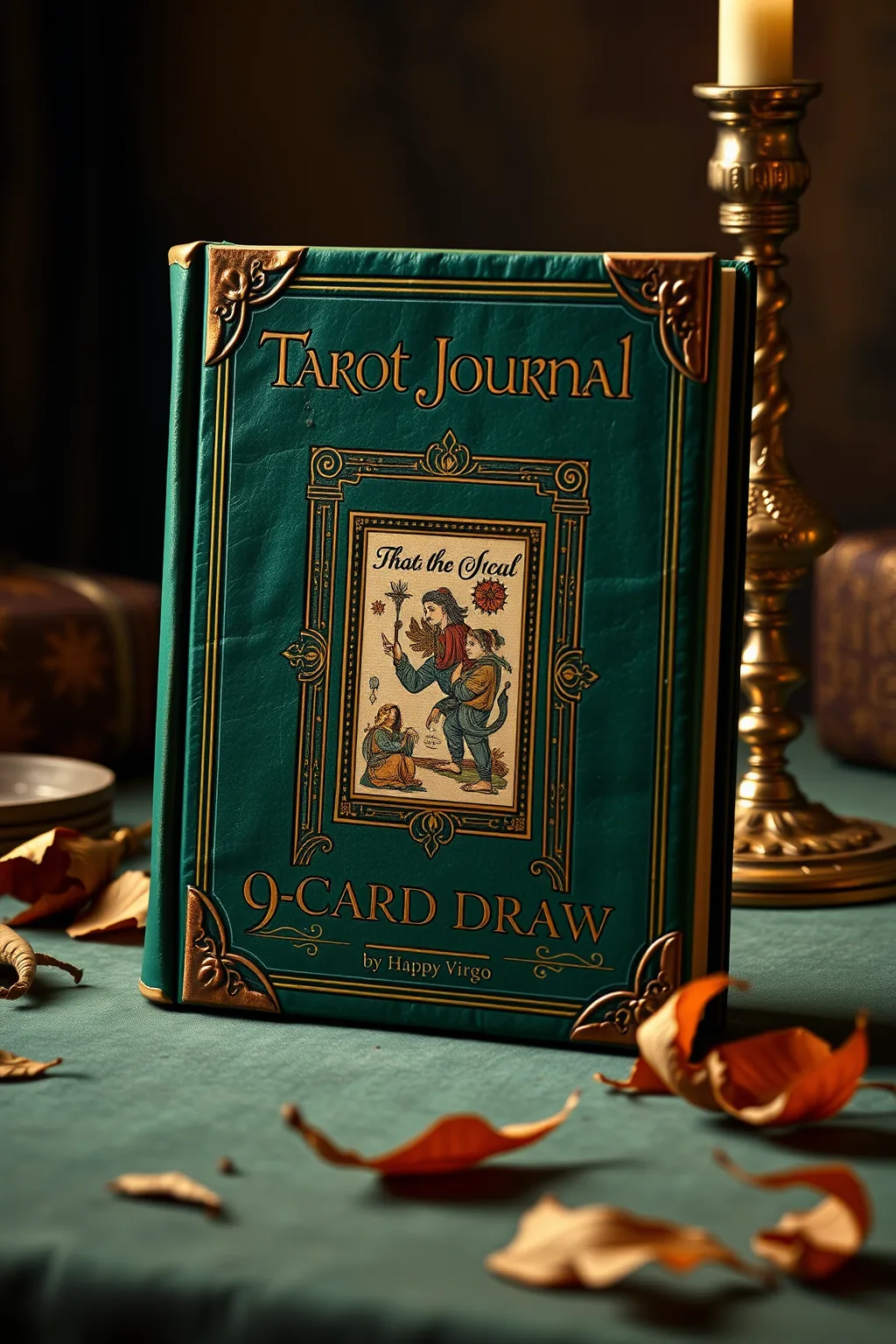
Tarot Journal 9-Card Draw
 62
62

Tarot Journal 9-Card Draw



Lorelei Sage, Contemplative Literature Editor: Happy Virgo's 'Tarot Journal: 9-Card Draw' is a masterfully conceived instrument for the serious student of Tarot. It transcends the typical journal, offering a structured yet intuitive framework for deep engagement with the cards. The 9-card spread, a cornerstone of Tarot interpretation, is expertly leveraged to facilitate comprehensive personal readings and profound self-reflection. Its strength lies in its ability to guide users beyond superficial interpretation, encouraging them to explore the nuanced interplay of energies and narratives within a spread. This journal is an indispensable companion for practitioners, seekers, and scholars alike who wish to cultivate a richer, more meaningful relationship with Tarot wisdom.
📝 Description
62
Happy Virgo's Tarot Journal: 9-Card Draw offers a structured approach to personal tarot practice.
This journal is designed to aid users in working with the 9-card spread for tarot readings. It provides dedicated space for recording card positions, interpretations, and personal reflections on the spread's message. The layout encourages a methodical examination of the cards, moving beyond simple one-off readings to a more sustained engagement with the tarot's symbolic system.
Users can track recurring themes, personal associations with specific cards, and the evolution of their understanding over time. The journal promotes a practice of self-inquiry, using the 9-card spread as a framework to explore questions about personal development, relationships, or specific challenges. It aims to help individuals develop their own intuitive connection with the tarot imagery and numerology.
This journal fits within the modern esoteric tradition of personal divination practice, particularly for tarot. It builds upon established methods for card interpretation and spread layouts, offering a tool for practitioners to deepen their personal relationship with the cards. The focus is on practical application and self-reflection, rather than theoretical study, aligning with approaches that emphasize intuitive development and the tarot as a mirror for the psyche.
💡 Why Read This Book?
This journal is your essential companion for unlocking Tarot's deepest secrets. It provides a dedicated space for recording and analyzing 9-card draws, fostering a profound connection with your intuition and the cards' rich symbolism. Ideal for seekers of esoteric knowledge, practitioners aiming to refine their readings, and scholars of divinatory arts, it transforms passive observation into active spiritual growth. Cultivate self-awareness and navigate life's mysteries with greater clarity and insight.
⭐ Reader Reviews
Honest opinions from readers who have explored this book.
❓ Frequently Asked Questions
What is the primary purpose of this Tarot journal?
The primary purpose is to provide a structured, dedicated space for recording, reflecting upon, and deeply understanding 9-card Tarot spreads, fostering personal growth and intuitive development.
Who is the ideal reader for this journal?
The ideal reader is anyone interested in Tarot, from beginners looking to deepen their understanding to experienced practitioners seeking a more organized and insightful approach to their readings.
How does the 9-card draw benefit the user?
The 9-card draw offers a comprehensive overview of a situation, exploring past, present, future, influences, and potential outcomes, allowing for nuanced interpretation and actionable insight.
Can this journal be used with any Tarot deck?
Yes, this journal is designed to be universally applicable to any Tarot deck, allowing users to work with their preferred or most resonant set of cards.
What makes this journal 'esoteric'?
Its esoteric nature lies in its focus on symbolic interpretation, archetypal energies, intuitive understanding, and the potential for spiritual and personal transformation through the practice of divination.
🔮 Key Themes & Symbolism
The Sacred Art of Divination
This journal positions Tarot not merely as a predictive tool, but as a sacred art form, a bridge between the seen and unseen realms. It emphasizes the ritualistic aspect of drawing cards, encouraging a mindful and reverent approach. The act of recording and interpreting each card within the context of a 9-card spread becomes a meditative practice, designed to attune the user to the subtle energies and symbolic language of the cosmos. This theme explores the historical lineage of divination as a means of seeking divine guidance and understanding one's place within the grand range of existence.
Archetypal Wisdom and the Inner Landscape
Looking at the profound symbolism of the Tarot, this journal guides readers to connect with the universal archetypes that shape human experience. Each card represents a facet of the psyche, a stage of the soul's journey, or a fundamental force of nature. By meticulously documenting 9-card draws, users are encouraged to identify recurring patterns and themes within their own inner landscape. This process facilitates self-discovery, helping to illuminate subconscious beliefs, hidden desires, and unresolved emotional currents, ultimately fostering a deeper understanding of the self and one's personal destiny.
Intuitive Development and Personal Alchemy
The 'Tarot Journal: 9-Card Draw' is a powerful catalyst for developing intuitive faculties. It provides a structured framework for the user to hone their inner knowing, moving beyond rote memorization of card meanings to a more fluid and personal interpretation. The act of journaling itself transforms raw insight into tangible understanding, a process akin to personal alchemy. Each recorded spread becomes a stepping stone, refining the user's ability to perceive subtle energetic shifts, understand complex situations, and harness their own inner power for transformative growth and conscious creation.
💬 Memorable Quotes
Direct passages from the work, attributed to the author.
“Within the spread lies the whisper of destiny, waiting to be heard.”
— This poetic phrase suggests that the Tarot holds profound, often subtle, insights into one's path. It encourages attentive listening and a receptiveness to the guidance offered by the cards.
“Each symbol is a key, unlocking chambers of forgotten wisdom.”
— This highlights the rich symbolic language of the Tarot and its potential to access ancient knowledge and hidden truths about ourselves and the universe.
“To journal the Tarot is to combine the threads of consciousness.”
— This speaks to the active, creative process of journaling. It suggests that by recording and reflecting on Tarot readings, one is actively shaping and integrating their understanding, tying together different aspects of their awareness.
💡 Key Ideas
Editorial paraphrase of the work's core concepts — not direct quotes.
The cards are not fortune-tellers, but mirrors reflecting the soul's journey.
This quote emphasizes the Tarot's role as a tool for introspection and self-awareness, rather than a rigid predictor of fate. It highlights the personal journey of discovery facilitated by the cards.
Let intuition be your compass, and the cards your map.
This quote provides a clear directive for using the Tarot effectively. It prioritizes inner guidance while positioning the cards as a valuable framework for navigation and exploration.
🌙 Esoteric Significance
Tradition
This journal is deeply rooted in the Western Esoteric Tradition, drawing heavily from Hermeticism, Kabbalah, and Tarot systems developed by occult orders like the Hermetic Order of the Golden Dawn. It embraces the concept of the Tarot as a 'Book of Thoth,' a sacred text containing universal wisdom and symbolic keys to understanding the manifest and unmanifest worlds. The 9-card draw is often seen as a miniature representation of cosmic principles or stages of a spiritual journey.
Symbolism
The core of the journal's esoteric significance lies in its engagement with Tarot symbolism. Each card, from the Fool to the World, the Minor Arcana suits, and the court cards, carries layers of meaning tied to archetypes, elemental forces, astrological correspondences, and psychological states. The 9-card spread itself can be interpreted through various symbolic lenses, such as the Tree of Life, or as a narrative arc, allowing for a rich and many-sided exploration of any given query.
Modern Relevance
In an era often characterized by information overload and a perceived disconnect from deeper meaning, this journal offers a powerful antidote. It provides a tangible, analog method for cultivating mindfulness, intuition, and self-awareness. The structured yet flexible approach to the 9-card draw allows individuals to navigate personal challenges, gain clarity on complex decisions, and foster a profound sense of inner connection, making ancient esoteric wisdom directly applicable to contemporary life.
👥 Who Should Read This Book
This 'Tarot Journal: 9-Card Draw' is an invaluable resource for a diverse range of seekers. For the **beginner**, it offers a clear, structured path to learning Tarot, transforming initial curiosity into confident practice. **Scholars** of occultism and divination will appreciate its depth and its connection to historical esoteric traditions. **Spiritual seekers** will find it a profound tool for introspection, self-discovery, and deepening their intuitive connection to the universe. **Practitioners** of Tarot, from seasoned readers to those developing their craft, will benefit from its organized format for recording and analyzing spreads, enhancing the precision and insight of their readings.
📜 Historical Context
The practice of Tarot divination, while its exact origins are debated, gained significant traction and esoteric interpretation during the 18th and 19th centuries, a period rich with occult revival and fascination with ancient mysteries. Figures like Antoine Court de Gébelin linked the Tarot to ancient Egyptian wisdom, while later occultists such as Eliphas Lévi and the Hermetic Order of the Golden Dawn further codified its symbolic meanings and divinatory applications. The 9-card spread, a common layout, evolved as practitioners sought structured methods to explore complex questions. This journal taps into that legacy, providing a modern conduit for ancient practices, resonating with a contemporary desire to reconnect with symbolic languages and intuitive wisdom in an increasingly secular world. It stands as a evidence of the enduring power of Tarot as a tool for self-inquiry and spiritual exploration.
📔 Journal Prompts
For the card representing 'The Core Issue,' what subconscious beliefs might be at play?
Regarding the 'Influences' card, how can I consciously work with or mitigate these energies?
Reflecting on the 'Outcome' card, what small, actionable steps can I take today to steer towards this potential?
Looking at the card in the 'Hidden Factor' position, what might my intuition be trying to tell me that I'm overlooking?
Considering the entire spread, what is the overarching narrative or lesson the Tarot is presenting to me now?
🗂️ Glossary
Arcana
Referring to the Major Arcana (22 cards representing significant life lessons and spiritual journeys) and Minor Arcana (40 cards depicting everyday experiences and challenges) within a Tarot deck.
Spread
The specific arrangement of Tarot cards laid out for interpretation, such as the 9-card draw, each position holding a distinct meaning or question.
Archetype
Universal, primal symbols or themes that represent fundamental human experiences, emotions, and behaviors, such as The Magician, The Empress, or The Hermit.
Intuition
The ability to understand something immediately, without the need for conscious reasoning; often considered a higher form of knowing accessible through inner perception.
Divination
The practice of seeking knowledge of the future or the unknown by supernatural means, often through symbolic systems like Tarot, astrology, or runes.
This book appears in 3 collections
🔮 Readers Also Liked
Browse all →








More by Happy Virgo
All books →





From the “Tarot” Collection
View all →








More Free Divination & Tarot Books
View all →