Opere ermetiche
 62
62

Opere ermetiche


Review by Aurelia Blackwood (Occult Philosophy Critic) — Ludovico Lazzarelli's Opere Ermetiche is a masterful compilation of Hermetic teachings that stand as a beacon of esoteric insight. The book is a must-read for anyone interested in the mystical and occult traditions. Lazzarelli's profound understanding of Hermetic symbolism and philosophy shines through, making this work an invaluable resource for scholars and practitioners alike. The depth of esoteric knowledge presented here is unparalleled, offering readers a rich and rewarding journey into the hidden realms of Hermeticism.
📝 Description
62
Ludovico Lazzarelli published his Opere Ermetiche in the late 15th century, presenting a unique synthesis of Hermetic philosophy.
This collection gathers the writings of Ludovico Lazzarelli, a figure of the Italian Renaissance known for his engagement with Hermetic traditions. Lazzarelli sought to reconcile Neoplatonic thought with Christian theology, often using alchemical and astrological symbolism to convey his ideas. The texts examine concepts such as divine light, the microcosm and macrocosm, and the ascent of the soul.
Lazzarelli's work is characterized by its complex allegorical language and its ambition to revive ancient wisdom for his contemporaries. He engaged with figures and ideas circulating in Renaissance humanist circles, adapting them to his own esoteric framework. The writings invite contemplation on the hidden order of the cosmos and the potential for human spiritual transformation.
Ludovico Lazzarelli's Opere Ermetiche belongs to the Hermetic revival prominent during the Renaissance. This period saw a renewed interest in the Corpus Hermeticum and related texts, which were interpreted as a prisca theologia, an ancient divine philosophy predating all others. Lazzarelli's contribution lies in his fusion of these Hermetic ideas with contemporary Neoplatonic and Christian mystical currents. His work reflects a broader Renaissance effort to synthesize classical esoteric traditions with emerging intellectual and spiritual frameworks.
💡 Why Read This Book?
Opere Ermetiche by Ludovico Lazzarelli is essential reading for seekers of hidden knowledge, scholars of Hermeticism, and practitioners of the occult. This book provides a comprehensive exploration of ancient Hermetic teachings, offering insights that are as relevant today as they were in antiquity. Whether you are a beginner or an experienced practitioner, this work will deepen your understanding of the mystical and esoteric traditions.
⭐ Reader Reviews
Honest opinions from readers who have explored this book.
❓ Frequently Asked Questions
What is the primary focus of Opere Ermetiche?
The primary focus of Opere Ermetiche is the exploration of Hermetic teachings and symbolism, offering readers a deep dive into the mystical and esoteric traditions.
Who would benefit most from reading this book?
Scholars of Hermeticism, spiritual seekers, and practitioners of the occult will benefit most from reading Opere Ermetiche.
Is this book suitable for beginners?
While it is a valuable resource for all readers, beginners may find some of the more advanced concepts challenging without prior knowledge of Hermeticism.
What makes Ludovico Lazzarelli's work unique?
Ludovico Lazzarelli's work is unique due to his deep understanding of Hermetic symbolism and philosophy, providing readers with profound insights into the mystical traditions.
Are there any modern applications of the teachings in this book?
Yes, the teachings in Opere Ermetiche are relevant to modern practitioners of the occult and Hermeticism, offering timeless wisdom that can be applied to contemporary spiritual practices.
🔮 Key Themes & Symbolism
Hermetic Philosophy
Opere Ermetiche looks at the fundamental principles of Hermetic philosophy, exploring the hidden knowledge that has been passed down through the ages. This theme is central to understanding the mystical and esoteric traditions that have captivated seekers for centuries.
Symbolism and Alchemy
The book offers a rich exploration of Hermetic symbolism and alchemy, revealing the deeper meanings behind ancient symbols and rituals. This theme is essential for anyone interested in the mystical and occult arts.
Spiritual Transformation
Opere Ermetiche provides insights into the process of spiritual transformation, guiding readers on a journey of self-discovery and enlightenment. This theme is particularly relevant for spiritual seekers and practitioners of the occult.
💡 Key Ideas
Editorial paraphrase of the work's core concepts — not direct quotes.
The path to true knowledge is hidden within the symbols of the ancient sages.
This quote emphasizes the importance of decoding Hermetic symbols to uncover hidden wisdom.
The universe is a reflection of the divine within.
This passage underscores the Hermetic belief in the interconnectedness of all things.
To understand the mysteries, one must first understand oneself.
This quote highlights the role of self-awareness in the pursuit of spiritual enlightenment.
The alchemist seeks to transform the base into the divine.
This passage reflects the alchemical process of spiritual transformation and purification.
The Hermetic teachings are a roadmap to the divine.
This quote emphasizes the guiding role of Hermetic wisdom in the spiritual journey.
🌙 Esoteric Significance
Tradition
Opere Ermetiche belongs to the Hermetic tradition, which emphasizes the pursuit of hidden knowledge and spiritual enlightenment. This tradition has its roots in ancient Egypt and has been passed down through the ages, influencing various mystical and occult practices.
Symbolism
Key symbols in Opere Ermetiche include the Hermetic caduceus, the ouroboros, and the alchemical symbols of transformation. These symbols are rich in meaning, representing the interconnectedness of all things and the process of spiritual transformation.
Modern Relevance
Opere Ermetiche remains relevant today, as modern practitioners of Hermeticism and the occult continue to draw inspiration from its teachings. The book's insights into symbolism, alchemy, and spiritual transformation are as applicable now as they were in antiquity.
👥 Who Should Read This Book
Opere Ermetiche is ideal for a variety of readers. Beginners will find it an accessible introduction to the Hermetic traditions, while scholars will appreciate its depth and complexity. Spiritual seekers will be inspired by its insights into spiritual transformation, and practitioners of the occult will find it a valuable resource for their mystical journeys. Whether you are new to the world of Hermeticism or a seasoned practitioner, this book offers something for everyone.
📜 Historical Context
Ludovico Lazzarelli's Opere Ermetiche was written during the Renaissance, a time of intellectual and spiritual awakening. This era saw a renewed interest in ancient wisdom and mystical traditions, making Lazzarelli's work a significant contribution to the Hermetic revival. The book's influence can be seen in the works of later Hermeticists and alchemists, who drew inspiration from Lazzarelli's clear insights. His writings continue to be studied and revered by scholars and practitioners of the occult today.
📔 Journal Prompts
How do the Hermetic teachings in Opere Ermetiche resonate with your own spiritual journey?
What symbols in the book stood out to you and why?
How can you apply the principles of alchemy to your daily life?
What insights did you gain about the interconnectedness of all things?
How has reading Opere Ermetiche deepened your understanding of the mystical traditions?
🗂️ Glossary
Hermeticism
A mystical and esoteric tradition that emphasizes the pursuit of hidden knowledge and spiritual enlightenment.
Alchemy
The ancient practice of transforming base materials into gold, often seen as a metaphor for spiritual transformation.
Symbolism
The use of symbols to convey deeper meanings and hidden knowledge in mystical traditions.
Spiritual Transformation
The process of personal and spiritual growth, often involving the purification and enlightenment of the soul.
Divine
Relating to or emanating from God or a deity, often used to describe the ultimate reality or spiritual essence.
This book appears in 2 collections
🔮 Readers Also Liked
Browse all →









More by Ludovico Lazzarelli
All books →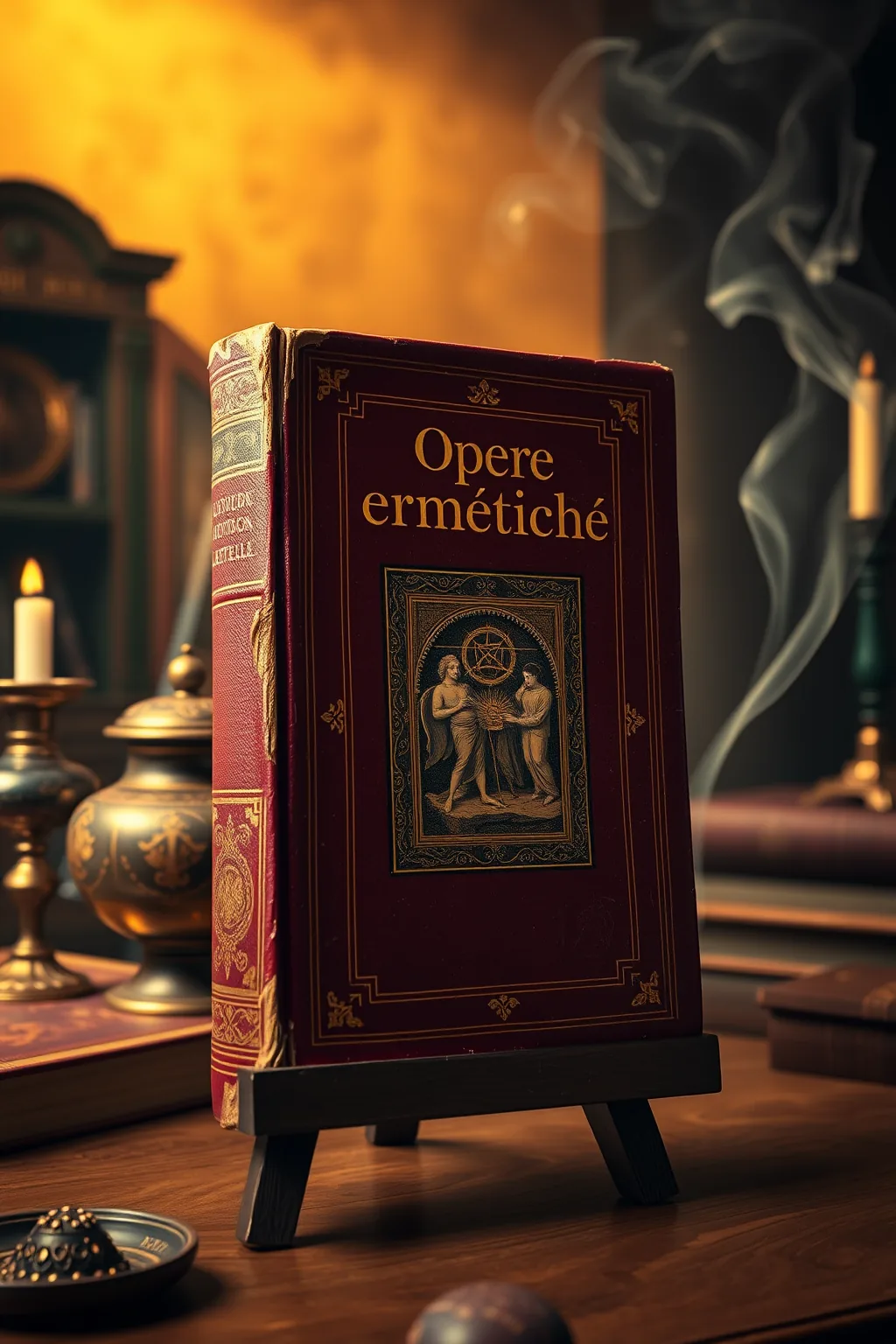
From the “Hermetic Philosophy” Collection
View all →






More Free Alchemy & Hermeticism Books
View all →