Jung on alchemy
 73
73

Jung on alchemy
Jung's dedicated exploration of alchemy, first appearing in print in 1995, is less a historical survey and more a psychological exegesis. The strength lies in Jung's unparalleled ability to map the landscape of the unconscious onto the arcane symbolism of the alchemists. He masterfully argues, for instance, that the *coniunctio* or alchemical marriage is not merely a chemical process but a profound depiction of the integration of conscious and unconscious, masculine and feminine principles within the psyche. A notable limitation, however, is the inherent density of Jung's prose and the specialized nature of alchemical lore itself, which can render sections challenging for those unfamiliar with either. The exploration of the *nigredo*, the dark, chaotic phase of transformation, offers a potent psychological parallel to states of depression or existential crisis, demonstrating the enduring relevance of these ancient symbols for understanding the modern psyche. This collection remains a vital, albeit demanding, resource for grasping Jung's most complex psychological theories.
📝 Description
73
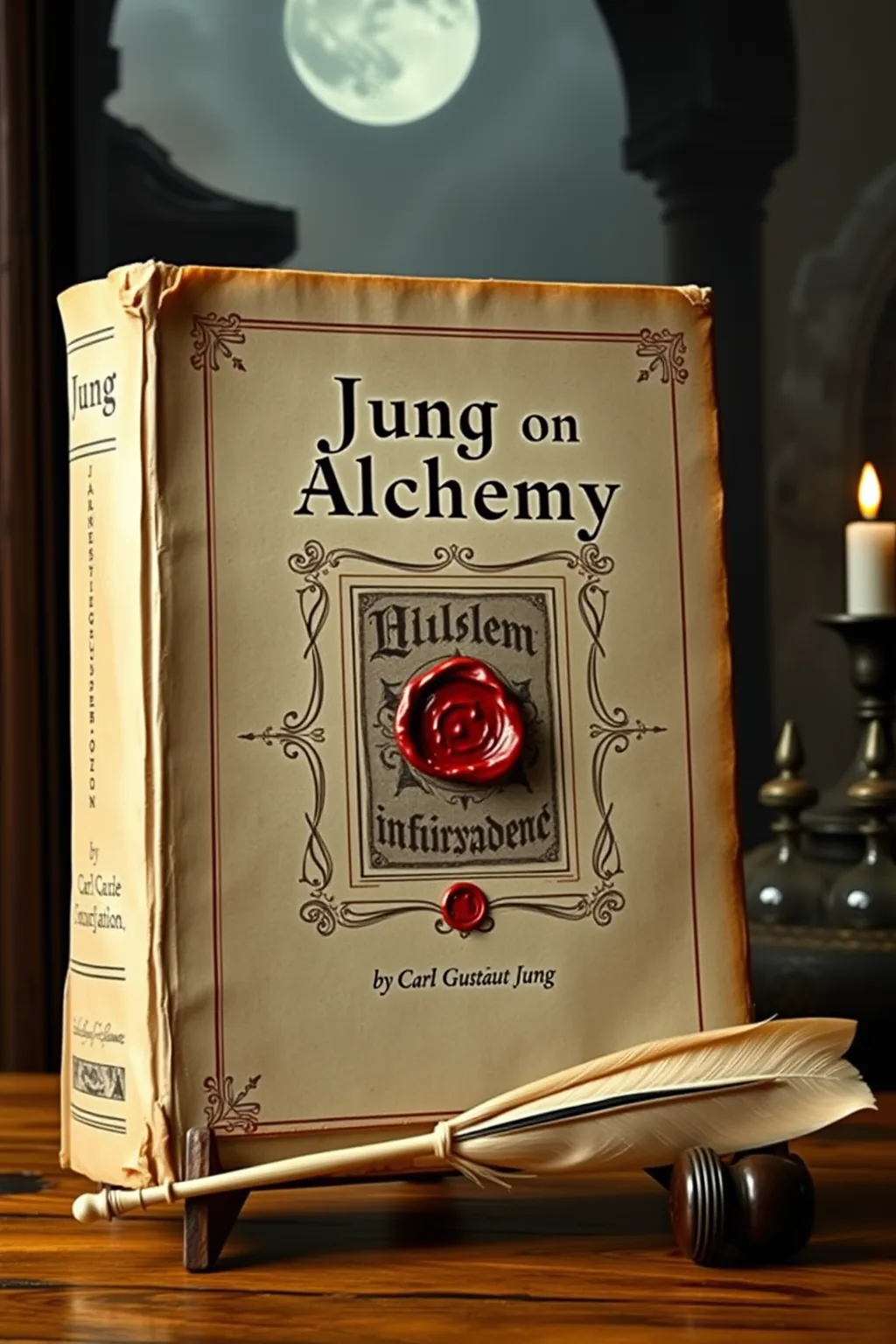
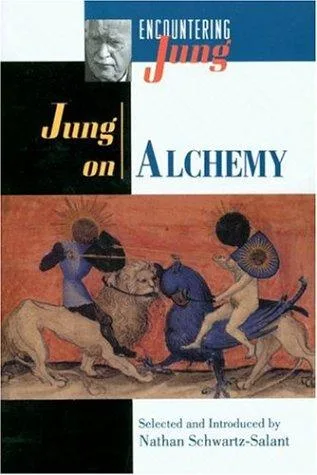
Jung on Alchemy gathers Carl Gustav Jung's writings on alchemy, first published in 1995.
This collection organizes Carl Gustav Jung's extensive writings on alchemy. Jung viewed alchemy not as a literal chemical process, but as a symbolic representation of the human psyche's transformation. The material draws from decades of his research into alchemical texts and symbolism, aiming to reveal the unconscious dynamics reflected in alchemical imagery.
The volume is suited for those studying Jungian psychology, comparative mythology, or the history of esoteric thought. It is particularly useful for understanding the archetypal dimensions of transformation and individuation as expressed through alchemical symbolism. Readers interested in the psychological basis of ancient mystical traditions will find considerable material here.
Carl Gustav Jung began seriously engaging with alchemy in the 1920s, seeing it as a historical precursor to his psychological theories. He interpreted alchemical processes and symbols as a coded language for the unconscious mind's development, particularly the process of individuation. This psychological approach diverged from earlier, more literal interpretations of alchemy and positioned his work within a broader 20th-century revival of interest in Western esotericism, while maintaining a distinct focus on the inner life.
💡 Why Read This Book?
• Gain a unique psychological framework for understanding personal transformation by analyzing the alchemical stages like the *nigredo* and *rubedo*, as presented in Jung's analysis. • Discover the symbolic language of the unconscious through Jung's interpretation of alchemical imagery, such as the *coniunctio* (union of opposites), offering insights into psychic integration. • Explore the historical connection between ancient Hermetic traditions and modern depth psychology, understanding how Jung utilized alchemical texts from his era to illustrate psychological principles.
⭐ Reader Reviews
Honest opinions from readers who have explored this book.
❓ Frequently Asked Questions
What is the primary argument Jung makes about alchemy?
Jung argues that alchemy is not primarily about literal chemical transformation but serves as a symbolic projection of the human psyche's unconscious process of individuation and spiritual development.
When did Jung begin seriously studying alchemy?
Jung's systematic study of alchemy began to intensify around the 1920s, though his engagement with its symbolic dimensions spanned several decades of his career.
What is the 'coniunctio' in Jungian alchemy?
The 'coniunctio' refers to the alchemical marriage or union of opposites, which Jung interpreted as a crucial stage in the individuation process, symbolizing the integration of conscious and unconscious elements.
Does Jung believe alchemists were aware they were discussing psychology?
Jung posited that while alchemists may not have consciously understood their work in psychological terms, their symbolic operations unconsciously mirrored and expressed psychic processes.
What alchemical symbol represents the initial chaotic stage of transformation?
The 'nigredo,' often depicted as a blackening or dissolution, represents the initial chaotic, undifferentiated, and often painful stage of psychic transformation in Jung's interpretation.
Is Jung on Alchemy suitable for beginners in psychology?
While foundational, the book requires some familiarity with Jungian concepts. Its specialized subject matter and Jung's complex prose make it more suitable for those with prior exposure to psychology or esoteric studies.
🔮 Key Themes & Symbolism
Alchemy as Psychic Projection
Jung posits that the laborious, often obscure processes described in alchemical texts are not literal but symbolic representations of the unconscious psyche's journey toward wholeness. The transformation of base metals into gold mirrors the individual's process of integrating shadow aspects and achieving self-realization. This framework allows for an understanding of ancient mystical practices through the lens of modern psychological development, revealing archetypal patterns at play.
The Stages of Individuation
The book details Jung's mapping of the individuation process onto distinct alchemical stages: the *nigredo* (darkening, chaos), *albedo* (purification, whitening), and *rubedo* (reddening, completion). Each stage is associated with specific alchemical operations and symbolic imagery, such as dissolution, calcination, and the *coniunctio* (union of opposites). These stages provide a symbolic narrative for the complex psychological work involved in becoming a unified self.
Archetypes in Alchemical Symbolism
Jung identifies universal archetypal figures and motifs within alchemical symbolism, including the hermaphrodite, the dragon, the wise old man, and the philosopher's stone. These symbols, he argues, emerge from the collective unconscious and express fundamental psychic dynamics. The analysis of these archetypes within the alchemical context offers clear insights into human nature and the underlying structure of the psyche.
The Philosopher's Stone as Self-Realization
The ultimate goal of alchemy, the creation of the Philosopher's Stone, is interpreted by Jung as the symbol for the integrated, realized self—the state of psychic wholeness achieved through the individuation process. This legendary substance represents the culmination of the alchemical work, signifying the attainment of psychological balance and spiritual enlightenment, a state of being rather than a material object.
💬 Memorable Quotes
Direct passages from the work, attributed to the author.
“The alchemical work is the projection of the unconscious.”
— This central tenet suggests that the entire symbolic system of alchemy, with its strange symbols and processes, serves as an external manifestation of the hidden dynamics within the human psyche.
“The *coniunctio* signifies the union of opposites.”
— Jung uses this alchemical term to describe the critical psychological process of integrating conflicting elements within oneself, such as masculine/feminine or conscious/unconscious aspects, leading to greater psychic balance.
“The *nigredo* is the dark stage of dissolution.”
— This refers to the initial phase of the alchemical process, which Jung correlates with psychological breakdown, chaos, and the confrontation with repressed material necessary before transformation can occur.
“The goal is the creation of the Philosopher's Stone.”
— In Jungian terms, achieving the legendary Stone represents the culmination of the individuation journey – the attainment of psychic totality and self-realization.
“Alchemy provides a symbolic language for the unconscious.”
— This highlights Jung's view that alchemical texts, though historical, offer a rich vocabulary of symbols that can be used to understand and interpret the deeper, often inaccessible, layers of the human mind.
🌙 Esoteric Significance
Tradition
Jung's work on alchemy firmly places it within the Western Esoteric Tradition, specifically drawing connections to Hermeticism, Gnosticism, and Neoplatonism. He saw alchemy not as a disconnected practice but as a lineage of symbolic thought concerned with spiritual transformation and the nature of consciousness. His approach departs from literal interpretations by framing the alchemical quest as an internal, psychological journey toward psychic wholeness, thus reinterpreting the tradition for a modern psychological context.
Symbolism
Central symbols analyzed include the *prima materia*, representing undifferentiated psychic potential or the raw material of the unconscious; the *coniunctio*, symbolizing the integration of opposites (e.g., anima/animus, conscious/unconscious); and the Philosopher's Stone, representing the perfected, integrated self or the state of individuation. These motifs are explored as archetypal expressions of the psyche's inherent drive towards balance and completion.
Modern Relevance
Jung's psychological interpretation of alchemy continues to influence contemporary depth psychology, Jungian analysis, and transpersonal psychology. Thinkers and practitioners in fields like comparative mythology, religious studies, and even art therapy draw upon his work to understand symbolic processes and the archetypal dimensions of human experience. His framework remains a vital resource for exploring the bridge between ancient wisdom traditions and modern psychological understanding.
👥 Who Should Read This Book
• Students of Jungian psychology seeking to understand the archetypal underpinnings of the individuation process through a unique symbolic lens. • Researchers in comparative mythology and religious studies interested in the cross-cultural expression of transformative symbolism and esoteric traditions. • Individuals engaged in personal growth and self-exploration who wish to explore the symbolic language of the unconscious as illuminated by alchemical metaphors.
📜 Historical Context
Carl Gustav Jung's engagement with alchemy unfolded significantly during the first half of the 20th century, a period marked by a burgeoning interest in the unconscious and esoteric traditions. While contemporary psychology, particularly Freudian psychoanalysis, focused on repression and early childhood, Jung expanded his scope to include archetypal patterns and mythological symbolism. His work on alchemy, developing through the 1930s and 1940s, offered a counterpoint to the purely mechanistic worldview prevalent in scientific circles. Jung’s interpretation of alchemy as a symbolic precursor to his own theories of individuation implicitly challenged reductionist approaches. He engaged with historical alchemical texts, often obscure and difficult, seeing in them a continuous stream of unconscious psychic content. His findings were published amidst a broader revival of Western esotericism, influenced by movements like Theosophy, though Jung's approach remained distinctly psychological, focusing on the inner experience rather than occult practice.
📔 Journal Prompts
The *prima materia* as your own psychic starting point.
Symbolic representation of the *coniunctio* in your life.
Reflecting on the *nigredo* phase of personal challenge.
The meaning of the Philosopher's Stone in your current path.
Alchemical imagery and its connection to your dream life.
🗂️ Glossary
Prima Materia
The fundamental, undifferentiated substance from which all things are created, interpreted by Jung as the raw, unformed material of the unconscious psyche.
Nigredo
The first stage of the alchemical process, characterized by blackening, dissolution, and chaos; psychologically, it represents confrontation with the shadow and repressed elements.
Albedo
The 'whitening' stage following the nigredo, symbolizing purification, clarification, and the emergence of light from darkness; a phase of psychic cleansing.
Rubedo
The final 'reddening' stage, representing completion, integration, and the attainment of the goal—the Philosopher's Stone or the fully realized self.
Coniunctio
The alchemical marriage or union of opposites (e.g., masculine/feminine, conscious/unconscious), representing the integration of psychic dualities.
Anima/Animus
Jung's terms for the unconscious feminine aspect in men (anima) and the unconscious masculine aspect in women (animus), often symbolized in alchemical union.
Philosopher's Stone
The legendary substance sought by alchemists, interpreted by Jung as a symbol for psychic wholeness, integration, and the achieved state of individuation.
🔮 Readers Also Liked
Browse all →








More by Carl Gustav Jung
All books →

More Free Alchemy & Hermeticism Books
View all →