Chinese Alchemy
 61
61

Chinese Alchemy


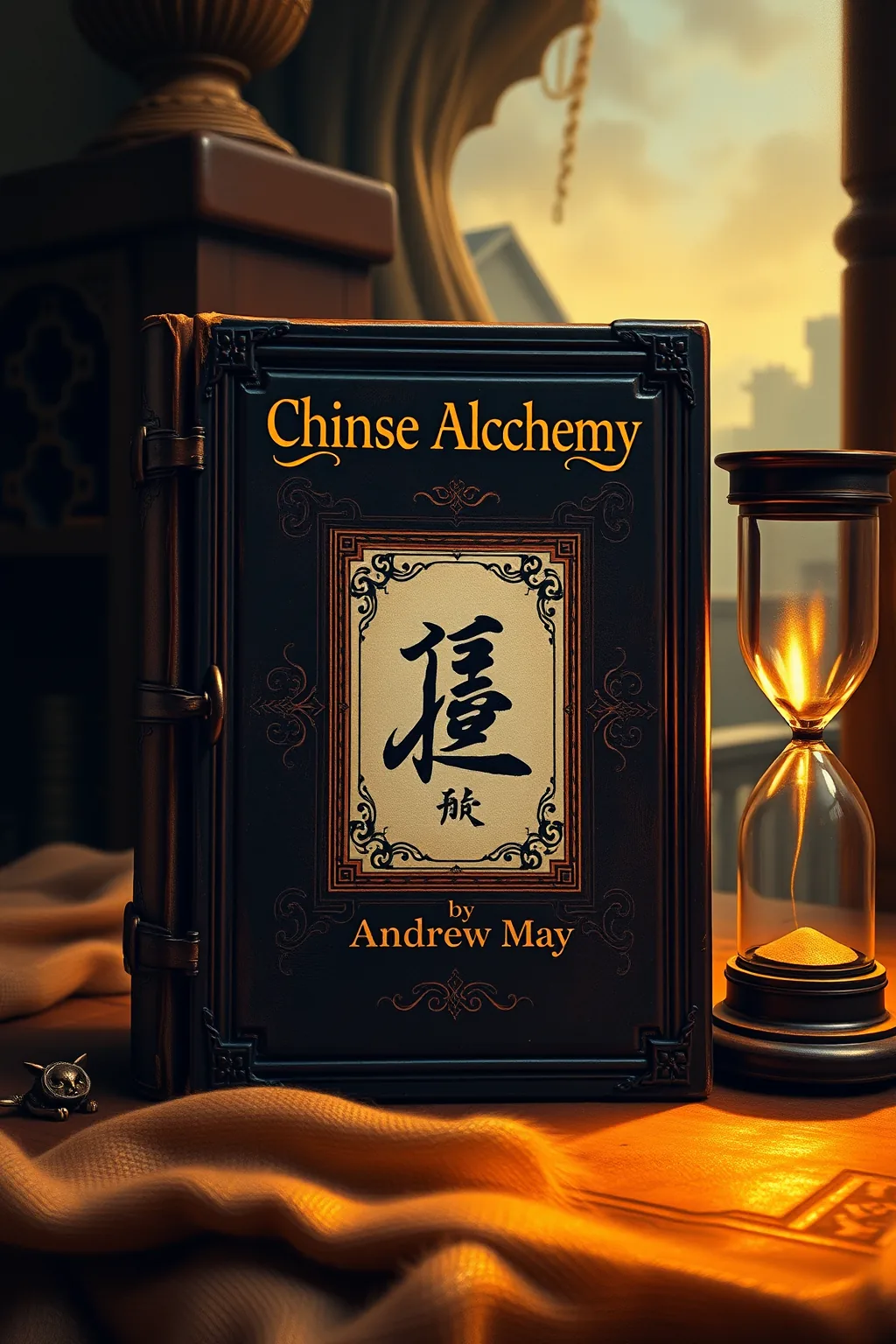
Andrew May's 'Chinese Alchemy' stands as a beacon of esoteric insight, offering readers a comprehensive journey into the mystical traditions of Chinese alchemy. May's strengths lie in his ability to translate complex alchemical principles into accessible and evocative language, making this book a must-read for those interested in the occult and hermeticism. The text is rich with symbolism and hidden knowledge, providing a deep dive into the philosophical underpinnings of alchemy. This work is particularly valuable for practitioners seeking to integrate ancient wisdom into their modern practices.
📝 Description
61
Andrew May's 'Chinese Alchemy' was published in 2006.
Andrew May's 'Chinese Alchemy' examines the historical and philosophical dimensions of Chinese alchemy. The book details the practices and beliefs that developed within this tradition, covering its theoretical underpinnings and practical applications. May traces the evolution of alchemical thought in China, from its early forms to its later developments, connecting it to broader Chinese philosophical schools like Taoism. The text focuses on the symbolism and conceptual framework that defined Chinese alchemical pursuits, distinguishing them from their Western counterparts.
This work is suitable for anyone interested in the history of science, religion, and philosophy in China. It explains the complex ideas and symbolic language used by Chinese alchemists without resorting to overly technical jargon. The book aims to provide a clear understanding of how alchemical goals, such as achieving immortality or transforming materials, were integrated into a wider spiritual and intellectual worldview.
Chinese alchemy forms a distinct branch within the global history of alchemy, closely tied to Taoist philosophy and practices. Unlike its Western counterpart, which often focused on the transmutation of base metals into gold, Chinese alchemy developed a strong emphasis on achieving physical immortality and spiritual transformation. Key concepts include the manipulation of internal energies (qi), the use of specific herbs and elixirs, and the interpretation of cosmological principles in the pursuit of longevity and union with the Tao. This tradition represents a unique fusion of spiritual aspiration and material practice within an Eastern metaphysical framework.
💡 Why Read This Book?
Read 'Chinese Alchemy' to gain profound insights into the mystical traditions of Chinese alchemy. This book is perfect for seekers of hidden knowledge, scholars of the occult, and practitioners looking to deepen their understanding of alchemical symbolism and its philosophical significance.
⭐ Reader Reviews
Honest opinions from readers who have explored this book.
❓ Frequently Asked Questions
What is the main focus of 'Chinese Alchemy'?
The book focuses on the mystical and esoteric traditions of Chinese alchemy, exploring its hidden knowledge, symbolism, and philosophical significance.
Who is the intended audience for this book?
The intended audience includes scholars of the occult, spiritual seekers, and practitioners of alchemy who wish to delve into the mystical underpinnings of this ancient art.
What makes this book unique?
'Chinese Alchemy' stands out for its rich symbolism, profound insights, and accessible language, making complex alchemical principles understandable to a broader audience.
Can beginners benefit from this book?
While the book is rich in detail, beginners with an interest in mysticism and alchemy will find valuable insights and a solid foundation for further study.
Is there a focus on practical alchemy?
The book primarily focuses on the philosophical and mystical aspects of alchemy, providing a deep understanding of its symbolism and hidden knowledge.
🔮 Key Themes & Symbolism
Alchemical Symbolism
This book studies the strong symbolism of Chinese alchemy, exploring how various symbols represent deeper mystical truths and philosophical concepts. May's insights into these symbols provide a gateway to understanding the esoteric underpinnings of alchemy.
Hidden Knowledge
'Chinese Alchemy' reveals the hidden knowledge that has been passed down through generations of alchemists. This knowledge is not just about the physical processes of alchemy but also about the spiritual and philosophical transformations it entails.
Philosophical Significance
The book explores the philosophical significance of alchemy, showing how it is more than just a physical science. It is a path to spiritual enlightenment and self-discovery, providing clear insights into the nature of reality and the human experience.
💬 Memorable Quotes
Direct passages from the work, attributed to the author.
“The elixir of life is found within, not without.”
— May underscores the internal journey of alchemy, where true transformation comes from within.
“Symbols are the language of the divine.”
— This statement underscores the importance of symbolism in understanding the mystical aspects of alchemy.
💡 Key Ideas
Editorial paraphrase of the work's core concepts — not direct quotes.
The alchemist seeks not gold, but the philosopher's stone.
This line highlights the true goal of alchemy, which is spiritual transformation rather than material gain.
In the crucible of the soul, all impurities are burned away.
This quote emphasizes the purifying effect of alchemical practices on the spirit.
The quest for the philosopher's stone is a journey of self-discovery.
This quote highlights the personal and spiritual growth that comes from the practice of alchemy.
🌙 Esoteric Significance
Tradition
This book belongs to the Hermetic tradition, which emphasizes the spiritual and mystical aspects of alchemy. It draws on ancient Chinese alchemical practices and integrates them with Western esoteric thought.
Symbolism
Key symbols in the book include the dragon, the phoenix, and the philosopher's stone, each representing different stages of spiritual transformation and enlightenment.
Modern Relevance
The teachings in 'Chinese Alchemy' are relevant today for modern practitioners who seek to integrate ancient wisdom into their spiritual and alchemical practices. It provides a foundation for understanding the deeper meanings behind alchemical processes.
👥 Who Should Read This Book
Beginners interested in the mystical and esoteric traditions of alchemy will find this book a valuable introduction. Scholars of the occult will appreciate the depth of research and insights provided. Spiritual seekers will benefit from the philosophical significance and hidden knowledge revealed. Practitioners of alchemy will find practical applications and deeper understanding of alchemical symbolism.
📜 Historical Context
Chinese Alchemy was written during a time when interest in Eastern mysticism and esoteric traditions was growing in the West. The book's importance lies in its ability to bridge the gap between ancient Chinese alchemical practices and modern seekers of hidden knowledge. It has influenced both academic studies and practical alchemical pursuits, providing a rich source of information and inspiration for those interested in the occult and hermeticism.
📔 Journal Prompts
How do the symbols in 'Chinese Alchemy' resonate with your own spiritual journey?
What insights have you gained about the philosophical significance of alchemy?
Reflect on the idea of spiritual transformation through alchemical practices.
How does the book's exploration of hidden knowledge challenge your current understanding of alchemy?
In what ways can you integrate the teachings of 'Chinese Alchemy' into your daily life?
🗂️ Glossary
Philosopher's Stone
A legendary alchemical substance said to be capable of turning base metals into gold and granting immortality.
Elixir of Life
A potion believed to grant eternal youth and health, often sought in alchemical practices.
Crucible
A container used in alchemy for melting and purifying substances, symbolizing spiritual purification.
Alchemical Symbolism
The use of symbols to represent mystical and philosophical concepts in alchemy.
Hermetic Tradition
A school of thought that emphasizes the mystical and spiritual aspects of alchemy, drawing on ancient wisdom.
This book appears in 3 collections
🔮 Readers Also Liked
Browse all →









From the “Hermeticism” Collection
View all →






More Free Alchemy & Hermeticism Books
View all →