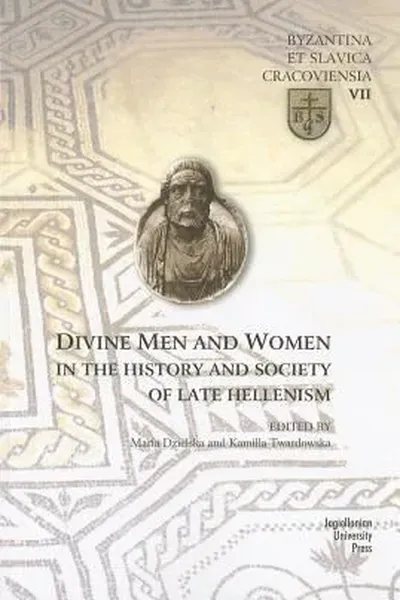
Transfigured Light

 79
79

Transfigured Light
Leon Marvell’s 'Transfigured Light' offers a rigorous examination of the Hermetic imaginary, challenging its perceived separation from mainstream philosophy and science. The work’s strength lies in its detailed tracing of influence, particularly its analysis of cybernetics and artificial intelligence through a Hermetic lens in Chapter 1. This section, exploring the 'Spirit of the Beehive,' is particularly compelling. However, the book's dense academic prose can sometimes obscure its more fascinating arguments, making certain passages, especially those concerning 'metaphysical geometry' in Chapter 3, a demanding read for those not already steeped in the subject matter. The author’s ambition to connect ancient esoteric thought with emergent digital philosophies is commendable and largely successful, though a more accessible synthesis for a broader audience would have been beneficial. It is a vital contribution for specialists seeking to understand the hidden currents of Western thought.
📝 Description
79
Leon Marvell's 2007 monograph, Transfigured Light, examines the 'hermetic imaginary's' impact on modern philosophy.
Published in 2007, Leon Marvell's Transfigured Light scrutinizes the conceptual framework of the Hermetic tradition, what he terms the 'hermetic imaginary.' The book investigates how these ideas have shaped subsequent philosophical and scientific discourse, particularly in the 20th and 21st centuries. Marvell identifies specific elements within this hermetic imaginary that significantly influenced modern thought. The research is designed for scholars and advanced students in philosophy, science studies, and the history of esoteric thought. It will appeal to those tracing the lineage of complex ideas and seeking to understand the influence of mystical and occult traditions on rationalist and empirical disciplines. Readers engaged with cybernetics, artificial intelligence, and theories of consciousness will find specific relevance in its arguments.
The work emerged during a time of renewed academic interest in Western esotericism. It engages with the ongoing debate about the relationship between magical thinking and scientific progress, a dialogue active since the Enlightenment. Marvell implicitly addresses figures central to the Hermetic revival like Giordano Bruno and Marsilio Ficino, while situating his arguments within contemporary fields such as cybernetics.
Transfigured Light situates itself within the study of Western esotericism, specifically the Hermetic tradition. It considers the Hermetic imaginary as a persistent conceptual network influencing philosophical and scientific developments. The book follows in a line of scholarship that re-evaluates the role of occult and mystical thought in shaping intellectual history, moving beyond earlier dismissals to explore its connections with rationalist and empirical disciplines. Marvell's work contributes to understanding how seemingly arcane concepts can resonate within modern scientific and philosophical frameworks.
💡 Why Read This Book?
• Gain a unique perspective on the historical underpinnings of cybernetics and AI, understanding how concepts like the 'Spirit of the Beehive' offer an esoteric framework for emergent intelligence, as detailed in Chapter 1. • Discover how 'metaphysical geometry' functions as a bridge between ancient Hermetic thought and modern abstract systems, providing a novel way to conceptualize complex structures beyond empirical observation. • Explore the enduring influence of the Hermetic tradition on philosophical discourse, learning to identify its subtle manifestations in fields seemingly distant from occultism.
⭐ Reader Reviews
Honest opinions from readers who have explored this book.
❓ Frequently Asked Questions
What is the 'hermetic imaginary' as discussed in Leon Marvell's 'Transfigured Light'?
The 'hermetic imaginary' refers to the collection of concepts, symbols, and modes of thought originating from or influenced by the Hermetic tradition, which Marvell argues has subtly shaped Western philosophy and science.
How does 'Transfigured Light' connect Hermeticism to cybernetics and AI?
The book's first chapter, 'Spirit of the Beehive,' examines resonances between Hermetic ideas of interconnectedness and correspondence and the development of cybernetics and artificial intelligence, particularly concerning emergent consciousness.
What does Leon Marvell mean by 'metaphysical geometry'?
In 'Transfigured Light,' 'metaphysical geometry' is presented as a way of understanding abstract, systemic relationships and structures that draws parallels with geometric principles found in Hermetic philosophy, extending beyond purely physical dimensions.
Who was Giordano Bruno and why is he relevant to 'Transfigured Light'?
Giordano Bruno was a 16th-century Italian philosopher and cosmologist deeply influenced by Hermeticism. Marvell's work implicitly connects with Bruno's Neoplatonic and Hermetic ideas about the cosmos and consciousness, foundational to the tradition explored.
Is 'Transfigured Light' a historical overview of Hermeticism?
No, 'Transfigured Light' is an analytical monograph that uses Hermeticism as a lens to examine its influence on modern philosophy and science, rather than a comprehensive historical survey of the tradition itself.
What are 'body doubles' in the context of this book?
The concept of 'body doubles' in 'Transfigured Light' refers to conceptual replications or echoes within philosophical and scientific systems that Marvell links to Hermetic principles of sympathy and correspondence, not literal entities.
🔮 Key Themes & Symbolism
Hermeticism and Modern Science
Marvell investigates how concepts originating in the Hermetic tradition, often dismissed as occult or mystical, have demonstrably influenced the development of modern scientific and philosophical frameworks. He argues that elements of the 'hermetic imaginary,' such as principles of correspondence and interconnectedness, are not merely historical curiosities but active conceptual forces that can be traced through fields like cybernetics and artificial intelligence, challenging the perceived dichotomy between esoteric thought and empirical inquiry.
The 'Spirit of the Beehive' Metaphor
This central metaphor, discussed in Chapter 1, is employed to explore emergent and collective consciousness. Marvell draws parallels between the organic, interconnected nature of a beehive and the complex systems of cybernetics and cyberspace. It serves as a hermetic concept for understanding how distributed intelligence and unified wholes can arise from seemingly disparate parts, echoing ancient ideas of sympathetic resonance and cosmic unity.
Metaphysical Geometry and Cyber-Attractors
Chapter 3 looks at 'metaphysical geometry' and 'cyber-attractors.' Marvell posits that geometric principles within Hermetic thought offer a unique language for describing abstract systems and their underlying order. Cyber-attractors, in the context of chaos theory and AI, are presented as modern manifestations of this impulse to find fundamental, perhaps even spiritual, geometries that govern complex phenomena, linking the ancient search for cosmic order to contemporary computational models.
Conceptual Replication and 'Body Doubles'
The notion of 'body doubles' is explored not as literal duplication but as conceptual echoes or self-replicating patterns within systems. Marvell examines how Hermetic ideas of sympathetic magic and universal correspondence might inform our understanding of how certain ideas or structures can replicate and persist across different domains of thought and technology, acting as conceptual 'doubles' of original forms.
💬 Memorable Quotes
Direct passages from the work, attributed to the author.
“The hermetic imaginary has been a persistent undercurrent in Western thought.”
— This statement underscores the book's central thesis: that Hermetic ideas have not been confined to esoteric circles but have continuously influenced mainstream philosophy and science, often in unrecognized ways.
“Cybernetics offers a modern language for ancient notions of cosmic sympathy.”
— Marvell suggests that the study of control and communication in both animals and machines (cybernetics) provides a framework that can articulate and validate long-held Hermetic principles about universal interconnectedness and influence.
“Metaphysical geometry reveals the inherent order in abstract systems.”
— This highlights Marvell's argument that geometric logic, deeply ingrained in Hermetic philosophy, can be applied to understand the fundamental structure and relationships within complex, non-physical domains, including theoretical science.
“The concept of 'body doubles' reflects the Hermetic idea of sympathetic resonance.”
— This interpretation points to how the book links the Hermetic principle of sympathetic magic, where like influences like, to the idea of conceptual replication and self-similarity within various systems.
“AI's emergent properties echo the Hermetic concept of the 'Spirit of the Beehive'.”
— This suggests that the complex, seemingly unified intelligence arising in Artificial Intelligence systems can be understood through the Hermetic metaphor of a collective consciousness or animating principle governing a whole.
🌙 Esoteric Significance
Tradition
This work is firmly rooted in the Hermetic tradition, drawing heavily on its core tenets of correspondence, microcosm-macrocosm relationships, and the belief in an underlying cosmic order accessible through symbolic and geometric reasoning. Marvell's contribution lies in tracing the lineage and transformation of these ideas within secularized, modern contexts like science and technology, demonstrating the tradition's enduring conceptual power beyond its historical mystical expressions.
Symbolism
Key symbols include the 'Spirit of the Beehive,' representing emergent, collective consciousness and the interconnectedness of systems, echoing ancient notions of a universal animating principle. 'Metaphysical geometry' itself functions as a symbolic framework, representing the search for fundamental, divine proportions and orders that underpin reality, a concept central to Renaissance Hermeticism. The idea of 'body doubles' symbolizes the principle of sympathetic magic and conceptual replication.
Modern Relevance
Contemporary thinkers in fields such as complexity theory, artificial intelligence ethics, and digital philosophy find resonance with Marvell's work. Scholars exploring the philosophical implications of cyberspace and emergent AI frequently cite or engage with the book's analysis of how Hermetic concepts provide a valuable lens for understanding these phenomena. It offers a conceptual toolkit for those seeking to bridge the gap between technological advancement and deeper philosophical or even spiritual inquiries.
👥 Who Should Read This Book
• Students of Western Esotericism: Those seeking to understand the practical application of Hermetic principles in academic research, moving beyond historical surveys to analyze contemporary influence. • Scholars of Philosophy of Science: Researchers interested in challenging conventional narratives of scientific progress by examining the role of non-rational or esoteric thought in shaping scientific paradigms. • Digital Humanities and AI Theorists: Individuals exploring the philosophical underpinnings of artificial intelligence and cyberspace, looking for historical precedents and conceptual frameworks to understand emergent intelligence and networked consciousness.
📜 Historical Context
Published in 2007, 'Transfigured Light' entered a scholarly landscape increasingly receptive to the history of Western esotericism, a field significantly revitalized by scholars like Frances Yates in the latter half of the 20th century. The book engaged with ongoing academic dialogues concerning the demarcation between magic and science, a debate with roots stretching back to the Enlightenment and figures like Giordano Bruno, who were deeply invested in Hermetic philosophy. Marvell's work positioned itself against purely rationalist interpretations of scientific development by highlighting the persistent influence of non-rational, esoteric frameworks. While not a direct response to a single event, it contributed to a broader academic re-evaluation of how mystical traditions shaped intellectual history, implicitly contrasting with earlier, more dismissive views of esoteric thought prevalent in mid-20th century historiography.
📔 Journal Prompts
The 'Spirit of the Beehive' as a metaphor for networked consciousness: how does this concept apply to your own digital interactions?
Reflect on the concept of 'metaphysical geometry' and its potential to describe abstract systems in your field of study.
Consider the implications of 'body doubles' in philosophy and science; what are the modern analogues to Hermetic sympathetic magic?
How does Marvell's identification of Hermetic resonances in cybernetics challenge your understanding of the history of science?
Analyze a contemporary technological concept through the lens of the 'hermetic imaginary'.
🗂️ Glossary
Hermetic Imaginary
The collective body of concepts, symbols, archetypes, and modes of thought derived from or influenced by the Hermetic tradition, which Marvell argues has permeated Western philosophy and science.
Spirit of the Beehive
A metaphorical concept used by Marvell to describe emergent, collective consciousness and the interconnectedness within complex systems, drawing parallels to cybernetics and AI.
Metaphysical Geometry
A mode of understanding abstract systems and their underlying order, drawing parallels with geometric principles found in Hermetic philosophy, extending beyond purely physical dimensions.
Cyber-Attractors
In the context of chaos theory and AI, these are points or states that complex systems tend to evolve towards, which Marvell connects to Hermetic ideas of cosmic order and geometric principles.
Body Doubles
Conceptual replications or echoes within philosophical and scientific systems that Marvell links to Hermetic principles of sympathy and correspondence, not literal entities.
Cybernetics
The scientific field concerned with control and communication in animals and machines, which Marvell analyzes for its conceptual links to Hermetic ideas of interconnectedness.
Correspondence
A core Hermetic principle stating that 'as above, so below,' implying a fundamental relationship and similarity between different levels of reality, which Marvell traces in modern systems.
This book appears in 1 collection
🔮 Readers Also Liked
Browse all →
![The Widow Ching Pirate [5 stories]](/img/thumb/the-widow-ching-pirate-5-stories-jorge-luis-borges-195810.webp)







From the “Hermetic Alchemy” Collection
View all →









More Free Alchemy & Hermeticism Books
View all →