Alchemy Collection
 61
61

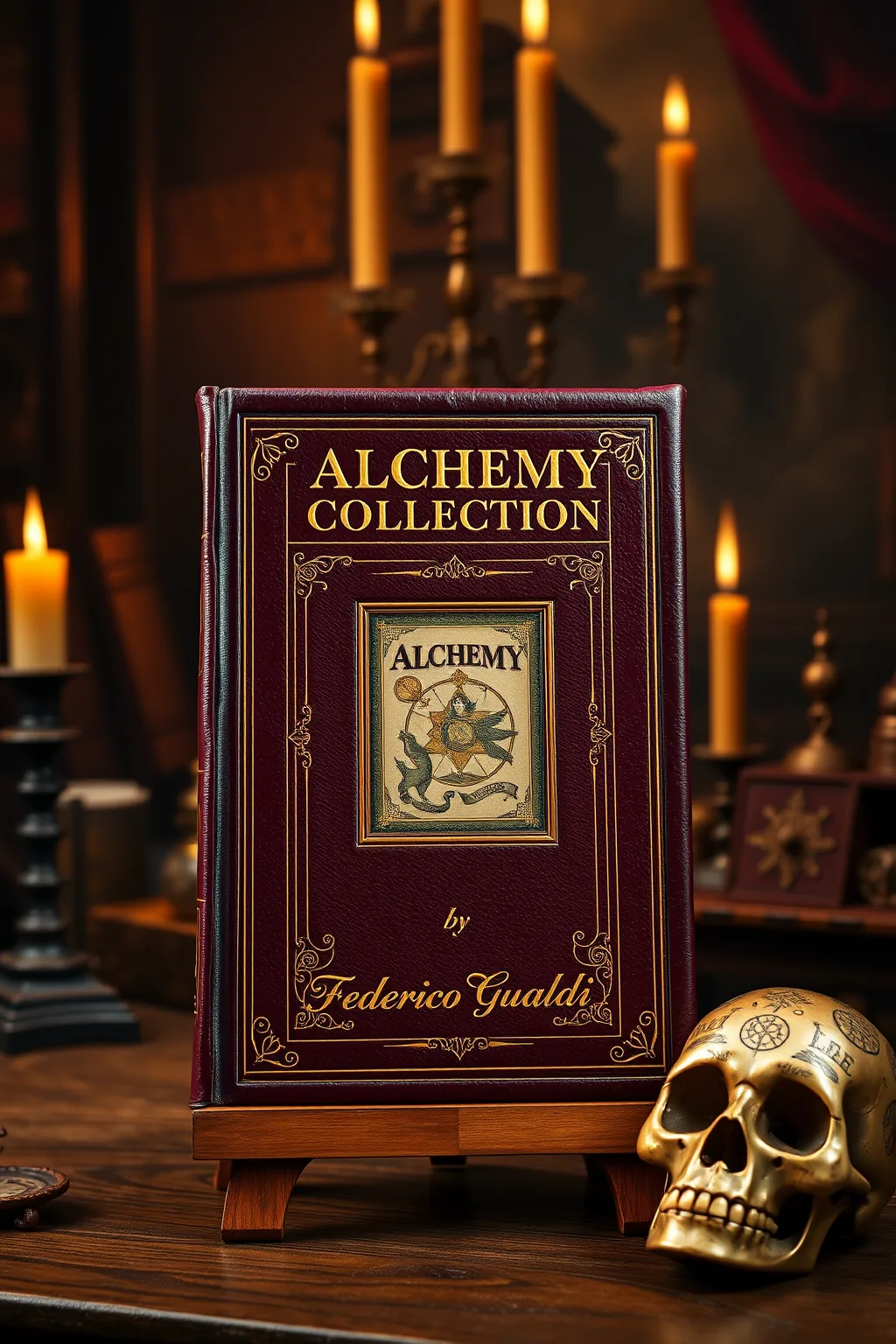
Alchemy Collection



Federico Gualdi's 'Alchemy Collection' stands as a testament to the enduring allure of alchemical mysteries. This work is not merely an academic exercise but a deeply esoteric exploration of the hidden knowledge that has been passed down through the ages. Gualdi's insights into the symbolism and philosophical underpinnings of alchemy are both enlightening and inspiring. The strengths of this collection lie in its ability to bridge the gap between historical alchemy and modern esoteric practices, making it an invaluable resource for anyone interested in the hermetic arts. Whether you are a seasoned scholar or a curious seeker, this book will enrich your understanding of alchemy's mystical dimensions.
📝 Description
61
Federico Gualdi's 'Alchemy Collection' details alchemy's spiritual and metaphysical dimensions.
Federico Gualdi's 'Alchemy Collection' examines alchemy not merely as a historical chemical practice but as a spiritual and metaphysical pursuit. The book unpacks the rich symbolism and philosophical depth inherent in alchemical traditions. Gualdi explores the principles that have guided seekers of hidden knowledge for centuries, focusing on the transformative power attributed to alchemical processes.
The text maintains an atmosphere of reverence and mystery, encouraging readers to understand the core alchemical concepts related to the creation of the Philosopher's Stone. It serves those interested in the mystical foundations of alchemy, appealing to scholars, practitioners, and spiritual seekers. The collection offers insights into hermetic arts that continue to hold significance.
This collection situates itself within the broader Hermetic tradition, which emphasizes correspondence between the macrocosm and microcosm, and the transformative potential of matter and spirit. It connects to a lineage of esoteric thought that views physical processes as allegories for inner spiritual development. Alchemy, in this context, is a symbolic language for understanding creation, consciousness, and the divine.
💡 Why Read This Book?
Why read this book? Federico Gualdi's 'Alchemy Collection' is essential for seekers of hidden knowledge, scholars of esoteric traditions, and practitioners of alchemy. It provides a comprehensive overview of alchemical principles, symbolism, and philosophical depth, making it an invaluable resource for anyone interested in the mystical and transformative power of alchemy. This collection offers a unique perspective on the hermetic arts, bridging the gap between historical alchemy and modern practices.
⭐ Reader Reviews
Honest opinions from readers who have explored this book.
❓ Frequently Asked Questions
What is the primary focus of 'Alchemy Collection'?
The primary focus is the exploration of alchemical principles, symbolism, and philosophical depth, providing insights into the mystical and transformative power of alchemy.
Who is the intended audience for this book?
The intended audience includes seekers of hidden knowledge, scholars of esoteric traditions, and practitioners of alchemy.
What makes this collection unique?
This collection is unique in its ability to bridge the gap between historical alchemy and modern esoteric practices, offering a comprehensive overview of alchemical principles and symbolism.
Is this book suitable for beginners?
While it is accessible to beginners, the depth of its content makes it particularly valuable for those with some prior knowledge of esoteric traditions.
How does this book contribute to the field of alchemy?
It contributes by providing a rich, evocative exploration of alchemical principles, making it an essential resource for scholars and practitioners alike.
🔮 Key Themes & Symbolism
The Philosopher's Stone
The quest for the Philosopher's Stone is a central theme, symbolizing the ultimate goal of alchemical transformation. This theme explores the mystical and metaphysical dimensions of creating this legendary substance, which is believed to grant immortality and transmutate base metals into gold.
Symbolism in Alchemy
Alchemy is rich in symbolism, and this theme looks at the esoteric meanings behind alchemical symbols. From the Ouroboros to the Hermetic seal, these symbols represent the hidden knowledge and transformative processes that lie at the heart of alchemy.
Hermetic Principles
The Hermetic principles, as outlined in the Emerald Tablet, form the foundation of alchemical practice. This theme explores these principles, including the famous maxim 'As above, so below,' and their application in both spiritual and material transformation.
💬 Memorable Quotes
Direct passages from the work, attributed to the author.
“The Philosopher's Stone represents the ultimate goal of alchemical transformation.”
— This highlights the quest for the legendary substance that grants immortality and transmutation.
“The Hermetic principles guide the alchemist on their mystical path.”
— This emphasizes the foundational role of Hermetic teachings in alchemical practice.
💡 Key Ideas
Editorial paraphrase of the work's core concepts — not direct quotes.
The alchemist's work is not merely a chemical process but a spiritual journey.
This quote underscores the mystical dimension of alchemy, emphasizing its role in spiritual transformation.
Alchemy is the art of turning base metals into gold.
This quote symbolizes the transformative power of alchemy, both in a material and spiritual sense.
Symbolism is the language of the alchemist, revealing hidden knowledge.
This quote underscores the importance of esoteric symbols in alchemical traditions.
🌙 Esoteric Significance
Tradition
This book belongs to the Hermetic tradition, which emphasizes the mystical and transformative power of alchemy. Hermeticism draws on the teachings of Hermes Trismegistus, combining elements of Gnosticism, Neoplatonism, and other esoteric traditions.
Symbolism
Key symbols in this collection include the Ouroboros, representing the cycle of life and death, and the Hermetic seal, symbolizing the unity of opposites. These symbols are central to understanding the esoteric dimensions of alchemy.
Modern Relevance
This book remains relevant today for modern practitioners of alchemy and esoteric traditions. It provides insights into the mystical and transformative power of alchemy, making it an essential resource for seekers of hidden knowledge.
👥 Who Should Read This Book
This book is ideal for beginners who are curious about the mystical dimensions of alchemy, as well as for scholars and spiritual seekers. Practitioners of alchemy will find it a valuable resource for deepening their understanding of alchemical principles and symbolism. Those interested in the hermetic arts and esoteric traditions will also benefit from the rich, evocative exploration of alchemical themes.
📜 Historical Context
The 'Alchemy Collection' was written during a time when alchemy was both a scientific and mystical pursuit. In the medieval and Renaissance periods, alchemists sought to uncover the secrets of nature and the universe through their work. This book was important for its exploration of alchemical principles and symbolism, which have influenced both scientific and esoteric traditions. Its influence can be seen in the development of modern chemistry, as well as in various occult and mystical practices.
📔 Journal Prompts
Reflect on the significance of the Philosopher's Stone in your spiritual journey.
How do alchemical symbols resonate with your personal quest for transformation?
Explore the Hermetic principles and their application in your daily life.
Consider the role of alchemy in bridging the gap between science and spirituality.
How does the quest for the Philosopher's Stone reflect your own search for hidden knowledge?
🗂️ Glossary
Philosopher's Stone
A legendary substance in alchemy believed to grant immortality and transmutate base metals into gold.
Hermeticism
An esoteric tradition that combines elements of Gnosticism and Neoplatonism, emphasizing the mystical and transformative power of alchemy.
Ouroboros
A symbol representing the cycle of life and death, often depicted as a serpent swallowing its own tail.
Emerald Tablet
A Hermetic text containing the principles of alchemy, including the famous maxim 'As above, so below.'
Transmutation
The alchemical process of transforming base metals into gold, symbolizing spiritual and material transformation.
This book appears in 3 collections
🔮 Readers Also Liked
Browse all →









More by Federico Gualdi
All books →
From the “Hermeticism” Collection
View all →






More Free Alchemy & Hermeticism Books
View all →