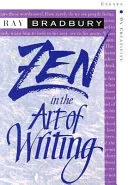
Zen in the art of writing
 81
81

Zen in the art of writing
Bradbury’s "Zen in the Art of Writing" crackles with the same manic energy that fuels his best fiction. His core argument—that writing stems from an intense, almost physical love affair with life and language—is compelling. The strength lies in his infectious enthusiasm, a palpable force that makes even the most mundane advice feel urgent. However, the book’s structure, a collection of disparate pieces, can feel disjointed, sometimes repetitive. A specific passage where he describes the sheer physical act of writing, the clatter of the typewriter, and the sweat on his brow, encapsulates his visceral approach. While not a systematic guide, it offers a potent antidote to creative ennui, though it requires the reader to filter its broad pronouncements through their own practice. It’s less a map and more a rocket booster.
📝 Description
81
Ray Bradbury compiled "Zen in the Art of Writing" in 1990, a collection of speeches and essays.
This book is not a standard self-help manual but a collection of essays and speeches. Ray Bradbury, a renowned science fiction and fantasy author, presents his views on generating ideas, overcoming writer's block, and sustaining a passion for storytelling. The text offers a direct look at the process of inspiration and the simple joy of writing.
It is aimed at writers of all experience levels who face self-doubt, procrastination, or a loss of creative energy. The book appeals to those who prefer a straightforward and enthusiastic approach to craft. It seeks to renew a writer's sense of purpose and excitement. Readers interested in the personal philosophies of prominent authors will also find value here.
The collection reflects a time when genre fiction was gaining recognition. Bradbury, whose career began in the 1940s, defended the artistic worth of speculative fiction. His speeches, often given to aspiring writers, captured the post-war American spirit and growing interest in popular narratives. His unique style and focus on the emotional aspects of writing distinguished him from contemporaries like Arthur C. Clarke and Isaac Asimov.
Bradbury's approach aligns with contemplative traditions that emphasize the spiritual or mindful aspect of creative work. He advocates for a practice rooted in pure love for the act of creation itself, separate from external validation. This echoes philosophies that find transcendence and meaning in dedicated, focused engagement with a craft. His call for prolific output, seeing it as a path to discovery, suggests an attitude akin to certain Zen practices where diligent repetition leads to deeper understanding and skill.
💡 Why Read This Book?
• Learn the necessity of embracing prolific output, inspired by Bradbury’s own relentless writing schedule that produced works like "Fahrenheit 451" and "The Martian Chronicles", understanding that quantity can refine quality. • Discover the importance of cultivating a rich inner life and external experiences, as Bradbury argues that vibrant writing springs from a life lived fully, a concept central to his creative philosophy. • Gain a renewed passion for the act of writing itself, moving beyond the goal of publication to find intrinsic joy in the process, mirroring Bradbury's lifelong dedication to the craft.
⭐ Reader Reviews
Honest opinions from readers who have explored this book.
❓ Frequently Asked Questions
When was Ray Bradbury's "Zen in the Art of Writing" first published?
The collection "Zen in the Art of Writing" was first published in 1990, bringing together various essays and speeches by Ray Bradbury on his writing process and philosophy.
Is "Zen in the Art of Writing" a how-to guide for beginners?
While it offers insights valuable to beginners, it's more of a motivational and philosophical exploration of writing. Bradbury focuses on the spirit and passion behind creation rather than strict technical instruction.
What is Bradbury's core message about writing?
Bradbury's central message is that writing should be fueled by an intense love for life, a boundless curiosity, and a joyous embrace of the creative act itself, regardless of external validation.
What kind of writing does Ray Bradbury discuss?
Bradbury discusses all forms of writing, advocating for a passionate approach to storytelling that transcends genre. His own work famously spans science fiction, fantasy, and more literary forms.
How does "Zen in the Art of Writing" relate to Zen Buddhism?
The title draws a parallel between the focused, mindful dedication of Zen practice and the creative process. Bradbury uses 'Zen' metaphorically to describe a state of intense, present-moment immersion in writing.
Does the book offer practical writing exercises?
It doesn't offer structured exercises but encourages a lifestyle of constant observation, imagination, and prolific writing. The 'practice' is living and creating relentlessly.
🔮 Key Themes & Symbolism
The Cult of Passion
Bradbury posits that writing is not a task but an all-consuming passion, a love affair with life and language. He urges writers to cultivate an intense, almost religious devotion to the craft, finding joy in the sheer act of creation. This isn't about technique; it's about the fire in the belly, the vital energy that compels stories to be told. He suggests that this passion, when genuine, naturally attracts inspiration and the drive to complete one's work, connecting the writer to a deeper, almost primal creative force.
Living as Fuel
A core tenet is that a writer's life experiences are the essential ingredients for compelling narratives. Bradbury advocates for a life lived with open senses, embracing wonder, curiosity, and even terror. He believes that to write vividly, one must first experience vividly. This involves actively engaging with the world, collecting sensory details, emotions, and observations, which then serve as the raw material for stories. The act of living becomes inseparable from the act of writing.
The Prolific Imperative
Bradbury champions quantity as a direct path to quality. He encourages writers to produce an enormous volume of work, believing that through sheer output, one hones skill, discovers voice, and generates unexpected gems. This approach combats writer's block by emphasizing momentum and the idea that every word written, even if imperfect, contributes to the overall development of the writer. It's a philosophy that values constant motion and output over hesitant perfectionism.
Embracing the Obsession
The book celebrates the writer's unique obsessions and curiosities as the wellspring of authentic creativity. Bradbury advises writers to lean into what fascinates them, no matter how strange or unconventional, as these personal fixations are the source of their distinct voice and most original ideas. He views these obsessions not as distractions but as essential guiding lights, leading to stories that are deeply personal and resonant.
💬 Memorable Quotes
Direct passages from the work, attributed to the author.
“Write first, think later.”
— This principle expresses Bradbury's belief in prioritizing the act of creation over excessive pre-planning or self-censorship. It encourages an immediate, instinctual flow of ideas onto the page, trusting that refinement and deeper meaning can emerge during the revision process.
“Love is the key.”
— Bradbury consistently returns to the idea that a profound, passionate love for life, for stories, and for the act of writing itself is the fundamental engine of creativity. This emotional core, he argues, is more vital than any technical skill.
“Live a thousand lives.”
— This concept highlights Bradbury's belief that a writer must immerse themselves in diverse experiences and perspectives. To write compellingly, one must 'live' broadly, drawing from a wide spectrum of human emotion and observation.
💡 Key Ideas
Editorial paraphrase of the work's core concepts — not direct quotes.
Fill the world with stories.
This quote reflects Bradbury's grand ambition and his view of writing as a vital, almost biological imperative. He saw the creation and dissemination of stories as a fundamental human need and contribution.
Don't think, do.
A direct call to action, this paraphrase emphasizes Bradbury's disdain for overthinking and procrastination. It pushes the writer to engage actively with the craft, overcoming mental barriers through sheer action and momentum.
🌙 Esoteric Significance
Tradition
While not explicitly a text within a formal esoteric lineage, "Zen in the Art of Writing" draws heavily on a Western tradition of inspiration and creative alchemy, particularly as seen in Romanticism and Transcendentalism. Bradbury's emphasis on direct experience, intuition, and the channeling of raw emotional energy aligns with concepts found in Hermeticism regarding the power of thought and imagination to manifest reality. The title itself invokes Eastern philosophy, suggesting a path to mastery through focused, mindful practice, akin to the discipline required in many contemplative traditions.
Symbolism
Bradbury frequently uses the symbol of the 'fire' – the burning passion, the incandescent idea, the destructive force of censorship ('Fahrenheit 451'). This fire represents transformative energy, both creative and destructive. Another motif is the 'carnival' or 'circus,' symbolizing the vibrant, chaotic, and often wondrous spectacle of life that writers must observe and absorb. These elements function as archetypal forces that fuel the imagination and provide the raw material for storytelling.
Modern Relevance
Bradbury's work continues to influence contemporary writers, particularly those in speculative fiction and young adult literature, who seek to imbue their work with emotional depth and a sense of wonder. His philosophy speaks to modern concepts of 'flow state' and mindfulness in creative practice. Thinkers and practitioners in fields like positive psychology and creative coaching often cite Bradbury's approach to passion and perseverance as a model for overcoming creative blocks and fostering a sustainable writing life.
👥 Who Should Read This Book
• Aspiring authors grappling with self-doubt and seeking a motivational boost, who will gain a renewed sense of purpose and permission to write from the heart. • Established writers experiencing creative fatigue, who can find inspiration in Bradbury's emphasis on lifelong learning and passionate engagement with the world. • Readers interested in the psychology of creativity, who will appreciate Bradbury's unique perspective on how life experiences directly fuel imaginative output.
📜 Historical Context
Published in 1990, "Zen in the Art of Writing" arrived at a time when the lines between literary and genre fiction were increasingly blurred, and authors like Ray Bradbury, who had long championed speculative fiction, were gaining broader recognition. Bradbury, a prolific writer whose career began in the late 1940s, was a significant cultural figure, known for works like "The Martian Chronicles" (1950) and "Fahrenheit 451" (1953). His speeches, the foundation of this book, were often delivered to enthusiastic crowds of aspiring writers, reflecting a post-war American cultural landscape that valued individual expression and the power of popular media. His energetic, almost evangelical style of advocacy for the writing life stood in contrast to more detached, academic approaches to literary criticism. He engaged with a burgeoning audience eager for practical, yet inspirational, guidance on creativity, a stark contrast to the more experimental literary movements of the era.
📔 Journal Prompts
The act of writing as a form of living.
Bradbury's concept of 'loving' the craft.
Collecting sensory details from a recent experience.
Overcoming the fear of imperfect first drafts.
The writer's unique obsessions as creative fuel.
🗂️ Glossary
The Muse
In classical and literary tradition, a source of artistic inspiration, often personified. Bradbury reinterprets this as an internal force driven by passion and life experience rather than an external entity.
Writer's Block
A psychological condition characterized by a temporary inability to produce new work or progress in a creative project. Bradbury offers a philosophy of relentless action and passion as an antidote.
Genre Fiction
Category of fiction categorized by conventions and tropes, such as science fiction, fantasy, mystery, or horror. Bradbury was a master and advocate for speculative genres.
Prolific
Producing much work. Bradbury advocates for a high volume of output as a means to improve skill and generate ideas.
Inspiration
The process of being mentally stimulated to do or feel something, especially to do something creative. Bradbury links inspiration directly to lived experience and passionate engagement.
Craft
The skill with which an author writes; the techniques used in writing. Bradbury emphasizes passion as the primary driver, with craft developing through practice.
Voice
The unique style, personality, and perspective of a writer, evident in their work. Bradbury encourages embracing personal obsessions to develop a distinct voice.
🔮 Readers Also Liked
Browse all →









More by Ray Bradbury
All books →





More Free Occult Philosophy Books
View all →