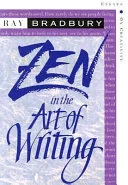
Zen in the art of writing
 81
81

Zen in the art of writing
Bradbury’s "Zen in the Art of Writing" is less a guide and more a fiery sermon from a craftsman who lived and breathed the written word. It crackles with the same electric energy that propelled his most famous tales. The work’s strength lies in its visceral defense of writing as a joyous, almost spiritual, act. Bradbury eschews sterile technique for pure, unadulterated passion, urging readers to embrace their obsessions and fears as fuel. A notable limitation, however, is the collection's essayistic nature; it can feel somewhat repetitive, circling back to core tenets without always offering new angles. The passage where he discusses the "smell of the library" and the tactile joy of books, even in the digital age, perfectly encapsulates his sensory approach to inspiration. This collection is a vital shot of adrenaline for any writer feeling the creative spark dimming.
📝 Description
81
Ray Bradbury's 2017 collection gathers decades of his thoughts on the writing life.
Ray Bradbury's "Zen in the Art of Writing" is not a standard how-to guide. It compiles essays and speeches that articulate Bradbury's personal philosophy on creativity, inspiration, and the pure joy of writing. This work acts as a manifesto for those compelled to create, stressing passion, persistence, and a strong belief in storytelling's power.
This book addresses writers facing motivation issues, creative blocks, or the discouragement that can come with a literary career. It speaks to the artist's spirit, aiming to restore a sense of purpose and wonder. Those looking for a conventional, step-by-step manual on plot or character will not find it here. The intended audience understands writing as a calling, an essential form of self-expression.
Though published in 2017, the collection's ideas stem from Bradbury's mid-20th century career. He stood out from contemporaries focused on technical or political science fiction, emphasizing the human element and lyrical qualities in fantastical settings. This book reflects the enduring spirit of his early work.
Bradbury's approach to writing aligns with contemplative traditions that view creative acts as forms of spiritual practice. The title itself invokes Zen Buddhism, a school that emphasizes direct experience, intuition, and the cultivation of mindful presence. This perspective suggests that writing, when approached with dedication and a certain detachment from outcome, can lead to a state of flow and self-discovery. It is less about technique and more about an internal disposition towards the act of creation.
💡 Why Read This Book?
• You will learn to see writing not as a task, but as a vital, ecstatic expression, directly inspired by Bradbury's emphasis on "loving" the act of creation as discussed in the book's essays. • You will discover how to actively cultivate inspiration by embracing sensory details and everyday observations, mirroring Bradbury's own methods detailed in his discussions of a writer's "catalog." • You will gain the courage to pursue unconventional ideas and trust your unique voice, a central tenet that Bradbury championed throughout his prolific career, particularly evident in his approach to genre-bending works.
⭐ Reader Reviews
Honest opinions from readers who have explored this book.
❓ Frequently Asked Questions
What is the primary message of Ray Bradbury's "Zen in the Art of Writing"?
The core message is that writing should be approached with profound love, passion, and an uninhibited joy, viewing it as a vital act of creation rather than a mere profession or chore.
Is "Zen in the Art of Writing" a practical guide to writing techniques?
No, it is not a conventional how-to manual. It focuses on the philosophy, inspiration, and emotional drive behind writing, rather than specific plot structures or grammar rules.
When was "Zen in the Art of Writing" first published?
The book was first published in 2017, though it compiles essays and speeches from throughout Ray Bradbury's long and influential career.
Who would benefit most from reading this book?
Writers experiencing creative blocks, burnout, or a loss of passion, as well as anyone seeking to reconnect with the fundamental joy and wonder of storytelling, will find it particularly resonant.
Does Bradbury discuss his own writing process in the book?
Yes, he frequently draws on his personal experiences and inspirations, offering insights into how he cultivated his unique voice and generated ideas for works like 'Fahrenheit 451'.
What is the 'Zen' aspect of the writing philosophy presented?
The 'Zen' refers to a state of mindful, intuitive engagement with the creative process, emphasizing presence, passion, and a direct, unforced connection to the act of writing.
🔮 Key Themes & Symbolism
The Ecstasy of Creation
Bradbury passionately argues that writing is not a labor to be endured but a joyous, almost ecstatic, compulsion. He champions the idea that the act of creation should be approached with an unbridled enthusiasm, akin to a spiritual practice. This theme is central to his philosophy, urging writers to find and maintain that core delight in putting words on paper, seeing it as a vital expression of life itself, rather than a task to be completed.
Inspiration as Active Pursuit
Contrary to the notion of inspiration as a passive muse, Bradbury presents it as something to be actively sought and cultivated. He emphasizes that inspiration is found not in abstract contemplation but in a deep, sensory engagement with the world – the smell of rain, the sight of a carnival, the echo of a distant train. This collection encourages readers to build a rich "catalog" of observations and experiences, serving as fertile ground for creative ideas.
The Writer's Authentic Voice
A recurring motif is the importance of a writer developing and trusting their unique voice. Bradbury eschews imitation and formulaic approaches, instead urging authors to embrace their individual perspectives, passions, and even their fears. He suggests that true originality stems from an honest exploration of one's inner landscape and a courageous commitment to expressing that vision authentically, regardless of conventional expectations.
The Power of Imagination
Bradbury consistently champions the boundless power of the human imagination. He views it not as mere fantasy, but as a fundamental tool for understanding the world, exploring possibilities, and creating meaningful narratives. The book encourages readers to nurture their imaginative faculties, to resist the mundane, and to use storytelling as a means of exploring the extraordinary within the ordinary.
💬 Memorable Quotes
Direct passages from the work, attributed to the author.
“If you want to write, you have to love to write.”
— This emphasizes the foundational requirement for a writer: a genuine, passionate affection for the act of writing itself, suggesting that love is the primary fuel and motivator for sustained creative effort.
“The librarian is the most important person in the world. The keeper of the keys.”
— Bradbury highlights the crucial role of libraries and librarians as guardians of knowledge and imagination, framing them as essential facilitators for writers and readers seeking inspiration and access to stories.
“Almost anything can be a story. The important thing is to tell it.”
— This suggests that inspiration is ubiquitous and that the true art lies not in finding a unique subject, but in the act of storytelling itself – transforming the ordinary into something compelling through narrative.
“You must stay drunk on words.”
— This powerful metaphor conveys the idea that a writer must be perpetually immersed in language, constantly reading, thinking, and playing with words to maintain a vibrant creative spirit and a keen sense of their power.
💡 Key Ideas
Editorial paraphrase of the work's core concepts — not direct quotes.
Write out of love, write out of hate, write out of hunger, write out of lust, write out of fear, write out of loneliness. Write out of your life.
This quote expresses Bradbury's belief that authentic and powerful writing springs from deep, raw emotion and lived experience, urging writers to tap into their most intense feelings as the source of their creative output.
🌙 Esoteric Significance
Tradition
While not strictly adhering to a single esoteric lineage, Bradbury's work often touches upon archetypal themes and the collective unconscious that resonate with Jungian psychology, a field often explored within metaphysical circles. His emphasis on imagination, inspiration, and the profound power of stories aligns with traditions that view creativity as a divine spark or a channel for higher truths. He taps into a universal longing for meaning and wonder, a characteristic found across various mystical traditions.
Symbolism
Bradbury frequently employs potent symbols: Mars, in "The Martian Chronicles," represents not just an alien world but humanity's own aspirations, fears, and destructive potential. Rockets and spaceships symbolize escape, progress, and the human drive to explore the unknown. Houses, particularly in "Something Wicked This Way Comes," often embody the psyche, holding both light and shadow, representing the internal battles between innocence and experience, good and evil.
Modern Relevance
Contemporary writers and creators who explore the intersection of technology, humanity, and spirituality often draw inspiration from Bradbury. Thinkers and artists who advocate for the preservation of art, literature, and humanistic values in an increasingly digital and commodified world find his voice particularly relevant. His emphasis on the emotional and imaginative core of human experience continues to influence those seeking to create narratives that are both thought-provoking and deeply felt.
👥 Who Should Read This Book
• Aspiring and established writers seeking to reignite their passion and overcome creative blocks, who will gain a renewed sense of purpose and a philosophy centered on the joy of writing. • Readers interested in the psychology of creativity and the power of imagination, who will find Bradbury's insights into inspiration and authentic expression particularly informative. • Fans of Ray Bradbury's iconic literary works, who will appreciate this collection as a direct window into the mind and heart of the beloved author, understanding the philosophy behind his enduring stories.
📜 Historical Context
Ray Bradbury's "Zen in the Art of Writing," compiled and published in 2017, draws from a body of work and thought that significantly impacted mid-20th century speculative fiction. Bradbury, a contemporary of authors like Isaac Asimov and Robert Heinlein, carved a unique niche. While Asimov focused on robotics and societal structures, and Heinlein explored libertarian themes and military futurism, Bradbury's strength lay in lyrical prose, emotional resonance, and a profound humanism, often tinged with melancholy. His work, including iconic pieces like "The Martian Chronicles" (1950) and "Fahrenheit 451" (1953), frequently engaged with themes of technological advancement's impact on the human spirit and the preservation of art and culture. This collection reflects the enduring appeal of his optimistic yet cautionary vision, a counterpoint to more rigid, scientifically-focused science fiction prevalent during his most active decades.
📔 Journal Prompts
The writer's "catalog" of sensory experiences and observations.
Cultivating the ecstatic compulsion to write.
Embracing the potent symbols found within your own life.
The courage to write from your deepest emotions.
Finding inspiration in the mundane wonders of the world.
🗂️ Glossary
The Catalog
A concept where writers meticulously collect and store observations, sensory details, emotions, and experiences from their lives, drawing upon this internal archive for inspiration and material in their writing.
Ecstatic Compulsion
The intense, joyous, and almost involuntary drive to write that Bradbury advocates for, viewing writing not as a chore but as a vital, life-affirming activity fueled by passion.
The Muse
Bradbury's interpretation often reframes the traditional passive muse as an active force that writers must seek out and engage with through constant observation, curiosity, and a deep connection to life.
Storytelling as Vital Act
The idea that telling stories is fundamental to human existence and expression, serving not just entertainment but also as a means of understanding oneself, others, and the world.
Writing from Life
The principle that authentic and powerful writing originates from the author's direct experiences, emotions, and unique perspective on the world, rather than from imitation or theoretical constructs.
Sensory Engagement
The practice of actively using all five senses to observe and experience the world, a method Bradbury champions for gathering rich details and evocative imagery for writing.
The Blank Page
Often presented not as a source of fear, but as a space of infinite possibility and potential, representing the beginning of creation and the excitement of bringing ideas to life.
🔮 Readers Also Liked
Browse all →








More by Ray Bradbury
All books →





More Free Occult Philosophy Books
View all →