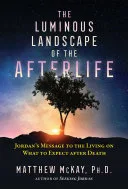
The Luminous Landscape of the Afterlife
 81
81

The Luminous Landscape of the Afterlife
Matthew McKay's The Luminous Landscape of the Afterlife presents a compelling, if somewhat familiar, vision of post-mortem existence as a malleable construct of consciousness. The book’s strength lies in its accessible explanation of complex ideas, particularly the concept of the afterlife as a 'luminous landscape' actively shaped by the individual. McKay effectively reframes death not as an end, but as a transition into a realm where imaginative and creative faculties become paramount. A limitation, however, is the reliance on channeled material, which, while presented clearly, inherently lacks the empirical verification many readers might seek. The section detailing how 'we learn and grow in the spirit world' is particularly insightful, offering a structured view of post-mortem development. Ultimately, this work offers a comforting and empowering perspective for those open to exploring consciousness beyond the physical body.
📝 Description
81
Matthew McKay's 2021 book posits the afterlife as a consciously constructed landscape.
The Luminous Landscape of the Afterlife presents existence after death not as a fixed place, but as a fluid dimension shaped by consciousness. Matthew McKay's work, drawing on channeled material, describes this post-mortem space as a 'luminous landscape' that individuals actively build and inhabit through their thoughts and beliefs. This model moves away from traditional ideas of heaven and hell, suggesting instead a process of spiritual growth and self creation.
This book addresses individuals concerned with mortality, seeking a less frightening view of death, and questioning the nature of consciousness beyond the physical body. It will resonate with those interested in spiritualism, parapsychology, and alternative frameworks for reality. Readers looking for guidance on spiritual development and communication with non-physical consciousness may find it particularly useful.
Published in 2021, The Luminous Landscape of the Afterlife appears during a time of renewed interest in consciousness studies and non-material realities. It shares common ground with 20th-century spiritualist writings and theosophy, particularly in its focus on subtle planes of existence. However, McKay's specific emphasis on the afterlife as a consciously created 'landscape' differentiates it from more deterministic views within earlier esoteric traditions, aligning it with contemporary discussions on subjective experience and mental creation.
💡 Why Read This Book?
• You will learn how the afterlife is conceptualized as a fluid, consciousness-created 'luminous landscape,' offering a new framework for understanding spiritual existence beyond the 2021 publication date. • You will gain practical techniques, including exercises and meditations, to reduce anxiety about death by understanding how to 'navigate the early stages of the afterlife' and prepare for spiritual communication. • You will explore the mechanics of learning and growth within the spirit world, moving beyond passive reception to an active, conscious engagement with your post-mortem journey as detailed by McKay.
⭐ Reader Reviews
Honest opinions from readers who have explored this book.
❓ Frequently Asked Questions
What is the primary concept presented in Matthew McKay's The Luminous Landscape of the Afterlife regarding the nature of the afterlife?
The book posits the afterlife as a 'luminous landscape' entirely created by consciousness, a fluid realm of imagination and invention rather than a fixed destination.
When was The Luminous Landscape of the Afterlife first published?
The book was first published on June 1, 2021, positioning it within contemporary discussions on consciousness and spirituality.
Does the book offer practical advice for dealing with the fear of death?
Yes, it includes exercises and meditations specifically designed to help individuals navigate the early stages of the afterlife and release anxiety about the end of life.
What does the book suggest about personal growth in the spirit world?
It explains that individuals continue to learn and grow in the spirit world, actively participating in their development through conscious engagement with their surroundings.
How is the information in this book presented?
The content is primarily presented through channeling, with Matthew McKay acting as the conduit for information received from individuals in the spirit world.
What is the significance of 'consciousness' in the context of the afterlife as described?
Consciousness is presented as the fundamental building block of the afterlife, actively shaping and manifesting the 'luminous landscape' that souls experience.
🔮 Key Themes & Symbolism
Consciousness as Creator
This theme centers on the radical idea that the afterlife is not a pre-ordained space but a direct manifestation of collective and individual consciousness. The 'luminous landscape' is a proof of the mind's power to construct reality. This concept challenges materialist views and aligns with certain strands of idealism and esoteric thought, suggesting that the perceived 'external' world, even after death, is a projection of inner states. McKay explores how beliefs and expectations actively shape the post-mortem experience, making personal transformation a key to navigating this realm.
Navigating Post-Mortem Transition
The book provides a practical framework for understanding the initial phases of existence after physical death. It moves beyond abstract speculation to offer guidance on how souls acclimate, learn to manage their newfound non-physical state, and begin a process of continuous learning and evolution. This focus on the 'early stages' aims to clarify the transition, offering reassurance and empowering individuals with knowledge about the mechanics of spiritual existence and interaction.
The Practice of Spiritual Growth
Growth in the spirit world is depicted as an active, conscious endeavor. The work emphasizes that learning and development are ongoing processes, facilitated by the unique properties of the afterlife realm. This includes understanding how consciousness interacts with its environment, how past lives influence present spiritual states, and how to consciously engage in practices that foster spiritual advancement, making the afterlife a dynamic school rather than a static reward or punishment.
Releasing Death Anxiety
A significant aim of the book is to alleviate the pervasive fear associated with death. By presenting the afterlife as a comprehensible and even creative process, McKay offers a psychological and spiritual antidote to existential dread. Understanding the afterlife as a range of consciousness, where one's own mental faculties are the primary tools, can transform the perception of death from an ending to a new beginning.
💬 Memorable Quotes
Direct passages from the work, attributed to the author.
“The afterlife is a luminous landscape created entirely of consciousness.”
— This core assertion frames existence beyond death not as a given destination but as a subjective, malleable reality. It implies that our thoughts, beliefs, and imagination are the architects of our spiritual environment.
“We learn and grow in the spirit world.”
— This highlights the dynamic nature of post-mortem existence, suggesting that spiritual evolution is a continuous process, akin to education, rather than a static state of being.
“Release anxiety about the end of life.”
— This points to the practical benefit of understanding the afterlife's nature, suggesting that knowledge and preparation can significantly reduce the fear often associated with dying.
“Read through the early stages of the afterlife.”
— This implies that there is a discernible process and a set of conditions to understand when first transitioning into non-physical existence, offering a guide for newcomers.
“Communicate in spirit.”
— This suggests that interaction and connection are possible and encouraged within the spirit world, offering a path towards maintaining relationships or receiving guidance.
🌙 Esoteric Significance
Tradition
This work aligns with esoteric traditions that emphasize the primacy of consciousness and the non-dualistic nature of reality, such as certain interpretations within Neoplatonism and modern New Age thought. It departs from more structured, hierarchical models found in Hermeticism or Kabbalah by focusing on the fluid, self-created aspect of the spiritual realms. The emphasis on imagination as a creative force speaks to Gnostic ideas of the mind's power to shape perceived reality, offering a personalized spiritual path.
Symbolism
The core symbol is the 'luminous landscape' itself, representing the afterlife as a radiant, malleable space constructed from thought and emotion. Light ('luminous') symbolizes consciousness, awareness, and spiritual energy, while the landscape signifies the manifested reality shaped by these forces. The concept of 'invention' within this landscape points to the soul's active role in creating its experiences, symbolizing the continuous process of spiritual evolution and self-discovery.
Modern Relevance
Contemporary thinkers and practitioners in fields like consciousness exploration, transpersonal psychology, and even certain branches of quantum mysticism find resonance in McKay's ideas. The emphasis on subjective reality and the mind's creative power aligns with discussions around simulation theory and the observer effect in physics. It offers a framework for individuals exploring lucid dreaming, astral projection, and other non-ordinary states of consciousness, providing a cohesive model for understanding non-physical experiences.
👥 Who Should Read This Book
• Individuals experiencing existential anxiety about death and seeking a more empowering, less fearful perspective on mortality. • Students of consciousness studies, comparative religion, and parapsychology interested in non-materialistic models of existence and post-mortem realities. • Practitioners of meditation and spiritual development looking for practical techniques to understand and prepare for the transition into non-physical states of being.
📜 Historical Context
The Luminous Range of the Afterlife, published in 2021, arrived during a period of renewed interest in consciousness studies and the nature of reality, influenced by advancements in neuroscience, quantum physics, and popular engagement with near-death experiences. It occupies a space adjacent to perennial philosophy and modern spiritualism, echoing earlier works like those of Helena Blavatsky and the Theosophical Society, which explored subtle planes of existence. However, McKay's specific articulation of the afterlife as a consciously constructed 'luminous landscape' distinguishes it from more deterministic eschatological models. While the 20th century saw figures like Arthur Conan Doyle championing spiritualism, McKay's work benefits from contemporary psychological understanding of belief formation and subjective experience, offering a more personalized and less dogmatic approach to post-mortem existence. The reception of channeled material, while always niche, has seen a steady audience seeking alternative spiritual frameworks.
📔 Journal Prompts
Reflect on the 'luminous landscape' metaphor and how your current beliefs might be shaping your perceived reality.
Consider the concept of learning and growth in the spirit world; what skills or knowledge might you prioritize developing?
Explore your personal anxieties surrounding death and how understanding consciousness as the creator of the afterlife could alter that perception.
Meditate on the idea of 'invention' within the spirit realm; what forms might your conscious creations take?
Imagine communicating in spirit; what questions would you ask, and what guidance might you seek from this perspective?
🗂️ Glossary
Luminous Landscape
The central concept describing the afterlife as a dynamic, ever-changing realm created entirely by consciousness, imagination, and thought.
Consciousness
The fundamental substance and creative force of the afterlife, shaping and manifesting the spiritual environment and individual experiences.
Spirit World
The non-physical plane of existence described in the book, characterized by its fluidity and responsiveness to consciousness.
Early Stages of the Afterlife
The initial period immediately following physical death, during which souls acclimate to their new state and learn to read through the spiritual realm.
Imagination and Invention
The active mental faculties used by consciousness to create and shape experiences within the 'luminous landscape' of the afterlife.
Spiritual Growth
The ongoing process of learning, evolution, and development that continues for consciousness within the spirit world.
Channeling
The process by which information is received from entities or intelligences in the spirit world, as utilized by the author.