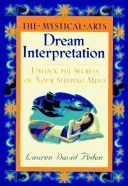
Dream Interpretation
 84
84

Dream Interpretation
Lauren David Peden's Dream Interpretation arrives with a practical promise: to unlock the mysteries held within our nightly visions. Its strength lies in its extensive A-Z dictionary, a clear and accessible tool for identifying common dream motifs. I found the section on dream journaling particularly well-articulated, encouraging a consistent practice that Peden links directly to charting personal evolution. However, the book occasionally feels more like a reference manual than a deeply explorative text. While it mentions the 'tantalizing world of dreams,' it sometimes stops short of fully exploring the emotional resonance or the more complex archetypal narratives that might arise. For instance, the explanation for the symbol 'serpent' is functional but doesn't deeply engage with its myriad cultural and psychological interpretations beyond the immediate. Nevertheless, for those seeking a structured entry point into dream analysis, Peden's work provides a solid foundation.
📝 Description
84
Lauren David Peden's Dream Interpretation, published in 1996, offers a dictionary for subconscious symbols.
Dream Interpretation by Lauren David Peden provides a structured method for understanding the symbolic language of the subconscious. The book, first released in 1996, features an A-Z dictionary intended to help readers interpret the images and narratives that appear in dreams. It goes beyond simple listing by examining how deciphering these nocturnal visions can contribute to personal and spiritual growth. This volume is for anyone interested in exploring their inner world, including those who experience vivid or recurring dreams and individuals focused on self-discovery.
The dictionary format ensures accessibility for newcomers to dream analysis. Peden also discusses how dreamwork can influence waking life, a topic that will appeal to those already engaged in introspective practices. The work connects dream interpretation to broader themes of psychological and spiritual development, suggesting that understanding one's dreams can lead to practical insights and solutions for everyday challenges.
Published in the mid-1990s, this book emerged during a period of renewed interest in Jungian psychology and New Age spirituality, continuing a long history of dream analysis. While figures like Carl Jung explored the symbolic meaning of dreams earlier in the 20th century, Peden offers a more direct, dictionary-based approach. The book appeared as esoteric practices became more integrated into popular self-help culture, moving beyond purely academic or clinical settings.
💡 Why Read This Book?
• Understand the foundational principles of dream analysis as presented in Peden's dictionary, learning how to correlate specific symbols like 'water' with potential subconscious messages. • Develop a consistent dream journaling practice, as outlined in the book's methodology, to track personal and spiritual growth over time. • Gain practical applications for dream insights, enabling you to use the decoded symbolism from your dreams to enhance problem-solving in your waking life, a concept explored throughout the 1996 publication.
⭐ Reader Reviews
Honest opinions from readers who have explored this book.
❓ Frequently Asked Questions
What is the primary purpose of Lauren David Peden's Dream Interpretation?
The book aims to help readers decode the symbolic language of their dreams using an A-Z dictionary, ultimately fostering self-awareness and enhancing waking life.
When was Dream Interpretation first published?
Dream Interpretation was first published in 1996, reflecting a mid-1990s interest in psychological and esoteric self-help.
Is Dream Interpretation suitable for beginners?
Yes, its dictionary format and clear explanations make it accessible for individuals new to dream analysis and interpretation.
How does the book suggest using dream interpretations?
It suggests using interpretations to chart personal and spiritual growth, and to gain insights that can positively impact one's waking life.
What is the significance of dream journaling according to this book?
Dream journaling is presented as a crucial tool for consistently recording and analyzing dream content, thereby facilitating a deeper understanding of one's subconscious.
Does the book offer a definitive interpretation for every dream symbol?
While it provides a comprehensive dictionary, the book acknowledges that dream symbols can be personal, encouraging readers to consider their individual associations.
🔮 Key Themes & Symbolism
The Dream Dictionary
The a core part of Peden's work is its extensive A-Z dictionary. This section provides readers with a structured reference for common dream symbols, from abstract concepts to concrete objects and beings. Each entry offers potential interpretations, encouraging users to see dreams not as random occurrences but as a coded language of the subconscious. The book emphasizes that while general meanings exist, personal associations are paramount in unlocking a symbol's true significance for the dreamer.
Dream Journaling for Growth
A central tenet is the importance of maintaining a dream journal. Peden guides readers on how to effectively record their dreams, noting details, emotions, and recurring patterns. This practice is presented as essential for charting personal and spiritual development. By consistently documenting nocturnal experiences, individuals can identify themes, track progress, and gain a clearer understanding of their inner landscape over time.
Subconscious Communication
The book operates on the premise that dreams serve as a direct line to the subconscious mind. It suggests that the imagery and narratives encountered during sleep are messages meant to be understood. These messages can pertain to unresolved issues, hidden desires, fears, or aspirations. Interpreting these symbols is framed as a dialogue with oneself, offering useful insights that can lead to greater self-awareness and psychological integration.
Enhancing Waking Life
Beyond mere interpretation, Peden stresses the practical application of dream insights. The ultimate goal is to leverage the understanding gained from dreams to improve one's conscious, waking existence. This can involve resolving internal conflicts, making better decisions, understanding relationships, or fostering creativity. The work bridges the gap between the dream world and reality, suggesting that a well-understood dream life can directly contribute to a more fulfilling and conscious life.
💬 Memorable Quotes
Direct passages from the work, attributed to the author.
“No two individuals dream alike, but everyone knows just how tantalizing the fleeting world of dreams can be.”
— This highlights the deeply personal nature of dream experiences while acknowledging the universal fascination and mystery surrounding them. It sets the stage for exploring individual dream symbolism.
“With a to Z dictionary, Dream Interpretation will help you decode the symbols hidden in your subconscious.”
— This directly states the book's primary tool and function: providing a systematic guide to deciphering the symbolic language that emerges from the deeper layers of the mind.
“Discover what your dreams really mean.”
— A concise call to action, emphasizing the potential for revelation and understanding that lies within one's own dream life, promising clarity where there might currently be confusion.
“Chart your personal and spiritual growth with a dream journal.”
— This frames dream journaling not just as an observational tool, but as a method for actively tracking and fostering one's development on psychological and spiritual levels.
“Understand the significance of symbols in your dreams.”
— This emphasizes the core premise of the book: that dream elements are not random but carry meaningful weight and require careful consideration to grasp their importance.
🌙 Esoteric Significance
Tradition
This work draws heavily from the psychological tradition of dream analysis, particularly influenced by Jungian archetypes and symbolism, but frames it within a broader esoteric context of self-discovery. It aligns with hermetic principles of correspondence and the idea that the microcosm (the individual) reflects the macrocosm. While not strictly tied to a single lineage like Kabbalah or Gnosticism, it utilizes a universal symbolic language that speaks to many esoteric paths seeking inner gnosis.
Symbolism
Key symbols like 'water' are explored for their universal associations with emotion, the unconscious, and purification, but Peden encourages personal correlation. The 'serpent' might be presented as a symbol of transformation, healing, or primal energy, depending on context. The book's approach to symbolism is less about rigid adherence to ancient doctrines and more about empowering the individual to find meaning within their unique dream collection.
Modern Relevance
In contemporary practice, Peden's *Dream Interpretation* continues to be a foundational text for those exploring dream analysis outside of clinical settings. Its accessible dictionary format influences modern dream apps and online resources. Thinkers and practitioners in fields like transpersonal psychology, modern witchcraft, and general mindfulness-based self-help often reference or build upon the accessible symbolic interpretation methods Peden popularized in the 1990s.
👥 Who Should Read This Book
• Individuals new to dream analysis seeking a structured, accessible entry point to understanding symbolic language. • Practicing psychonauts and spiritual explorers interested in integrating subconscious insights into their personal growth journey. • Writers and artists looking for inspiration and methods to tap into the subconscious for creative output.
📜 Historical Context
Lauren David Peden's *Dream Interpretation*, first published in 1996, emerged during a period of significant public interest in psychology and esoteric studies, fueled by New Age movements and a growing accessibility of Jungian concepts. While Sigmund Freud and Carl Jung had laid the groundwork for modern dream analysis in the early to mid-20th century, Peden's approach offered a more direct, dictionary-based method for a wider audience. The book arrived in bookstores alongside works by authors like Robert Moss, who also championed dream exploration, and within a cultural climate that embraced self-help and personal growth. Unlike academic texts, Peden’s work provided a practical, non-clinical guide, making complex symbolic interpretation seem manageable. Its reception was part of a broader trend where spiritual and psychological disciplines began to blend more fluidly in popular culture, seeking practical applications for inner exploration.
📔 Journal Prompts
The recurring symbol of the 'house' in your dreams: what rooms remain unexplored?
Reflect on the emotional tone of your most recent vivid dream.
Consider the 'shadow' figures encountered in your dreams; what traits do they represent?
Analyze the transformation of a symbol from your dream journal.
Connect a dream image to a specific challenge faced in your waking life.
🗂️ Glossary
Subconscious
The part of the mind of which one is not fully aware but which influences one's actions and feelings. In dream interpretation, it's seen as the source of symbolic messages.
Symbol
An object, person, or idea that represents something else, often an abstract concept. In dreams, symbols are the primary language used by the subconscious.
Dream Journal
A record kept by individuals of their dreams, typically including details of the narrative, emotions, and symbols encountered during sleep.
Archetype
A universally understood symbol, character, or pattern of behavior often found in collective myths and dreams, popularized by Carl Jung.
Personal Association
The unique meaning a symbol holds for an individual based on their personal experiences, memories, and cultural background.
Waking Life
The conscious, everyday experience of an individual, as distinct from their dream life or subconscious activities.
Decipher
To convert (a text or code) into normal language; to succeed in understanding, interpreting, or identifying (something).