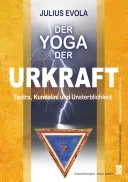
Der Yoga der Urkraft
 74
74

Der Yoga der Urkraft
Evola's "Der Yoga der Urkraft" offers a starkly different perspective on Kundalini Yoga than what typically circulates today. The book prioritizes the raw, energetic mechanics of the practice, presenting it as a potent spiritual technology rather than a path to general well-being. Evola's strength lies in his unflinching focus on the transformative, and at times perilous, nature of awakening inner forces. A particularly striking aspect is his detailed explanation of the subtle body's architecture and the role of specific yogic techniques in manipulating these energies. However, the text can be dense and demanding, requiring a reader already familiar with esoteric terminology and Evola's philosophical framework. The absence of modern concessions or simplified explanations might alienate newcomers. Evola’s "Tantra-Buch" is a significant, albeit challenging, resource for understanding the more rigorous dimensions of Kundalini Yoga.
📝 Description
74
Julius Evola published 'Der Yoga der Urkraft' in 1924, focusing on Kundalini Yoga's potent, original form.
This German translation of Evola's work addresses Kundalini Yoga not as a modern wellness trend, but as a powerful spiritual technology. The book aims to reveal the energetic and transformative principles at the core of this ancient practice, bypassing superficial interpretations. Evola's approach emphasizes the direct encounter with these potent forces and their spiritual objectives.
Intended for serious students of esoteric traditions and comparative religion, this volume appeals to those seeking a deeper understanding of Yoga beyond contemporary iterations. It focuses on historical and spiritual depth, offering substantial material for readers interested in Tantra, specifically Kundalini Yoga, and its potential for radical personal transformation. Scholars of Indian philosophies and admirers of Evola's distinct perspective will also find value here.
Evola's examination of Kundalini Yoga emerged during the early 20th-century European engagement with Eastern spiritualities, particularly in the 1920s and 1930s. While contemporaries like René Guénon also studied traditional doctrines, Evola distinguished himself by focusing on the active, transformative, and sometimes transgressive aspects of these practices. His work often contrasted with more academic or devotional Hindu studies, highlighting the inherent power within certain yogic techniques.
Julius Evola's 'Der Yoga der Urkraft' is situated within the broader European esoteric revival of the early 20th century, a period marked by intense interest in Eastern philosophies and spiritual systems. Unlike purely academic or purely metaphysical approaches, Evola's work often focused on the practical, transformative, and sometimes radical potential of these traditions. His engagement with Kundalini Yoga, specifically, sought to uncover its original potency as a spiritual technology, distinct from later, perhaps diluted, interpretations.
💡 Why Read This Book?
• Gain insight into the original, potent form of Kundalini Yoga, distinct from modern adaptations, as detailed in Evola's analysis of energetic pathways and spiritual objectives. • Understand the concept of Shakti and its manifestation as Kundalini, as explored in the book's examination of divine feminine power and its role in yogic ascent. • Explore the subtle body and the mechanics of energy manipulation through specific yogic practices, offering a view of transformation that prioritizes potent spiritual technology.
⭐ Reader Reviews
Honest opinions from readers who have explored this book.
❓ Frequently Asked Questions
What is "Der Yoga der Urkraft" about?
It is Julius Evola's "Tantra-Buch," focusing on the original, potent form of Kundalini Yoga. It explores the energetic principles, subtle body, and transformative practices of this ancient Indian spiritual discipline.
When was "Der Yoga der Urkraft" first published?
The original publication date for Julius Evola's "Tantra-Buch," which forms the basis of "Der Yoga der Urkraft," is not explicitly stated in the provided text, but the German translation is noted as being published in 2020.
Who is Julius Evola?
Julius Evola (1898-1974) was an Italian philosopher, painter, and esotericist known for his controversial views on tradition, spirituality, and politics. His work often focused on radical paths to spiritual realization.
What is Kundalini Yoga according to Evola?
Evola presents Kundalini Yoga as a powerful spiritual technology focused on awakening dormant energy (Kundalini) and directing it through the subtle body's energetic centers (chakras) for profound transformation.
Is this book suitable for beginners in Yoga?
The book is intended for serious students of esoteric traditions. Its dense, technical nature and focus on potent, potentially challenging practices make it less suitable for absolute beginners seeking general wellness.
What is the main difference between Evola's approach and modern Yoga?
Evola emphasizes the original, energetic, and transformative aspects of Kundalini Yoga as a spiritual technology, contrasting with many modern adaptations that focus on physical health and stress reduction.
🔮 Key Themes & Symbolism
Kundalini Awakening
The book focuses intensely on the concept of Kundalini, the coiled spiritual energy at the base of the spine. Evola details the methods and potential consequences of awakening this force, presenting it as the core of a radical spiritual discipline. It is not merely a metaphor but a tangible, potent energy to be consciously manipulated for transformative purposes, bypassing conventional spiritual paths.
Subtle Body Mechanics
Evola elaborates on the intricate structure of the subtle body, particularly the chakras and nadis. These energetic centers and channels are presented as the landscape upon which Kundalini operates. Understanding these mechanics is crucial for directing the awakened energy, preventing dissipation, and achieving spiritual ascent, moving beyond purely philosophical discussions to practical energetic work.
Shakti and Divine Power
The work explores Shakti, the primordial cosmic energy, often personified as the Divine Feminine. Kundalini is seen as its manifestation within the individual. Evola's treatment of Shakti emphasizes its active, dynamic, and sometimes fierce nature, integral to the transformative process. This perspective aligns with certain Tantric traditions that venerate feminine divine power as the source of creation and liberation.
Spiritual Technology
Evola frames Kundalini Yoga as a potent spiritual technology, a system of precise techniques designed for radical transformation. This approach underscores the active, often transgressive, nature of the practices, emphasizing their efficacy in altering consciousness and achieving a state of transcendence. It is presented as a disciplined method for mastering inner forces.
💬 Memorable Quotes
Direct passages from the work, attributed to the author.
“The original form of Kundalini Yoga is a powerful spiritual technology.”
— This statement highlights Evola's view of yoga not as a gentle practice, but as a rigorous system of techniques designed for profound, often challenging, personal transformation and mastery of inner forces.
“Awakening Kundalini requires understanding the subtle body's energetic pathways.”
— This emphasizes the technical aspect of Kundalini Yoga, suggesting that successful and safe practice depends on a detailed knowledge of the chakras and nadis, the energetic channels within the practitioner.
“Shakti is the dynamic force underlying spiritual realization.”
— This frames the Divine Feminine energy, Shakti, as the essential power that drives spiritual progress and transformation, positioning it as central to the yogic path.
“This is not a path for the merely curious.”
— This conveys Evola's assertion that the practices described are serious, demanding, and potentially dangerous, intended only for dedicated practitioners seeking genuine spiritual realization, not superficial engagement.
“The aim is radical transformation, not mere comfort.”
— This captures Evola's focus on the transformative potential of Kundalini Yoga, suggesting its purpose is to fundamentally alter the practitioner's being, rather than provide relaxation or well-being.
🌙 Esoteric Significance
Tradition
This work is deeply rooted in Tantric traditions of India, specifically those focusing on Kundalini Yoga. Evola interprets these practices through his lens of Traditionalism and a focus on spiritual hierarchy and potent spiritual technology. He departs from purely devotional or philosophical approaches, emphasizing the active, transformative, and sometimes dangerous energetic manipulation central to these paths.
Symbolism
Central symbols include Kundalini, the coiled serpent representing dormant spiritual energy, and the chakras, visualized as lotus-like energy centers along the spine. Evola explains how the manipulation of Kundalini through these energetic gateways is key to awakening spiritual potential and achieving higher states of consciousness, moving beyond the physical form.
Modern Relevance
Contemporary esoteric practitioners and scholars of comparative religion still engage with Evola's rigorous approach to Kundalini Yoga. Thinkers interested in the energetic and transformative aspects of spirituality, particularly those who find modern adaptations of yoga too diluted, often turn to Evola's work for a more potent and historically grounded understanding of these practices.
👥 Who Should Read This Book
["• Serious students of esoteric Hinduism and Tantra seeking an in-depth understanding of Kundalini Yoga's original principles and energetic mechanics.", "• Comparative religion scholars interested in Julius Evola's unique, often controversial, interpretations of Eastern spiritual disciplines and their transformative potential.", '• Practitioners of advanced yogic or tantric arts looking to explore the theoretical underpinnings of energy manipulation and spiritual ascent as presented by a key 20th-century esotericist.']
📜 Historical Context
Julius Evola's "Der Yoga der Urkraft" emerges from the early 20th-century European milieu of intense interest in Eastern spiritualities, particularly during the 1920s and 1930s. This era saw many thinkers exploring traditions beyond the Western canon, often seeking potent methods for spiritual or existential renewal. Evola's approach, however, was distinct from more academic or devotional interpretations of Hinduism prevalent at the time. While scholars like Mircea Eliade were also examining comparative religion, Evola focused on the active, energetic, and often transgressive dimensions of practices like Kundalini Yoga. His work positioned itself against the backdrop of rising nationalism and a search for 'authentic' traditions, though his specific interpretations were often controversial. This book represents his engagement with Tantrism and its more potent yogic techniques, offering a perspective that emphasized power and radical transformation.
📔 Journal Prompts
The concept of Shakti as a primordial, dynamic force.
The mechanics of Kundalini energy and its pathways through the subtle body.
Evola's distinction between potent spiritual technology and superficial practice.
The role of the chakras in directing spiritual energy.
Potential challenges and dangers associated with awakening inner forces.
🗂️ Glossary
Kundalini
A primordial, dormant spiritual energy often depicted as a coiled serpent at the base of the spine. Its awakening is central to Kundalini Yoga, leading to spiritual transformation.
Shakti
The primordial cosmic energy, often personified as the Divine Feminine. In Tantra, Kundalini is seen as its manifestation within the individual, the power that drives creation and spiritual realization.
Chakras
Energetic centers within the subtle body, visualized as lotus-like structures along the spine. They are points where Kundalini energy is directed and transformed during yogic practices.
Nadis
Channels or pathways within the subtle body through which vital energy (prana) flows. They are interconnected with the chakras and are crucial for the circulation of Kundalini.
Tantra
A complex set of esoteric traditions originating in India, often characterized by rituals, symbolic practices, and the use of energy (Shakti) for spiritual liberation and transformation.
Subtle Body
The non-physical aspect of a human being, composed of energies, chakras, and nadis, as distinct from the physical body. It is the realm where yogic and tantric energies are manipulated.
Spiritual Technology
A term used by Evola to describe practices like Kundalini Yoga that employ specific, potent techniques designed for radical spiritual transformation and mastery of inner forces.