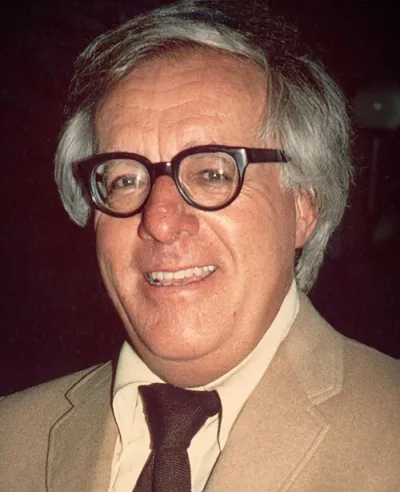
Ray Bradbury was a celebrated American author known for his imaginative works across genres, profoundly influencing science fiction.
Ray Douglas Bradbury (1920–2012) was a highly acclaimed American writer and screenwriter whose prolific career spanned multiple genres, including fantasy, science fiction, horror, and realistic fiction. He is widely recognized for seminal works such as the dystopian novel Fahrenheit 451 and the evocative short story collections The Martian Chronicles and The Illustrated Man. Bradbury's writing often explored themes of human nature, memory, and the impact of technology, delivered with a distinctive poetic prose style. His imaginative vision and ability to blend the fantastical with the relatable earned him an international reputation and significantly contributed to bringing modern science fiction into the literary mainstream.
Born in Waukegan, Illinois, Bradbury's childhood experiences, including family visits and encounters at carnivals, deeply influenced his fictional settings and narratives, with his hometown often reimagined as 'Green Town.' His early fascination with storytelling was nurtured by family members and a love for reading, drawing inspiration from authors like H.G. Wells and Edgar Allan Poe. He actively participated in literary and drama clubs, and his early career involved writing for fanzines and selling jokes, eventually leading to full-time writing and the publication of his first short story collection, Dark Carnival.
Imaginative Roots and Early Influences
Ray Bradbury's formative years in Waukegan, Illinois, provided a rich backdrop for his later literary creations, with his hometown often transformed into the fictional 'Green Town' in his stories. His childhood was shaped by a close-knit extended family, including grandparents and an aunt who shared stories, and a pivotal encounter with a carnival performer named Mr. Electrico at age twelve. This electrifying experience, where he was touched by a flaming sword and told to 'Live, forever!', profoundly impacted him, sparking a lifelong commitment to writing. Bradbury's early reading habits were extensive, devouring works by H.G. Wells, Jules Verne, and Edgar Allan Poe, whose styles he attempted to emulate. He also drew inspiration from popular culture, collecting Tarzan and Buck Rogers comic books and listening intently to radio dramas, meticulously scripting them from memory.
Literary Career and Thematic Exploration
Bradbury's career as a full-time writer began after being deferred from military service in World War II. He initially published science fiction stories in fanzines, connecting with other writers in nascent science fiction societies. His first paid story, 'Pendulum,' appeared in 1941, followed by his first solo sale, 'The Lake,' and his debut collection, 'Dark Carnival,' in 1947. A significant turning point was the publication of his story 'Homecoming' in Mademoiselle, which garnered an O. Henry Award. This story was later expanded into the novel Fahrenheit 451, a powerful critique of censorship and conformity. Throughout his career, Bradbury explored profound themes, including the nature of humanity, the passage of time, the allure and peril of technology, and the enduring power of memory and imagination, often infused with a melancholic yet hopeful tone.
Cross-Media Influence and Legacy
Beyond his literary achievements, Ray Bradbury was also a prolific screenwriter and consultant, contributing to film and television projects, including adaptations of classics like Moby Dick and original screenplays such as It Came from Outer Space. Many of his own works were successfully adapted into various media, including films, television series, and comic books, further extending his reach and impact. The New York Times recognized him as a key figure in bringing modern science fiction into the literary mainstream, praising his imaginative scope, lyrical prose, and deep understanding of human character. His poetic style and ability to weave fantastical elements into relatable human experiences cemented his legacy as one of the most beloved and influential writers of the 20th century.
Key Ideas
- Exploration of censorship and conformity (Fahrenheit 451)
- The impact of technology on humanity
- Nostalgia and the idealized past (Green Town)
- The power of imagination and storytelling
- Humanity's place in the universe and the future
Notable Quotes
“Live, forever!”
Books by
8 free public domain books · Read online or download