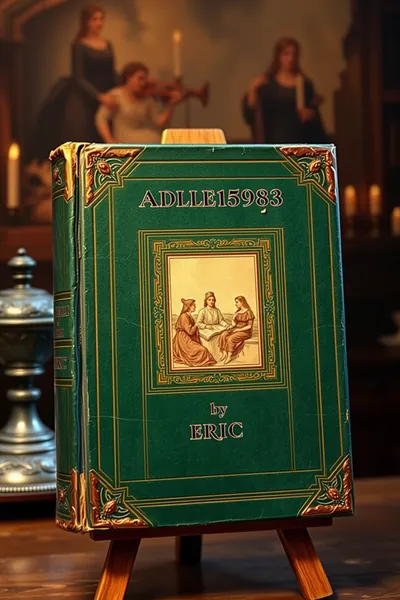
Same Soul, Many Bodies

 80
80

Same Soul, Many Bodies
Brian L. Weiss's "Same Soul, Many Bodies" revisits the territory of reincarnation with a focus on the persistent patterns of soul journeys. The strength of the book lies in its presentation of clinical case studies, grounding the often-abstract concept of past lives in the concrete experiences of Weiss's patients. The recurring themes of soul groups and karmic connections, as detailed through these regressions, provide a compelling framework for understanding relationships and life challenges. However, the work occasionally leans towards a devotional tone, which might alienate readers seeking a purely scientific or skeptical analysis. A limitation is the lack of critical engagement with potential psychological explanations for regression content, such as cryptomnesia or confabulation, though Weiss does address these briefly. The detailed accounts of patients remembering specific historical details, like a patient recalling life as a "Roman soldier named Marcus," serve as a powerful, if debated, illustration of past-life recall. Ultimately, the book offers a deeply comforting, albeit unproven, perspective on the continuity of the self.
📝 Description
80
Brian L. Weiss's 2004 book Same Soul, Many Bodies details psychiatric patients' past-life regressions.
Published in 2004, Same Soul, Many Bodies chronicles psychiatrist Brian L. Weiss's encounters with reincarnation through his patients' regression sessions. Weiss presents a series of case studies where individuals recount consistent narratives of souls inhabiting multiple bodies across different historical periods. He moves beyond simple stories to build a coherent argument for the soul's continuous existence and its progression through various lives.
This work is for anyone interested in the nature of consciousness, the possibility of life beyond death, and the spiritual dimensions of human existence. It addresses common curiosities about life patterns, unexplained fears, or innate aptitudes, suggesting their roots might lie in previous existences. Readers who are open to alternative views on life, or who are curious about the therapeutic use of past-life regression, will find much to consider within its pages.
Emerging in the early 2000s, a period marked by growing interest in New Age spirituality and alternative healing, Weiss's book tapped into existing discussions around reincarnation. While figures like Shirley MacLaine had popularized the topic, Weiss's psychiatric background lent a clinical lens to these phenomena. His work positioned itself within a broader examination of the connections between psychology and spiritual beliefs, offering a perspective that sought to bridge empirical observation with esoteric concepts of the soul's eternal nature.
💡 Why Read This Book?
• Gain insight into the concept of 'soul groups,' learning how Weiss suggests souls may choose to incarnate together across lifetimes to facilitate spiritual development, offering a new lens for understanding persistent relationships. • Understand the therapeutic potential of past-life regression as presented by Weiss, exploring how recalling specific past existences, such as a patient's memory of being a "young woman in wartime France," might alleviate current anxieties or phobias. • Explore Weiss's hypothesis that current life challenges and talents can be direct echoes from previous incarnations, providing a framework for self-reflection on recurring patterns and innate abilities, as detailed in his 2004 publication.
⭐ Reader Reviews
Honest opinions from readers who have explored this book.
❓ Frequently Asked Questions
What is the core concept of Brian L. Weiss's 'Same Soul, Many Bodies'?
The book's core concept is that the soul is eternal and reincarnates through multiple physical bodies across different lifetimes, carrying lessons and experiences that influence present-day lives and relationships.
When was 'Same Soul, Many Bodies' first published?
'Same Soul, Many Bodies' was first published in 2004, building upon Brian L. Weiss's earlier explorations into past-life regression and reincarnation.
Does the book offer scientific proof of reincarnation?
While Weiss, a psychiatrist, presents case studies from his practice to support his theories, the book is not a scientific treatise offering empirical proof. It explores the phenomena through patient regressions.
What are 'soul groups' as described in the book?
Soul groups are clusters of souls who choose to incarnate together repeatedly across different lifetimes, acting as companions and teachers for each other's spiritual growth and learning.
How does Weiss connect past lives to current life issues?
Weiss suggests that unresolved issues, phobias, talents, and relationship dynamics in the present life can often be traced back to events or experiences in previous incarnations, as revealed through regression.
Is this book suitable for skeptics?
The book might be challenging for strict skeptics due to its foundational premise of reincarnation. However, it can be valuable for those open to exploring alternative perspectives on consciousness and existence.
🔮 Key Themes & Symbolism
The Eternal Nature of the Soul
Weiss posits that the soul is an immortal entity that persists beyond physical death, starting a continuous journey through successive lifetimes. This eternal aspect of the soul is fundamental to understanding the book's premise. It suggests that our current existence is but one chapter in a much larger narrative, with the soul accumulating wisdom and resolving karmic debts over vast periods. The work implies that the essence of who we are is not tied to a single physical form but is a continuous thread woven through multiple existences, learning and evolving with each incarnation.
Past-Life Regression as Therapy
A significant focus of the book is the therapeutic application of past-life regression. Weiss, drawing from his psychiatric background, details how guiding patients into past-life memories can unlock the roots of current psychological distress, phobias, or unexplained ailments. By confronting and understanding the origins of these issues in previous incarnations, patients often experience profound healing and release. This therapeutic angle positions reincarnation not just as a metaphysical concept but as a practical tool for personal growth and emotional well-being.
Soul Groups and Karmic Connections
Weiss introduces the concept of 'soul groups' – entities that choose to incarnate together across lifetimes. These recurring relationships, whether as family, friends, or even adversaries, are seen as opportunities for mutual learning and spiritual advancement. The book explores how karmic patterns, established in past lives, often dictate the dynamics of present relationships. Understanding these connections can provide clarity on interpersonal challenges and foster a sense of purpose in our interactions with others, viewing them as part of a shared soul journey.
The Spirit World and Life Between Lives
Between physical incarnations, Weiss describes a 'Spirit World' where souls exist in a non-physical state. In this realm, souls reflect on past lives, plan future incarnations, and receive guidance. This intermediate state is crucial for understanding the soul's intentionality and the process of choosing life lessons. The book suggests that this period is one of profound understanding and preparation, where souls gain perspective before starting new physical journeys, highlighting a structured and purposeful afterlife.
💬 Memorable Quotes
Direct passages from the work, attributed to the author.
“The soul is immortal, and it chooses its own lessons.”
— This concept emphasizes the soul's agency and eternal nature, suggesting that our lives are not random but are carefully chosen experiences designed for growth and learning.
“We are all part of a larger soul group, returning together in different relationships.”
— This highlights the interconnectedness of souls, proposing that many of our significant relationships in this life have roots in previous incarnations, forming a supportive or challenging network for spiritual evolution.
“Many of our present-day fears and phobias have their origins in past-life traumas.”
— This statement directly links current psychological conditions to past-life experiences, suggesting that regression can uncover and help resolve these deep-seated issues by addressing their original cause.
“Life between lives is a time of healing, planning, and spiritual understanding.”
— This interpretation of the afterlife suggests a purposeful existence between physical bodies, where souls prepare for future incarnations and gain insight into their spiritual path.
“The purpose of life is learning and spiritual growth.”
— This expresses the overarching philosophy that each incarnation serves as an educational opportunity for the soul to advance on its path toward greater understanding and spiritual maturity.
🌙 Esoteric Significance
Tradition
Weiss's work draws heavily from the concept of reincarnation found in Eastern religions like Hinduism and Buddhism, but frames it within a Western, often therapeutic, context. It aligns with certain Theosophical ideas about the soul's evolution through successive lives and the concept of spiritual planes. While not strictly adhering to any single esoteric lineage, it echoes Gnostic notions of spiritual awakening and the soul's journey towards liberation from material existence, albeit through a modern, psychotherapeutic lens.
Symbolism
The recurring motif of the 'soul group' acts as a powerful symbol of interconnectedness and divine providence, suggesting that relationships are not accidental but divinely orchestrated for mutual growth. The 'Spirit World' can be seen as a symbolic representation of the astral or causal planes, a liminal space where consciousness exists beyond physical limitations, facilitating reflection and planning. The concept of 'karmic debt' functions symbolically, representing the spiritual law of cause and effect that guides the soul's journey toward balance and resolution.
Modern Relevance
Weiss's exploration of past lives and soul continuity continues to influence contemporary spiritual seekers and therapists. His work is often cited in discussions of past-life regression therapy, consciousness studies, and the perennial philosophy. Thinkers and practitioners exploring themes of ancestral healing, soul contracts, and the energetic nature of relationships can find resonance with his theories. The ongoing interest in 'life between lives' regressions also owes a debt to Weiss's foundational work in popularizing the concept.
👥 Who Should Read This Book
• Individuals grappling with persistent life challenges or unexplained phobias, seeking a framework to understand their origins through past-life regression. • Students of comparative religion and spirituality interested in how concepts of reincarnation are presented within a modern therapeutic context. • Those curious about the nature of consciousness and the soul's journey, open to exploring theories beyond conventional scientific understanding.
📜 Historical Context
Published in 2004, "Same Soul, Many Bodies" emerged within a cultural landscape where New Age thought and alternative spiritual practices were gaining wider acceptance. Brian L. Weiss, a psychiatrist trained in conventional medicine, lent a degree of credibility to discussions of reincarnation, a topic often relegated to the fringes of mainstream discourse. His earlier work, "Many Lives, Many Masters" (1988), had already established him as a prominent voice in this field. This period saw continued interest in therapeutic modalities that extended beyond the purely psychological, with figures like Louise Hay and Deepak Chopra also exploring mind-body-spirit connections. While Weiss's clinical approach differentiated him from more purely spiritual writers, his work existed alongside and sometimes intersected with the burgeoning self-help and spiritual wellness industries. The reception of such works often polarized opinions, with some embracing them as profound revelations and others dismissing them as pseudoscientific or wishful thinking, a dynamic common for explorations of consciousness and the afterlife.
📔 Journal Prompts
The concept of soul groups and their influence on current relationships.
Reflections on how past-life memories, if experienced, might inform present-day anxieties.
The soul's journey and the lessons chosen for each incarnation.
The therapeutic potential of understanding the origins of phobias or talents from previous lives.
Contemplating the existence and purpose of the Spirit World between physical lives.
🗂️ Glossary
Reincarnation
The belief that the soul, after death, begins a new life in a new body. It is a core concept in many religions and spiritual traditions, suggesting a continuous cycle of birth, death, and rebirth.
Past-Life Regression
A therapeutic technique where a trained practitioner guides an individual into a hypnotic state to access memories of previous lives. It is used to explore potential origins of current life issues.
Soul Group
A collection of souls who have known and chosen to be with each other over many lifetimes, often incarnating together in various roles to facilitate mutual learning and growth.
Karmic Connection
The energetic link or consequence arising from actions, thoughts, or intentions in past lives that influences present circumstances and relationships. It relates to the law of cause and effect.
Spirit World
A non-physical realm or dimension where souls are believed to exist between physical incarnations, often described as a place of rest, learning, and planning for future lives.
Life Between Lives (LBL)
A specific type of spiritual hypnotherapy designed to access the soul's memories of the spiritual realm and the period between physical incarnations.
Spiritual Evolution
The process by which the soul progresses through various lifetimes, accumulating wisdom, resolving challenges, and developing greater spiritual understanding and consciousness.
🔮 Readers Also Liked
Browse all →








More by Brian L. Weiss
All books →





More Free Occult Philosophy Books
View all →