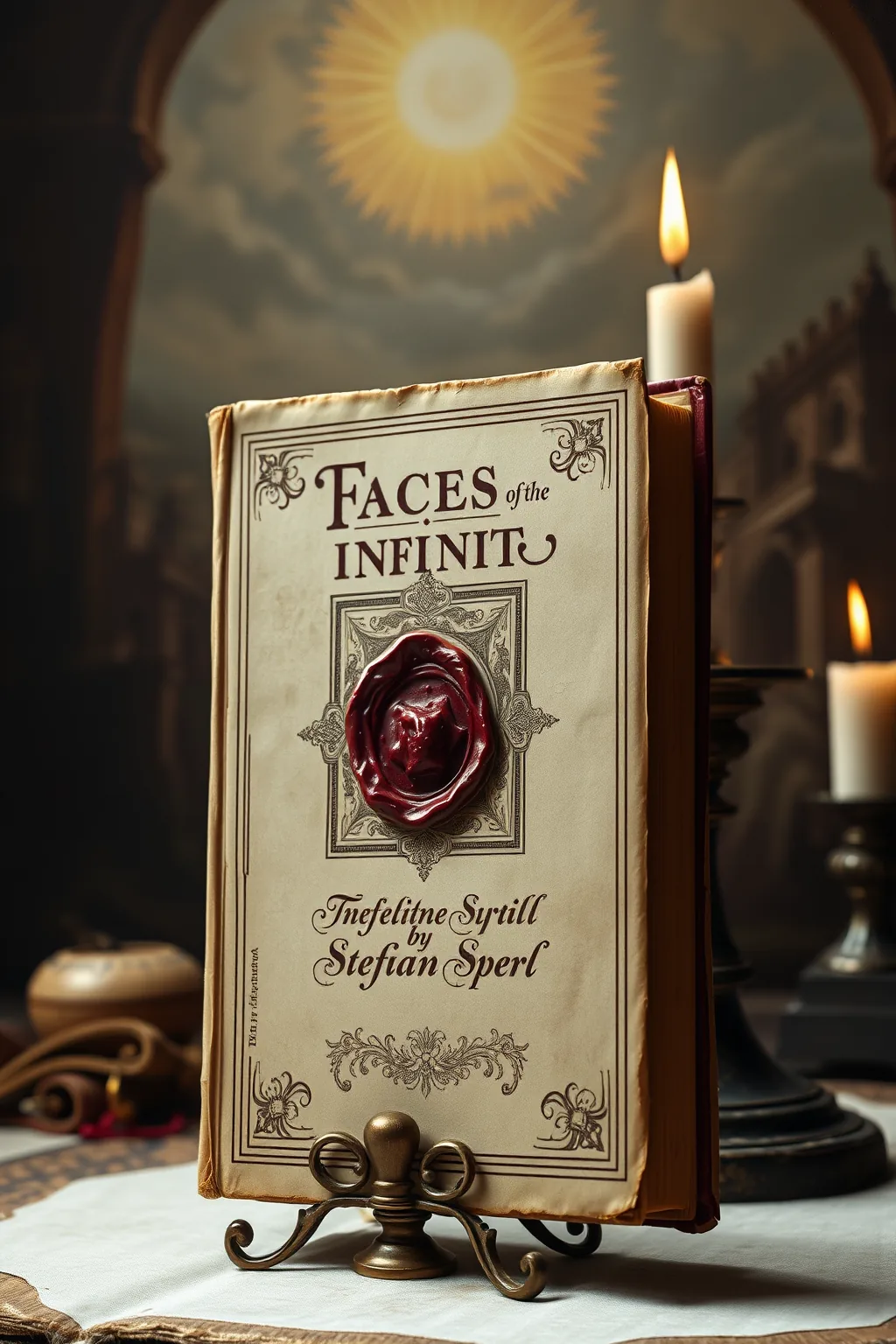
Faces of the Infinite
 74
74

Faces of the Infinite
Stefan Sperl and Yorgos Dedes’s *Faces of the Infinite* offers a compelling argument for the cross-cultural significance of Neoplatonism, moving beyond the confines of academic philosophy to reveal its poetic and spiritual resonance. The strength of the work lies in its extensive textual evidence, drawn from seven representative languages of the Mediterranean basin, which convincingly illustrates the philosophy’s adaptability. A notable passage details how Plotinian concepts of ascent are echoed in Sufi poetry, bridging seemingly disparate traditions. However, the sheer breadth of the study occasionally leads to a density that might challenge readers less familiar with the intricacies of Late Antique thought. While the analyses are robust, the book could benefit from more explicit connections drawn to specific modern esoteric practices that claim Neoplatonic roots, beyond the historical survey. Nevertheless, for its meticulous scholarship and its demonstration of Neoplatonism's enduring legacy, the book serves as a vital resource for understanding a foundational esoteric current.
📝 Description
74
Faces of the Infinite, published in 2021, examines Neoplatonism's impact on Mediterranean traditions.
This scholarly work traces the influence of Neoplatonism, originating with thinkers like Plotinus and Proclus, across major religious and literary traditions of the Mediterranean. It details how these metaphysical ideas, which began to form in the 3rd century CE, spread and shaped intellectual discourse from Late Antiquity through later poetic expressions. The book demonstrates how Neoplatonic concepts transcended linguistic and cultural barriers, becoming integral to the thought of Christian, Jewish, and Muslim scholars. It situates this philosophical current within the broader historical context of the Mediterranean world, extending its reach into the early modern period. The authors focus on the cross-pollination of ideas between Abrahamic faiths and the wider cultural reception of Neoplatonic philosophy. Readers interested in the historical connections and textual analysis of esoteric traditions rooted in Platonic thought will find this volume informative. It is particularly suited for those studying comparative religion, philosophy of religion, and literary history.
Neoplatonism, emerging in the 3rd century CE with figures like Plotinus, offered a complex metaphysical system that deeply affected the spiritual and intellectual life of the late Roman Empire. Its core ideas, such as emanation from a supreme, ineffable One and a structured hierarchy of existence, provided a flexible framework for adaptation by various religious and philosophical groups. This book situates these concepts within the historical and cultural milieu of the Mediterranean, showing how they became part of the shared intellectual heritage of Christian, Jewish, and Muslim cultures, thus connecting classical philosophy with later esoteric developments.
💡 Why Read This Book?
• Understand the philosophical underpinnings of *Theurgy*, a practice explored in the book, and its historical application in spiritual disciplines aiming for divine union, offering a concrete method for transcendence. • Gain insight into the concept of *Emanation* as presented by thinkers like Plotinus, providing a specific cosmological model that influenced centuries of Western and Eastern thought. • Discover the cross-cultural dialogues between Neoplatonism and early Islamic mysticism, as evidenced in texts discussed from the medieval period, revealing shared philosophical language across faiths.
⭐ Reader Reviews
Honest opinions from readers who have explored this book.
❓ Frequently Asked Questions
What is the primary philosophical system examined in Faces of the Infinite?
The book's primary focus is Neoplatonism, a school of philosophy that flourished in the Roman Empire, building upon the ideas of Plato but introducing new metaphysical concepts like emanation and the transcendent One.
Which cultures and languages does the book analyze regarding Neoplatonic influence?
It examines the influence across Christian, Jewish, and Muslim cultures, drawing examples from seven representative languages of the greater Mediterranean region, from Late Antiquity to modern periods.
Who were some key figures associated with the Neoplatonic thought discussed?
While not exclusively focused on them, the work implicitly engages with the legacy of figures like Plotinus (c. 204/5 – 270 CE), often considered the founder of Neoplatonism, and his followers like Porphyry and Proclus.
What is the concept of 'The One' in Neoplatonism as presented in the book?
The One is the ultimate, ineffable, and transcendent principle from which all reality emanates. It is the absolute source, beyond being and thought, and the ultimate goal of spiritual ascent.
Does the book discuss practical applications of Neoplatonic philosophy?
Yes, the work touches upon the concept of Theurgy, which refers to ritualistic practices and disciplines intended to facilitate spiritual ascent and communion with the divine, as interpreted within Neoplatonic thought.
When was Faces of the Infinite first published?
The book was first published on January 6, 2022, making it a contemporary scholarly engagement with historical Neoplatonic thought.
🔮 Key Themes & Symbolism
The Transcendent One
The central concept of an ultimate, ineffable source from which all existence emanates. This work traces how poets and mystics across different traditions grappled with describing this absolute principle, moving beyond simple pantheism to a complex hierarchy of being. The exploration highlights the philosophical challenge of articulating the unarticulated and its impact on mystical language and theological speculation within the Mediterranean basin.
Emanation and Hierarchy
This theme focuses on the Neoplatonic doctrine of emanation, where reality unfolds from The One through successive stages: Intellect (Nous), Soul (Psyche), and the material world. The book illustrates how this cosmological model provided a framework for understanding the relationship between the divine and the created order, influencing discussions on cosmology, anthropology, and the nature of existence in various religious and philosophical texts.
Spiritual Ascent and Theurgy
The work examines the Neoplatonic path of spiritual ascent, aiming to return the soul to its divine source. It details the role of theurgy—sacred rites and practices—as a means to achieve this union. The book demonstrates how these practices, often involving symbolic rituals and invocations, were integrated into different religious contexts to facilitate mystical experience and transcendence.
Cross-Cultural Dialogue
A significant theme is Neoplatonism's role as a bridge between diverse cultural and religious traditions of the Mediterranean. The book showcases how Christian mystics, Jewish Kabbalists, and Islamic Sufis adapted and reinterpreted Neoplatonic concepts to articulate their own spiritual experiences and theological frameworks, revealing a shared intellectual heritage.
💬 Memorable Quotes
Direct passages from the work, attributed to the author.
“The verses composed from Late Antiquity to the modern period, in the seven languages which were representative of the region, confirm the cross-cultural relevance of Neoplatonic thought.”
— This statement underscores the book's core thesis: Neoplatonism was not confined to academic philosophy but permeated the creative and spiritual output of a vast cultural area over centuries.
“Neoplatonism forms part of the common heritage of the Christian, Jewish, and Muslim cultures of the greater Mediterranean.”
— This highlights the foundational argument that Neoplatonic ideas served as a shared intellectual and spiritual language, influencing diverse religious traditions before and during the medieval period.
“The verses composed from Late Antiquity to the modern period...”
— This points to the book's methodology, emphasizing the analysis of poetic and literary works alongside philosophical treatises to demonstrate Neoplatonism's pervasive influence.
💡 Key Ideas
Editorial paraphrase of the work's core concepts — not direct quotes.
The work explores the concept of Theurgy as a pathway to the divine.
This paraphrase indicates the book's engagement with the practical and ritualistic dimensions of Neoplatonism, focusing on how adherents sought direct communion with higher realities.
The book examines the concept of Emanation from the ultimate One.
This paraphrase points to the exploration of Neoplatonism's distinctive cosmology, detailing how existence is understood to flow from a singular, transcendent source.
🌙 Esoteric Significance
Tradition
Faces of the Infinite engages with the lineage of Western Esotericism, particularly its Platonic and Neoplatonic roots. This tradition emphasizes the existence of hidden knowledge, spiritual ascent, and the interconnectedness of the cosmos. The work fits within this lineage by tracing how Neoplatonic metaphysics, particularly its concepts of the One, emanation, and theurgy, provided foundational ideas for subsequent esoteric movements within Hermeticism, Kabbalah, and various forms of mysticism.
Symbolism
The work implicitly references key Neoplatonic symbols such as 'The One,' representing ultimate unity and the ineffable source of all being. Another significant motif is the 'Intellectual Soul' (Psyche), symbolizing the bridge between the material and the divine, and the principle through which individuals can achieve spiritual recollection and ascent. The concept of 'Emanation' itself functions as a symbolic process, illustrating the unfolding of reality from the divine source.
Modern Relevance
Contemporary thinkers and practitioners in fields like comparative mysticism, depth psychology influenced by Jungian archetypes, and certain branches of ceremonial magic continue to draw upon Neoplatonic concepts. The work's exploration of theurgy and spiritual ascent offers a historical basis for understanding modern esoteric practices that seek direct experience of the divine or ultimate reality, demonstrating the persistent appeal of its metaphysical structures.
👥 Who Should Read This Book
• Students of comparative religion and philosophy of religion seeking to understand the philosophical underpinnings of Abrahamic faiths and their historical interconnections. • Scholars of Late Antiquity and medieval intellectual history interested in the transmission and adaptation of philosophical ideas across cultures and linguistic barriers. • Practitioners of esoteric traditions who wish to explore the historical roots of concepts like theurgy and divine ascent within Neoplatonism.
📜 Historical Context
Neoplatonism emerged in the 3rd century CE, primarily through the work of Plotinus, as a sophisticated synthesis and development of Platonic philosophy. It offered a metaphysical framework that profoundly influenced the intellectual and spiritual currents of the late Roman Empire and Byzantium. Its hierarchical cosmology, emphasizing emanation from a transcendent One, provided a conceptual language that could be adapted by diverse religious and philosophical schools. The work situates this philosophical tradition within the historical milieu of the greater Mediterranean, spanning Late Antiquity and extending into the early modern period. It acknowledges its presence in the intellectual heritage shared by Christian, Jewish, and Muslim cultures. While Gnosticism presented an alternative Gnostic cosmology during the same period, Neoplatonism offered a more structured and philosophically rigorous system that proved more enduring in mainstream intellectual circles. The reception of Neoplatonism was complex, often integrated into theological doctrines, and its ideas continued to be debated and reinterpreted by scholars and mystics across centuries.
📔 Journal Prompts
The concept of The One as an ineffable source.
Reflections on the process of Emanation from The One.
The role of Theurgy in spiritual practice.
Poetic expressions of Neoplatonic ideas across languages.
The shared heritage of Mediterranean cultures through philosophy.
🗂️ Glossary
Neoplatonism
A philosophical school originating in the Roman Empire, building on Plato's ideas but emphasizing a transcendent One, emanation, and spiritual ascent. Key figures include Plotinus, Porphyry, and Proclus.
The One
The ultimate, ineffable, and transcendent principle in Neoplatonic metaphysics, from which all existence emanates. It is beyond being and description.
Emanation
The Neoplatonic doctrine describing the process by which reality flows or is generated from The One through successive levels, such as Intellect (Nous) and Soul (Psyche).
Theurgy
A set of ritualistic and spiritual practices in Neoplatonism aimed at facilitating communion with the divine and promoting spiritual ascent; often involves symbolic actions and invocations.
Nous (Intellect)
In Neoplatonism, the first emanation from The One, representing the field of divine thought and the Forms. It is the intelligible world.
Psyche (Soul)
In Neoplatonism, the level of reality that bridges the intelligible and material worlds. The human soul is seen as a spark of this divine Soul, capable of returning to its source.
Late Antiquity
A historical period generally considered to span from the 3rd to the 7th or 8th century CE, characterized by significant religious and philosophical developments, including the rise of Neoplatonism and early Christianity.