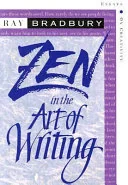
Zen in the Art of Writing
 79
79

Zen in the Art of Writing
Ray Bradbury’s collection of essays, “Zen in the Art of Writing,” offers a raw, unfiltered glimpse into the mind of a prolific storyteller. The strength lies in its unvarnished enthusiasm; Bradbury communicates a profound love for the act of writing itself, urging readers to embrace the sheer joy of creation. He doesn't offer prescriptive advice but rather infectious passion. A passage where he describes the physical sensation of writing, comparing it to breathing or eating, vividly captures this. However, the book’s limitation is its lack of structured guidance. For those seeking concrete techniques or a systematic approach to craft, the essays might feel more like eloquent ramblings than actionable steps. While his personal anecdotes are inspiring, they don't always translate into universally applicable methods. Bradbury's true gift here is reigniting the writer's inner fire.
📝 Description
79
Ray Bradbury published "Zen in the Art of Writing" in 1994, a collection of essays on his creative process.
Ray Bradbury's "Zen in the Art of Writing," published in 1994, collects essays that reveal his personal approach to creation. This is not a typical guide to writing mechanics; instead, Bradbury discusses the writer's inner world and the almost spiritual drive to produce work. He recounts his experiences, how his ideas began, and the pure joy he feels when writing. The book acts as a look into his distinct methods, showing the inner life that supports his well-known fiction.
This work appeals to many readers. Writers looking for fresh inspiration may find his passionate stories about overcoming creative blocks and staying productive relatable. New authors can learn indirectly by seeing his commitment and grasping the emotional foundation of storytelling. Beyond writers, anyone interested in the nature of creativity, the psychology of artistic motivation, or the life of a famous author like Bradbury will find much to consider. It is for those who value the 'why' of the craft as much as the 'how'.
Published in 1994, Bradbury's "Zen in the Art of Writing" arrived as digital media began to shift literary forms. Bradbury, a writer since the mid-20th century, offered a viewpoint grounded in a lifetime of physical writing and a deep regard for the act itself. His perspective often contrasted with the more academic or formulaic writing advice common then. He continued to support imaginative fiction and individual expression, drawing from earlier American literary currents and the science fiction and fantasy movements he helped shape.
💡 Why Read This Book?
• You will learn to reframe your writing process not as a task, but as an act of passionate discovery, inspired by Bradbury's description of his writing compulsion which began in his youth. • You will feel an amplified sense of creative urgency by understanding Bradbury’s belief that inspiration is an active pursuit, not a passive reception, as he details in his essays on the writing process. • You will gain a unique perspective on the writer's life from the mid-20th century onwards, appreciating Bradbury's dedication to analog creation and his engagement with the burgeoning science fiction movement.
⭐ Reader Reviews
Honest opinions from readers who have explored this book.
❓ Frequently Asked Questions
When was Ray Bradbury's "Zen in the Art of Writing" first published?
Ray Bradbury's "Zen in the Art of Writing" was first published in 1994, collecting a series of essays on his creative process and career.
What is the primary focus of the essays in "Zen in the Art of Writing"?
The essays primarily focus on the author's personal compulsion to write, the joy of the writing process, creativity, inspiration, and the circumstances behind the creation of several of his works.
Does "Zen in the Art of Writing" offer practical writing exercises?
No, the book is less about prescriptive exercises and more about sharing Bradbury's passionate philosophy and personal experiences with writing, aiming to inspire rather than instruct technically.
Who would benefit most from reading "Zen in the Art of Writing"?
Writers seeking inspiration, aspiring authors interested in the creative mindset, and readers fascinated by Ray Bradbury's life and the nature of artistic drive would benefit.
What is Bradbury's view on inspiration according to this book?
Bradbury views inspiration not as a passive gift but as an active pursuit, often found through dedication, observation, and a deep love for the act of writing itself.
Is "Zen in the Art of Writing" a biography of Ray Bradbury?
While it contains autobiographical elements and personal reflections, it is primarily a collection of essays focused on his writing life and creative philosophy, not a comprehensive biography.
🔮 Key Themes & Symbolism
The Compulsion to Create
Bradbury frames writing not as a choice but as an intrinsic need, a fundamental part of his being. This compulsion, rooted in his early life in Waukegan, Illinois, drives his prolific output. He discusses how this deep-seated urge manifests, often describing it as a physical hunger or thirst that can only be sated by the act of writing. It's a force that demands expression, transforming the mundane into the magical and fueling his unique narrative voice. This theme explores the primal nature of artistic drive.
The Joy of the Process
Central to Bradbury's philosophy is the sheer delight found in the act of writing itself, irrespective of external validation or commercial success. He champions the writer's ability to find profound satisfaction in the physical and mental engagement with language. The book conveys a sense of childlike wonder and playfulness, encouraging readers to embrace the tactile experience of putting words on paper and the imaginative freedom it provides. This emphasis on intrinsic pleasure is a core tenet of his approach.
Inspiration as Active Pursuit
Bradbury refutes the notion of inspiration as a rare, passive occurrence. Instead, he posits that creativity is an ongoing, active quest. Ideas are not merely found but are cultivated through observation, passion, and relentless engagement with the world. He shares how everyday experiences, memories, and even fears can be transformed into compelling narratives. This perspective encourages writers to be perpetual discoverers, actively seeking and nurturing the sparks that ignite their stories, rather than waiting for them to appear.
The Writer's Inner Landscape
The collection offers an intimate look into Bradbury's personal world, revealing how his memories, dreams, and emotional life are inextricably linked to his creative output. He discusses his early influences and the development of his distinctive style, showing how the writer's internal state directly shapes their external work. This theme underscores the personal nature of art, suggesting that authenticity and a deep connection to one's own experiences are vital for meaningful storytelling.
💬 Memorable Quotes
Direct passages from the work, attributed to the author.
“Writing is an act of love. You must love the process.”
— This captures Bradbury's core belief that passion is the fundamental fuel for creation. He suggests that the writer's dedication to the craft, finding joy in the act itself, is more important than any external reward or technical proficiency.
“Inspiration comes not from waiting, but from doing.”
— Bradbury challenges the romanticized idea of waiting for muse-sent inspiration. He argues that active engagement with writing, the sheer act of putting words down, is what generates creative momentum and brings ideas to life.
“The world is full of wonders if you know how to look.”
— This highlights Bradbury's emphasis on observation and maintaining a sense of childlike curiosity. He believed that the extraordinary can be found in the ordinary, and it's the writer's job to perceive and articulate these wonders.
“My childhood was the source of everything.”
— Bradbury frequently references his formative years, particularly in Waukegan, Illinois, as the bedrock of his imagination. This suggests that early experiences and memories are potent wells of creative material.
“Don't think. Just write.”
— This is an encouragement to bypass self-censorship and overthinking, advocating for an intuitive and uninhibited approach to generating initial drafts. It prioritizes flow and discovery over immediate perfection.
🌙 Esoteric Significance
Tradition
While not explicitly aligning with a single esoteric lineage, Bradbury's work taps into the Hermetic principle of 'As Above, So Below,' suggesting that the inner world of imagination directly mirrors and influences the outer reality of creation. His emphasis on the 'compulsion to write' echoes Gnostic ideas of divine spark or inner gnosis compelling expression. The act of writing becomes a ritual, transforming mundane existence into narrative art, a form of alchemical transmutation of thought into tangible form.
Symbolism
The act of writing itself serves as a potent symbol for creation and manifestation. Bradbury's frequent references to his childhood in Waukegan, Illinois, symbolize a foundational, pure source of imaginative energy, a personal mythos. The 'compulsion' can be seen as a symbol of the daimon or guiding spirit, an inner force that propels the individual towards their true creative destiny, akin to a dauntless inner voice.
Modern Relevance
Bradbury's passionate advocacy for the sheer love of writing continues to inspire creators in the digital age. Contemporary writers, particularly those in speculative fiction and personal essay genres, often draw on his emphasis on voice and imagination. His philosophy appeals to modern movements like 'mindfulness' in creative practice, encouraging presence and engagement with the immediate act of creation rather than solely focusing on the outcome or external validation.
👥 Who Should Read This Book
• Aspiring novelists and short story writers seeking to reignite their passion and understand the emotional drive behind creation, particularly those fascinated by Bradbury's early career in the 1940s and 50s. • Established authors looking for a jolt of inspiration and a reminder of the fundamental joy of the writing process, moving beyond technical craft to embrace creative urgency. • Readers interested in the psychology of creativity and the life of a celebrated author, gaining insight into how personal history and compulsion shape artistic output, as seen through Bradbury's Waukegan memories.
📜 Historical Context
Published in 1994, "Zen in the Art of Writing" arrived as the internet began its ascent, a stark contrast to Bradbury's analog, tactile approach to storytelling. Bradbury, a titan of 20th-century speculative fiction, had already established his voice decades prior, influenced by pulp magazines and the imaginative currents of mid-century America. His work often stood apart from the more experimental literary fiction of the beat generation or the burgeoning postmodernist critiques of narrative. While not directly engaging with academic writing theory, his essays championed a personal, passionate method that implicitly countered more sterile, formulaic approaches. His contemporaries like Isaac Asimov and Arthur C. Clarke were also shaping the range of science fiction, but Bradbury's focus remained intensely personal, emphasizing the emotional and spiritual dimensions of writing.
📔 Journal Prompts
The writer's compulsion as a driving force, originating from formative experiences.
Finding the extraordinary in the mundane details of daily life, à la Bradbury.
The physical and emotional sensations of the writing process.
Cultivating a childlike wonder towards the act of storytelling.
Transforming personal memories into narrative fuel.
🗂️ Glossary
Compulsion to Write
Bradbury's term for the intrinsic, almost involuntary urge to create stories, viewing it as a fundamental life force rather than a mere hobby or career choice.
Joy of Writing
The profound personal satisfaction and exhilaration derived from the act of writing itself, emphasizing intrinsic pleasure over external rewards.
Inspiration
For Bradbury, not a passive gift but an active pursuit, generated through observation, passion, and continuous engagement with the world and one's inner life.
Waukegan, Illinois
The city where Ray Bradbury spent his childhood, frequently cited as a foundational source of his imagination and the setting for many of his early stories.
Creative Engine
Metaphor for the internal mechanisms and sources of energy that drive an artist's continuous creation and output.
Analog Creation
Refers to the process of creating art using traditional, non-digital methods, emphasizing the tactile and physical aspects of writing.
Writer's Psyche
The mental and emotional range of a writer, including their motivations, fears, inspirations, and the unique way they perceive and process the world.
This book appears in 1 collection
🔮 Readers Also Liked
Browse all →








From the “Zen Buddhism” Collection
View all →




More Free Occult Philosophy Books
View all →