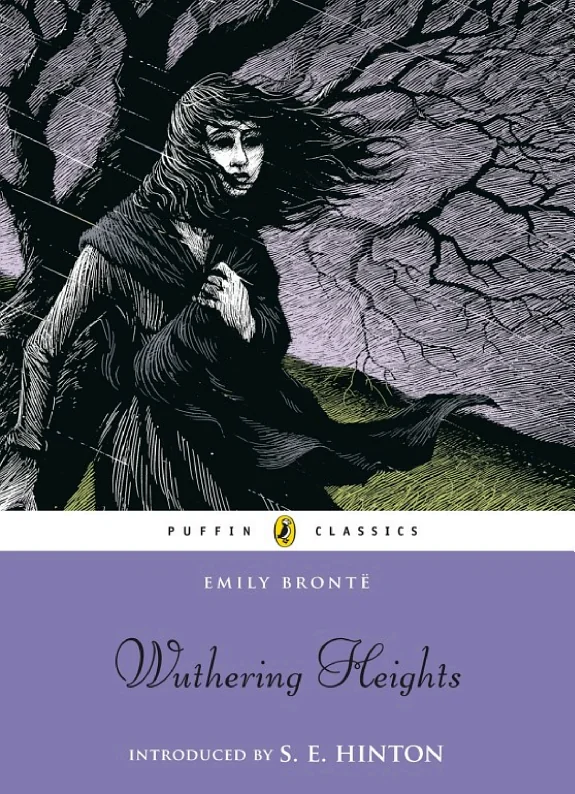
Wuthering Heights
 78
78

Wuthering Heights
Emily Brontë’s Wuthering Heights is less a story of love and more a chronicle of spiritual possession and its devastating consequences. The novel’s power lies in its unflinching portrayal of Heathcliff, a character who embodies a force of nature as much as a man. His raw, often brutal, pursuit of Catherine and his subsequent revenge on those who wronged him are depicted with an intensity that few other works achieve. The moors themselves become a character, reflecting the wild, untamed passions of the inhabitants. However, the narrative’s relentless bleakness and the sheer unlikeability of most characters can be a significant hurdle. The second generation, while offering a glimmer of hope, feels somewhat underdeveloped in comparison to the overwhelming presence of Heathcliff and Catherine. The climax, where Heathcliff’s spirit is said to haunt the moors, offers a potent, if unsettling, conclusion. Brontë's singular vision, though challenging, remains an extraordinary achievement in English literature.
📝 Description
78
Emily Brontë published Wuthering Heights in 1847, a novel that chronicles a destructive obsession on the Yorkshire moors.
Wuthering Heights chronicles the destructive obsession between Catherine Earnshaw and Heathcliff, an orphaned boy taken in by the Earnshaw family. Their bond, formed in childhood on the wild moors, becomes a consuming force that shapes their lives and affects subsequent generations. The narrative unfolds at two main locations: Wuthering Heights, the bleak farmhouse of the Earnshaws, and Thrushcross Grange, the more refined estate of the Lintons. The story is framed by Lockwood, a tenant at Thrushcross Grange, and Nelly Dean, a servant who witnessed the events unfold.
The novel contrasts the wild, untamed natural world with the constraints of civilized society. Heathcliff, a figure of elemental force, is inextricably linked to the harsh landscape. Catherine is torn between her love for Heathcliff and her desire for social standing, reflecting an internal conflict between primal connection and societal aspirations. Themes of cyclical violence and the haunting presence of the past are central to the story's progression.
Published in the mid-Victorian era, Wuthering Heights departed from prevailing literary trends with its frank depiction of intense emotions and morally ambiguous characters. Emily Brontë, using the pseudonym Ellis Bell, presented a stark contrast to the more sentimental novels of her contemporaries. The novel's exploration of primal urges, societal constraints, and the enduring impact of past events aligns with a tradition of gothic literature that examines the darker aspects of human psychology and the potential for unchecked passion to shape destiny.
💡 Why Read This Book?
• You will experience the raw, elemental force of passion and revenge, as depicted in the stark Yorkshire moors setting, offering a visceral understanding of unchecked emotion that transcends typical romantic narratives. • You will explore the nature of spiritual connection and its destructive potential through the intertwined fates of Catherine Earnshaw and Heathcliff, a dynamic rarely presented with such untamed ferocity. • You will confront the clash between social convention and primal instinct, examining how societal pressures in the 1840s influenced characters like Catherine to abandon their true affinities for status.
⭐ Reader Reviews
Honest opinions from readers who have explored this book.
❓ Frequently Asked Questions
When was Wuthering Heights first published and by whom?
Wuthering Heights was first published in December 1847. It was written by Emily Brontë, who initially used the pen name Ellis Bell to disguise her gender, a common practice for female authors at the time.
What is the significance of the setting in Wuthering Heights?
The desolate and wild Yorkshire moors are central to the novel's atmosphere and themes. The harsh landscape mirrors the untamed, passionate, and often brutal nature of the characters, particularly Heathcliff and Catherine.
Is Wuthering Heights considered a gothic novel?
Yes, Wuthering Heights is a prominent example of gothic literature. It features elements such as a dark and brooding atmosphere, intense emotions, supernatural suggestions, and a remote, imposing setting.
Who are the main characters in Wuthering Heights?
The central characters are Catherine Earnshaw and Heathcliff, whose tempestuous and destructive relationship forms the core of the novel. Other key figures include the Earnshaw family, the Lintons, and their descendants.
What does the title Wuthering Heights refer to?
The title refers to the Earnshaw family's ancestral home, a farmhouse situated on the moors. The name 'Wuthering' evokes the stormy, windswept conditions of the region, reflecting the turbulent lives of its inhabitants.
What is the primary theme explored in Wuthering Heights?
A primary theme is the destructive nature of obsessive love and revenge, set against the backdrop of social class and the wildness of nature. The novel explores how intense emotions can corrupt individuals and devastate families.
🔮 Key Themes & Symbolism
Nature vs. Civilization
The novel starkly contrasts the wild, elemental forces of nature, embodied by Heathcliff and the moors, with the restrictive conventions of civilized society, represented by the Lintons. Heathcliff, an outsider, is driven by primal instincts, while Catherine Earnshaw is torn between her fierce connection to Heathcliff and her desire for social elevation. This dichotomy fuels much of the conflict, suggesting that societal constraints can corrupt or stifle genuine, albeit destructive, human connections.
Obsessive Love and Revenge
The relationship between Catherine and Heathcliff is defined by an all-consuming, almost spiritual, bond that transcends conventional love. Their inability to be together, due to social barriers and personal choices, breeds a deep-seated bitterness that fuels Heathcliff's lifelong quest for revenge. This passion is depicted as a destructive force, leading to misery for themselves and widespread suffering for those around them, illustrating how obsession can warp the soul.
The Supernatural and Haunting
Wuthering Heights is imbued with a sense of the uncanny and the supernatural, reflecting the gothic tradition. Ghosts, apparitions, and the pervasive feeling of past traumas influencing the present create an atmosphere of unease. Catherine's ghost appearing to Lockwood, and Heathcliff's conviction that he will be reunited with her in death, suggest that the spiritual realm actively intrudes upon the physical world, blurring the lines between life and death.
Social Class and Status
The rigid social hierarchy of the Victorian era significantly impacts the characters' lives and decisions. Catherine's choice to marry Edgar Linton over Heathcliff is a direct consequence of her desire for social advancement, a decision that leads to profound regret and tragedy. Heathcliff's own social degradation and subsequent rise through ruthless means highlight the power and limitations of class structures within the narrative.
💬 Memorable Quotes
Direct passages from the work, attributed to the author.
“I am Heathcliff—he’s always, always in my mind—not as a pleasure, any more than I am always a pleasure to myself—but as my own being.”
— This statement by Catherine Earnshaw captures the profound, almost symbiotic, connection she feels with Heathcliff. It suggests their bond transcends typical affection, becoming an integral part of their very identity, inseparable and fundamental to their existence.
“Whatever our souls are made of, his and mine are the same.”
— This declaration emphasizes the spiritual and inseparable nature of Catherine and Heathcliff's connection. It posits a soul-level kinship that defies social boundaries and earthly limitations, suggesting a predestined union that the world cannot break.
“I’ve no more business to marry Edgar Linton than I have to be in heaven; and if the lower world proves to him the same as it has done to me, I dare say he’ll be glad to get rid of me.”
— Catherine expresses her deep-seated aversion to marrying Edgar, highlighting her true allegiance to Heathcliff. Her words reveal the forced nature of her societal aspirations and foreshadow the misery that will result from her compromise.
“My love for Linton is like the foliage in the woods: time will change it, I’m well aware, as I know I shall change. My love for Heathcliff resembles the eternal rocks beneath: a source of little visible delight, but necessary.”
— Catherine uses this metaphor to distinguish between her superficial affection for Edgar and her profound, essential connection to Heathcliff. She acknowledges the transient nature of societal love versus the enduring, fundamental need she has for Heathcliff.
💡 Key Ideas
Editorial paraphrase of the work's core concepts — not direct quotes.
He’s more myself than I am.
Another powerful assertion from Catherine, this quote underscores the idea that Heathcliff is not merely a lover but an extension of her own being. It suggests a shared essence that makes them fundamentally inseparable, even in life.
🌙 Esoteric Significance
Tradition
While not explicitly aligned with a single esoteric tradition, Wuthering Heights speaks to themes found in Romanticism and certain strands of folk magic and pagan beliefs. Its focus on elemental forces, the connection between humans and the natural world, and the potent influence of primal emotions echoes pre-Christian European spiritualities. The novel’s exploration of soul-mates and the idea of souls being 'the same' touches upon concepts of spiritual union that appear in various mystical traditions, including Neoplatonism and certain Gnostic ideas of complementary souls.
Symbolism
The Wuthering Heights estate itself symbolizes the untamed, primal self, buffeted by the harsh elements of existence. The moors represent a liminal space, a realm where societal rules dissolve, and raw emotional and spiritual forces dominate. Heathcliff, as a character, can be interpreted as an archetype of the shadow self or a force of nature unleashed, embodying destructive passions that society attempts to suppress but which ultimately erupt with devastating consequences.
Modern Relevance
Contemporary readers and esoteric practitioners often interpret Wuthering Heights through lenses of Jungian psychology, exploring archetypes of the shadow and the anima/animus. Its themes of karmic entanglement, soul connections, and the enduring power of primal bonds continue to be relevant in discussions of spiritual relationships and the psychological impact of unresolved trauma. Modern witchcraft and pagan communities may find resonance in the novel's depiction of nature's power and the deep, often destructive, connections forged between individuals.
👥 Who Should Read This Book
• Students of Gothic literature and Romanticism seeking to understand the evolution of dark, psychological narratives and the exploration of untamed human emotion. • Comparative religion scholars interested in how pre-Christian European beliefs and elemental spirituality might be symbolically represented in 19th-century literature. • Readers of psychological fiction who are drawn to intense character studies and the examination of destructive obsessions, revenge, and the blurred lines between love and hate.
📜 Historical Context
Published in 1847, Emily Brontë's Wuthering Heights emerged during the height of the Victorian era, a period characterized by strict social mores, industrial expansion, and a burgeoning middle class. The novel's raw depiction of passion, violence, and morally ambiguous characters was a stark departure from the more sentimental and socially constrained novels popular at the time, such as those by authors like Elizabeth Gaskell. Brontë, writing as Ellis Bell, created a work that shocked contemporary readers, including her sister Charlotte, who revised the text for subsequent editions. The novel’s focus on untamed nature and elemental human emotions challenged the prevailing literary tastes, which often favored domestic realism and moral instruction. Its reception was mixed, with some critics finding it savage and coarse, while others recognized its unique power and intensity, positioning it as a distinctively English, albeit dark, contribution to literature.
📔 Journal Prompts
The wildness of the moors as a reflection of Heathcliff's inner state.
Catherine Earnshaw's divided loyalties between Heathcliff and Edgar Linton.
The cyclical nature of revenge enacted by Heathcliff across two generations.
The haunting presence of the past and its influence on the present narrative.
The symbolic meaning of the two houses, Wuthering Heights and Thrushcross Grange.
🗂️ Glossary
Wuthering Heights
The Earnshaw family's ancestral home, a farmhouse on the Yorkshire moors. Its name suggests the harsh, stormy weather, mirroring the turbulent lives of its inhabitants and the raw, elemental nature of their passions.
Thrushcross Grange
The estate of the Linton family, representing civilization, refinement, and social order, in contrast to the wildness of Wuthering Heights. It is a place of relative calm but also perceived as stifling by those accustomed to the moors.
Moors
The desolate, open, and often wild field of Yorkshire, England. In the novel, the moors serve as a powerful symbol of untamed nature, freedom, and the primitive forces that drive the characters.
Gothic Literature
A literary genre characterized by elements of horror, death, and romance, often featuring settings like old castles or remote estates, a brooding atmosphere, and intense emotions. Wuthering Heights exemplifies many of these traits.
Archetype
A recurring symbol, character, or motif that is universally understood, often representing a fundamental human experience or personality type. Heathcliff can be seen as an archetype of the passionate outsider or the destructive shadow.
Liminal Space
A transitional or in-between state or place. The moors and the interactions between characters from different social strata often create liminal spaces where societal rules are suspended or altered.
Shadow Self
In Jungian psychology, the unconscious aspect of the personality which the conscious ego does not readily recognize and which resists adjustment to personal standards. Heathcliff often embodies this dark, repressed aspect.
This book appears in 1 collection
🔮 Readers Also Liked
Browse all →









From the “Ghosts” Collection
View all →





More Free Spiritualism & Afterlife Books
View all →