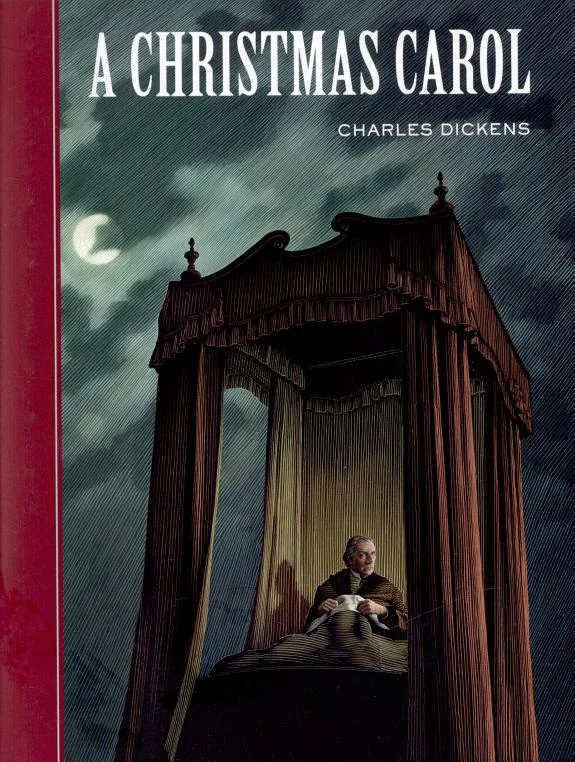
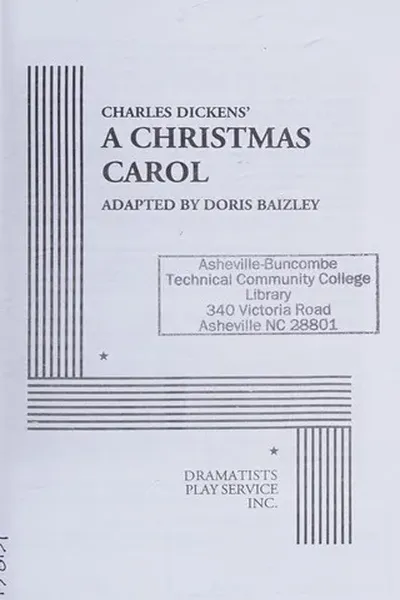
A Christmas Carol
 80
80

A Christmas Carol
Dickens's *A Christmas Carol* remains a potent fable, its narrative momentum driven by the spectral visits that dissect Ebenezer Scrooge’s life. The Ghost of Christmas Past, in particular, offers a poignant, almost alchemical, depiction of how formative experiences can solidify into a hardened, miserly present. The novella’s strength lies in its vivid characterization and its unflinching portrayal of social neglect, a theme Dickens championed throughout his career. However, the sheer didacticism, while effective, can sometimes feel heavy-handed to a modern sensibility; the moral lessons are delivered with an urgency that borders on the absolute. The stark vision of the Ghost of Christmas Yet to Come, with its chilling indifference to Scrooge’s fate, is a particularly potent passage that underscores the novella's enduring power. Ultimately, *A Christmas Carol* serves as a powerful, albeit direct, examination of the human capacity for change.
📝 Description
80
Charles Dickens published *A Christmas Carol* in 1843 to address Victorian poverty.
Published in December 1843, Charles Dickens's novella follows Ebenezer Scrooge's spiritual turnaround. On Christmas Eve, Scrooge, a man defined by his stinginess, receives visits from the specter of his former partner, Jacob Marley. Marley warns Scrooge about his fate if he continues his avaricious ways.
Following Marley's warning, Scrooge is visited by three more spirits. The Ghost of Christmas Past shows him scenes from his youth, revealing the origins of his hardened heart. The Ghost of Christmas Present illustrates the joy and community he is missing in his current life. Finally, the Ghost of Christmas Yet to Come presents a bleak vision of his lonely death, a consequence of his uncharitable existence. These supernatural encounters force Scrooge to confront his past actions and present isolation, ultimately leading to his transformation into a generous and kind individual by Christmas morning.
The story was a direct response to Dickens's observations of child labor and widespread poverty in Victorian England. He sought to stir public sympathy and encourage acts of charity. The novella sold out its initial print run within days, quickly becoming a beloved classic.
Dickens's work emerged during a Victorian period marked by a fascination with spiritualism and the afterlife. The presence of ghosts and prophetic visions in *A Christmas Carol* aligns with popular interest in séances and communication with the departed. While not overtly occult, the novella uses supernatural visitations as a narrative device to probe moral and spiritual questions, reflecting a broader cultural engagement with the unseen and the possibility of transformation beyond conventional religious frameworks. The narrative's focus on the impact of past lives and future destinies resonates with contemporary spiritualist beliefs.
💡 Why Read This Book?
• Learn how the spectral encounters, particularly the visits from the Ghost of Christmas Past, illustrate the formative power of memory and early experiences on adult character, offering a unique lens on psychological development. • Understand the Victorian social critique embedded within the narrative, recognizing how Dickens used Scrooge’s transformation to advocate for reforms concerning poverty and child welfare in London. • Witness the symbolic weight of Christmas itself as a transformative season, depicted through the Ghost of Christmas Present’s revels and the stark warnings of the Ghost of Christmas Yet to Come.
⭐ Reader Reviews
Honest opinions from readers who have explored this book.
❓ Frequently Asked Questions
When was A Christmas Carol first published?
Charles Dickens's *A Christmas Carol* was first published on December 19, 1843, making it a significant work of Victorian literature that immediately captured public attention.
What is the main theme of A Christmas Carol?
The central theme is redemption and the transformative power of empathy and generosity, as Ebenezer Scrooge learns to overcome his miserliness through supernatural encounters.
Who are the ghosts that visit Ebenezer Scrooge?
Scrooge is visited by the ghost of his deceased partner, Jacob Marley, followed by the Ghost of Christmas Past, the Ghost of Christmas Present, and the Ghost of Christmas Yet to Come.
What social issues does A Christmas Carol address?
The novella critiques the extreme poverty and social inequality prevalent in Victorian London, particularly highlighting the plight of the poor and the responsibility of the wealthy.
Is A Christmas Carol considered an allegory?
Yes, the story functions as an allegory for societal and personal transformation, with Scrooge representing greed and the potential for moral rebirth through introspection and compassion.
What is the significance of Tiny Tim in the story?
Tiny Tim symbolizes innocence and the suffering of the poor, serving as a catalyst for Scrooge's awakening conscience and his eventual embrace of charity and family.
🔮 Key Themes & Symbolism
Redemption and Second Chances
The narrative hinges on the possibility of profound personal change, even for the most hardened individuals. Scrooge's journey, guided by the three spirits, demonstrates that past actions do not irrevocably condemn one to a bleak future. The Ghost of Christmas Yet to Come, while terrifying, ultimately serves as a warning that motivates Scrooge to actively seek redemption, illustrating the esoteric concept that free will can alter destiny's course.
The Weight of Greed
Ebenezer Scrooge embodies the destructive consequences of avarice. His obsession with wealth isolates him and corrupts his spirit, transforming him into a figure of misery. The novella contrasts Scrooge's barren existence with the warmth and fellowship found in generosity, suggesting that true wealth lies not in material possessions but in human connection and compassion. Marley's spectral chains serve as a potent symbol of this self-imposed spiritual burden.
Social Responsibility and Charity
Dickens uses *A Christmas Carol* to highlight the stark social inequalities of Victorian England, particularly the suffering of the poor and the indifference of the wealthy. The interactions with the Cratchit family and the scenes depicting destitution serve as a powerful call to action, urging readers to recognize their obligations to society and to embrace practices of charity and benevolence.
Memory and the Past
The Ghost of Christmas Past's role is crucial in revealing how Scrooge's formative experiences shaped his present disposition. By revisiting scenes of his childhood, schooling, and early career, the spirit unearths the roots of his isolation and his turn towards miserliness. This emphasizes the esoteric principle that understanding one's past is essential for present healing and future transformation.
💬 Memorable Quotes
Direct passages from the work, attributed to the author.
““I will live in the Past, the Present, and the Future!””
— This declaration marks Scrooge's radical acceptance of the lessons learned from the spirits. It signifies his commitment to integrating all aspects of time and experience into his transformed consciousness, no longer fearing or rejecting any temporal dimension.
““Bah, humbug!””
— This is Scrooge's signature exclamation, dismissing any sentimentality or joy associated with Christmas. It captures his cynicism and his profound disconnect from human warmth and communal spirit.
““Mankind was my business. Charity, mercy, forbearance, and benevolence, were, all, my business.””
— Spoken by Jacob Marley, this is a profound confession of his past failings. He laments neglecting human connection and ethical responsibilities in favor of financial pursuits, highlighting the spiritual cost of prioritizing material gain.
““Will you help me, Spirit?””
— This question, often posed by Scrooge to the Ghosts, reflects his dawning awareness and his willingness to engage with the difficult truths revealed. It signifies his passive acceptance evolving into an active plea for guidance and change.
““I see a vacant seat in the poor house, which you may have all to yourself.””
— This is Scrooge's harsh reply to a charitable collector asking for donations for the poor. It starkly reveals his callousness and his belief that destitution is a consequence of personal failing, a perspective the spirits will challenge.
🌙 Esoteric Significance
Tradition
While not explicitly tied to a single esoteric lineage, *A Christmas Carol* draws heavily on archetypal themes found in various spiritual traditions, particularly those concerning judgment, transformation, and the cyclical nature of time. It echoes Gnostic ideas of spiritual awakening from a state of ignorance (Scrooge's miserliness) and Hermetic principles of correspondence, where inner states manifest in outer circumstances. The visitation of spirits aligns with traditions that believe in non-corporeal guidance and the influence of unseen realms on human life.
Symbolism
The three spirits are potent symbols: the Ghost of Christmas Past represents memory and the influence of formative experiences; the Ghost of Christmas Present embodies the living moment and the abundance of the present; and the Ghost of Christmas Yet to Come signifies the potential future shaped by current actions, serving as a stark memento mori. Scrooge's chains, forged during his life, symbolize the burdens of his past sins and his attachment to material wealth, a common motif in spiritual allegories about liberation.
Modern Relevance
Contemporary spiritual practitioners and self-help movements often reference Scrooge's journey as a paradigm for personal transformation and overcoming negative patterns. His story is used to illustrate the power of introspection, empathy, and conscious choice in altering one's life trajectory. Thinkers in positive psychology and those exploring mindfulness may draw parallels to Scrooge's eventual embrace of presence and connection, seeing his redemption as a model for achieving a more fulfilling existence.
👥 Who Should Read This Book
• Individuals interested in Victorian social history and literature, seeking to understand the era's concerns about poverty and morality through a compelling narrative. • Students of comparative mythology and archetypal psychology, exploring universal themes of redemption, judgment, and the journey of the soul. • Readers exploring personal development and ethical frameworks, looking for a classic narrative that powerfully illustrates the consequences of choices and the potential for profound inner change.
📜 Historical Context
Published in December 1843, *A Christmas Carol* arrived during a period of intense social upheaval in Victorian England. Widespread poverty, exacerbated by the Industrial Revolution, spurred calls for reform. Charles Dickens, already a celebrated author, was deeply affected by the conditions he witnessed, particularly child labor. He penned the novella in a short, intense burst, intending it as a social commentary and a plea for greater benevolence. Its immediate success, selling out its initial print run within days, demonstrated a public appetite for such moral narratives. The work engaged with prevailing anxieties about class disparity and offered a vision of potential redemption that resonated widely. Contemporaries like William Makepeace Thackeray recognized its power, reviewing it favorably and contributing to its cultural impact during an era when literature often served as a vehicle for social critique and moral instruction.
📔 Journal Prompts
Scrooge's childhood isolation: How might early experiences shape one's relationship with connection and material security?
The Ghost of Christmas Present's lessons: Reflect on the spiritual significance of observing the present moment's joys and sorrows.
Marley's chains: What self-imposed burdens weigh upon your own spiritual or emotional progress?
The Cratchit family's resilience: Analyze the sources of joy and fortitude found amidst hardship.
Scrooge's final transformation: Consider the practical steps one can take to embody generosity and compassion in daily life.
🗂️ Glossary
Miser
An extremely stingy person, characterized by a reluctance to spend money and a tendency to hoard wealth. Ebenezer Scrooge is the quintessential literary example of a miser.
Ghost of Christmas Past
The first of the three spirits who visits Scrooge. This entity, often depicted as childlike or elderly, shows Scrooge scenes from his own history, particularly his formative years and early adulthood.
Ghost of Christmas Present
The second spirit, a jovial giant figure who reveals the current Christmas celebrations and the lives of others, including the poor Cratchit family, highlighting both joy and suffering.
Ghost of Christmas Yet to Come
The third and most fearsome spirit, a silent, cloaked figure that shows Scrooge potential future events, including his own lonely death, serving as a dire warning.
Jacob Marley
Scrooge's deceased business partner, whose ghost appears first to warn Scrooge of his fate and the consequences of a life lived in avarice. He is depicted bound in chains forged during his lifetime.
The Cratchits
A poor family employed by Scrooge, led by Bob Cratchit. They exemplify resilience, love, and the Christmas spirit despite their dire poverty, with their son Tiny Tim being particularly symbolic.
Ignorance and Want
Two spectral children, a boy and a girl, whom the Ghost of Christmas Present reveals as embodiments of societal ills. They represent the devastating effects of poverty, neglect, and lack of education on the populace.
This book appears in 1 collection
🔮 Readers Also Liked
Browse all →









From the “Ghosts” Collection
View all →




More Free Spiritualism & Afterlife Books
View all →