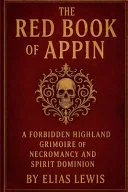
The Red Book of Appin
 75
75

The Red Book of Appin
Elias Lewis's "The Red Book of Appin" arrives with the scent of peat smoke and grave dust, promising direct access to Highland necromancy. The thirty chapters lay out a series of rituals that, if followed precisely, claim to offer dominion over spectral entities and pathways to communicating with the departed. One particularly striking section details a rite involving a "stone of binding," intended to anchor a summoned spirit to a specific location. While the prose is often evocative, the work suffers from a lack of verifiable historical sourcing for its claims, leaving the reader to trust the author's interpretations of obscure Highland lore. The practical efficacy of the rites remains, as with most grimoires of this nature, entirely subjective and dependent on the practitioner's skill and belief. It is a work that demands caution and a strong grounding in magical theory.
📝 Description
75
Published in 2025, The Red Book of Appin claims to be a forbidden Highland grimoire.
This volume, titled "The Red Book of Appin: A Forbidden Highland Grimoire of Necromancy and Spirit Dominion," is a recent collection of thirty chapters. It details esoteric practices from Scotland's Appin region, reportedly revealing ancient rites, lost cultic traditions, spectral summoning rituals, and dark folklore. The work focuses on themes of necromancy and the dominion over spirits, presenting what it claims are specific Highland pacts and rituals. These practices are said to draw from a unique, localized magical current separate from more common European grimoire traditions.
The book is intended for serious practitioners and scholars of Western esotericism. Individuals interested in Scottish folklore, ceremonial magic, and the history of grimoires will find its contents relevant. It is suited for those seeking direct engagement with magical systems that may be dangerous or ethically complex. A background in magical theory and practice is recommended for readers.
The grimoire format gained prominence in the 19th century, but regional magical traditions have seen renewed interest. This book emerges in 2025, a time marked by growing fascination with localized occult history, often stimulated by online communities and academic research. By focusing on Appin's alleged necromantic past, "The Red Book of Appin" aligns with a contemporary trend of investigating specific, regional magical lineages.
💡 Why Read This Book?
• Gain access to specific Highland necromantic rites detailed in Chapters 1-5, offering a unique approach to spirit communication not found in common grimoires. • Understand the concept of "Highland pacts" as presented in Chapter 12, exploring a localized magical framework for spirit interaction. • Engage with the folklore surrounding Appin's spectral traditions, as explored through specific rituals described in Chapters 15-18, offering a distinct regional magical perspective.
⭐ Reader Reviews
Honest opinions from readers who have explored this book.
❓ Frequently Asked Questions
What is the primary focus of The Red Book of Appin?
The primary focus is on Highland necromancy and spirit dominion, presenting thirty chapters of alleged ancient rites, lost cults, and spectral rituals specific to Scotland's Appin region.
Is The Red Book of Appin suitable for beginners in magic?
The book is generally recommended for experienced practitioners due to its focus on potentially dangerous practices like necromancy and spirit control, requiring a solid understanding of magical theory.
What kind of spirits are discussed in the book?
The book discusses spectral entities and spirits that are purported to be subject to dominion through specific Highland pacts and rituals detailed within its chapters.
Does the book offer historical evidence for its practices?
The book presents its content as derived from obscure Highland lore and ancient rites. However, explicit historical documentation or academic verification of these specific practices is not a primary feature.
When was The Red Book of Appin first published?
The Red Book of Appin was first published on June 29, 2025.
What makes this grimoire different from others?
Its distinction lies in its purported focus on a specific, localized magical tradition from the Appin region of Scotland, emphasizing unique necromantic rites and spirit dominion practices.
🔮 Key Themes & Symbolism
Necromancy and Spirit Dominion
This theme explores the purported methods for communicating with the dead and commanding spirits, as detailed in the thirty chapters of the grimoire. It focuses on the specific techniques attributed to the Appin region, suggesting a localized approach to these powerful arts. The work delineates rites aimed at achieving control over spectral entities, presenting necromancy not merely as divination but as an active practice of magical influence over the ethereal plane.
Highland Folk Magic and Pacts
The grimoire explores the unique magical traditions allegedly practiced in the remote glens of Appin. It highlights the concept of 'Highland pacts,' suggesting agreements or bindings made with spirits that are distinct from broader European magical paradigms. This theme explores the integration of local folklore and belief systems into a structured system of occult practice, emphasizing a regional flavor to the magical arts.
Spectral Rituals and Legends
This theme centers on the specific rituals designed to interact with the spectral realm, as outlined throughout the book. It includes descriptions of ceremonies, invocations, and methods for engaging with spirits, drawing upon the chilling legends associated with the Scottish Highlands. The work aims to bring to light these 'lost cults' and their associated practices, offering a glimpse into a hidden history of occultism.
Forbidden Knowledge
The 'forbidden' aspect underscores the nature of the material presented, suggesting that these rites and traditions have been deliberately obscured or suppressed. The book positions itself as an unveiling of esoteric secrets, particularly those connected to the darker and more potent forms of magic. This theme appeals to the allure of uncovering hidden or dangerous knowledge deemed too potent for the uninitiated.
💬 Memorable Quotes
Direct passages from the work, attributed to the author.
“Dominion over the spectral host is achieved through precise invocation and the binding of will.”
— This statement captures the core premise of spirit control within the grimoire, emphasizing that mastery requires not just calling spirits, but actively imposing one's will upon them through carefully executed rituals.
“The veil between worlds thins where the mist clings to the ancient stones.”
— This evocative phrase suggests a connection between the specific geography of the Scottish Highlands and the accessibility of the spirit world, implying that certain locations hold inherent magical potency.
“A pact is not merely a request, but a solemn contract etched in ether and blood.”
— This interpretation highlights the serious and potentially dangerous nature of spirit pacts as presented in the book, framing them as binding agreements with significant consequences rather than casual interactions.
“Whispers from the shadow-lands carry truths obscured by the living.”
— This suggests that necromancy offers access to hidden knowledge or perspectives unavailable through ordinary means, implying that communication with the dead can reveal profound secrets.
“The rites of Appin demand respect for the unseen forces they command.”
— This serves as a cautionary note, underscoring that the magical practices described are not to be undertaken lightly and require a deep understanding and reverence for the powerful entities involved.
🌙 Esoteric Significance
Tradition
This work aligns with the broad spectrum of Western Esotericism, specifically drawing from the grimoire tradition and ceremonial magic. It presents a distinct, regionally focused current, purportedly rooted in Highland Scottish folklore and necromantic practices. Unlike more formalized Hermetic or Kabbalistic systems, it emphasizes a more animistic or folk-magic approach to spirit interaction and control, possibly diverging from mainstream esoteric lineages by its direct engagement with the dead.
Symbolism
Key symbols likely include the 'mist-shrouded glens' representing liminal spaces conducive to spirit work, and 'ancient stones' as anchors for ritual or spirit binding. The concept of 'pacts' itself functions symbolically, representing the formal agreement and exchange between practitioner and spirit, often implying a potent, potentially dangerous, cross-planar negotiation.
Modern Relevance
Contemporary practitioners of folk magic, animism, and certain branches of ceremonial magic may find "The Red Book of Appin" relevant. Its focus on localized traditions and direct spirit interaction speaks to modern interests in reclaiming ancestral magical practices and exploring less codified forms of occultism. Thinkers and practitioners exploring the intersection of folklore, magic, and regional identity might engage with its purported methods.
👥 Who Should Read This Book
• Advanced practitioners of ceremonial magic seeking to expand their repertoire with unique regional rites. • Students of Western Esotericism interested in comparative grimoire studies and Scottish occult folklore. • Researchers of folk magic and necromancy examining localized magical traditions and their historical purported practices.
📜 Historical Context
The grimoire tradition, while ancient, experienced a significant revival in the 19th century, influenced by figures like Éliphas Lévi and the burgeoning interest in occultism. "The Red Book of Appin," published in 2025, taps into a contemporary resurgence of interest in localized magical traditions and the darker aspects of folklore. It emerges in a landscape where scholars like Owen Davies have explored the history of witchcraft and magic in Britain, and practitioners seek direct engagement with historical magical texts. While not directly engaging with contemporaries like Aleister Crowley's writings, it aligns with a broader trend of occult scholarship and practice that re-examines and re-interprets older magical systems, sometimes with a focus on regional variations or suppressed knowledge.
📔 Journal Prompts
The spectral rituals described in Chapters 15-18: what personal interpretations arise?
Reflecting on the concept of 'Highland pacts' from Chapter 12, how might such agreements manifest ethically?
Appin's mist-shrouded glens as liminal spaces: envisioning a personal ritual setting.
The balance between necromancy and spirit dominion: exploring the practitioner's intent.
Consider the 'stone of binding' concept: how could symbolic anchoring be applied in modern practice?
🗂️ Glossary
Necromancy
A form of magic focused on communication with, or the manipulation of, the dead and spirits of the dead. In "The Red Book of Appin," it implies direct interaction and potential control.
Spirit Dominion
The practice of asserting control or authority over non-corporeal entities or spirits, as detailed through specific rites in the grimoire.
Highland Pacts
Unique agreements or contracts allegedly made between practitioners and spirits within the specific cultural and geographical context of the Scottish Highlands, as presented in the book.
Spectral Rituals
Ceremonies and practices specifically designed for interacting with spirits and the spectral realm, outlined within the text.
Grimoire
A textbook of magic, typically containing instructions on how to cast spells, perform rituals, and invoke entities. This book is presented as a grimoire.
Liminal Spaces
Transitional or in-between places or states, often considered potent for magical activity. The book suggests Appin's glens are such spaces.
Stone of Binding
A ritual element mentioned in the text, purportedly used to anchor or constrain a summoned spirit to a particular location or object.