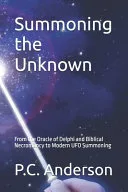
Summoning the Unknown
 81
81

Summoning the Unknown
P. C. Anderson's "Summoning the Unknown" approaches a well-trodden subject with a commendably sober gaze. The book’s strength lies in its extensive cataloging of diverse historical attempts at spirit communication, moving beyond Western occultism to encompass global practices. Anderson avoids sensationalism, presenting accounts of oracular pronouncements and shamanic encounters with academic rigor. A particular highlight is the nuanced discussion of the biblical narrative of Saul's encounter with Samuel, which Anderson frames not as a simple magical act but as a complex negotiation of forbidden knowledge and spiritual authority. However, the work occasionally suffers from a lack of deep engagement with the *experience* of these phenomena. While the historical breadth is impressive, the subjective phenomenology of trance or possession remains somewhat underserved, leaving the reader informed but not fully immersed. Anderson’s careful documentation of the various historical attempts to contact unseen intelligences offers a valuable, if somewhat detached, overview of a persistent human endeavor.
📝 Description
81
P C Anderson's 2023 book examines humanity's long search for contact with non-corporeal entities.
This work surveys the human impulse to communicate with unseen intelligences, tracing this drive from ancient oracles to indigenous shamanism. Anderson details practices like the biblical account of Saul summoning Samuel and Islamic warnings against jinn invocation, demonstrating a widespread human desire. The book maps diverse cultural methods for spirit communication, including ecstatic trance states and formal rituals. It covers millennia of history, showing how the wish to connect with higher or other minds appeared in different places and times. Anderson's research distinguishes specific approaches, contrasting Greek priestesses' direct pronouncements with shamans' personal spirit allies. Cautionary religious narratives, such as prohibitions on necromancy, are also discussed.
'Summoning the Unknown' considers the dangers and possible benefits of attempting such contact. It questions the identity of these intelligences, asking if they are external, psychological projections, or something else. The book balances accounts of spiritual guidance with warnings about misinterpretation and harmful influences.
This book sits within the study of esoteric history, specifically focusing on the long-standing human fascination with contacting entities beyond the material world. It examines historical and cultural accounts of spiritualism, divination, and mediumship, framing these as persistent attempts to bridge the gap between the known and the unknown. The work places itself in dialogue with traditions that have documented or practiced such interactions, from ancient Greece to various indigenous cultures and later Western esoteric movements. It treats these practices not as fringe beliefs but as a consistent thread in human experience, worthy of historical and comparative study.
💡 Why Read This Book?
• Understand the historical breadth of spirit communication attempts, from the Oracle of Delphi to 19th-century spiritualism, gaining context beyond modern occultism. • Analyze the ethical and spiritual risks associated with direct contact, as illustrated by cautionary tales in Islamic and biblical traditions. • Examine the varied methodologies employed across cultures, such as shamanic ecstatic states versus ritualistic invocation, as presented in the book's detailed case studies.
⭐ Reader Reviews
Honest opinions from readers who have explored this book.
❓ Frequently Asked Questions
What specific historical examples of spirit communication does 'Summoning the Unknown' explore?
The book examines ancient Greek oracles like Delphi, indigenous shamanic practices, King Saul's summoning of Samuel, and Islamic traditions regarding jinn, alongside 19th-century spiritualism.
Does 'Summoning the Unknown' offer practical instructions for summoning?
No, the book focuses on historical accounts, cultural contexts, and the philosophical implications of attempting contact, rather than providing practical how-to guides.
Who is P. C. Anderson and when was this book first published?
P. C. Anderson is the author of 'Summoning the Unknown,' which was first published on March 6, 2026.
What is the primary focus of the book's 'Key Concepts' section?
The 'Key Concepts' section breaks down the underlying philosophies and varied methods behind different cultures' approaches to communicating with unseen intelligences.
Is 'Summoning the Unknown' suitable for beginners in esoteric studies?
Yes, its broad historical overview and clear explanations make it accessible for beginners, while its depth offers value to more experienced practitioners or scholars.
What cultural traditions are highlighted in the book's historical context?
The book specifically references ancient Greek, indigenous shamanic, biblical (Hebrew), Islamic, and 19th-century Western spiritualist traditions.
🔮 Key Themes & Symbolism
Cross-Cultural Contact Methods
The work meticulously surveys the diverse techniques humanity has employed to bridge the gap between the seen and unseen realms. It contrasts the ecstatic, visionary states of shamans with the ritualistic invocations of Hellenistic oracles and later occultists. Anderson highlights how cultural frameworks shape the perceived nature of the contacted entities and the acceptable methods for engagement, moving beyond a singular, Western-centric view of spiritual communication.
The Perilous Nature of the Unknown
A recurring theme is the inherent danger and ethical complexity involved in seeking direct contact with non-corporeal intelligences. The book cites scriptural warnings, such as King Saul's forbidden necromancy, and Islamic admonitions against jinn, illustrating a widespread recognition of potential spiritual or psychological harm. This theme underscores the necessity for caution, discernment, and respect when exploring such phenomena.
Historical Motivations for Contact
Anderson explores the fundamental human drives behind these attempts: the desire for guidance, knowledge, healing, or simply understanding one's place in the cosmos. Whether seeking prophecy from the Oracle of Delphi or solace from departed spirits, the underlying motivation often stems from a perceived lack or a yearning for connection beyond ordinary human experience.
The Spectrum of Intelligences
The book grapples with the ambiguous nature of the entities contacted. It questions whether these are external spirits, ancestral shades, nature elementals, or projections of the human psyche. By presenting various cultural interpretations and historical accounts, Anderson encourages critical reflection on the ontology of the 'unknown' being addressed.
💬 Memorable Quotes
Direct passages from the work, attributed to the author.
“Across thousands of years and across vastly different cultures, human beings have attempted something extraordinary: deliberate contact with unseen intelligences.”
— This foundational statement sets the stage for the book's comprehensive historical and anthropological survey, emphasizing the universality and antiquity of humanity's drive to connect with non-physical realities.
“Ancient Greeks sought guidance from the trance-speaking priestess of the Oracle of Delphi.”
— This highlights a specific, well-documented instance of formalized communication with an unseen intelligence, showcasing how ancient societies integrated such practices into their spiritual and political lives.
“Indigenous shamans entered ecstatic states to consult spirit allies.”
— This points to a widespread shamanic tradition that utilizes altered states of consciousness as a primary method for interacting with the spirit world, often for healing or divination purposes.
“The biblical account of King Saul describes a forbidden attempt to summon the prophet Samuel from the dead.”
— This example introduces the theme of prohibition and danger associated with certain forms of spirit contact, contrasting with more accepted forms of divination or spiritual guidance.
“Islamic traditions warn against invoking jinn.”
— Further reinforcing the concept of spiritual risk, this references a major religious tradition's cautionary stance towards interacting with specific classes of unseen beings, emphasizing potential negative consequences.
🌙 Esoteric Significance
Tradition
While not strictly adhering to a single lineage, 'Summoning the Unknown' draws heavily on comparative mysticism and historical accounts of spiritual practices. It aligns with the broader Hermetic principle of 'As Above, So Below' by exploring the mirroring between human consciousness and perceived external spiritual realities. The work respects diverse traditions, including shamanism, Hellenistic divination, and Abrahamic cautionary tales, positioning itself as an objective surveyor rather than an adherent to one specific esoteric school.
Symbolism
The book implicitly engages with symbols of mediation and liminality. The Oracle of Delphi, for instance, symbolizes a conduit to divine knowledge, often through altered states (trance). Shamanic spirit allies represent guides or powers sought for assistance, embodying the animistic belief in sentient forces within nature. Warnings against jinn symbolize the dangers of interacting with chaotic or deceptive forces beyond human control, a common motif in many mythologies.
Modern Relevance
Contemporary practices in altered states research, consciousness studies, and neo-shamanic movements echo the historical inquiries detailed in 'Summoning the Unknown.' Thinkers exploring the boundaries of consciousness, the nature of reality, and the potential for non-ordinary perception find valuable historical context and comparative data within Anderson's work. It provides a grounding perspective for those investigating psi phenomena or integrating cross-cultural spiritual practices into modern life.
👥 Who Should Read This Book
• Academic researchers in comparative religion, anthropology, and the history of consciousness seeking a broad overview of cross-cultural communication with non-corporeal entities. • Practitioners of esoteric traditions interested in the historical precedents and diverse methodologies employed in spirit contact across different cultures and eras. • Skeptics and curious minds wanting to understand the historical prevalence and philosophical underpinnings of human attempts to connect with the unseen, presented without overt sensationalism.
📜 Historical Context
Published in 2026, P. C. Anderson’s "Summoning the Unknown" emerges in an era marked by renewed interest in esoteric practices and comparative religion, yet also within a scientific paradigm that often dismisses such phenomena. The book situates itself against the backdrop of a long history, referencing specific cultural touchstones like the Oracle of Delphi and the biblical narrative of King Saul. Its approach can be seen as a counterpoint to purely psychological interpretations of altered states prevalent in mid-20th-century thought, such as those explored by Carl Jung. While Anderson doesn't directly engage with contemporary figures, the work implicitly addresses the legacy of 19th-century Spiritualism, a movement that faced both fervent belief and intense skepticism, and whose investigations into mediumship and ectoplasm continue to spark debate.
📔 Journal Prompts
The Oracle of Delphi's trance-speaking priestess: What assumptions about consciousness underpin this form of communication?
Shamanic spirit allies: How might the concept of 'allies' differ from direct 'summoning'?
King Saul's forbidden summoning: Explore the ethical boundaries of seeking knowledge from the departed.
Islamic warnings against jinn: What parallels exist in modern anxieties about unseen influences?
The drive for contact: Reflect on the fundamental human need that fuels these historical endeavors.
🗂️ Glossary
Oracle of Delphi
An ancient Greek sanctuary dedicated to Apollo, famous for the Pythia, a priestess who delivered prophecies inspired by the god, often in a trance state.
Shaman
An individual who acts as an intermediary between the visible world and the spirit world, typically through ecstatic journeys or altered states of consciousness.
Spirit Allies
Entities or beings from the spirit world that a shaman forms a relationship with, often providing guidance, protection, or power.
Necromancy
A practice of magic involving communication with the dead, either by raising them physically or by summoning their spirits for purposes of divination or information.
Jinn
Supernatural creatures in Islamic mythology and theology, believed to inhabit an unseen world parallel to that of humankind, capable of interacting with humans.
Ecstatic States
Altered states of consciousness characterized by intense emotion, spiritual fervor, or a sense of profound detachment from ordinary reality, often sought in religious or mystical practices.
Unseen Intelligences
A broad term encompassing any non-corporeal entities or consciousnesses believed to exist beyond the normal range of human perception, including deities, spirits, and abstract forces.