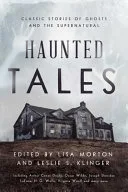
Haunted Tales
 72
72

Haunted Tales
The collaboration between Leslie S. Klinger and Lisa Morton in Haunted Tales offers a thoughtful, if somewhat conventional, survey of spectral narratives. Their inclusion of Algernon Blackwood’s “The Kit-Bag” is a particular strength, showcasing a master of atmospheric dread. The anthology falters slightly in its pacing; the juxtaposition of Wilde’s witty “The Canterville Ghost” with more overtly horrific pieces like F. Marion Crawford’s “The Screaming Skull” can feel jarring rather than complementary. While the selection is competent, it rarely ventures into truly uncharted territory for seasoned readers of the genre. Nevertheless, for those seeking a curated entry point into classic ghost fiction, Haunted Tales provides a solid, if unsurpassed, collection.
📝 Description
72
Haunted Tales, published in 2022, collects ghost stories from diverse literary periods.
Curated by Leslie S. Klinger and Lisa Morton, Haunted Tales gathers ghost stories spanning various literary eras. The anthology features both well known classics and lesser recognized narratives focused on spectral visitations and eerie events. It aims to present a broad spectrum of the ghost story genre, appealing to readers interested in the supernatural.
The collection is for those who enjoy classic ghost fiction and appreciate the literary craft behind supernatural tales. It traces the development of horror storytelling, from Victorian literature through early 20th-century works. Readers familiar with authors such as Algernon Blackwood and Oscar Wilde will discover both familiar styles and new voices within the genre.
The ghost story tradition, prominent in the 19th and early 20th centuries, mirrors a historical fascination with spiritualism and the paranormal. This period saw literature grapple with the perceived boundary between the material and the ethereal. Haunted Tales reflects this cultural moment, assembling stories that explore intense contemplation of the unknown and the spectral.
💡 Why Read This Book?
• Engage with the foundational texts of spectral literature, such as Algernon Blackwood’s “The Kit-Bag,” to understand the roots of atmospheric horror that continue to influence modern ghost stories. • Analyze the diverse narrative techniques employed by authors like Oscar Wilde in “The Canterville Ghost,” learning how humor and social commentary can be interwoven with supernatural themes. • Explore the psychological underpinnings of fear as presented in tales like F. Marion Crawford’s “The Screaming Skull,” gaining insight into how unresolved trauma manifests in spectral narratives.
⭐ Reader Reviews
Honest opinions from readers who have explored this book.
❓ Frequently Asked Questions
What is the publication date of Haunted Tales by Lisa Morton and Leslie S. Klinger?
Haunted Tales was first published on August 2, 2022. It follows their previous acclaimed anthologies, Ghost Stories and Weird Women.
Which famous ghost stories are included in Haunted Tales?
The anthology features well-known works such as Algernon Blackwood’s “The Kit-Bag,” Oscar Wilde’s “The Canterville Ghost,” and F. Marion Crawford’s “The Screaming Skull.”
What makes Haunted Tales different from other ghost story collections?
It aims for an eclectic mix, presenting both celebrated masterpieces and lesser-known gems, curated by award-winning anthologists Leslie S. Klinger and Lisa Morton.
Are there any lesser-known ghost stories featured in this anthology?
Yes, alongside famous tales, the editors have included lesser-known but significant contributions to the ghost story genre, offering new discoveries for readers.
What is the overall tone of the stories in Haunted Tales?
The tone varies across the collection, encompassing terrifying, delightful, and horrific narratives, all centered around spectral encounters and supernatural occurrences.
Who are the award-winning editors of Haunted Tales?
The editors are Leslie S. Klinger and Lisa Morton, recognized for their previous anthologies like Ghost Stories and Weird Women.
🔮 Key Themes & Symbolism
The Persistence of the Past
Many stories in Haunted Tales explore how unresolved events, emotions, or relationships from the past manifest in the present through spectral visitations. The lingering presence of former inhabitants or victims serves as a narrative engine, demonstrating that what is believed to be gone often remains. This theme touches upon the idea that physical death does not necessarily sever connections to the living world, and that certain places or individuals can become focal points for residual energy or conscious spectral intent.
The Uncanny and the Familiar
A significant thread within the anthology is the exploration of the uncanny – the unsettling experience of the familiar becoming strange. Ghostly apparitions often appear in ordinary settings, transforming domestic spaces or everyday encounters into sites of dread. This concept highlights how the intrusion of the supernatural into the mundane shatters our sense of security and predictable reality, forcing a confrontation with the unknown that resides just beneath the surface of perceived normalcy.
Atmosphere as Narrative Force
Several selections, particularly those from authors like Algernon Blackwood, demonstrate how atmosphere itself functions as a primary narrative force. The creation of palpable mood through descriptive language, setting, and pacing is crucial for evoking fear and suspense. These stories suggest that the environment—whether a creaking old house, a desolate moor, or a fog-shrouded street—can become a character in its own right, imbued with a presence that influences events and amplifies the psychological impact on both characters and readers.
The Psychology of Fear
Haunted Tales examines the psychological dimensions of fear and the spectral. Beyond mere jump scares, the stories often probe the internal states of characters confronted by the supernatural. This includes exploring themes of guilt, madness, isolation, and the human capacity to rationalize or succumb to inexplicable phenomena. The anthology showcases how authors use the ghost as a catalyst to examine the darker aspects of the human psyche and the fragility of mental composure.
💬 Memorable Quotes
Direct passages from the work, attributed to the author.
““The Kit-Bag” features a traveller who encounters a mysterious, decaying sack that instills profound dread.”
— This imagery from Algernon Blackwood's story suggests that fear can be attached to seemingly innocuous objects, becoming potent symbols of decay and impending doom that transcend rational understanding.
“Oscar Wilde’s “The Canterville Ghost” presents a spectral family accustomed to their haunting duties.”
— Wilde’s interpretation of the spectral is less about terror and more about the absurdity of tradition and the clash between the old world and the new, offering a satirical take on ghostly encounters.
“F. Marion Crawford’s “The Screaming Skull” involves a chilling account of a skull that emits a terrifying cry.”
— This visceral image points to the idea that a physical object can retain and amplify the trauma or terror of a past event, making the spectral manifest through horrifying sensory experience.
“The anthology includes tales where spectral presences are tied to specific locations or unresolved earthly matters.”
— This concept highlights the common trope in ghost stories that spirits are often bound by unfinished business or strong emotional ties to the physical world, unable to find peace.
“Morton and Klinger's selection emphasizes varied approaches to ghost storytelling across different eras.”
— Their curation suggests that the ghost story is a flexible genre, adaptable to different literary styles, from the overtly horrific to the subtly psychological and even the comically absurd.
🌙 Esoteric Significance
Tradition
While not strictly adhering to a single esoteric lineage, Haunted Tales draws from a tradition of exploring the veil between worlds, a concept resonant across Hermetic, Gnostic, and various forms of folk magic. The anthology engages with the idea of spiritual residue, psychic imprints, and the possibility of consciousness persisting beyond physical dissolution. This aligns with speculative explorations found in 19th-century occultism, which sought to understand and categorize phenomena beyond empirical science, often through literary and artistic expression.
Symbolism
The anthology features potent symbols common in esoteric thought. 'Haunted places,' particularly houses, often symbolize the psyche itself, cluttered with unresolved issues or ancestral burdens. 'Apparitions' can represent fragmented aspects of the self, projections of guilt, or elements of past traumas. 'Objects' like the titular screaming skull or the kit-bag can function as talismans or anchors, concentrating spectral energy and serving as focal points for spiritual manifestation and dread.
Modern Relevance
Contemporary practitioners of modern witchcraft, occult studies, and even psychological horror writers often revisit these classic ghost narratives. The anthology's exploration of psychic residue, the power of place, and the psychological impact of the uncanny offers material for reflection on energetic imprints and the manifestation of subconscious fears. Thinkers in paranormal investigation and paranormal psychology may find the literary representations a useful, albeit fictionalized, exploration of phenomena they seek to understand and document.
👥 Who Should Read This Book
• Students of literary horror and Gothic studies seeking to analyze the evolution of spectral narratives from the 19th and early 20th centuries. • Enthusiasts of classic ghost fiction interested in discovering both renowned and lesser-known tales curated by recognized experts like Leslie S. Klinger. • Readers fascinated by the intersection of psychology and the supernatural, who appreciate stories that explore the uncanny and the darker aspects of the human psyche.
📜 Historical Context
The late 19th and early 20th centuries, the period from which many of Haunted Tales' selections originate, marked a golden age for the ghost story. This era coincided with a widespread fascination with spiritualism, the occult, and the nature of consciousness, fueled by figures like Helena Blavatsky and the burgeoning Theosophical Society. Literary ghost stories of this time often grappled with anxieties surrounding industrialization, societal change, and the perceived encroachment of the material world upon the spiritual. Authors like M.R. James, a contemporary and peer of some included writers, developed distinct styles of chilling, academic horror. While not explicitly discussed within the anthology itself, the historical context of Victorian and Edwardian England provides a crucial backdrop, revealing how these tales reflected and sometimes challenged the era's prevailing beliefs about life, death, and the unseen.
📔 Journal Prompts
The spectral presence in Algernon Blackwood’s “The Kit-Bag” and its tangible dread.
Oscar Wilde’s satirical approach to the ghost in “The Canterville Ghost.”
The manifestation of trauma via the screaming skull in F. Marion Crawford’s tale.
The recurring theme of haunted locations as psychological landscapes.
How authors build atmosphere to evoke the uncanny.
🗂️ Glossary
Spectral
Pertaining to or like a ghost or phantom. In literature, it refers to the manifestation of spirits or apparitions, often associated with the supernatural.
Uncanny
A psychological concept describing the feeling of unease or strangeness evoked by something that is simultaneously familiar and unfamiliar, often associated with the repressed or the return of the repressed.
Anthology
A published collection of literary works, such as poems, short stories, or essays, selected by a compiler or editor. Haunted Tales is an example.
Supernatural
Attributed to forces or causes beyond the scope of normal scientific understanding; relating to ghosts, spirits, or magic.
Atmosphere
The pervading tone or mood of a place, work of art, or literary composition, often created through descriptive language and setting.
Residue
In a paranormal context, refers to lingering psychic energy or imprints left behind by intense emotions or events, often associated with hauntings.
Literary Horror
A genre of fiction that focuses on evoking feelings of horror, dread, and suspense through narrative, character development, and thematic exploration, often with artistic intent.