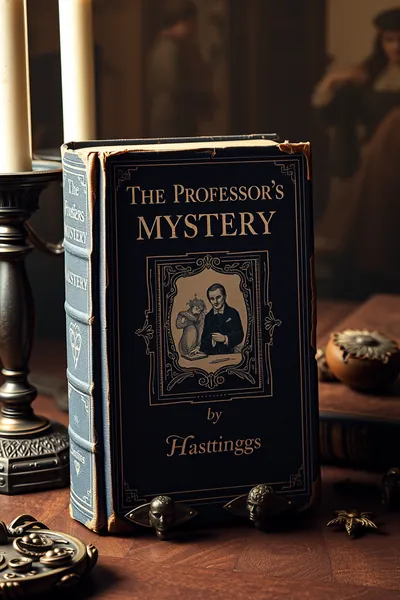
The Hound of the Baskervilles

 74
74

The Hound of the Baskervilles
Arthur Conan Doyle’s The Hound of the Baskervilles remains a peak of detective fiction, not merely for its ingenious plot, but for its palpable atmosphere. The fog-shrouded moors and the pervasive sense of ancient dread are almost characters themselves. Doyle’s skill in juxtaposing the spectral legend of the hound with the grounded, rational deductions of Sherlock Holmes is unparalleled. A particular strength lies in the character of Sir Henry Baskerville, a modern man thrust into an ancestral nightmare, embodying the conflict between the old world and the new. However, some modern readers might find Holmes’s more protracted absences from the immediate scene of the mystery a slight narrative drag. The scene where Holmes reveals the true nature of the hound’s threat, demonstrating how superstition masks human avarice, is a masterclass in narrative resolution. It is a story that perfectly balances gothic horror with intellectual rigor.
📝 Description
74
Arthur Conan Doyle revived Sherlock Holmes for "The Hound of the Baskervilles" in 1901.
The story follows Sherlock Holmes and Dr. Watson as they investigate a supposed supernatural curse afflicting the Baskerville family for generations. Set on the atmospheric moors of Dartmoor, the narrative blends classic detective work with local folklore and the unsettling legend of a spectral hound. Doyle constructs a suspenseful plot where Holmes must determine if the events are truly paranormal or the result of a human scheme.
This novel appeals to readers who enjoy detailed plots and atmospheric settings within detective fiction. Those interested in the links between folklore, local legends, and logical deduction will find it engaging. The book also draws in readers fond of Sherlock Holmes's character and his methods, showing how superstition can be manipulated or overcome by rational thought.
Serialized between 1901 and 1902, "The Hound of the Baskervilles" appeared during a time of widespread public fascination with spiritualism and the occult. This interest in folk tales and unexplained phenomena, which Arthur Conan Doyle himself engaged with, forms a backdrop for the story. The novel uses the legend of the spectral hound as a potent symbol, tapping into primal fears and ancestral guilt while Holmes insists on finding material explanations for seemingly supernatural occurrences.
💡 Why Read This Book?
• Gain insight into how folklore and superstition can be weaponized, as seen in the manipulation of the Baskerville curse to conceal human motives, offering a unique perspective on deceptive practices. • Understand the power of setting in building suspense, by experiencing how Dartmoor’s desolate landscape in the 1901 serialization amplifies the psychological impact of the legend. • Appreciate Sherlock Holmes's deductive method when confronted with seemingly supernatural phenomena, demonstrating his rigorous approach to debunking myths with empirical evidence.
⭐ Reader Reviews
Honest opinions from readers who have explored this book.
❓ Frequently Asked Questions
Is The Hound of the Baskervilles based on a real legend?
The story draws inspiration from local Dartmoor folklore, particularly tales of spectral hounds. While not based on a single specific legend, Arthur Conan Doyle synthesized elements of these myths to create the chilling backstory for the Baskerville family.
When was The Hound of the Baskervilles first published?
The novel was first serialized in The Strand Magazine from August 1901 to April 1902, before being released as a book.
What is the primary theme explored in The Hound of the Baskervilles?
The core theme is the conflict between rationalism and superstition, exploring how ancient fears and folklore can be exploited by human cunning and greed.
Who are the main characters in The Hound of the Baskervilles?
The central figures are Sherlock Holmes, the brilliant detective; Dr. John Watson, his loyal companion and chronicler; and Sir Henry Baskerville, the heir to the cursed estate.
How does the setting of Dartmoor contribute to the story?
Dartmoor's wild, isolated, and mist-shrouded landscape serves to heighten the sense of dread, mystery, and ancient peril, making the spectral hound legend feel more plausible and menacing.
Does Sherlock Holmes believe in ghosts in The Hound of the Baskervilles?
No, Sherlock Holmes remains steadfastly rational. He seeks a scientific or human explanation for all phenomena, refusing to accept supernatural causes, even when confronted with seemingly impossible events.
🔮 Key Themes & Symbolism
Rationalism vs. Superstition
The narrative constantly pits Sherlock Holmes's empirical methods against the pervasive belief in the supernatural. The legend of the spectral hound, a symbol of primal fear and ancestral curse, looms large over the Baskerville family. Holmes's mission is to strip away the layers of folklore and fear to reveal the earthly machinations at play, demonstrating that even the most terrifying apparitions can have logical, human explanations. This theme reflects a broader cultural debate during the late Victorian and Edwardian eras concerning the rise of scientific thought versus enduring folk beliefs.
The Exploitation of Fear
Central to the plot is how fear, particularly fear of the unknown and the supernatural, is used as a tool for manipulation and personal gain. The Baskerville curse, a centuries-old legend, provides the perfect cover for a more mundane, yet deadly, scheme. The perpetrators leverage the villagers' ingrained superstitions and Sir Henry's own anxieties to mask their true intentions. This highlights how deeply ingrained beliefs can be exploited by those who understand human psychology and the power of suggestion.
The Wildness of Nature
Dartmoor, with its desolate moors, bogs, and ancient tors, is more than just a setting; it's an active force in the story. Its untamed, primal nature mirrors the ancient legend of the hound and amplifies the sense of isolation and primal fear. Holmes must navigate this challenging environment, which seems to harbor secrets as old as the hills themselves. The landscape becomes a symbol of the untamed aspects of human nature and the ancient forces that lie beneath the veneer of civilization.
Heredity and Ancestral Guilt
The Baskerville curse is intrinsically linked to the family's past actions, particularly the alleged cruelty of Hugo Baskerville. The idea that ancestral sins can manifest as a curse upon subsequent generations is a powerful motif. Sir Henry, as the current heir, bears the weight of this perceived inherited guilt. The story explores whether such curses are supernatural retributions or simply the long-term consequences of family history and psychological inheritance, playing on Victorian anxieties about lineage and degeneration.
💬 Memorable Quotes
Direct passages from the work, attributed to the author.
“It is a capital mistake to theorize before one has data.”
— Holmes emphasizes the importance of empirical evidence and observation before forming conclusions. This principle guides his investigations, ensuring his deductions are based on facts rather than speculation.
“The business in hand is a curious one... the more I go into it the less I seem to understand.”
— This expresses the initial bewilderment and complexity Holmes faces when confronted with the seemingly inexplicable legend and circumstances surrounding Sir Charles's death on the moor.
“There is nothing more deceptive than an obvious fact.”
— This highlights the narrative's deceptive nature, suggesting that what appears clear on the surface may hide a more intricate reality, a common trope in detective fiction.
💡 Key Ideas
Editorial paraphrase of the work's core concepts — not direct quotes.
The world is full of obvious things which nobody by any chance ever observes.
This quote captures Holmes's philosophy: true detection lies not in seeing the extraordinary, but in observing the overlooked details of the ordinary, which often hold the keys to complex mysteries.
It is a simple matter of proving that the spectral hound is a fraud.
This paraphrased concept shows Holmes's unwavering commitment to rational explanation, framing his investigation as a process of clarifying the supernatural by uncovering its earthly origins.
🌙 Esoteric Significance
Tradition
While *The Hound of the Baskervilles* is primarily a detective novel, its engagement with folklore and the power of suggestion touches upon elements found in animistic traditions and folk magic. The belief in a spectral hound as a harbinger of death or a guardian of a curse echoes primal fears and superstitions common across many cultures. It departs from more structured esoteric systems like Hermeticism or Kabbalah by focusing on the *psychological* impact of ancient beliefs rather than their codified principles. The work explores how ingrained cultural narratives can manifest as tangible, albeit misattributed, phenomena.
Symbolism
The central symbol is the spectral hound itself, representing ancestral guilt, primal fear, and the untamed forces of nature. In an esoteric context, it can be seen as an archetype of the Shadow self, a manifestation of suppressed fears or ancestral trauma that haunts the living. The Dartmoor moorlands function as a symbol of the unconscious, a wild and ancient landscape where hidden truths and dangers lurk, mirroring the internal range of the characters plagued by the curse.
Modern Relevance
Contemporary authors and practitioners in fields like Jungian psychology and modern folklore studies frequently cite *The Hound of the Baskervilles* for its exploration of archetypal fears and the power of collective belief. The novel's depiction of how superstition can be manipulated remains relevant in discussions of misinformation and psychological warfare. Its enduring appeal lies in its ability to tap into universal anxieties about the unknown, ancestral burdens, and the thin veil between the rational world and the ancient, primal forces that continue to influence human consciousness.
👥 Who Should Read This Book
• Readers interested in the intersection of detective fiction and folklore, seeking to understand how ancient legends can be woven into compelling modern narratives. • Students of Arthur Conan Doyle and Sherlock Holmes, looking for a deep dive into one of his most atmospheric and thematically rich novels, first serialized in 1901. • Individuals fascinated by psychological thrillers that explore the power of suggestion and the exploitation of fear, examining how superstition can be used as a weapon.
📜 Historical Context
Arthur Conan Doyle's *The Hound of the Baskervilles*, serialized in *The Strand Magazine* between 1901 and 1902, emerged at a unique cultural juncture. The late Victorian and Edwardian eras were marked by a fervent public interest in spiritualism, psychical research, and the occult, a trend Doyle himself would later embrace. Simultaneously, the burgeoning field of criminology championed scientific methods and rational deduction, epitomized by Doyle's own creation, Sherlock Holmes. This novel masterfully plays on the tension between these two currents: the pervasive belief in ancient curses and spectral phenomena, and Holmes's unwavering commitment to empirical evidence. While authors like Bram Stoker explored gothic horror with *Dracula* (1897), Doyle chose to ground his supernatural-seeming mystery in logical explanation, albeit one that acknowledged the power of folklore and primal fear. The work’s immense popularity, coming shortly after Doyle had seemingly killed off Holmes in 1893, demonstrated the public’s insatiable appetite for his detective and the compelling power of a well-crafted mystery that touched upon deep-seated anxieties.
📔 Journal Prompts
The spectral hound's manifestation and its connection to the Baskerville curse.
Sherlock Holmes's reliance on empirical observation versus the pervasive local superstitions.
The symbolic significance of the Dartmoor landscape in amplifying dread.
Sir Henry Baskerville's position as a modern man confronting ancestral folklore.
The practical application of fear as a manipulative tool within the narrative.
🗂️ Glossary
The Strand Magazine
A popular British literary magazine founded in 1891, famous for publishing early Sherlock Holmes stories by Arthur Conan Doyle, including the serialization of *The Hound of the Baskervilles* from 1901-1902.
Dartmoor
A large area of moorland in the centre of Devon, England. Known for its granite tors, bogs, and wild landscape, it serves as the atmospheric and isolated setting for the novel.
Spectral Hound
A legendary supernatural canine, often depicted as a harbinger of death or a demonic entity. In the novel, it is the central element of the Baskerville family curse, driving much of the plot's suspense.
Hugo Baskerville
The infamous ancestor whose alleged cruelty and pact with the devil supposedly initiated the Baskerville family curse, setting the stage for the supernatural events and fears in the novel.
Arthur Conan Doyle
The Scottish physician and writer (1859-1930) best known for his creation of the detective Sherlock Holmes. He was also deeply involved in spiritualism later in his life.
Empirical Evidence
Information acquired through observation and experimentation rather than theory or belief. This is the central to Sherlock Holmes's investigative method, contrasting with superstition.
Folklore
The traditional beliefs, customs, and stories of a community, passed through the generations by word of mouth. The novel heavily utilizes local folklore surrounding Dartmoor and spectral hounds.
This book appears in 1 collection
🔮 Readers Also Liked
Browse all →









From the “Ghosts” Collection
View all →






More Free Spiritualism & Afterlife Books
View all →