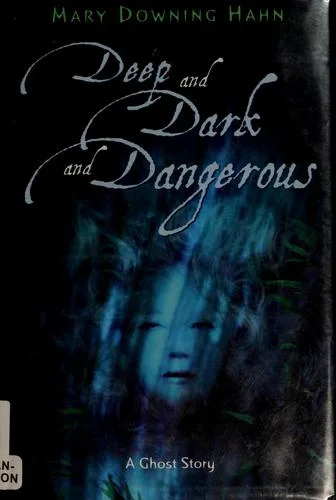
Deep and dark and dangerous
 81
81

Deep and dark and dangerous
Mary Downing Hahn, a seasoned weaver of adolescent dread, delivers a particularly potent yarn with 'Deep and Dark and Dangerous.' The novel excels in its slow-burn atmosphere, meticulously crafting a sense of creeping unease that permeates every page. The setting of the remote lake house, shrouded in mist and secrets, is rendered with a chilling efficacy. Hahn's strength lies in her ability to tap into the specific anxieties of childhood – the fear of the unknown, the burden of adult secrets, and the unsettling realization that the world is not always safe. The character of the ghost, particularly its origins tied to a tragic past event in 1927, is hauntingly realized. However, the pacing, while deliberate, occasionally dips into a languid rhythm in the middle sections, which might test the patience of some readers. The resolution, while thematically sound, feels slightly abrupt after the extended build-up. Still, for those who appreciate a story that lingers long after the final page, Hahn's work is a masterclass in psychological ghost fiction.
📝 Description
81
Mary Downing Hahn published 'Deep and Dark and Dangerous' in 2008, a story about a girl haunted by a past summer.
Ali's summer vacation at her Aunt Clara's isolated lakeside house turns frightening in Mary Downing Hahn's 2008 novel. What begins as a typical visit quickly shifts into a disturbing encounter with a past trauma that continues to affect the present. The narrative builds a strong sense of unease as Ali grapples with unsettling events.
The story centers on Ali, an 11-year-old drawn into a history of unresolved grief and guilt. The remote setting amplifies the psychological tension, making the past feel as present as the summer day. Hahn uses the atmosphere of the lakeside house and the surrounding woods to create a palpable sense of dread, focusing on internal fears and hidden family secrets rather than explicit scares.
Published in 2008, 'Deep and Dark and Dangerous' connects to the long tradition of ghost stories and folklore. These narratives often act as vessels for societal anxieties and historical traumas. The novel uses the supernatural to represent psychological distress, aligning with how many tales explore inner turmoil through external spectral events. The lake itself symbolizes submerged emotions and forgotten histories, a common motif in stories that explore the psychological weight of the past.
💡 Why Read This Book?
• Gain insight into the enduring power of familial secrets, specifically how the submerged trauma of 1927 directly impacts the characters' present lives. • Experience the unsettling atmosphere of a lakeside setting that functions as a character itself, mirroring the hidden depths and forgotten histories. • Understand the concept of spectral presence as a manifestation of unresolved grief and guilt, a common trope in gothic literature explored through Ali's interactions.
⭐ Reader Reviews
Honest opinions from readers who have explored this book.
❓ Frequently Asked Questions
What is the main conflict in 'Deep and Dark and Dangerous'?
The main conflict involves young Ali confronting a supernatural presence at her aunt's lake house, which is intrinsically linked to a tragic event from 1927 and the unresolved guilt of her family.
What is the significance of the lake in the story?
The lake serves as a potent symbol of hidden depths, forgotten memories, and the submerged anxieties of the characters. It is where the central supernatural events often manifest.
Who are the main characters in 'Deep and Dark and Dangerous'?
The primary characters are Ali, the protagonist; her younger brother, Michael; her Aunt Clara; and the spectral figure of Dulcie, whose past is central to the mystery.
When was 'Deep and Dark and Dangerous' first published?
The novel was first published in 2008, contributing to the trend of darker, more psychologically complex young adult fiction.
What themes does Mary Downing Hahn explore in this book?
Hahn explores themes of inherited guilt, the impact of past traumas on the present, childhood fears, and the unsettling nature of hidden family secrets.
Is 'Deep and Dark and Dangerous' considered a ghost story?
Yes, it is a well-regarded young adult ghost story that focuses on atmospheric horror and psychological suspense rather than explicit gore.
🔮 Key Themes & Symbolism
Spectral Manifestations of Trauma
The novel posits that certain locations, like the lake house, can retain elements of profound emotional distress. The spectral presence of Dulcie is not merely a disembodied spirit but a manifestation of the unresolved tragedy of 1927, embodying the lingering guilt and sorrow that affects the living characters. This suggests a view of haunting as a psychological phenomenon externalized, a palpable residue of past pain.
Inherited Guilt and Family Secrets
A central tenet of the narrative is how the transgressions and unresolved issues of one generation can burden the next. The secrets surrounding Dulcie's fate and the subsequent family dynamics create an atmosphere of unease that Ali and Michael inherit. The story suggests that denial and secrecy do not erase the past but rather allow its negative energies to fester and resurface.
The Lake as a Threshold
The lake itself functions as a liminal space, a boundary between the known and the unknown, the living and the spectral. Its dark, deep waters symbolize the submerged aspects of the psyche and the hidden histories of the family. Events occurring near or within the lake are often central, representing a crossing into a more dangerous, uncanny reality.
Childhood Innocence Confronting the Uncanny
The story highlights the vulnerability of children when faced with adult-level trauma and supernatural phenomena. Ali's perspective, while observant, is filtered through a child's understanding, making the unfolding horror more potent. Her struggle to reconcile what she sees with what she is told underscores the theme of confronting uncomfortable truths that shatter a sense of security.
💬 Memorable Quotes
Direct passages from the work, attributed to the author.
“The water was dark and still, reflecting the somber sky.”
— This simple description of the lake captures the novel's mood. The 'dark and still' water mirrors the suppressed secrets and unresolved trauma within the family, while the 'somber sky' hints at the impending dread and emotional weight.
“She felt a chill that had nothing to do with the summer air.”
— This phrase captures the essence of supernatural unease. It signifies a fear that transcends the physical, an intuitive recognition of danger or a presence that is not of the natural world, stemming from the psychological impact of the past.
“The past wasn't dead; it wasn't even past.”
— This interpretation reflects the narrative's core theme: that historical events and their emotional repercussions continue to influence the present. The spectral occurrences demonstrate how unresolved trauma from 1927 actively shapes the characters' current reality.
“Sometimes the things you couldn't see were the most dangerous.”
— This highlights the novel's reliance on psychological horror. The unseen threat, the lingering presence tied to the past, is often more terrifying than any physical manifestation, playing on the characters' fears and anxieties.
“The house held its breath, waiting.”
— Personifying the house imbues the setting with an ominous sentience. This suggests that the location itself is aware of the underlying tension and the supernatural forces at play, amplifying the suspense.
🌙 Esoteric Significance
Tradition
While not explicitly aligned with a specific occult tradition, 'Deep and Dark and Dangerous' draws heavily on the folklore and psychological underpinnings of Western ghost stories, which often incorporate elements of animism and the idea of psychic residue. It speaks to concepts found in spiritualism and psychical research, exploring how intense emotional events might imprint themselves onto a location or object, influencing those sensitive to such energies.
Symbolism
The lake is a primary symbol, representing the unconscious mind, less-obvious layers, and the forgotten past. Its dark waters can be seen as a gateway to the spectral realm or a repository of suppressed memories and trauma. The recurring motif of the boat and drowning relates to themes of loss, surrender, and the terrifying transition between life and death, or between different states of consciousness.
Modern Relevance
Contemporary practitioners of psychological horror and those interested in the intersection of memory, trauma, and the supernatural find Hahn's work relevant. It informs discussions on how historical events and familial legacies can manifest in tangible, unsettling ways, influencing modern storytelling about hauntings that are deeply rooted in character psychology and unresolved emotional burdens.
👥 Who Should Read This Book
• Young readers (ages 10-14) who enjoy atmospheric ghost stories and suspenseful narratives that explore the darker side of childhood experiences. • Fans of classic gothic literature who appreciate slow-burn tension, evocative settings, and psychological depth over jump scares. • Students of folklore and supernatural literature interested in how traditional ghost story elements are adapted to explore themes of family secrets and inherited trauma.
📜 Historical Context
Mary Downing Hahn's 'Deep and Dark and Dangerous,' published in 2008, arrived at a time when young adult literature was increasingly willing to explore darker psychological territory. The early 2000s saw a rise in supernatural and horror-themed YA fiction, moving beyond simpler ghost stories. While Hahn's work taps into the enduring tradition of gothic literature and ghost tales, exemplified by authors like Shirley Jackson, it distinguishes itself by grounding its supernatural elements in familial trauma and inherited guilt. The novel appeared in an era where authors like Stephenie Meyer (Twilight series, beginning 2005) and Suzanne Collins (The Hunger Games, 2008) were also pushing boundaries, though in different genres. Hahn's focus on nuanced atmospheric dread and psychological complexity positioned her work within a more introspective vein of YA horror, distinct from the paranormal romance or dystopian trends.
📔 Journal Prompts
The lake's dark waters as a symbol of submerged memories.
Ali's dawning awareness of the spectral presence and its connection to the past.
The weight of the 1927 tragedy on the present-day characters.
Reflect on the unspoken secrets within the family and their impact.
The palpable sense of dread associated with the abandoned boat.
🗂️ Glossary
Spectral Presence
A manifestation of a spirit or ghost, often linked to intense emotional events or unresolved issues from the past, capable of interacting with or influencing the living environment.
Psychic Residue
The concept that strong emotions or traumatic events can leave an energetic imprint on a location or object, which can be sensed by others.
Liminal Space
A transitional or in-between place, such as a threshold, doorway, or in this case, the edge of a lake, often associated with heightened supernatural activity or psychological shifts.
Inherited Guilt
A psychological or spiritual burden passed down through generations, stemming from the actions or unresolved traumas of ancestors.
Atmospheric Horror
A subgenre of horror that emphasizes mood, setting, and psychological tension to create a sense of dread and unease, rather than relying on gore or explicit violence.
Foreshadowing
Literary device where the author hints at future events, often creating suspense or setting a particular mood, as seen in the early descriptions of the lake.
1927 Tragedy
The central, unresolved event from the past that haunts the characters and serves as the source of the supernatural occurrences in the narrative.
🔮 Readers Also Liked
Browse all →









More by Mary Downing Hahn
All books →





More Free Spiritualism & Afterlife Books
View all →