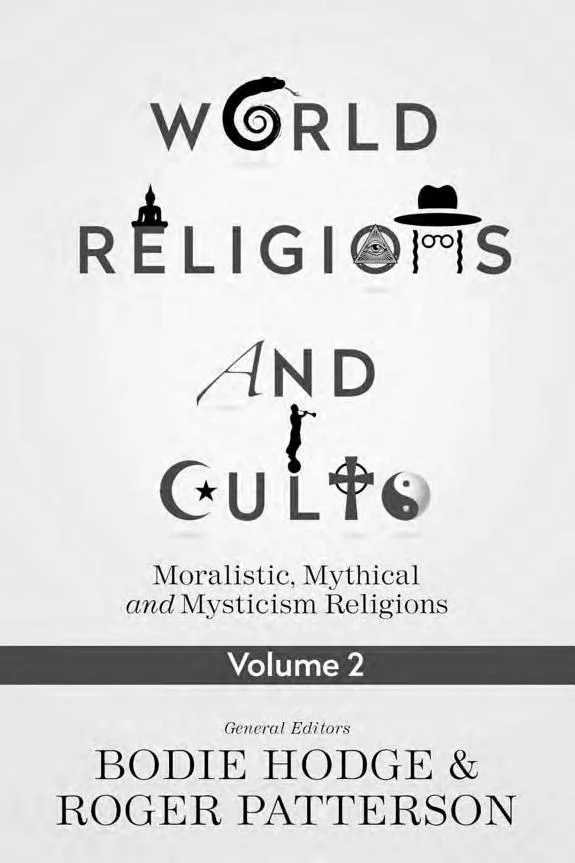
World Religions & Cults Volume 2
 80
80

World Religions & Cults Volume 2
Bodie Hodge and Roger Patterson’s *World Religions & Cults Volume 2* offers a direct, if somewhat polemical, examination of Eastern religions and contemporary spiritual movements. The strength of this work lies in its attempt to provide a structured, comparative analysis from a specific theological viewpoint. For instance, the section dissecting the concept of multiple deities in Hinduism versus monotheism in Christianity provides a clear point of contrast. However, the book’s primary limitation is its overtly apologetic stance, which at times leads to generalizations and a less nuanced portrayal of the complex traditions it discusses. The authors' assertion that "witchcraft infiltrating the minds of the next generation" is a significant concern, reflecting a particular anxiety about cultural shifts. While the text offers practical advice for Christian evangelism, its critical distance from the subject matter can feel strained. It serves as a clear articulation of a specific counter-apologetic perspective.
📝 Description
80
Published in 2016, this volume examines Eastern religions and modern occult movements.
This book analyzes the theological beliefs and practices of various non-Christian traditions, focusing on Hinduism, Buddhism, New Age philosophies, and modern witchcraft. The authors aim to provide readers with a method for understanding these systems, often by contrasting them with Christian doctrine. Concepts like karma, reincarnation, and different views of deities are discussed as they appear in Eastern faiths. The text also considers contemporary spiritual trends and offers analytical tools for examining these beliefs.
The intended audience is individuals with a Christian perspective who want to understand, evaluate, or interact with other religious and spiritual paths. It is particularly relevant for those concerned about the influence of non-Christian ideas in Western culture, especially on younger people. The book seeks to help readers articulate their own faith more clearly and address what the authors consider 'false religions'.
Interest in Eastern religions and occult practices grew in the West during the 20th century, with figures like Swami Vivekananda and the rise of the New Age movement in the 1970s and 80s. This period saw a blend of Eastern mysticism, occultism, and self-help. Published in 2016, this book addresses the ongoing presence of these influences in contemporary culture and spirituality, which often challenge established Western religious views.
💡 Why Read This Book?
• Gain a structured critique of Hinduism and Buddhism from a Christian apologetics perspective, understanding key concepts like karma and reincarnation as presented by the authors, which offers a distinct counter-narrative. • Learn specific arguments to refute what the authors term 'false religions,' equipping you with a Christian framework for responding to adherents of New Age or pagan beliefs. • Understand the perceived rise of witchcraft and paganism in Western society as analyzed within the book's 2016 publication context, providing insight into specific cultural anxieties and theological responses.
⭐ Reader Reviews
Honest opinions from readers who have explored this book.
❓ Frequently Asked Questions
What are the primary Eastern religions discussed in World Religions & Cults Volume 2?
The book primarily focuses on Hinduism and Buddhism, examining their core theological principles, concepts like karma and reincarnation, and their spread into Western culture.
Besides Eastern religions, what other spiritual movements are covered?
Volume 2 also addresses New Age philosophies and contemporary paganism, including witchcraft, analyzing their tenets and perceived influence.
What is the author's main goal in writing this book?
The authors aim to equip Christian readers to understand, critique, and effectively witness to individuals involved in these other religious and spiritual systems.
When was World Religions & Cults Volume 2 first published?
This volume was first published on May 2, 2016.
Who are the authors of World Religions & Cults Volume 2?
The book is authored by Bodie Hodge and Roger Patterson.
What specific Christian perspective does the book adopt?
The book is written from a Christian apologetics standpoint, seeking to defend and articulate Christian beliefs in contrast to the doctrines of other faiths.
🔮 Key Themes & Symbolism
Comparative Theology
The work engages in comparative theology, contrasting the doctrines of major Eastern religions like Hinduism and Buddhism with Christian teachings. It dissects concepts such as the nature of God, salvation, and the afterlife as presented in these traditions. For example, it examines the Hindu concept of Brahman versus the Christian understanding of God, and the Buddhist path to Nirvana against the Christian concept of salvation through Christ. The analysis is framed to highlight perceived theological divergences and incompatibilities.
Apologetics and Evangelism
A central theme is Christian apologetics—the reasoned defense of Christian beliefs. The book provides arguments and strategies for Christians to engage with followers of other religions, aiming to equip them to 'refute these false religions' and effectively share their faith. It addresses how to articulate Christian truth in the face of differing worldviews, particularly concerning the perceived rise of occult and Eastern spiritual practices in Western society.
Analysis of Modern Spiritual Movements
Beyond traditional Eastern religions, the text scrutinizes contemporary spiritual currents such as New Age philosophies and modern witchcraft. It attempts to identify commonalities and underlying principles within these diverse movements, often framing them as syncretic or deviations from established religious traditions. The authors explore the appeal and dissemination of these beliefs, especially among younger demographics, and their potential impact on Christian households.
The Nature of Truth in Religion
Underlying the entire work is an assertion of the exclusivity of Christian truth. The book operates on the premise that there is one true God and one true path, and that other religious systems, by definition, deviate from this truth. This theme frames the analysis of Hinduism, Buddhism, New Age, and witchcraft not as alternative valid paths, but as systems that require critical examination and correction from a Christian standpoint.
💬 Memorable Quotes
Direct passages from the work, attributed to the author.
“Religions of the Far East like Hinduism, Buddhism, and New Age have been gaining a foothold in the Western world.”
— This statement highlights the authors' observation of a growing presence and influence of non-Western spiritual traditions within Western societies, setting the stage for their analysis.
“We even see witchcraft on the rise and paganism infiltrating the minds of the next generation–even in Christian homes!”
— This expresses a strong concern regarding the perceived spread of occult and pagan practices, particularly among youth, and their potential impact on Christian families and beliefs.
“How can a Christian respond?”
— This question frames the practical objective of the book: to provide Christians with tools and knowledge to address and counter the beliefs and practices of other religions.
“We already know how the one true God has responded...”
— This assertion establishes the authors' theological foundation, implying that Christian scripture and doctrine provide the definitive answers and framework for understanding all other religious claims.
“In this title you will learn: How a Christian can effectively witness for Christ”
— This indicates a key practical takeaway for the reader, focusing on the development of evangelistic skills within a comparative religious context.
🌙 Esoteric Significance
Tradition
This work does not align with a specific esoteric lineage but rather critiques them from an external, dogmatic Christian perspective. It engages with traditions that often draw from Gnosticism, Hermeticism, and Eastern mysticism, but its purpose is to expose perceived errors rather than to interpret or perpetuate esoteric knowledge within its own framework.
Symbolism
The book likely discusses symbols associated with Hinduism (e.g., Om, lotus), Buddhism (e.g., Dharma wheel, Buddha statue), and potentially paganism (e.g., pentagram, nature symbols). From the authors' perspective, these symbols would be interpreted as representations of false deities, misguided spiritual paths, or even demonic influence, rather than holding inherent esoteric power or meaning within their original contexts.
Modern Relevance
For contemporary Christian apologists and evangelists, this book remains relevant as a resource for understanding and critiquing the spiritual range of the early 21st century. It provides talking points and theological counterarguments against the continued prevalence of Eastern religions, New Age thought, and resurgent paganism in Western culture, particularly in online spiritual communities.
👥 Who Should Read This Book
• Christian individuals seeking to understand the theological claims of Hinduism, Buddhism, New Age, and witchcraft to better articulate their own faith. • Parents and educators concerned about the influence of non-Christian spiritual ideas on young people and looking for structured counterarguments. • Apologetics students or church leaders who need resources for comparative religious studies and outreach in a pluralistic society.
📜 Historical Context
Published in 2016, *World Religions & Cults Volume 2* emerged during a period marked by continued globalization and the digital dissemination of diverse spiritual ideas. The late 20th and early 21st centuries saw a significant increase in the accessibility of Eastern philosophies, New Age concepts, and neo-pagan practices through books, the internet, and cultural exchange. This followed decades of growing interest, spurred by figures like Helena Blavatsky and the Theosophical Society in the late 19th century, and later by the counter-culture movements of the 1960s. While mainstream academic comparative religion studies in the 2010s often favored phenomenological or sociological approaches, works like Hodge and Patterson’s represent a strong contingent of Christian apologetics engaging directly with these traditions. Their work implicitly engages with, and seeks to counter, the intellectual currents popularized by authors advocating for spiritual pluralism or new spiritual paradigms, such as those emerging from authors associated with the Esalen Institute or the broader New Age movement.
📔 Journal Prompts
The concept of karma as presented in Hinduism and its contrast with Christian notions of divine justice.
The Four Noble Truths of Buddhism and their implications for understanding suffering.
The perceived rise of witchcraft and paganism and its potential appeal to younger generations.
How the New Age movement's emphasis on personal spiritual evolution differs from salvation doctrines.
Strategies for effectively sharing Christian beliefs when encountering adherents of Hinduism or Buddhism.
🗂️ Glossary
Karma
In Hinduism and Buddhism, the principle of cause and effect where actions in this life influence future lives. The book contrasts this with Christian concepts of divine judgment and grace.
Reincarnation
The belief that the soul, after physical death, can begin a new life in a new body. This is a central tenet in Hinduism and Buddhism, presented by the authors as contrary to Christian doctrine.
New Age
A broad term for a range of spiritual or religious beliefs and practices that emerged in the 1970s, often characterized by syncretism, self-spirituality, and holistic health. The book critiques its eclecticism.
Paganism
A broad term for indigenous or folk religions, often polytheistic or nature-based. In contemporary usage, it frequently refers to neo-pagan revival movements, including witchcraft, which the book examines.
Brahman
In Hinduism, the ultimate reality or supreme cosmic spirit that underlies all phenomena. The book contrasts this impersonal concept with the personal God of Christianity.
Nirvana
In Buddhism, the ultimate state of liberation, characterized by the cessation of suffering and the cycle of rebirth. The book compares this to the Christian concept of heaven or eternal life.
Witnessing
In a Christian context, the act of testifying to one's faith in Christ. The book provides guidance on how to do this effectively when engaging with individuals from other religious backgrounds.
This book appears in 1 collection
🔮 Readers Also Liked
Browse all →





From the “Eastern Mysticism” Collection
View all →






More Free Mysticism & Contemplation Books
View all →