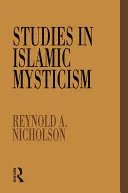
Studies in Islamic Mysticism
 78
78

Studies in Islamic Mysticism
Nicholson’s survey of Islamic mysticism, first appearing in 1914, remains a significant scholarly resource, particularly for its careful exposition of foundational Sufi thought. The section detailing the influence of Neoplatonic ideas on early Sufis, such as Al-Ghazālī's engagement with philosophical critiques, demonstrates the intellectual rigor Nicholson brought to the subject. While the prose can occasionally feel dense, characteristic of its academic origins, the clarity with which complex theological and philosophical concepts are presented is commendable. A limitation, perhaps inherent to a survey text, is that the depth afforded to any single mystic or school of thought is necessarily constrained. Nonetheless, for an overview that respects the intellectual lineage and spiritual aspirations of Sufism, Nicholson’s work provides a solid and authoritative foundation.
📝 Description
78
Reynold A. Nicholson published Studies in Islamic Mysticism in 1914 to detail Sufism's inner experience.
Reynold A. Nicholson's "Studies in Islamic Mysticism" offers a survey of Sufism, the mystical tradition within Islam. Nicholson, a respected scholar, examines the main figures, ideas, and historical progression of this spiritual path. The book was initially meant to assist students of Sufism, philosophy, and literature. It serves as a way into a complex spiritual field, showing the growth of Islamic thought beyond its legal and theological aspects. The focus is on the direct experience of the divine.
This book suits students and academics studying comparative religion, Islamic studies, and philosophy. It also benefits those interested in the history of mysticism across cultures. Readers familiar with R.A. Nicholson's translations or exploring the work of A.J. Arberry will find this volume useful. It is for individuals with a serious academic or spiritual interest in Islam's esoteric dimensions.
Nicholson's work appeared during a time of growing Western academic interest in Eastern religions. Published in the early 20th century, it helped advance scholarly understanding of Sufism, a subject less studied in English then. The book presented a spiritual counterpoint to purely rational or legal views of Islam, highlighting its mystical core. While later scholarship would expand on or adjust Nicholson's views, the initial reception acknowledged its detailed research and broad coverage.
💡 Why Read This Book?
• Gain a structured understanding of Sufism's core concepts, such as *fana'* (annihilation) and *baqa'* (subsistence), as presented in Chapter III, 'The Sufi's Path'. • Appreciate the historical development of Islamic mysticism by tracing its lineage and influences, as discussed in the introduction concerning the period around the 10th century. • Explore the philosophical underpinnings of Sufi thought, particularly its engagement with Neoplatonism, as detailed in the chapter on early Sufi thinkers.
⭐ Reader Reviews
Honest opinions from readers who have explored this book.
❓ Frequently Asked Questions
When was Reynold A. Nicholson's 'Studies in Islamic Mysticism' first published?
Reynold A. Nicholson's 'Studies in Islamic Mysticism' was first published in 1914. This paperback reissue makes his foundational scholarship accessible to a new generation of readers interested in Sufism.
Who is Reynold A. Nicholson and why is he significant?
Reynold Alleyne Nicholson (1868–1947) was a prominent British scholar of Oriental studies, specializing in Persian literature and Islamic mysticism. His translations and commentaries, including this work, are considered seminal in Western academic understanding of Sufism.
What is Sufism according to Nicholson's book?
Nicholson's work presents Sufism as the esoteric, mystical dimension of Islam, focused on direct experience of God, spiritual purification, and the pursuit of divine love through various stages of the soul's journey.
Does this book require prior knowledge of Islam?
While prior knowledge is helpful, Nicholson's book is intended as an introduction for students. It explains key terms and concepts, making it suitable for those new to the field of Islamic mysticism.
What makes this book useful for students of philosophy and literature?
The book connects Sufi thought to broader philosophical traditions, like Neoplatonism, and explores the literary expressions of mystical experience, offering insights valuable to those studying these disciplines.
Is this book a translation of Sufi texts?
No, 'Studies in Islamic Mysticism' is a scholarly survey and analysis of Sufi thought and history, not a direct translation of primary Sufi texts, although it discusses and references them extensively.
🔮 Key Themes & Symbolism
The Sufi Path
Nicholson meticulously charts the 'Sufi's Path,' examining the stages of spiritual development that mystics undertake. This path is often characterized by intense devotion, self-discipline, and a longing for union with the Divine. The work details concepts like repentance, renunciation, patience, gratitude, and trust in God, illustrating how these virtues are cultivated through rigorous practice and contemplation, forming the bedrock of the Sufi's inner transformation.
Divine Love and Union
A central pillar of Islamic mysticism explored in this study is the concept of Divine Love ('ishq ilahi'). Nicholson elucidates how this passionate love for God drives the Sufi's quest for annihilation of the self (*fana'*) in order to achieve a state of perpetual divine presence (*baqa'*). This pursuit of union is depicted not as mere emotional fervor, but as a profound spiritual state attainable through the purification of the heart and the transcendence of ego.
Philosophical Influences
The work critically examines the intellectual milieu in which Sufism developed, paying particular attention to the influence of Greek philosophy, especially Neoplatonism, on early Sufi thinkers. Nicholson discusses how concepts like emanation and the hierarchy of being were integrated or adapted into an Islamic framework. This exploration highlights the dialogue between mystical experience and philosophical reasoning within the Islamic intellectual tradition, demonstrating Sufism's engagement with broader currents of thought.
Key Figures and Schools
Nicholson dedicates significant attention to the foundational figures and emergent schools within Islamic mysticism. From early ascetics and mystics like Al-Hasan al-Basri to later systematizers and poets, the book traces the evolution of Sufi thought through the lives and teachings of its most influential proponents. Understanding these historical personalities and their contributions is crucial for grasping the diversity and development of Sufi traditions over centuries.
💬 Memorable Quotes
Direct passages from the work, attributed to the author.
“The Sufi aims at the annihilation of self in God.”
— This concise statement captures the ultimate goal of the Sufi path as described by Nicholson. It refers to the concept of *fana'*, the dissolution of the individual ego and its desires, allowing for the realization of a permanent state of divine presence and consciousness.
“Divine love is the motive force of the Sufi's spiritual journey.”
— This highlights the central role of *ishq ilahi* (Divine Love) in Sufism. Nicholson emphasizes that it is not merely an emotion but a profound, transformative power that propels the mystic towards God, guiding their actions and aspirations.
“Early Sufism was influenced by Neoplatonic ideas.”
— This observation points to the intellectual cross-pollination that shaped Sufi philosophy. Nicholson illustrates how concepts from Greek philosophical schools were adopted and reinterpreted within an Islamic context by early mystics.
“The stages of the spiritual path require rigorous discipline.”
— This underscores the practical and disciplined nature of Sufi practice. Nicholson details the various virtues and trials the aspirant must undergo, emphasizing that spiritual progress is achieved through sustained effort and self-mastery.
“Sufism represents the inner, mystical dimension of Islam.”
— This defines Sufism's place within the broader Islamic tradition. Nicholson distinguishes the esoteric pursuit of direct divine experience from the exoteric aspects of Islamic law and theology.
🌙 Esoteric Significance
Tradition
This work fits squarely within the Hermetic tradition of comparative mysticism and comparative religion, focusing on the esoteric dimension of Islam. While distinct from Western Hermeticism, Kabbalah, or Gnosticism, Nicholson's study analyzes Sufism's spiritual path and its pursuit of divine knowledge and union, aligning with the universal Hermetic quest for understanding the hidden laws of the cosmos and the soul's relationship to the Divine.
Symbolism
The book frequently discusses the symbolic language employed by Sufis. Concepts like the 'wine' and 'beloved' are explored not merely as literal references but as potent symbols for divine intoxication and the soul's passionate yearning for God. The journey through various spiritual 'stations' or 'states' can also be seen as symbolic, representing the internal transformation and purification required to approach the Divine.
Modern Relevance
Contemporary practitioners and scholars of comparative spirituality, as well as those interested in mindfulness and contemplative practices, draw on Nicholson's foundational work. His clear exposition of Sufi concepts like *fana'* and *baqa'* continues to inform discussions on ego dissolution and spiritual presence in modern psychological and spiritual discourse, bridging ancient mystical insights with contemporary concerns.
👥 Who Should Read This Book
• Students of comparative religion and Islamic studies seeking a foundational text on Sufism's intellectual and historical development. • Philosophy enthusiasts interested in the intersection of mysticism and Neoplatonic thought within an Islamic context. • Individuals exploring the history of esoteric traditions globally, looking for a rigorous academic overview of Islamic mysticism.
📜 Historical Context
Published in 1914, Reynold A. Nicholson's *Studies in Islamic Mysticism* emerged during a vibrant period of Orientalist scholarship in Europe. Western academics were increasingly engaging with the rich intellectual and spiritual traditions of the East. Nicholson's work was a significant contribution, offering a systematic scholarly treatment of Sufism at a time when it was often misunderstood or viewed solely through the lens of exoticism. It provided a counterpoint to more legalistic or political studies of Islam, highlighting its profound mystical and philosophical dimensions. The book engaged with prevailing intellectual currents, notably the application of historical-critical methods to religious texts and the comparative study of mysticism, drawing parallels with Western esoteric traditions while asserting Sufism's unique Islamic identity. Contemporary scholars like D.B. Macdonald were also active in the field, though their approaches sometimes differed, with Macdonald focusing more on the social and psychological aspects of Islamic piety.
📔 Journal Prompts
The concept of *fana' (annihilation) in relation to the ego.
The role of Divine Love (*ishq ilahi*) as depicted in early Sufi writings.
Neoplatonic influences on the systematic presentation of Sufi doctrines.
Stages of the Sufi's Path and their practical implications.
The symbolic language used by mystics to describe the Divine.
🗂️ Glossary
Sufism
The esoteric, mystical dimension of Islam, focused on inner spiritual experience, purification of the heart, and the pursuit of direct knowledge of God.
Fana'
An Arabic term meaning 'annihilation' or 'dissolution,' referring to the Sufi concept of the annihilation of the ego or self in the presence of God.
Baqa'
An Arabic term meaning 'subsistence' or 'permanence,' referring to the state of enduring in God after the annihilation of the self, characterized by a constant divine presence.
Ishq Ilahi
Divine love; the passionate, all-consuming love for God that is a central driving force in Sufi spirituality and the motivation for the mystic's journey.
Neoplatonism
A philosophical system originating with Plotinus in the 3rd century AD, characterized by a hierarchical cosmology emanating from a supreme, ineffable 'One,' which significantly influenced early Sufi thought.
Dhikr
The remembrance of God, often practiced through repetitive chanting of divine names or phrases, a key meditative and devotional practice in Sufism.
Wali
A 'friend' of God; a saint or holy person in Islamic tradition, particularly revered in Sufism for their spiritual proximity to the Divine.