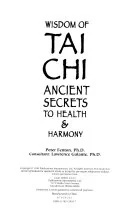
Wisdom of Tai Chi
 79
79

Wisdom of Tai Chi
Fenton and Galante's "Wisdom of Tai Chi" offers a welcome departure from purely instructional texts, framing the art within a more substantial philosophical and esoteric context. The strength of the book lies in its attempt to articulate the deeper energetic principles that inform Tai Chi movements, particularly its exploration of Qi circulation and the dynamic balance of Yin and Yang. The authors successfully bridge the gap between physical form and internal awareness. However, the book sometimes struggles to provide concrete, actionable guidance on these esoteric concepts, leaning heavily on theoretical exposition. A particularly insightful section details the concept of 'Push Hands' not just as a training drill, but as a micro-cosmos of energetic exchange, revealing the subtle interplay of intention and response. While the 1998 publication date means some contemporary esoteric scholarship is absent, the work remains a solid resource for dedicated practitioners seeking a richer understanding.
📝 Description
79
Published in 1998, Wisdom of Tai Chi connects the martial art's movements to metaphysical concepts.
"Wisdom of Tai Chi" by Peter Fenton and Lawrence Galante is not just a manual for performing Tai Chi movements. It functions as a philosophical examination, linking the physical practice and principles of Tai Chi Chuan to deeper esoteric and metaphysical ideas. The authors look at the art's origins, its internal workings, and how its principles apply beyond physical well-being, touching on energy cultivation and the integration of mind and body. They present Tai Chi as a system for grasping universal forces and one's position within them.
This book targets individuals with a serious interest in Tai Chi who want to grasp its core principles and its relationship to wider esoteric traditions. It will interest practitioners aiming to go beyond the physical aspects of their training, as well as those curious about comparative philosophy, martial arts history, and the study of energetic systems. Students of Taoism, Qigong, and similar mind-body disciplines will find relevant connections and new viewpoints. The work arrived during a time of growing global interest in Eastern philosophies, distinguishing itself by explicitly connecting Tai Chi's theory and practice to esoteric thought.
Emerging in 1998, this book appeared when Eastern practices like Tai Chi gained wider Western attention. Unlike much popular literature that emphasized health benefits, Fenton and Galante's work explicitly tied Tai Chi's theory and practice to esoteric concepts. This approach resonated with a growing interest in the philosophical underpinnings of martial arts, aligning with a broader cultural shift toward exploring Eastern spiritual and philosophical systems. It offered a bridge between the physical practice of Tai Chi and its deeper connections to traditions like Taoism and Qigong, focusing on energetic cultivation and universal forces.
💡 Why Read This Book?
• Gain a deeper understanding of Qi cultivation, learning how "Wisdom of Tai Chi" explains its flow through specific movements and energetic pathways, offering a practical esoteric perspective beyond basic health benefits. • Explore the dynamic interplay of Yin and Yang as presented in the book, discovering how Fenton and Galante connect these fundamental Taoist principles to the nuanced transitions and power generation within Tai Chi forms. • Grasp the concept of the Dan Tian, as described in the text, and its significance as an energetic center for internal power and awareness, providing a concrete focal point for meditation and practice.
⭐ Reader Reviews
Honest opinions from readers who have explored this book.
❓ Frequently Asked Questions
What is the primary focus of "Wisdom of Tai Chi" beyond physical technique?
The book emphasizes the philosophical and esoteric underpinnings of Tai Chi. It explores concepts like Qi cultivation, the balance of Yin and Yang, and the energetic principles that influence both martial application and spiritual development, moving beyond a simple exercise manual.
Who are the authors of "Wisdom of Tai Chi"?
The authors are Peter Fenton and Lawrence Galante. The book was first published in 1998, aiming to provide a more in-depth, esoteric perspective on the practice of Tai Chi.
Does "Wisdom of Tai Chi" explain the martial applications of the art?
Yes, while focusing on esoteric principles, the book does connect these concepts to the martial applications of Tai Chi. It explains how internal energy cultivation and understanding energetic dynamics contribute to effective self-defense techniques.
What is the significance of the Dan Tian according to the book?
The book presents the Dan Tian as a crucial energetic center within the body, often located below the navel. It is described as the source and reservoir of Qi, essential for generating internal power and fostering a deeper connection between mind and body in Tai Chi practice.
Is "Wisdom of Tai Chi" suitable for absolute beginners?
While beginners can learn from it, the book is best suited for those with some foundational knowledge or a strong interest in the philosophical aspects of Tai Chi. Its esoteric focus might be dense for individuals seeking only basic physical instruction.
When was "Wisdom of Tai Chi" first published?
The book was first published in 1998. This era saw a growing interest in Eastern philosophies and holistic practices in Western cultures, providing a context for this work's detailed exploration of Tai Chi's esoteric dimensions.
🔮 Key Themes & Symbolism
Qi and Energetic Cultivation
The book meticulously details the concept of Qi, or vital life force, as central to Tai Chi. It moves beyond simplistic notions of energy to explore how specific postures, movements, and mental focus in Tai Chi serve to cultivate, circulate, and harmonize Qi within the practitioner. This energetic cultivation is presented not merely for health, but as a pathway to enhanced awareness, vitality, and even martial efficacy, aligning with Taoist principles of natural flow and balance.
The Dynamic of Yin and Yang
Fenton and Galante interpret the movements and principles of Tai Chi through the lens of Yin and Yang. They illustrate how the art embodies the constant flux and interpenetration of these complementary forces – soft yielding (Yin) meeting firm assertion (Yang), stillness generating motion, and vice versa. This duality is explored as a fundamental aspect of the universe and human existence, with Tai Chi practice offering a means to understand and embody this balance in both physical and mental states.
Mind-Body Integration
A core theme is the profound integration of mind and body achieved through Tai Chi. The work emphasizes that effective practice requires not just physical execution but also conscious intention and internal awareness. The connection between the practitioner's mental state, their energetic field (Qi), and their physical movements is highlighted. This holistic approach suggests that mastering Tai Chi involves aligning one's inner state with outward expression, leading to a unified and centered self.
Tai Chi as a Microcosm
The book posits Tai Chi as a microcosm of universal principles and natural laws. Through its structured forms and energetic principles, practitioners can gain insights into the broader workings of the cosmos. Concepts like the Eight Energies (Ba Men) are presented as archetypal forces that can be understood and applied through Tai Chi, offering a practical method for engaging with and understanding profound philosophical ideas in a tangible, embodied way.
💬 Memorable Quotes
Direct passages from the work, attributed to the author.
“The body is a vessel for Qi, and the mind directs its flow.”
— This statement captures the book's core message about the inseparable link between physical form, vital energy, and conscious intention in Tai Chi practice, highlighting the mind's role in energetic management.
“True yielding is not weakness, but the strength to absorb and redirect.”
— This interpretation of the Yin principle within Tai Chi emphasizes that passive submission is not the goal. Instead, it's about a dynamic, strategic flexibility that allows one to neutralize an opponent's force by understanding and utilizing energetic principles.
“The Dan Tian is the root from which all movement originates.”
— This highlights the central importance of the lower abdominal energy center in generating power and maintaining balance. It suggests that focused energy here is the foundation for all effective Tai Chi techniques and internal development.
“The practice extends beyond the mat, shaping perception and interaction.”
— This suggests that the benefits of Tai Chi, as presented in the book, are not confined to the physical act of training. The cultivated awareness and energetic understanding are intended to influence one's daily life and relationships.
💡 Key Ideas
Editorial paraphrase of the work's core concepts — not direct quotes.
Every movement is a conversation between Yin and Yang.
This paraphrase illustrates how the authors view the constant interplay of opposing yet complementary forces within each Tai Chi posture and transition, reflecting a fundamental Taoist understanding of universal dynamics.
🌙 Esoteric Significance
Tradition
This work is rooted in the Taoist tradition, specifically as it informs the internal martial arts. It draws heavily from concepts central to Taoism, such as Qi, Yin and Yang, and the pursuit of natural harmony (Wu Wei). While not strictly aligned with Western Hermeticism or Gnosticism, it shares with them an emphasis on inner cultivation, energetic principles, and the understanding of universal laws through symbolic and practical means. It represents an application of Taoist philosophy to a specific physical and energetic discipline.
Symbolism
Key symbols explored include Qi, the vital life force, often visualized as a flowing current essential for health and power. The Yin and Yang symbol is central, representing the dynamic balance of opposites that governs all phenomena, and is embodied in the reciprocal movements of Tai Chi. The Dan Tian, a point of energetic concentration, serves as a symbol of inner potential and the seat of vital energy, crucial for developing internal strength and awareness.
Modern Relevance
Contemporary practitioners of Qigong, energy healing modalities, and somatic psychology often find resonance with the principles articulated in "Wisdom of Tai Chi." Thinkers and practitioners who emphasize the energetic body, mind-body integration, and the application of philosophical principles to embodied practice continue to draw on such works. Its focus on the energetic and philosophical dimensions provides a framework for understanding practices that aim for holistic well-being and self-mastery.
👥 Who Should Read This Book
• Dedicated Tai Chi practitioners seeking to understand the philosophical and energetic underpinnings of their art beyond physical form, looking to deepen their practice with esoteric context. • Students of Taoism and comparative philosophy interested in how ancient principles are embodied and applied through physical discipline, offering a tangible link to abstract concepts. • Individuals exploring mind-body integration and energetic cultivation who are curious about systems that promote holistic well-being and self-awareness through structured movement.
📜 Historical Context
Published in 1998, "Wisdom of Tai Chi" emerged in a Western landscape increasingly receptive to Eastern philosophies and alternative health practices. While Tai Chi had gained recognition primarily for its health benefits, this work sought to elevate the discourse by explicitly grounding it in esoteric and metaphysical principles. It coincided with a broader interest in 'energy work' and mind-body disciplines, differentiating itself from purely instructional texts by exploring the deeper energetic and philosophical currents. Unlike more academic explorations of Taoism that might be found in comparative philosophy circles, Fenton and Galante focused on the practical, embodied application within the martial art itself. Their approach can be seen as part of a wave of authors making complex esoteric ideas accessible, though their focus remained distinctly on the internal martial arts lineage, distinct from the burgeoning New Age movement's more generalized spiritual explorations.
📔 Journal Prompts
The role of the Dan Tian as an energetic anchor.
Reflecting on the dynamic balance of Yin and Yang in a recent interaction.
How intention shapes the circulation of Qi during movement.
Analyzing a specific Tai Chi posture through the lens of Eight Energies.
The relationship between stillness and motion in your daily life.
🗂️ Glossary
Qi (Chi)
The fundamental concept of vital life force or energy that permeates all things in the universe. In Tai Chi, its cultivation and circulation are essential for health, vitality, and martial effectiveness.
Yin and Yang
The Taoist principle of complementary opposites that represent dualistic, yet interconnected forces (e.g., dark/light, passive/active, soft/hard). Tai Chi embodies their dynamic interplay.
Dan Tian
Literally 'elixir field,' this refers to specific energy centers in the body, most notably below the navel, considered the primary reservoir and origin point for Qi.
Eight Energies (Ba Men)
A set of eight fundamental energetic principles or forces (e.g., Peng, Lu, Ji, An, Cai, Lie, Zhou, Kao) derived from the application of Yin and Yang, which describe the qualities of movement and intention in Tai Chi.
Push Hands
A training exercise in Tai Chi where two practitioners engage in a controlled application of techniques, focusing on sensitivity, balance, and energetic exchange rather than brute force.
Wu Wei
A Taoist concept often translated as 'non-action' or 'effortless action.' It refers to acting in accordance with the natural flow of things, without forcing or striving.
Form
The sequence of choreographed movements in Tai Chi. Each movement within the form is designed to cultivate specific energetic qualities and principles.
This book appears in 1 collection
🔮 Readers Also Liked
Browse all →








From the “Tai Chi” Collection
View all →




More Free Occult Philosophy Books
View all →