Clairvoyance - A Quantum Approach
 77
77

Clairvoyance - A Quantum Approach
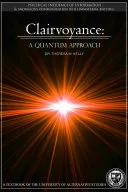
Dr. Theresa M. Kelly’s approach to clairvoyance in *Clairvoyance - A Quantum Approach* is commendably analytical, attempting to bridge the chasm between anecdotal experience and scientific inquiry. The book’s strength lies in its synthesis of parapsychological research with quantum physics concepts, offering a novel framework for understanding extrasensory perception. Kelly avoids sensationalism, presenting her material with academic rigor. A point of contention, however, is the inherent difficulty in empirically verifying quantum-entangled consciousness theories, which forms a significant part of her argument. While the exploration of the observer effect’s implications for consciousness is intellectually stimulating, the leap to direct clairvoyant phenomena remains speculative. The chapter detailing proposed mechanisms for information retrieval through non-local means, while detailed, treads into highly theoretical territory. Despite these limitations, the work provides a coherent, albeit ambitious, model for those seeking a scientific rationale for psychic abilities. Kelly’s text serves as a solid, if challenging, primer on the quantum-informed study of clairvoyance.
📝 Description
77
Dr. Theresa M. Kelly's 2023 text approaches clairvoyance through quantum mechanics and neuroscience.
Clairvoyance - A Quantum Approach by Dr. Theresa M. Kelly examines clairvoyance not as an unexplainable gift, but as a cognitive ability that might fit within current scientific models. The author draws connections between parapsychology, psychology, neuroscience, and quantum physics to explain the phenomenon. This integration of ideas is presented for readers with some technical background.
The book is for intelligent readers interested in precognition, telepathy, and remote viewing. Professionals in psychology, neuroscience, and physics who want to examine the empirical evidence and theoretical ideas about psychic abilities will also find it useful. It also serves as a guide for those interested in the practical use of clairvoyant skills.
Kelly places the study of clairvoyance within the larger history of how consciousness and perception have been understood. The work acknowledges earlier research, like that from the Society for Psychical Research in the late 19th and early 20th centuries, which attempted to verify extrasensory perception scientifically. This book builds on those earlier efforts.
This work engages with a long-standing tradition of attempting to understand psychic phenomena through rational inquiry. It follows in the footsteps of early psychical researchers who sought to apply scientific methods to investigate consciousness beyond the physical senses. By referencing concepts from quantum mechanics, the book attempts to bridge the gap between the materialist scientific worldview and the study of subjective experience and precognition, placing it within a modern materialist interpretation of esoteric subjects.
💡 Why Read This Book?
• Gain a structured understanding of clairvoyance by examining its potential links to quantum mechanics, moving beyond purely spiritual explanations. Kelly's approach offers a different perspective than traditional metaphysical texts. • Discover how Dr. Kelly integrates findings from psychology and neuroscience, providing a multi-disciplinary framework for extrasensory perception that goes beyond simple assertion. • Explore practical applications and the theoretical underpinnings of clairvoyant abilities, informed by research initiatives from 2011, offering a contemporary scientific perspective.
⭐ Reader Reviews
Honest opinions from readers who have explored this book.
❓ Frequently Asked Questions
What is the primary scientific discipline Dr. Kelly uses to explain clairvoyance?
Dr. Theresa M. Kelly primarily utilizes quantum mechanics and neuroscience, alongside psychology and parapsychology, to offer a quantum approach to understanding clairvoyance. The book aims to bridge these fields for a semi-technical audience.
Who is the intended audience for 'Clairvoyance - A Quantum Approach'?
The textbook is designed for intelligent laypersons interested in clairvoyance, as well as professionals in fields like psychology and neuroscience who are curious about psychic phenomena and its potential scientific basis.
When was 'Clairvoyance - A Quantum Approach' first published?
The book, 'Clairvoyance - A Quantum Approach' by Dr. Theresa M. Kelly, was first published on November 4, 2011. This date places its research within the context of early 21st-century scientific inquiry.
Does the book provide methods for developing clairvoyance?
Yes, the book aims to provide a detailed framework for understanding and potentially utilizing clairvoyant abilities, drawing from scientific research and theoretical models.
What differentiates this book from traditional esoteric texts on clairvoyance?
Unlike traditional texts, Kelly's book attempts to ground clairvoyance in scientific research initiatives from parapsychology, psychology, neuroscience, and quantum mechanics, offering a semi-technical, evidence-informed perspective.
What specific scientific concepts are explored in relation to clairvoyance?
The work explores concepts such as the observer effect in quantum mechanics, non-local information transfer, and the neurological correlates of consciousness, attempting to link them to the phenomenon of clairvoyance.
🔮 Key Themes & Symbolism
Quantum Parallels
The book posits that principles observed in quantum mechanics, such as entanglement and the observer effect, might offer explanatory models for clairvoyant phenomena. It suggests that information might be transferred non-locally, bypassing conventional spatial and temporal limitations. This perspective challenges classical deterministic views of reality and consciousness, proposing that the universe and our awareness are more interconnected than commonly assumed. The text explores how these quantum concepts could provide a scientific scaffolding for understanding extrasensory perception.
Neuroscience of Perception
Dr. Kelly examines the human brain's role in processing information, including data that may not originate from sensory organs. The work investigates potential neurological correlates for intuitive insights and precognitive flashes, drawing from current research in neuroscience. It seeks to identify how the brain might interpret or manifest information received through non-standard channels, connecting brain activity to subjective experiences of clairvoyance.
Parapsychological Frameworks
This text situates clairvoyance within the field of parapsychology, acknowledging decades of research into psychic phenomena. It references empirical studies and theoretical frameworks developed within parapsychology to explain telepathy, precognition, and remote viewing. The book aims to synthesize these findings with more recent scientific advancements, offering a contemporary and evidence-informed perspective on these often-controversial subjects.
Consciousness and Information
A central theme is the nature of consciousness itself and its relationship with information. The book explores how consciousness might interact with or perceive information existing beyond the physical senses. By framing clairvoyance as a form of information processing, the author seeks to explain the subject and place it within a broader scientific discourse on the mind-matter relationship.
💬 Memorable Quotes
Direct passages from the work, attributed to the author.
“The observer effect in quantum physics suggests that observation influences reality; perhaps consciousness plays a similar role in extrasensory perception.”
— This interpretation points to a key analogy the book draws, suggesting that the act of 'perceiving' clairvoyantly might inherently shape or interact with the phenomenon being perceived, mirroring quantum principles.
“Integrating neuroscience with quantum mechanics offers a novel pathway to investigate the mechanisms of precognition.”
— This captures the book's interdisciplinary ambition, emphasizing the synthesis of biological brain function studies with theoretical quantum physics to explore phenomena like foresight.
“Empirical data from parapsychology warrants further investigation through contemporary scientific models.”
— This interpretation underscores the book's commitment to empirical research, advocating for the continued study of psychic phenomena using modern scientific tools and theories, rather than outright dismissal.
💡 Key Ideas
Editorial paraphrase of the work's core concepts — not direct quotes.
Clairvoyance may be understood as an information-retrieval process operating beyond conventional sensory modalities.
This paraphrased concept highlights the book's core thesis: viewing clairvoyance not as magic, but as a sophisticated, albeit poorly understood, method of acquiring knowledge akin to a specialized cognitive function.
The subconscious mind may act as a crucial interface for processing non-local information.
This paraphrased concept suggests the book views the subconscious as a potential 'receiver' or 'translator' for information that bypasses conscious, sensory input, linking it to psychic phenomena.
🌙 Esoteric Significance
Tradition
While not explicitly aligning with a single esoteric lineage like Hermeticism or Kabbalah, this work fits within the broader modern esoteric tradition that seeks to reconcile spiritual or psychic phenomena with scientific understanding. It engages with the perennial quest to understand consciousness beyond its materialist explanations, drawing parallels between ancient contemplative insights and modern physics, a trend seen in various New Age and esoteric movements.
Symbolism
The book's primary symbolic motif is the quantum field itself, representing interconnectedness, potentiality, and the non-local nature of reality. It implicitly utilizes the symbol of the 'observer' not just as a scientific concept but as a representation of conscious agency interacting with the fabric of existence. The 'veil' between the seen and unseen is conceptually dissolved through the lens of quantum information, suggesting a hidden layer of reality accessible through expanded perception.
Modern Relevance
Contemporary thinkers exploring consciousness, quantum mysticism, and the integration of science and spirituality find resonance in Kelly's approach. Practices involving meditation, remote viewing, and precognitive journaling that seek a scientific or quasi-scientific underpinning can draw upon the conceptual framework presented. Researchers in artificial intelligence and consciousness modeling also engage with the idea of non-local information processing.
👥 Who Should Read This Book
• Students of consciousness studies and theoretical physics interested in the potential intersection of quantum mechanics and subjective experience. • Parapsychology enthusiasts seeking a scientifically-informed perspective that moves beyond anecdotal evidence and traditional metaphysical explanations. • Individuals curious about the nature of intuition and precognition who prefer a structured, academic approach to exploring these phenomena.
📜 Historical Context
Published in 2011, Dr. Theresa M. Kelly's *Clairvoyance - A Quantum Approach* emerged during a period of renewed interest in consciousness studies, often termed the 'Decade of the Brain.' It arrived decades after the peak of early 20th-century parapsychological research, which saw figures like J.B. Rhine popularizing terms like 'extrasensory perception' (ESP). Kelly’s work distinguished itself by attempting to integrate findings from these earlier investigations with the cutting edge of quantum physics and neuroscience, fields that had advanced considerably since Rhine’s foundational experiments. While figures like Fritjof Capra had previously explored quantum physics’ philosophical implications in works like *The Tao of Physics* (1975), Kelly focused more narrowly on clairvoyance. The book aimed to provide a semi-technical audience with a framework grounded in contemporary science, moving beyond the more spiritual or purely anecdotal approaches prevalent in some esoteric circles.
📔 Journal Prompts
The quantum observer effect and its potential role in clairvoyant perception.
Information transfer beyond sensory modalities: personal reflections.
Bridging neuroscience and quantum mechanics for understanding intuition.
Interpreting non-local information through the subconscious interface.
Evaluating empirical parapsychology data within a quantum framework.
🗂️ Glossary
Clairvoyance
The purported ability to perceive information, events, or objects beyond the normal range of the senses, often involving precognition, telepathy, or remote viewing.
Quantum Mechanics
A fundamental theory in physics that provides a description of the physical properties of nature at the scale of atoms and subatomic particles.
Observer Effect
In quantum mechanics, the phenomenon where the act of observing or measuring a system inevitably alters the state of the system itself.
Non-locality
The concept in quantum physics suggesting that entangled particles can influence each other instantaneously, regardless of the distance separating them.
Parapsychology
The study of alleged psychic phenomena and other paranormal claims, including extrasensory perception (ESP) and psychokinesis.
Neuroscience
The scientific study of the nervous system, including the brain, spinal cord, and peripheral nervous system, and how they control behavior and cognitive functions.
Subconscious Mind
The part of the mind of which one is not fully aware but which influences one's actions and feelings; often considered a reservoir for intuition and unprocessed information.